Mass CommunicationUnit 78 min read
Digital Journalism: Tools, Ethics & Trends
Unit 7 of Mass Communication explores how digital technology reshapes journalism—from social media reporting to multimedia storytelling—covering key tools, ethical challenges, and future trends in an exam-focused way.
TAKEAWAYS:
- Digital journalism uses online tools (blogs, apps, AI) to report faster and reach global audiences.
- Ethics matter: Verify facts, protect sources, and avoid misinformation in digital spaces.
- Multimedia skills (videos, infographics) make stories more engaging than text alone.
- NEB exams test: Definitions, comparisons (traditional vs. digital), and real-world case studies.
- Trends: AI, citizen journalism, and mobile-first reporting are shaping the future.
What is Digital Journalism?
Digital journalism is reporting news using digital tools—websites, apps, social media, and multimedia. Unlike traditional print or TV journalism, it lets journalists:
- Publish instantly (no waiting for printing or broadcasting).
- Engage directly with readers via comments, likes, and shares.
- Use interactive elements (videos, polls, maps) to tell stories better.
graph LR
    A["Traditional Journalism"] -->|"Print/TV"| B["Slow, one-way"]
    C["Digital Journalism"] -->|"Web/Social Media"| D["Fast, two-way"]
    D -->|"Tools"| E["Blogs, Apps, AI"]
    D -->|"Skills"| F["Multimedia, Data Journalism"]
Why does it matter?
- Speed: Breaking news spreads in minutes (e.g., Twitter during earthquakes).
- Reach: Stories go viral globally (e.g., #MeToo movement).
- Cost: Cheaper than printing newspapers or filming TV segments.
Key Tools of Digital Journalism
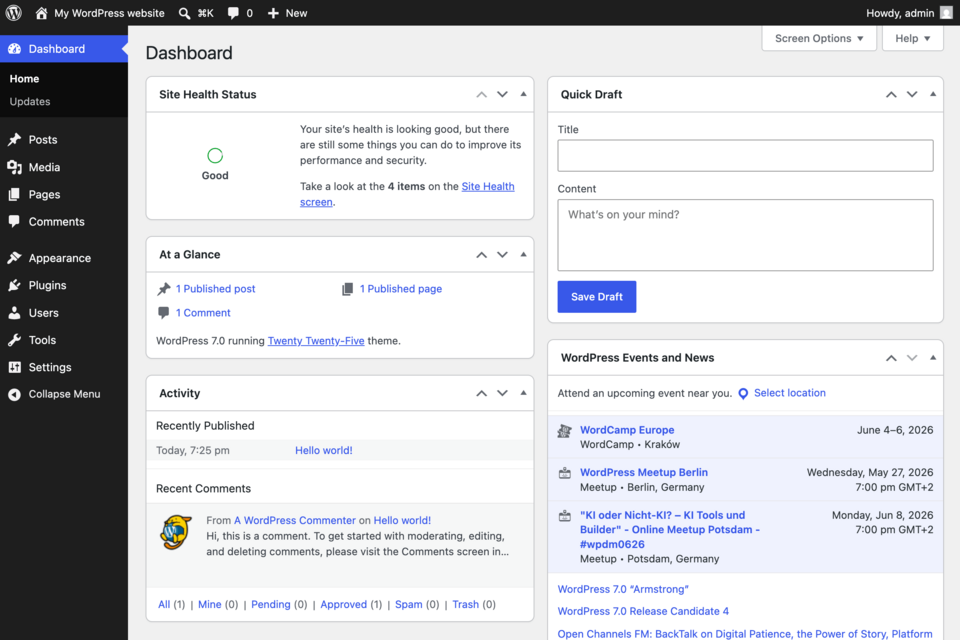 Example of a Content Management System (CMS) interface used for publishing digital news stories. (Image: WordPress Foundation, GPL, via Wikimedia Commons)
1. Social Media Platforms
Platforms like Facebook, Twitter (X), Instagram, and LinkedIn help journalists:
- Share news instantly (e.g., live-tweeting protests).
- Gather sources (e.g., asking followers for eyewitness videos).
- Build audiences (e.g., journalists with millions of followers).
Example: During the 2015 Nepal earthquake, journalists used Twitter and Facebook to share rescue updates in real time.
2. Content Management Systems (CMS)
Software like WordPress, Google Sites, or Medium lets journalists:
- Create blogs easily.
- Add photos, videos, and links.
- Track reader engagement (e.g., how many people viewed an article).
Example: A local journalist in Kathmandu writes about floods in Chitwan using WordPress. They embed a Google Map showing affected areas and add photos from readers.
3. Multimedia Tools
- Photos: Canva, Adobe Lightroom (for editing).
- Videos: iMovie, CapCut (for mobile editing).
- Infographics: Piktochart (to explain complex data simply).
Example: A story on "Plastic Pollution in Pokhara" uses:
- A before/after photo of a river.
- A short video of cleanup efforts.
- An infographic showing plastic waste stats.
4. Data Journalism Tools
Software like Excel, Tableau, or Google Data Studio helps turn numbers into stories. Example: A journalist investigates "Traffic Deaths in Nepal" using:
- Excel: Organizes police reports.
- Tableau: Creates a map showing hotspots.
- Story: "Why Are Roads in Kathmandu So Dangerous?" with interactive charts.
Advantages of Digital Journalism
| Pros | Cons |
|---|---|
| Faster updates | Misinformation spreads quickly |
| Global reach | Less depth (short attention spans) |
| Interactive stories | Ethical risks (privacy, deepfakes) |
| Lower costs | Dependence on tech (not all have smartphones) |
| Citizen journalism | Algorithmic bias (what gets seen?) |
Ethical Challenges in Digital Journalism
- Verification: Always check sources before posting (e.g., fake news during elections).
- Privacy: Avoid doxxing (sharing personal details of victims).
- Bias: Algorithms may favor sensational stories over balanced reporting.
- Deepfakes: Edited videos/audio can spread lies (e.g., fake political speeches).
Example: In 2020, a fake video of a Nepali politician was circulated on WhatsApp. Journalists had to debunk it before it caused panic.
Digital Journalism vs. Traditional Journalism
| Feature | Digital Journalism | Traditional Journalism |
|---|---|---|
| Speed | Instant (minutes/hours) | Slow (days/weeks) |
| Audience | Global (social media) | Local (newspapers, TV) |
| Cost | Low (free tools) | High (printing, broadcasting) |
| Engagement | Two-way (comments, shares) | One-way (readers can’t reply) |
| Depth | Often shallow (short articles) | Deeper (long reports, investigations) |
| Tools | Blogs, apps, AI | Printers, cameras, editing suites |
Future Trends in Digital Journalism
- AI & Automation
- Robots write sports scores or weather reports.
- Chatbots answer reader questions.
- Citizen Journalism
- Ordinary people report news (e.g., smartphone videos of accidents).
- Mobile-First Reporting
- Most readers use phones, so stories must load fast.
- Immersive Storytelling
- VR/AR lets readers "experience" news (e.g., walking through a refugee camp).
- Fact-Checking Tools
- Websites like Snopes or AFP Fact Check fight misinformation.
Example: In 2023, a Nepali journalist used AI to analyze 10 years of traffic data and predicted future accident hotspots.
How Digital Journalism Works: A Step-by-Step Example
Let’s trace how a digital news story is made:
- Idea: A journalist notices power cuts in Biratnagar due to monsoon damage.
- Research:
- Calls the electricity company for data.
- Talks to affected residents.
- Writing:
- Drafts a short, engaging headline: "Monsoon Havoc: Biratnagar Faces 12-Hour Blackouts".
- Multimedia:
- Takes photos of damaged poles.
- Records a short video of people complaining.
- Makes a simple infographic showing outage times.
- Publishing:
- Posts on Facebook and Twitter.
- Embeds the video in a WordPress blog.
- Engagement:
- Asks readers: "Have you faced power cuts? Share your stories in comments."
- Updates:
- Later, adds: "Government promises repairs by next week."
NEB Exam Tips for Digital Journalism
- Define Key Terms
- Example: "Digital journalism is the use of digital tools to gather, verify, and distribute news."
- Compare Traditional vs. Digital
- Use a table (like above) to show differences.
- Case Studies
- Mention real examples (e.g., Twitter during earthquakes, AI in reporting).
- Ethics Questions
- "How can digital journalists avoid spreading fake news?" → Answer: Verify sources, use fact-checking tools.
- Tools & Trends
- Know at least 3 tools (e.g., WordPress, Twitter, Tableau) and 2 trends (e.g., AI, citizen journalism).
Practice Questions (NEB-Style)
Short Answer (5 marks)
- What are two advantages and two disadvantages of digital journalism?
- Name one tool used for data journalism and explain its use.
Long Answer (10 marks)
- "Digital journalism has changed how news is reported." Discuss with examples.
- How can a journalist verify information before publishing on social media?
Application (5 marks)
- Imagine you’re reporting on "Air Pollution in Kathmandu" digitally. Describe the steps you’d take, including tools and multimedia.
Final Checklist for NEB Success
✅ Know definitions (digital journalism, CMS, data journalism). ✅ Compare traditional vs. digital journalism. ✅ List tools (social media, WordPress, Tableau). ✅ Discuss ethical challenges (fake news, privacy). ✅ Mention future trends (AI, citizen journalism). ✅ Practice writing short digital news stories.
 Twitter, Facebook, Instagram, LinkedIn logos with labels (Image: mikemacmarketing, CC BY 2.0, via Wikimedia Commons)
Based on the NEB +2 Humanities syllabus for Mass Communication (MC), unit 7.
Discussion
Loading…