Mass CommunicationUnit 614 min read
Broadcast Journalism: Scripting & Production – Formats, Techniques & Ethics
Unit 6 of Mass Communication explains how news is produced for radio and TV, covering scripting formats (news bulletins, features, interviews), production workflows, technical requirements, and ethical guidelines—with solved examples and NEB-style questions.
TAKEAWAYS:
- Broadcast journalism uses structured scripts (news bulletins, features, interviews) with strict time limits and clear formats.
- Production workflows include pre-production (research, scripting), production (recording), and post-production (editing, mixing).
- Technical skills (microphones, cameras, lighting) and ethical rules (accuracy, fairness, sensitivity) are critical for credibility.
- NEB exams test script formats, ethical dilemmas, and comparisons between radio and TV production.
- Common mistakes include unstructured scripts, poor audio/video quality, and violating ethical norms.
What is Broadcast Journalism?
Broadcast journalism is the process of collecting, writing, producing, and delivering news and information through radio and television. Unlike print journalism, broadcast journalism relies on audio and visual elements to engage the audience quickly.
Key Features of Broadcast Journalism
Why is it different from print journalism?
| Aspect | Broadcast Journalism | Print Journalism |
|---|---|---|
| Medium | Radio/TV (audio + visual) | Newspapers/magazines (text only) |
| Speed | Faster (live updates) | Slower (edited before publication) |
| Engagement | Uses voice tone, body language, music, graphics | Relies on headlines, images, layout |
| Scripting | Structured, time-bound scripts | Flexible, detailed articles |
| Ethics | Must be accurate and sensitive to tone/voice | Focuses on written clarity and fairness |
1. Scripting in Broadcast Journalism
Scripts are the blueprint of broadcast content. They must be: ✅ Clear (easy to understand) ✅ Concise (fits time limits) ✅ Engaging (holds audience attention) ✅ Ethical (no bias, sensitive language)
Types of Broadcast Scripts
A. News Bulletin Script
A short, structured script for live or recorded news updates (usually 1-3 minutes).
Format:
Example: Script for a Fire Incident (30 seconds)
[ANCHOR]
"Good evening, viewers. A major fire broke out in Kathmandu’s New Road this evening, damaging at least 5 shops. Firefighters are still battling the blaze. We’ll bring you updates as the situation develops. Back to you, [Reporter Name]."

[REPORTER (on location)]
"Standing outside the smoldering ruins, I can see firefighters working tirelessly to control the flames. Witnesses say the fire started around 6 PM. Police have cordoned off the area. We’ll keep you updated."
Key Rules for News Scripts:
- Inverted Pyramid Style: Most important info first.
- Active Voice: "Firefighters fought the blaze" (not "The blaze was fought by firefighters").
- No Jargon: Avoid technical terms unless explained.
- Time Sensitivity: "Just now," "a few minutes ago" for live updates.
B. Feature Script
A longer, storytelling-style script (usually 3-10 minutes) that explores a topic in depth.
Example: Script for a "Child Education in Nepal" Feature (5 minutes)
[INTRO (1 min)]
"In Nepal, where 1 in 5 children never attend school, a small NGO in Bhaktapur is changing lives. Today, we meet the students and teachers of the ‘Light of Hope’ school, where education is free—and hope is the only fee."

[BODY (3 min)]
[Interview with Teacher]
"Teacher: ‘Many children here walk 2 hours just to reach school. But when they learn to read, their families see a future.’"

[Student Story]
"Student (10 yrs): ‘I want to be a doctor. My teacher says I can if I study hard.’"

[Closing (1 min)]
"Back in Kathmandu, education activists say government support is crucial. But for now, schools like ‘Light of Hope’ prove that even small efforts can light up a child’s future."
Key Rules for Feature Scripts:
- Storytelling Approach: Use quotes, anecdotes, and interviews.
- Visual/Audio Cues: "Show the children playing outside," "Play the sound of the school bell."
- Balanced Perspective: Include positive and negative views if discussing issues.
C. Interview Script
Used for live or recorded interviews (e.g., politicians, experts, celebrities).
Format:
sequenceDiagram
    participant Anchor as [Anchor]
    participant Guest as [Guest]
    Anchor->>Guest: "Opening question (easy, engaging)"
    Guest-->>Anchor: "Answer"
    Anchor->>Guest: "Follow-up (deeper question)"
    Guest-->>Anchor: "Answer"
    Anchor->>Guest: "Closing (thank you, sign-off)"
Example: Interview Script with a Climate Scientist (2 minutes)
[ANCHOR]
"Dr. Sharma, Nepal’s glaciers are melting at an alarming rate. What’s the biggest threat to our water supply?"

[SCIENTIST]
"Well, the Himalayas store water like a giant bank. If glaciers melt too fast, we’ll face floods **and** droughts in the same year."

[ANCHOR]
"So, what can the government do to prepare?"
Key Rules for Interviews:
- Prepare Questions in Advance (but allow flexibility).
- Use Open-Ended Questions (avoid "Yes/No" answers).
- Stay Neutral (don’t lead the guest).
- Time Management: Allocate 60% for questions, 40% for responses.
2. Broadcast Production Process
Broadcast production follows a structured workflow:
A. Pre-Production
- Research: Gather facts, interview sources, check credibility.
- Scriptwriting: Write the script (news, feature, or interview).
- Rehearsal: Practice delivery (especially for anchors/reporters).
- Equipment Check: Ensure microphones, cameras, lighting work.
B. Production (Recording)
- For News: Live or recorded in studio.
- For Features/Interviews: On-location or studio setup.
- Key Technical Skills:
- Microphone Techniques: Use lapel mics for interviews, shotgun mics for outdoor sound.
- Camera Angles: Eye-level for interviews, wide shots for context.
- Lighting: Avoid shadows; use three-point lighting (key, fill, backlight).
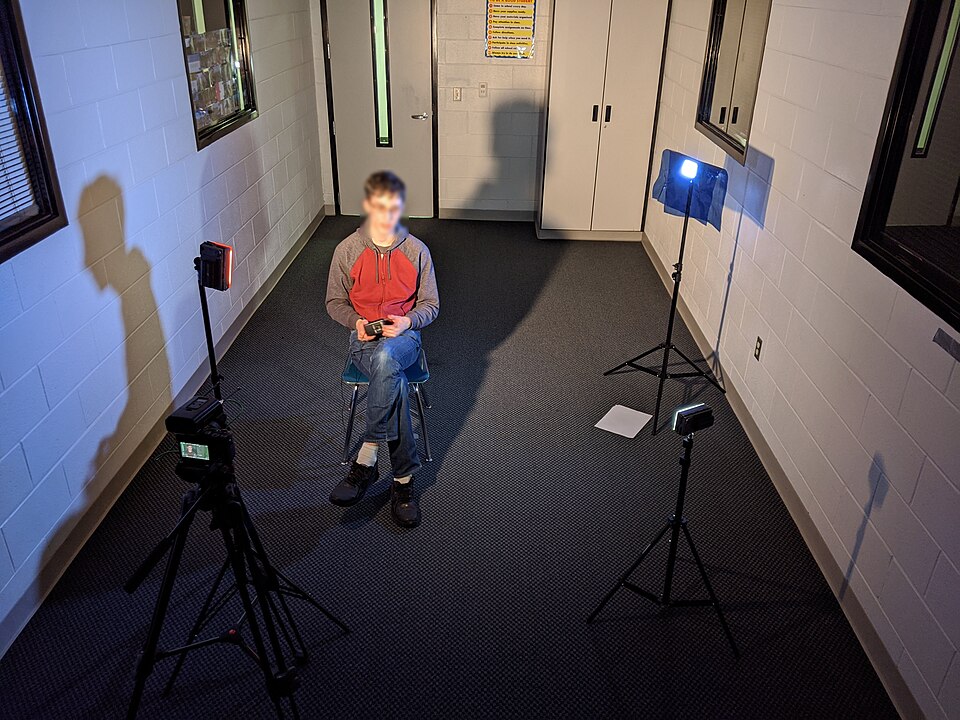 How to light a subject for TV news. (Image: SweetCanadianMullet, CC BY-SA 4.0, via Wikimedia Commons)
C. Post-Production
- Editing: Cut unnecessary parts, add music/graphics.
- Audio Mixing: Balance voice, sound effects, music.
- Graphics: Add subtitles, lower-thirds (names/titles), maps.
- Final Review: Check for errors, ethical issues, technical glitches.
Example: Editing a News Segment
- Before: Raw footage (3 minutes) with background noise.
- After: Tightened to 1 minute, with b-roll (visuals), sound effects (fire siren), and subtitles.
3. Technical Skills for Broadcast Journalism
A. Microphone Techniques
| Microphone Type | Use Case | Example |
|---|---|---|
| Lavalier (Lapel) | Interviews, on-camera | Worn on shirt for clear voice |
| Shotgun | Outdoor sound recording | Used with cameras |
| Dynamic | Live broadcasts | Used by news anchors |
| Headset | Remote interviews | For clear audio over phone |
B. Camera Basics
- Tripod: Stabilizes camera for steady shots.
- Zoom: Avoid digital zoom (use optical zoom for quality).
- Focus: Keep subject sharp (avoid blurry images).
- Rule of Thirds: Place key elements off-center for balance.
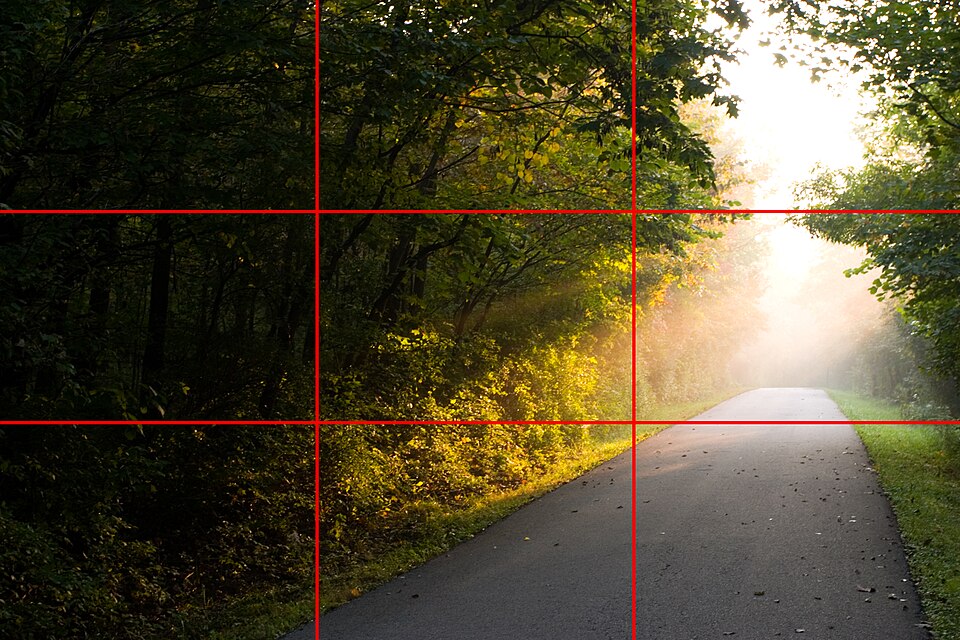 How to frame a shot for better composition. (Image: John R. Daily, CC BY-SA 2.5, via Wikimedia Commons)
C. Lighting
- Natural Light: Best for outdoor shoots (shoot in golden hour—sunset/sunrise).
- Artificial Light: Use softboxes to avoid harsh shadows.
- Avoid: Backlighting (makes subject dark), overhead lighting (creates shadows under eyes).
4. Ethical Considerations in Broadcast Journalism
Broadcast journalists must follow ethical guidelines to maintain trust and credibility.
| Ethical Rule | Example |
|---|---|
| Accuracy | Verify facts before broadcasting (e.g., check fire department reports). |
| Fairness | Give all sides of a story (e.g., interview both pro- and anti-government groups). |
| Sensitivity | Avoid showing graphic images of victims without consent. |
| Confidentiality | Protect sources (e.g., whistleblowers). |
| No Plagiarism | Always credit sources (e.g., "According to X news agency..."). |
| Avoid Sensationalism | Don’t exaggerate (e.g., "Nepal is drowning!" → "Heavy rains cause floods in 5 districts"). |
Example: Ethical Dilemma Scenario: A reporter films a domestic violence incident but the victim asks not to be shown. Solution: ✅ Respect privacy (blur face, use voiceover). ✅ Focus on the issue (e.g., "Police say domestic violence cases are rising"). ❌ Don’t exploit the victim for ratings.
5. Radio vs. TV Production: Key Differences
| Aspect | Radio Production | TV Production |
|---|---|---|
| Medium | Audio-only | Audio + Visual |
| Script Length | Shorter (30 sec–2 min) | Longer (1–10 min) |
| Engagement | Relies on voice modulation, music, sound effects | Uses visuals, body language, graphics |
| Equipment | Microphones, audio mixer | Cameras, microphones, lighting, editing software |
| Ethics | Must describe visuals ("Show a crowd protesting") | Must ensure accurate and sensitive visuals |
| Example | "Listen to the sound of the protest chants..." | "Here’s footage of the protest leaders speaking." |
6. Common Mistakes to Avoid
❌ Unstructured Scripts: Jumping between topics without clear flow. ❌ Poor Audio Quality: Background noise, muffled voices. ❌ Overloading with Info: Too many details in little time. ❌ Ignoring Ethics: Showing sensitive content without consent. ❌ Bad Lighting: Dark faces, harsh shadows. ❌ No Rehearsal: Reading scripts poorly on camera.
Exam Tip: How NEB Tests This Unit
NEB exams on Broadcast Journalism usually ask:
- Script Writing: Write a news bulletin or feature script (given a scenario).
- Production Workflow: Explain the steps from research to broadcast.
- Technical Questions: Identify microphone types, camera angles, lighting setups.
- Ethical Dilemmas: "How would you handle a sensitive story?"
- Comparisons: "Differentiate between radio and TV production."
- Short Answers: Define terms like b-roll, inverted pyramid, lower-thirds.
NEB-Style Questions & Answers
Question 1: Write a 30-second news bulletin script on "Power Outages in Kathmandu."
Answer:
[ANCHOR]
"Kathmandu is facing another round of power cuts today, with residents complaining of 6-hour blackouts. The Nepal Electricity Authority blames transmission line failures. We’ll keep you updated as the situation develops. Back to you."

[REPORTER (on location)]
"Standing outside a local market, I see shops struggling without electricity. One shopkeeper says, ‘We’ve lost thousands today.’ Authorities urge patience as repair teams work overnight."
Question 2: Explain the pre-production steps for a TV interview with a politician.
Answer:
- Research: Check the politician’s past statements, current policies.
- Scriptwriting: Prepare 3-5 key questions (avoid leading questions).
- Equipment Check: Test microphones, cameras, lighting.
- Rehearsal: Practice delivery, body language, and timing.
- Legal/Ethical Review: Ensure no defamation, respect for privacy.
Question 3: Differentiate between a shotgun mic and a lavalier mic.
| Shotgun Mic | Lavalier Mic |
|---|---|
| Directional (picks up sound in front) | Omnidirectional (picks up all around) |
| Used for outdoor sound recording | Worn on shirt for interviews |
| Attached to cameras | Wired or wireless |
| Example: Filming a protest | Example: On-camera interview |
Question 4: How would you handle an ethical dilemma where a source asks to remain anonymous?
Answer: ✅ Respect their request (if they have a valid reason). ✅ Verify their credibility (check their knowledge/experience). ✅ Use a voice modifier (if showing their face is necessary). ✅ Disclose in the report: "Sources requested anonymity due to safety concerns." ❌ Don’t fabricate quotes or misrepresent their identity.
Final Checklist for NEB Exam
Before submitting your answer: ✔ For scripts: Follow inverted pyramid, active voice, time limits. ✔ For production steps: Mention pre-production, production, post-production. ✔ For technical questions: Name microphones, cameras, lighting correctly. ✔ For ethics: Always prioritize accuracy, fairness, and sensitivity. ✔ For comparisons: Use tables to highlight differences clearly.
Good luck! Practice writing scripts and identifying technical terms—this unit is highly practical in NEB exams. 🚀
Based on the NEB +2 Humanities syllabus for Mass Communication (MC), unit 6.
Discussion
Loading…