Social Studies and Life SkillsUnit 1110 min read
Disaster Management: Types, Causes, Preparedness & Response
Unit 11 of Social Studies and Life Skills explains what disasters are, their types (natural vs. human-made), causes, impacts, and how individuals, communities, and governments can prepare for and respond to them—with real-life examples, preparedness checklists, and NEB-style questions.
```figure
{"type":"tree","root":{"v":"Disaster Management","children":[{"v":"Types","children":[{"v":"Natural","children":[{"v":"Geological: Earthquake, Landslide, Volcano"},{"v":"Meteorological: Flood, Storm, Drought"},{"v":"Hydrological: Avalanche, Glacial Lake Outburst"}]},{"v":"Human-made","children":[{"v":"Industrial: Oil Spill, Chemical Leak"},{"v":"Technological: Fire, Transport Accidents"},{"v":"Biological: Epidemic, Pandemic"}]}]},{"v":"Causes","children":[{"v":"Natural: Plate Tectonics, Climate Change"},{"v":"Human: Deforestation, Poor Infrastructure"}]},{"v":"Impacts","children":[{"v":"Loss of Life"},{"v":"Economic Damage"},{"v":"Environmental Degradation"}]},{"v":"Preparedness","children":[{"v":"Early Warning Systems"},{"v":"Community Drills"},{"v":"Emergency Kits"}]},{"v":"Response","children":[{"v":"Rescue Operations"},{"v":"Rehabilitation"},{"v":"Reconstruction"}]}]},"caption":"Hierarchical classification of disaster types, causes, and management phases"}
What is a Disaster?
A disaster is a sudden, unexpected event that causes great damage, destruction, and suffering to people, property, and the environment. Disasters can be natural (like earthquakes or floods) or human-made (like oil spills or wars).
Why Study Disaster Management?
- To save lives and reduce suffering.
- To protect property and the environment.
- To prepare communities for emergencies.
- To respond quickly and recover faster.
Types of Disasters
Disasters are classified into two main types:
| Type | Examples | Causes |
|---|---|---|
| Natural | Earthquake, Flood, Landslide, Storm | Geological activity, Weather, Climate change |
| Human-made | Fire, Oil Spill, Chemical Leak, War | Poor planning, Negligence, Conflict |
Natural Disasters
Natural disasters happen due to natural forces beyond human control. They are further divided into:
1. Geological Disasters
- Caused by movement of Earth’s crust.
- Examples:
- Earthquake: Sudden shaking of the ground due to tectonic plate movement.
- Landslide: Movement of rock, earth, or debris down a slope.
- Volcanic Eruption: Explosion of molten rock (lava) from a volcano.
2. Meteorological Disasters
- Caused by atmospheric conditions.
- Examples:
- Flood: Overflow of water onto normally dry land.
- Storm (Cyclone, Tornado): Violent windstorms with heavy rain.
- Drought: Long period of abnormally low rainfall.
3. Hydrological Disasters
- Caused by water-related events.
- Examples:
- Avalanche: Sudden slide of snow down a mountain.
- Glacial Lake Outburst Flood (GLOF): Sudden release of water from a glacial lake.
Human-Made Disasters
These disasters are caused by human actions or negligence.
1. Industrial Disasters
- Examples:
- Oil Spill: Leakage of oil into water bodies (e.g., Gulf of Mexico spill).
- Chemical Leak: Release of toxic gases (e.g., Bhopal Gas Tragedy).
2. Technological Disasters
- Examples:
- Fire: Uncontrolled burning (e.g., forest fires, building fires).
- Transport Accidents: Plane crashes, train derailments.
3. Biological Disasters
- Examples:
- Epidemic: Sudden outbreak of a disease (e.g., cholera).
- Pandemic: Global spread of a disease (e.g., COVID-19).
Causes of Disasters
| Type | Natural Causes | Human Causes |
|---|---|---|
| Natural | Tectonic plate movement, Climate change | Deforestation, Poor construction |
| Human-made | - | Negligence, War, Industrial accidents |
Impacts of Disasters
Disasters have three major impacts:
Human Impact
- Loss of lives.
- Injuries and displacement (people forced to leave homes).
- Psychological trauma (fear, stress, depression).
Economic Impact
- Destruction of property (houses, roads, schools).
- Loss of livelihoods (farmers lose crops, businesses shut down).
- Increased government spending on relief and recovery.
Environmental Impact
- Pollution (oil spills, chemical leaks).
- Loss of biodiversity (animals and plants die).
- Soil erosion (floods wash away fertile land).
Disaster Management Cycle
Disaster management follows a 4-step cycle:
1. Preparedness
- Planning before a disaster strikes.
- Activities:
- Early warning systems (siren, SMS alerts).
- Community training (first aid, evacuation drills).
- Emergency kits (food, water, medicine, flashlight).
2. Response
- Immediate actions taken during or right after a disaster.
- Activities:
- Search and rescue (saving trapped people).
- Providing medical aid.
- Evacuation (moving people to safe places).
3. Recovery
- Short-term and long-term actions to return to normal life.
- Activities:
- Rebuilding homes and infrastructure.
- Psychological counseling for affected people.
- Restoring economic activities.
4. Mitigation
- Long-term actions to reduce disaster risks.
- Activities:
- Building earthquake-resistant houses.
- Planting trees to prevent landslides.
- Improving drainage systems to reduce floods.
Disaster Preparedness at Home
Every family should be ready for disasters. Here’s how:
| Step | Action |
|---|---|
| Identify Risks | Know common disasters in your area (earthquake, flood, fire). |
| Make an Emergency Plan | Decide meeting points, escape routes. |
| Prepare an Emergency Kit | Include water, food, medicine, torch, radio. |
| Practice Drills | Conduct earthquake drills every 6 months. |
| Stay Informed | Listen to radio/TV alerts during disasters. |
Role of Government in Disaster Management
The Nepali government has three main agencies for disaster management:
National Disaster Risk Reduction and Management Authority (NDRRMA)
- Coordinates disaster response.
- Provides relief (food, shelter, medicine).
Local Governments (Municipalities, Village Councils)
- Conduct drills in schools and communities.
- Maintain emergency shelters.
Non-Governmental Organizations (NGOs)
- Red Cross, UNICEF, Save the Children
- Provide medical aid, food, and education to affected people.
Case Study: 2015 Earthquake in Nepal
- When? April 25, 2015 (7.8 magnitude).
- Impact:
- 9,000+ deaths.
- Millions displaced.
- Historic buildings (Kathmandu Durbar Square) damaged.
- Response:
- International aid (India, China, USA sent rescue teams).
- Temporary shelters set up.
- Rebuilding took years.
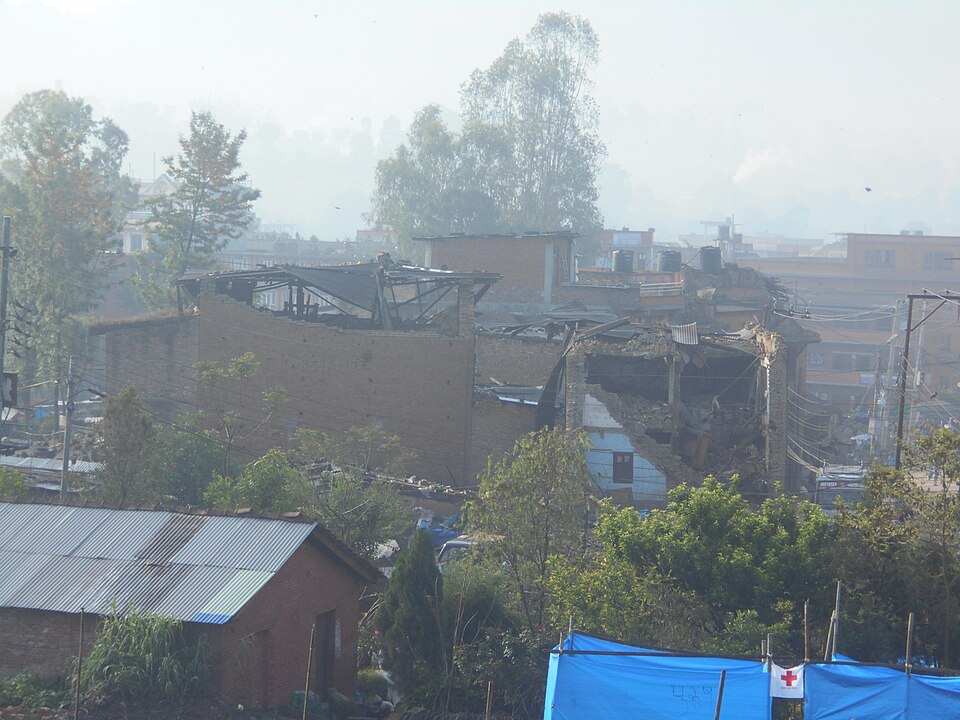 Collapsed buildings in Bhaktapur (Image: Punya, CC BY-SA 4.0, via Wikimedia Commons)
How You Can Help in a Disaster
- Before a disaster:
- Know first aid.
- Help neighbors prepare.
- During a disaster:
- Stay calm.
- Follow evacuation orders.
- After a disaster:
- Donate to relief funds.
- Volunteer with NGOs.
Exam Tip: How to Score Full Marks in NEB Exams
NEB exams on Disaster Management usually ask:
Short Answer Questions (2-5 marks)
- Example: "What are the two types of disasters? Give one example of each."
- Answer:
Disasters are classified into natural (e.g., earthquake) and human-made (e.g., oil spill).
Long Answer Questions (10 marks)
- Example: "Explain the disaster management cycle with examples."
- Answer Structure:
- Introduction (Define disaster management cycle).
- Four Stages (Preparedness, Response, Recovery, Mitigation) with examples.
- Conclusion (Importance of each stage).
Case Study Questions (5-10 marks)
- Example: "How did Nepal respond to the 2015 earthquake? What lessons were learned?"
- Answer:
Nepal’s response included international aid, temporary shelters, and rebuilding. Lessons: Stronger buildings, better early warning systems.
Diagram-Based Questions
- Example: "Draw and label the disaster management cycle."
- Solution: Use the flowchart shown earlier.
NEB-Style Practice Questions
Short Questions (2 marks each)
- Define disaster management.
- Name two natural and two human-made disasters.
- What is GLOF? Where does it commonly occur in Nepal?
- List three items that should be in an emergency kit.
Long Questions (10 marks)
- Explain the causes and impacts of floods in Nepal. How can we prevent them?
- Describe the role of NDRRMA in disaster management in Nepal. Give two examples of its work.
- "Preparedness is better than cure." Explain this statement in the context of disaster management. How can a school prepare for an earthquake?
Case Study (5 marks)
- The 2017 monsoon floods in Nepal affected thousands. What were the main causes? How did the government and NGOs respond?
Final Checklist for Students
✅ Memorize the types of disasters (natural vs. human-made). ✅ Understand the disaster management cycle (4 stages). ✅ Know the role of NDRRMA and NGOs. ✅ Practice short and long answer questions. ✅ Draw and label diagrams (disaster cycle, emergency kit).
Good luck with your NEB exams! 🚀 Remember: "Being prepared today saves lives tomorrow."
Based on the NEB +2 Management syllabus for Social Studies and Life Skills (SSLS), unit 11.
Discussion
Loading…