Social Studies and Life SkillsUnit 108 min read
Stress, Emotion & Conflict: Causes, Effects & Solutions
Unit 10 of Social Studies and Life Skills explains stress (types, causes, effects), emotions (positive/negative, management), and conflict (types, resolution techniques) with real-life examples, NEB-style questions, and visual tools to help Class 11 students score full marks.
TAKEAWAYS:
- Stress is a physical/mental reaction to pressure—learn its 3 types (acute, episodic, chronic) and how to manage it.
- Emotions are signals—positive ones (joy, love) boost health; negative ones (anger, fear) need control techniques.
- Conflicts arise from misunderstandings or needs—resolve them using 5 key methods (negotiation, mediation, etc.).
- NEB loves comparisons: Stress vs. Emotion vs. Conflict tables get full marks—memorize them!
- Life skills like deep breathing and active listening are exam favorites—practice them for questions.
- Real-world links: Stress → health problems; conflict → broken relationships—apply these in answers.
What is Stress?
Stress is the body’s reaction to changes or challenges. It can be good (eustress) or bad (distress).
- Good stress: Motivates you (e.g., before exams).
- Bad stress: Harms health (e.g., constant worry).
Types of Stress
Why does stress happen?
- External causes: School pressure, family issues, poverty.
- Internal causes: Fear of failure, perfectionism.
Effects of Stress
- Physical: Headaches, weak immunity, sleep problems.
- Mental: Anxiety, depression, poor memory.
- Behavioral: Irritability, withdrawal, substance abuse.
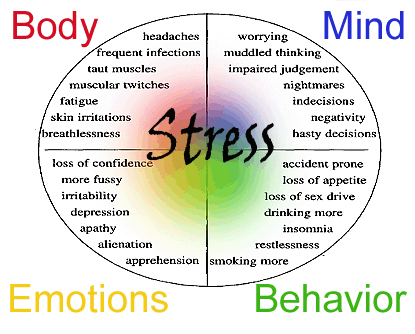 A labelled flowchart showing physical (e.g., muscle tension), mental (e.g., forgetfulness), and behavioral (e.g., anger outbursts) stress effects. (Image: Gdudycha, CC BY-SA 3.0, via Wikimedia Commons)
Managing Stress: 5 Simple Techniques
| Method | How to Do It | Example |
|---|---|---|
| Exercise | 30 mins of walking/jogging daily | Yoga or dancing |
| Relaxation | Deep breathing, meditation | 5-minute breathing exercise |
| Time Management | Prioritize tasks, avoid procrastination | Study 1 hour before bed |
| Social Support | Talk to friends/family | Call a friend when stressed |
| Hobbies | Engage in fun activities | Drawing, cooking, music |
Solved Example: Rita feels stressed before exams. Suggest 3 ways to manage it. Answer:
- Study in short bursts (Pomodoro technique: 25 mins study + 5 mins break).
- Practice deep breathing: Inhale for 4 sec, hold for 4 sec, exhale for 6 sec.
- Talk to a teacher/parent about her fears.
Understanding Emotions
Emotions are strong feelings that influence thoughts and actions.
- Positive emotions: Joy, love, gratitude → boost health and relationships.
- Negative emotions: Anger, sadness, fear → can harm health if uncontrolled.
The Emotion Wheel
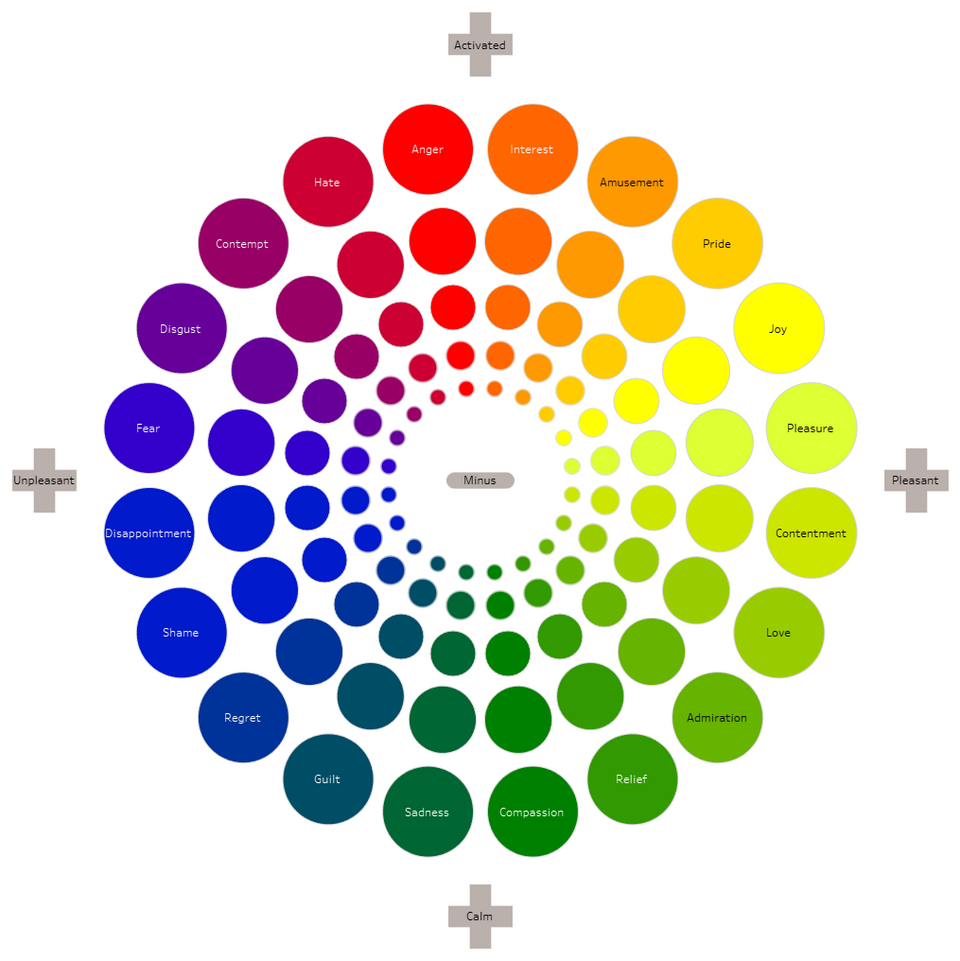 A circular diagram showing primary emotions (happy, sad, angry, scared) and their intensities. (Image: JurijFedorov, CC BY-SA 4.0, via Wikimedia Commons)
Managing Emotions: 4 Key Skills
- Identify the emotion: Ask, “Am I angry or just frustrated?”
- Pause before reacting: Count to 10 if upset.
- Express feelings calmly: Use “I feel…” statements (e.g., “I feel ignored when…”).
- Seek help if needed: Talk to a counselor or trusted person.
Solved Example: Laxman gets angry when his brother teases him. How can he handle this? Answer:
- Take deep breaths to calm down.
- Say, “Stop, I’m upset. Let’s talk later.”
- Find a hobby (e.g., sports) to release anger.
What is Conflict?
Conflict is a disagreement between people or groups. It can be healthy (leads to solutions) or harmful (damages relationships).
Types of Conflict
Causes of Conflict
- Miscommunication: Not listening or misunderstanding.
- Competing needs: Two people want the same thing (e.g., money, attention).
- Differences: Cultural, religious, or personal beliefs.
Resolving Conflict: 5 Methods
| Method | When to Use | Example |
|---|---|---|
| Negotiation | Both sides want a win-win | Siblings sharing a toy |
| Mediation | A neutral person helps | Teacher mediates a classroom fight |
| Compromise | Both sides give up something | Splitting chores 50/50 |
| Collaboration | Working together for a solution | Classmates planning a project |
| Avoidance | Conflict is minor | Ignoring a small argument |
Solved Example: Ram and Shyam argue over who will clean the room. How can they resolve this? Answer:
- Negotiate: “Let’s take turns—you clean today, I’ll clean tomorrow.”
- Compromise: Split tasks (Ram sweeps, Shyam wipes).
- Collaborate: Make it fun (play music while cleaning).
Stress vs. Emotion vs. Conflict: Comparison Table
| Aspect | Stress | Emotion | Conflict |
|---|---|---|---|
| Definition | Body’s reaction to pressure | Strong feelings (happy/sad) | Disagreement between people |
| Cause | External pressure (exams) | Triggers (success/failure) | Miscommunication, needs |
| Effect | Headaches, anxiety | Motivation or harm | Broken relationships |
| Solution | Exercise, relaxation | Calm expression | Negotiation, mediation |
NEB Exam Tips for Full Marks
- Define clearly: Always start with “Stress is…” or “Conflict is…”.
- Use examples: NEB loves real-life cases (e.g., “A student stressed before exams…”).
- Compare tables: The Stress vs. Emotion vs. Conflict table is a sure-shot 5-mark question.
- Draw diagrams: Sketch the emotion wheel or conflict types mindmap in answers.
- Link to life skills: Show how managing stress/emotions improves health and relationships.
NEB-Style Question: Describe the types of stress and suggest two ways to manage each type. [5 marks] Model Answer: Stress has three types:
- Acute stress: Short-term (e.g., exam day). Management: Deep breathing, quick breaks.
- Episodic stress: Frequent short stress (e.g., daily arguments). Management: Exercise, social support.
- Chronic stress: Long-term (e.g., poverty). Management: Therapy, hobby time.
Final Checklist for NEB Success: ✅ Memorize types of stress, emotions, and conflict. ✅ Practice writing short paragraphs (3-4 marks) on causes/effects. ✅ Draw one diagram (emotion wheel or conflict types) in your answer. ✅ Apply to real life: Use examples from school/family in answers.
Based on the NEB +2 Management syllabus for Social Studies and Life Skills (SSLS), unit 10.
Discussion
Loading…