BiologyUnit 410 min read
Kingdom Monera, Protista, Fungi: Structure, Reproduction & Importance
Unit 4 of Biology explores the three kingdoms—Monera (bacteria), Protista (amoeba, paramecium), and Fungi (mushrooms, yeasts)—covering their cell types, reproduction methods, economic uses, and how they differ from plants/animals. Includes NEB-style questions and solved examples.
TAKEAWAYS:
- Monera are prokaryotes (no nucleus) with peptidoglycan cell walls and reproduce by binary fission or budding (e.g., Bacillus, Escherichia coli).
- Protista are eukaryotic but not plants, animals, or fungi—they include amoebas (pseudopodia), paramecia (cilia), and euglenas (flagella) that photosynthesize or ingest food.
- Fungi are heterotrophic decomposers with chitin cell walls and reproduce via spores (e.g., Rhizopus, Agaricus).
- Key differences: Monera = unicellular prokaryotes; Protista = mostly unicellular eukaryotes; Fungi = multicellular (except yeasts) with hyphae.
- Applications: Bacteria = yogurt, antibiotics; Protista = malaria (Plasmodium); Fungi = bread, penicillin, biocontrol.
- NEB focus: Compare structures (e.g., cell walls), reproduction methods, and economic importance.
1. Kingdom Monera: The Prokaryotes
Monera includes bacteria and blue-green algae (cyanobacteria). They are prokaryotic (no nucleus, no membrane-bound organelles) and have peptidoglycan cell walls.
A. Structure of a Bacterial Cell
Key Features:
- No nucleus: DNA floats freely in the nucleoid.
- 70S ribosomes: Smaller than eukaryotic 80S ribosomes.
- Cell wall: Made of peptidoglycan (absent in mycoplasma).
- Flagella: For movement (e.g., Salmonella).
- Pili: For attachment (e.g., Neisseria gonorrhoeae).
B. Classification of Bacteria
Bacteria are classified based on:
- Shape:
- Cocci (spherical): Streptococcus, Staphylococcus.
- Bacilli (rod-shaped): Escherichia coli, Bacillus subtilis.
- Spirilla (spiral): Treponema pallidum (syphilis).
- Gram Staining:
- Gram-positive: Thick peptidoglycan layer (stains purple). Example: Streptococcus, Bacillus.
- Gram-negative: Thin peptidoglycan + outer lipid membrane (stains pink). Example: E. coli, Salmonella.
classDiagram
    class Bacteria {
        +Shape: Cocci/Bacilli/Spirilla
        +Gram Stain: +ve/-ve
        +Cell Wall: Peptidoglycan
        +Reproduction: Binary Fission
    }
    class GramPositive {
        +Thick peptidoglycan
        +Stains purple
    }
    class GramNegative {
        +Thick outer membrane
        +Stains pink
    }
    Bacteria <|-- GramPositive
    Bacteria <|-- GramNegative
C. Reproduction in Monera
- Binary Fission: Asexual reproduction where the cell divides into two identical daughter cells. Example: E. coli divides every 20 minutes under ideal conditions.
- Budding: Unequal division (e.g., Saccharomyces cerevisiae—yeast).
- Conjugation: Transfer of genetic material via sex pilus (e.g., E. coli exchanging plasmids).
Worked Example: If E. coli divides every 20 minutes, how many cells will be present after 2 hours? Solution:
- Time = 2 hours = 120 minutes.
- Number of divisions = 120 / 20 = 6.
- Cells = .
D. Economic Importance of Monera
| Type | Useful Roles | Harmful Roles |
|---|---|---|
| Lactic Acid Bacteria | Yogurt, cheese (Lactobacillus) | Dental caries (Streptococcus mutans) |
| Nitrogen-Fixing | Fertilizer (Rhizobium in legumes) | Food poisoning (Clostridium botulinum) |
| Decomposers | Break down waste (Pseudomonas) | Tuberculosis (Mycobacterium tuberculosis) |
| Biotechnology | Insulin production (E. coli) | Antibiotics resistance |
2. Kingdom Protista: The "Oddballs" of Eukaryotes
Protists are eukaryotic but not plants, animals, or fungi. They are mostly unicellular (except algae like Spirogyra).
A. Classification of Protista
Protists are divided into 4 main groups:
- Amoeboids (move via pseudopodia):
- Amoeba proteus: Uses false feet to move and ingest food.
- Flagellates (move via flagella):
- Euglena: Has chloroplasts (photosynthesis) + eyespot (light detection).
- Trypanosoma: Causes sleeping sickness.
- Ciliates (move via cilia):
- Paramecium: Has oral groove, contractile vacuole, and trichocysts.
- Algae (photosynthetic):
- Chlamydomonas: Unicellular green alga.
- Spirogyra: Filamentous green alga.
B. Structure and Function of Protists
Amoeba:
- Pseudopodia: Temporary projections for movement and engulfing food (phagocytosis).
- Contractile vacuole: Expels excess water (osmoregulation).
- Food vacuole: Digests food.
figure
{ "type": "fungus", "hyphae": { "septate": true, "coenocytic": false, "hyphaeCount": 5 }, "fruitingBody": { "type": "mushroom", "label": "Reproductive Structure" }, "caption": "Structure of a typical fungus (e.g., Agaricus)" }
#### **B. Classification of Fungi**
Fungi are classified into **4 main groups**:
1. **Phycomycetes** (primitive fungi):
   - *Rhizopus* (bread mold): Coenocytic hyphae, reproduces via **sporangia**.
2. **Ascomycetes** (sac fungi):
   - *Aspergillus*, *Penicillium*: Septate hyphae, produce **ascospores**.
3. **Basidiomycetes** (club fungi):
   - *Agaricus* (mushroom), *Puccinia* (rust): Produce **basidiospores**.
4. **Deuteromycetes** (imperfect fungi):
   - *Fusarium*: No known sexual reproduction.

```mermaid
mindmap
  root((Fungi))
    Phycomycetes
      *Rhizopus*
      Coenocytic hyphae
    Ascomycetes
      *Aspergillus*
      *Penicillium*
      Ascospores
    Basidiomycetes
      *Agaricus*
      Basidiospores
    Deuteromycetes
      *Fusarium*
      No sexual reproduction
C. Reproduction in Fungi
- Asexual:
- Spores: Rhizopus produces sporangiospores.
- Budding: Yeast (Saccharomyces).
- Sexual:
- Plasmogamy: Fusion of cytoplasm (e.g., Rhizopus).
- Karyogamy: Fusion of nuclei to form a zygote.
- Meiosis: Produces spores (e.g., Aspergillus forms ascospores).
Worked Example: Trace the life cycle of Rhizopus (bread mold). Solution:
- Asexual:
- Hyphae grow and form a sporangium.
- Spores are released and germinate into new hyphae.
- Sexual:
- Two hyphae of different mating types fuse (plasmogamy).
- Nuclei fuse (karyogamy) to form a zygote.
- Meiosis produces spores in a sporangium.
D. Economic Importance of Fungi
| Type | Useful Roles | Harmful Roles |
|---|---|---|
| Yeast | Bread, beer (Saccharomyces) | None |
| Penicillium | Antibiotics (Penicillin) | Blue mold in citrus |
| Aspergillus | Soy sauce (Aspergillus oryzae) | Aflatoxins (carcinogenic) |
| Rhizopus | Tempeh (fermented soy) | Bread mold |
| Decomposers | Break down dead matter | Dry rot in wood |
4. Comparison of Kingdoms Monera, Protista, and Fungi
5. NEB Board-Style Questions
Short Answer Questions (SAQ)
Define:
- Binary fission: Asexual reproduction in bacteria where the cell divides into two equal parts.
- Conjugation: Temporary union of two bacterial cells for genetic exchange.
- Hyphae: Filamentous structures in fungi that form the mycelium.
Differentiate:
- Gram-positive and Gram-negative bacteria:
Feature Gram-Positive Gram-Negative Cell Wall Thick peptidoglycan Thin peptidoglycan + outer membrane Stain Purple Pink Examples Streptococcus, Bacillus E. coli, Salmonella
- Gram-positive and Gram-negative bacteria:
Label the diagram:
- Draw and label the structure of Amoeba or Paramecium (from memory).
Long Answer Questions (LAQ)
Describe the structure and reproduction of Rhizopus. Answer:
- Structure:
- Coenocytic hyphae (no septa).
- Sporangium at the tip of sporangiophore.
- Reproduction:
- Asexual: Sporangium produces sporangiospores via mitosis.
- Sexual: Two hyphae fuse (plasmogamy), nuclei fuse (karyogamy), meiosis produces zygospores.
- Structure:
Explain the economic importance of fungi with examples. Answer:
- Food: Saccharomyces in bread/beer.
- Medicine: Penicillium (antibiotics).
- Biotechnology: Aspergillus in soy sauce.
- Decomposition: Break down dead matter (e.g., Agaricus).
- Harmful: Rhizopus causes bread mold; Aspergillus produces aflatoxins.
Multiple Choice Questions (MCQ)
Which of the following is a prokaryote? a) Amoeba b) Euglena c) E. coli d) Paramecium Answer: c) E. coli
The cell wall of fungi is made of: a) Cellulose b) Chitin c) Peptidoglycan d) Lipids Answer: b) Chitin
Which protist causes malaria? a) Amoeba b) Paramecium c) Plasmodium d) Euglena Answer: c) Plasmodium
Exam Tip
- Memorize Key Structures:
- Draw and label Amoeba, Paramecium, Rhizopus, and bacterial cells.
- Compare and Contrast:
- Monera vs. Protista vs. Fungi (cell type, nutrition, reproduction).
- Life Cycles:
- Know the life cycles of Rhizopus (sexual/asexual) and Paramecium (conjugation).
- Economic Importance:
- Link fungi/bacteria to real-world applications (e.g., antibiotics, food spoilage).
- NEB Tricks:
- For SAQs, use bullet points and diagrams where possible.
- For LAQs, structure your answer as Introduction → Detailed Explanation → Conclusion.
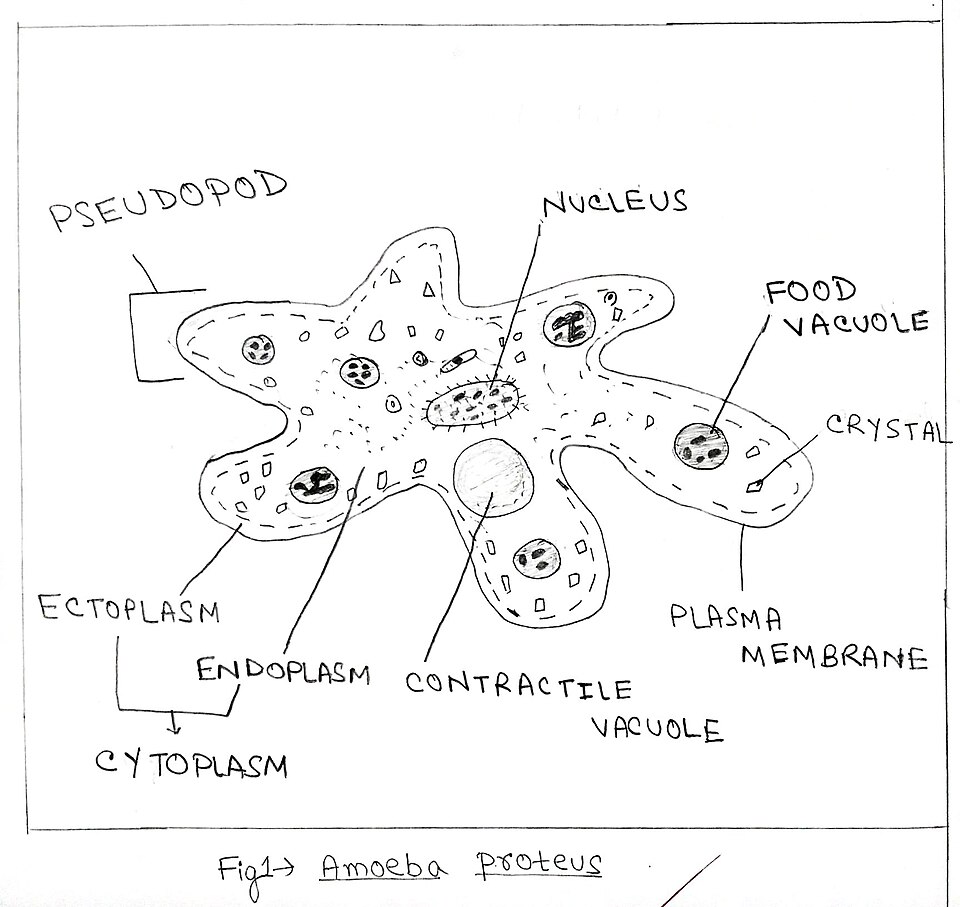 Structure of Amoeba proteus showing pseudopodia and contractile vacuole. (Image: RupamInsilico, CC BY-SA 4.0, via Wikimedia Commons)
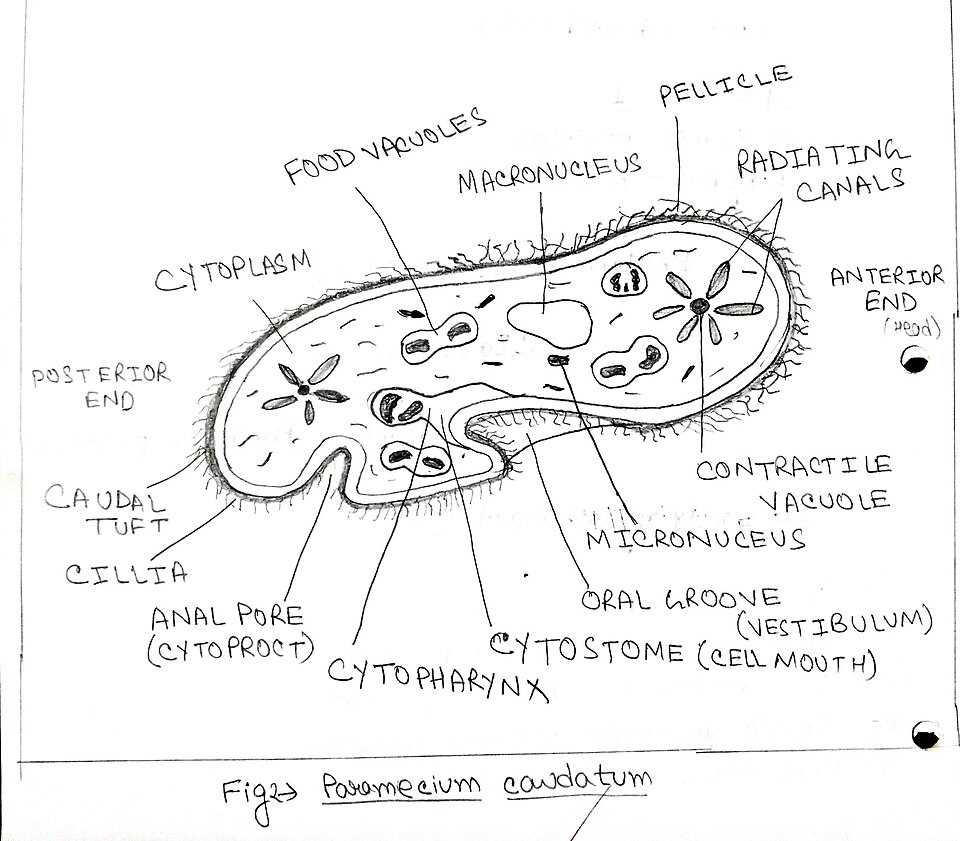 Paramecium with oral groove, cilia, and contractile vacuoles. (Image: RupamInsilico, CC BY-SA 4.0, via Wikimedia Commons)
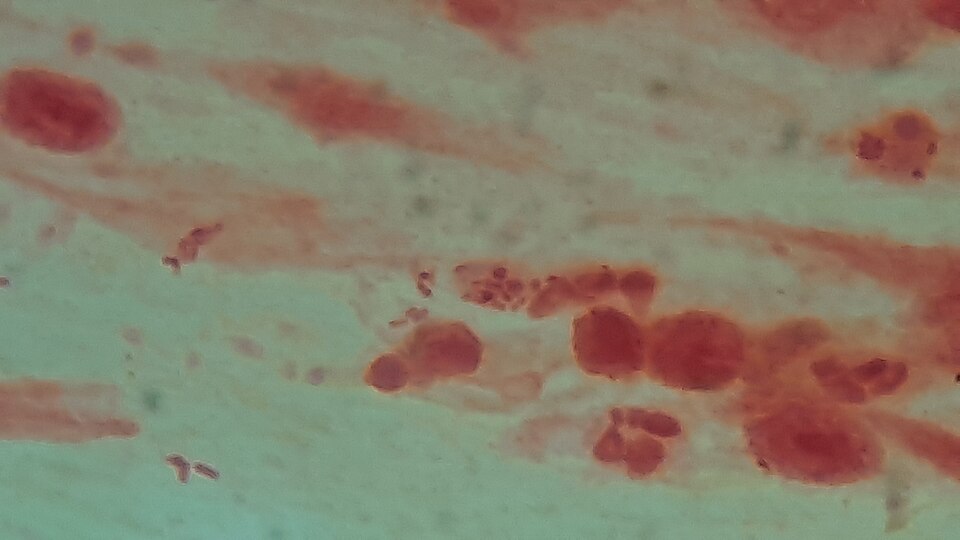 Gram-positive (Streptococcus) vs. Gram-negative (E. coli). (Image: Ajay Kumar Chaurasiya, CC BY-SA 4.0, via Wikimedia Commons)
Based on the NEB +2 Science syllabus for Biology (Bio), unit 4.
Discussion
Loading…