BiologyUnit 510 min read
Kingdom Plantae: Algae, Bryophytes, Pteridophytes, Gymnosperms, Angiosperms
Unit 5 of Biology explores the five major plant groups—algae, bryophytes, pteridophytes, gymnosperms, and angiosperms—covering their classification, body structure, reproduction, and evolutionary adaptations, with NEB-style questions and solved examples.
---

## **Introduction to Kingdom Plantae**
Kingdom Plantae includes all green, multicellular, autotrophic organisms that perform photosynthesis. They are classified into five main groups based on their **body structure, reproduction, and evolutionary complexity**:

1. **Algae** (Thallophyta)
2. **Bryophytes** (Non-vascular plants)
3. **Pteridophytes** (Seedless vascular plants)
4. **Gymnosperms** (Seed-bearing vascular plants)
5. **Angiosperms** (Flowering plants)

Each group shows **progressive evolution** in terms of **vascular tissues, seeds, and flowers**.

---

## **1. Algae (Thallophyta)**
Algae are **simple, non-vascular plants** that live in water or moist places. They lack true roots, stems, and leaves.

### **Key Features**
- **Body Structure**: Thallus (no differentiation into roots, stems, or leaves).
- **Reproduction**: Asexual (spores, fragmentation) and sexual (isogamy, anisogamy, oogamy).
- **Habitat**: Mostly aquatic (freshwater and marine).
- **Examples**: *Chlamydomonas*, *Spirogyra*, *Ulva*, *Fucus*.

### **Classification of Algae**
Algae are classified based on **pigments, storage food, and cell wall composition**:

| **Group**       | **Pigments**               | **Storage Food** | **Cell Wall** | **Examples**          |
|-----------------|----------------------------|-------------------|---------------|-----------------------|
| **Chlorophyceae** (Green algae) | Chlorophyll a & b          | Starch           | Cellulose     | *Chlamydomonas*, *Spirogyra* |
| **Phaeophyceae** (Brown algae)  | Chlorophyll a & c, Fucoxanthin | Laminarin        | Cellulose, Alginic acid | *Fucus*, *Sargassum* |
| **Rhodophyceae** (Red algae)    | Chlorophyll a & d, Phycoerythrin | Floridean starch | Cellulose, Agar | *Porphyra*, *Gelidium* |

### **Reproduction in Algae**
- **Asexual**: By **fragmentation** (breaking into pieces) or **spores** (zoospores, aplanospores).
- **Sexual**: By **isogamy** (equal-sized gametes), **anisogamy** (unequal-sized gametes), or **oogamy** (egg and sperm).

**Example**: *Spirogyra* reproduces asexually by **fragmentation** and sexually by **conjugation** (fusion of two gametes).

---

## **2. Bryophytes (Non-Vascular Plants)**
Bryophytes are **small, non-vascular plants** that live in moist places. They lack **xylem and phloem** (no true roots, stems, or leaves).

### **Key Features**
- **Body Structure**: Thallus or differentiated into **rhizoids (root-like), cauloid (stem-like), and phylloid (leaf-like)**.
- **Reproduction**: Alternation of generations (haploid gametophyte and diploid sporophyte).
- **Habitat**: Damp, shady places (e.g., forests, rocks).
- **Examples**: *Marchantia*, *Funaria*, *Sphagnum*.

### **Classification of Bryophytes**
Bryophytes are divided into three classes:

| **Class**       | **Body Structure**         | **Examples**       |
|-----------------|----------------------------|--------------------|
| **Hepaticopsida** (Liverworts) | Thallus or leafy | *Marchantia* |
| **Anthocerotopsida** (Hornworts) | Thallus with horn-like sporophyte | *Anthoceros* |
| **Bryopsida** (Mosses) | Leafy, with rhizoids | *Funaria*, *Sphagnum* |

### **Reproduction in Bryophytes**
- **Gametophyte (haploid)**: Produces **antheridia (male)** and **archegonia (female)**.
- **Sporophyte (diploid)**: Grows from fertilized egg, produces **spores** in a capsule.
- **Water required** for fertilization (sperm swims to egg).

```mermaid
flowchart TD
    A[Gametophyte (n)] -->|Antheridia| B[Sperm]
    A -->|Archegonia| C[Egg]
    B -->|Fertilization| D[Zygote (2n)]
    D --> E[Sporophyte (2n)]
    E -->|Meiosis| F[Spores (n)]
    F -->|Germination| A
    style A fill:#98FB98,stroke:#000
    style E fill:#FFA07A,stroke:#000
Example: In Funaria, the capsule (sporophyte) releases spores that grow into protonema (gametophyte).
3. Pteridophytes (Seedless Vascular Plants)
Pteridophytes are vascular plants that reproduce by spores (no seeds). They have true roots, stems, and leaves.
Key Features
- Body Structure: Well-developed xylem and phloem, roots, stems, and leaves.
- Reproduction: Alternation of generations (dominant sporophyte).
- Habitat: Damp, shady places (forests, mountains).
- Examples: Pteris, Dryopteris, Equisetum, Selaginella.
Classification of Pteridophytes
Pteridophytes are divided into four classes:
| Class | Features | Examples |
|---|---|---|
| Psilopsida | No roots, simple stems | Psilotum |
| Lycopsida | Microphylls (small leaves) | Selaginella |
| Sphenopsida | Jointed stems, whorled leaves | Equisetum |
| Pteropsida | Megaphylls (large leaves), fronds | Pteris, Dryopteris |
Reproduction in Pteridophytes
- Sporophyte (2n): Produces spores in sori (clusters on underside of leaves).
- Gametophyte (n): Small, heart-shaped prothallus (produces antheridia and archegonia).
- Water required for fertilization.
Example: In Pteris, the sori (brown spots on fronds) contain spores that grow into prothallus.
4. Gymnosperms (Seed-Bearing Vascular Plants)
Gymnosperms are vascular plants that produce naked seeds (not enclosed in fruits). They have true roots, stems, and leaves.
Key Features
- Body Structure: Well-developed vascular system, woody stems.
- Reproduction: Seeds develop on cones (no flowers).
- Habitat: Mostly in temperate and cold regions.
- Examples: Pinus, Cycas, Ginkgo, Juniperus.
Classification of Gymnosperms
Gymnosperms are divided into four classes:
| Class | Features | Examples |
|---|---|---|
| Cycadopsida | Palm-like leaves, thick stems | Cycas |
| Ginkgopsida | Fan-shaped leaves, dioecious | Ginkgo |
| Coniferopsida | Needle-like leaves, cones | Pinus, Juniperus |
| Gnetopsida | Vessel elements in xylem | Ephedra |
Reproduction in Gymnosperms
- Male Cone (Microstrobilus): Produces pollen grains (male gametophyte).
- Female Cone (Megastrobilus): Produces ovules (female gametophyte).
- Pollination: Wind carries pollen to ovules.
- Fertilization: Sperm reaches egg inside ovule → forms seed.
Example: In Pinus, the male cone releases pollen, which fertilizes the female cone, forming seeds.
5. Angiosperms (Flowering Plants)
Angiosperms are the most advanced and diverse plants. They produce flowers and fruits enclosing seeds.
Key Features
- Body Structure: Well-developed vascular system, flowers, fruits, and seeds.
- Reproduction: Double fertilization (one sperm fertilizes egg, the other forms endosperm).
- Habitat: Every ecosystem (terrestrial and aquatic).
- Examples: Rose, Wheat, Mango, Sunflower.
Classification of Angiosperms
Angiosperms are divided into two classes:
| Class | Features | Examples |
|---|---|---|
| Monocotyledons | One cotyledon, parallel venation, scattered vascular bundles | Wheat, Rice, Grass |
| Dicotyledons | Two cotyledons, reticulate venation, ring vascular bundles | Rose, Mango, Sunflower |
Reproduction in Angiosperms
- Flower Parts:
- Stamen (male): Anther (pollen) + Filament.
- Carpel (female): Stigma, Style, Ovary (ovules).
- Pollination: By wind, water, or animals.
- Fertilization: Double fertilization → zygote (2n) and endosperm (3n).
- Seed and Fruit Development: Ovule → seed; ovary → fruit.
flowchart TD
    A["Flower"] -->|"Pollen"| B["Stigma"]
    B -->|"Germination"| C["Pollen Tube"]
    C -->|"Fertilization"| D["Ovule"]
    D -->|"Zygote"| E["Embryo"]
    D -->|"Endosperm"| F["3n Nutritive Tissue"]
E -->|"Seed"| G["Fruit"]Example: In Wheat, the pollen from the anther reaches the stigma, fertilizes the ovule, and forms a seed inside a grain.
Comparison of Plant Groups
| Feature | Algae | Bryophytes | Pteridophytes | Gymnosperms | Angiosperms |
|---|---|---|---|---|---|
| Vascular Tissue | Absent | Absent | Present | Present | Present |
| Seeds | Absent | Absent | Absent | Present (naked) | Present (enclosed) |
| Flowers | Absent | Absent | Absent | Absent | Present |
| Fruits | Absent | Absent | Absent | Absent | Present |
| Habitat | Aquatic | Moist land | Damp land | Dry land | All habitats |
| Examples | Spirogyra | Funaria | Pteris | Pinus | Rose |
Exam Tip
- Memorize Key Features: Know the differences between algae, bryophytes, pteridophytes, gymnosperms, and angiosperms.
- Life Cycles: Draw and explain the alternation of generations in bryophytes and pteridophytes.
- Reproduction: Understand double fertilization in angiosperms and naked seeds in gymnosperms.
- Classification: Be able to classify examples under the correct group (e.g., Cycas is a gymnosperm).
- NEB-Style Questions:
- Short Answer: "Describe the life cycle of Funaria."
- Long Answer: "Compare and contrast bryophytes and pteridophytes."
- Diagram-Based: "Label the parts of a flower and explain fertilization."
Practice Questions:
- Why are bryophytes called "amphibians of the plant kingdom"?
- How do gymnosperms differ from angiosperms in seed formation?
- Draw and label the life cycle of Pteris.
- What is the significance of double fertilization in angiosperms?
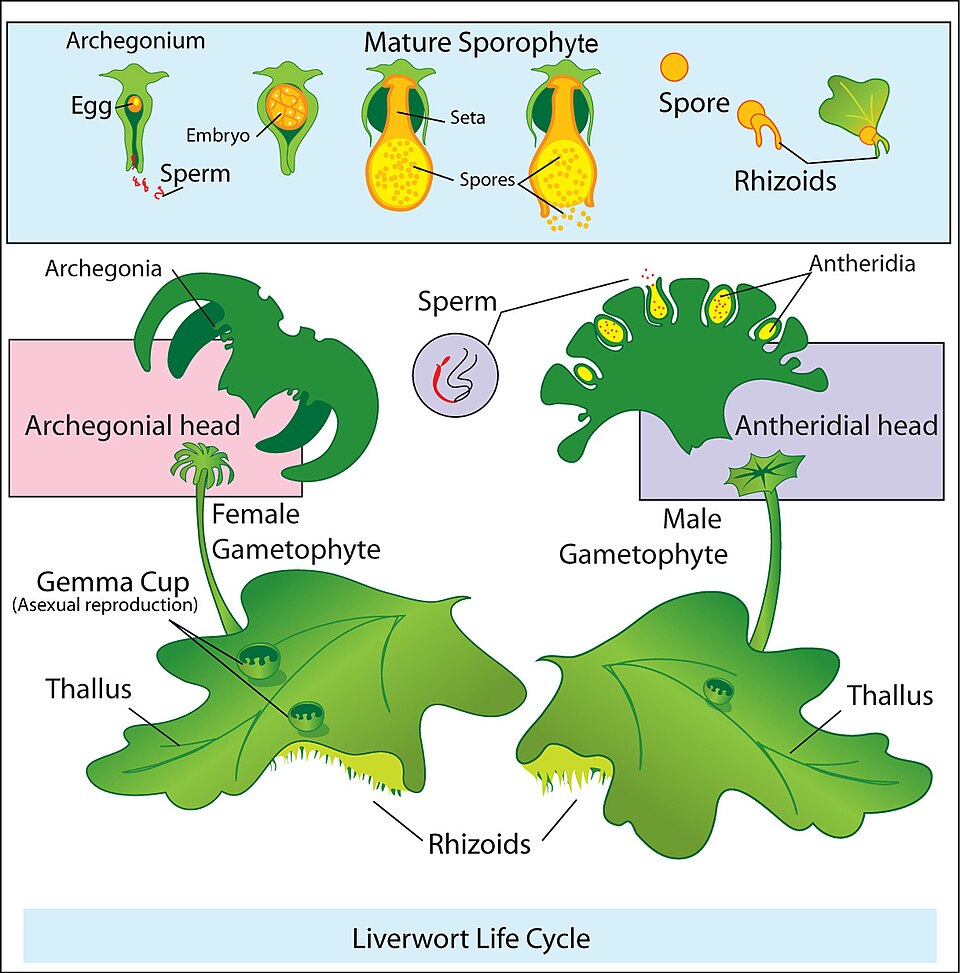 Alternation of generations in Funaria (Image: Public domain, via Wikimedia Commons)
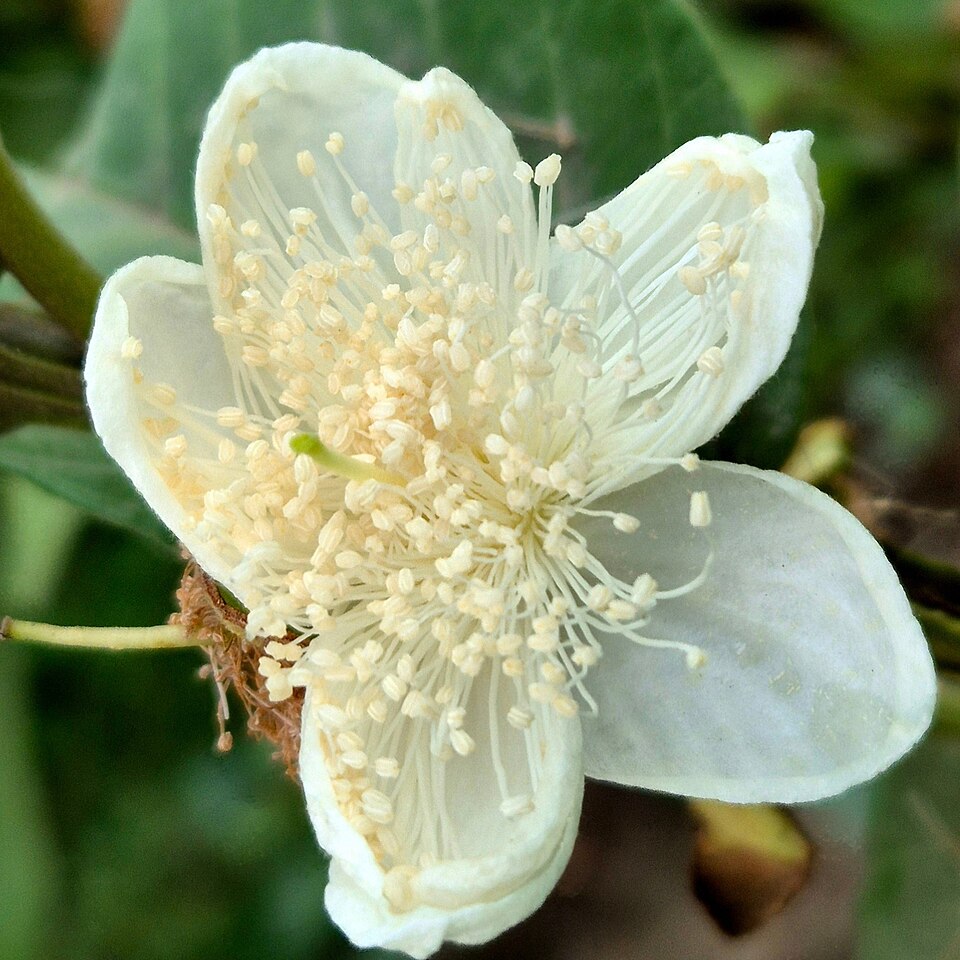 Labelled diagram of a typical flower (Image: Resham singh chhina, CC0, via Wikimedia Commons)
Based on the NEB +2 Science syllabus for Biology (Bio), unit 5.
Discussion
Loading…