EnglishUnit 96 min read
Arts and Creations: Forms, Techniques, and Cultural Impact
Unit 9 of English explores the world of arts and creations, covering visual arts, music, dance, literature, and crafts. It explains their forms, techniques, and significance in society, with examples and exam-focused questions.
TAKEAWAYS:
- Arts include visual arts (painting, sculpture), performing arts (music, dance, drama), and literary arts (poetry, storytelling)—each with unique techniques and cultural roles.
- Crafts (e.g., pottery, weaving) blend tradition and innovation, often reflecting local heritage.
- Creative processes involve inspiration, skill, and cultural context—key to understanding artistic expression.
- Exam questions test definitions, comparisons, and critical analysis of arts and their societal impact.
- Visuals (diagrams, examples) are essential for explaining techniques and forms.
---

### **What Are Arts and Creations?**
Arts and creations are **human expressions** of ideas, emotions, and culture. They include:
1. **Visual Arts** (painting, drawing, sculpture)
2. **Performing Arts** (music, dance, drama)
3. **Literary Arts** (poetry, stories, essays)
4. **Crafts** (pottery, weaving, metalwork)

These forms **communicate messages**, **entertain**, and **preserve traditions**.

---

### **1. Visual Arts: Painting and Sculpture**
#### **Definitions and Techniques**
- **Painting**: Art of applying paint to surfaces (canvas, paper, walls).
  - **Techniques**: Watercolor, oil painting, acrylic, fresco.
  - **Tools**: Brushes, palettes, easels.
- **Sculpture**: 3D art created by carving, molding, or assembling materials.
  - **Techniques**: Chiseling (stone), clay modeling, welding (metal).

#### **Famous Examples**
- **Painting**: *Mona Lisa* (Leonardo da Vinci) – oil on wood.
- **Sculpture**: *David* (Michelangelo) – marble carving.

#### **Cultural Role**
- **Storytelling**: Paintings like *The Last Supper* depict religious stories.
- **Political Statements**: Sculptures like *The Thinker* symbolize human reflection.

---

### **2. Performing Arts: Music, Dance, and Drama**
#### **Music**
- **Definition**: Organized sound using instruments or voice.
- **Techniques**:
  - **Classical**: Orchestras, symphonies.
  - **Folk**: Traditional instruments (sitar, tabla).
  - **Modern**: Rock, hip-hop, electronic.
- **Cultural Role**: Celebrates festivals, preserves history (e.g., Nepali *Dhime* music).

#### **Dance**
- **Definition**: Movement expressing emotions or stories.
- **Types**:
  - **Classical**: Bharatanatyam (India), *Newari* dance (Nepal).
  - **Folk**: *Charya Nritya* (Buddhist), *Tamang Selo* (Nepal).
- **Cultural Role**: Rituals, weddings, cultural festivals.

#### **Drama**
- **Definition**: Storytelling through acting, dialogue, and stagecraft.
- **Techniques**: Playwriting, acting, set design.
- **Example**: *The Tempest* (Shakespeare) explores power and magic.

---

### **3. Literary Arts: Poetry and Stories**
#### **Poetry**
- **Definition**: Rhythmic, imaginative language to evoke emotions.
- **Forms**:
  - **Sonnet**: 14 lines (e.g., Shakespeare’s sonnets).
  - **Free Verse**: No strict structure (e.g., *The Road Not Taken* by Robert Frost).
- **Cultural Role**: Preserves language, history, and emotions.

#### **Short Stories**
- **Definition**: Brief narratives with characters, plot, and theme.
- **Example**: *The Necklace* (Guy de Maupassant) – critiques societal values.

---

### **4. Crafts: Pottery and Weaving**
#### **Pottery**
- **Definition**: Shaping clay into useful or decorative objects.
- **Techniques**: Hand-building, wheel-throwing, glazing.
- **Cultural Role**: Daily use (pots, bowls) and art (sculptural vases).

#### **Weaving**
- **Definition**: Interlacing threads to create fabric.
- **Techniques**: Handloom, power loom, tapestry.
- **Cultural Role**: Traditional clothing (e.g., *Dhaka* fabric in Bangladesh, *Paithani* in India).

---

### **Comparison Table: Arts vs. Crafts**
| Feature        | Arts                          | Crafts                        |
|----------------|-------------------------------|-------------------------------|
| **Purpose**    | Aesthetic, emotional          | Functional + decorative       |
| **Materials**  | Paint, clay, words            | Clay, fabric, wood, metal     |
| **Skill Level**| High (technique mastery)      | Varies (some require training) |
| **Cultural Role** | Preserves ideas, stories    | Preserves traditions, skills   |

---

### **How Are Arts and Creations Created?**
The creative process involves:
1. **Inspiration**: Ideas from nature, emotions, or culture.
2. **Skill**: Practice and technique (e.g., brushstrokes in painting).
3. **Cultural Context**: Local traditions influence style (e.g., Nepali *Thangka* paintings).

```mermaid
flowchart TD
    A[Inspiration] --> B[Skill Development]
    B --> C[Cultural Context]
    C --> D[Creation]
    D --> E[Sharing/Performance]
Exam Tips for Unit 9
- Definitions: Know key terms (e.g., "What is sculpture?").
- Examples: Link arts to culture (e.g., Newari dance in Nepal).
- Comparisons: Differentiate arts and crafts (see table above).
- Critical Analysis: Explain why an art form is important (e.g., "How does music preserve culture?").
- Visuals: Use diagrams/tables to organize answers (e.g., process flow for pottery).
NEB Board-Style Questions
Short Answer (5 marks)
- Explain the difference between visual arts and performing arts with examples.
- How does pottery reflect cultural traditions? Give one Nepali example.
Long Answer (10 marks)
- Discuss the role of literary arts in preserving history. Use examples from Nepali and global literature.
- Compare painting and sculpture in terms of techniques and cultural significance.
Creative Writing (5 marks)
- Write a short paragraph describing how you would create a traditional Nepali craft (e.g., Magar hat weaving).
Solved Example: Analyzing a Painting
Question: How does The Starry Night by Van Gogh convey emotion? Answer:
- Brushstrokes: Thick, swirling strokes create movement and chaos.
- Colors: Blues and yellows evoke night and energy.
- Symbolism: The cypress tree may represent death or spirituality.
- Cultural Role: Reflects Van Gogh’s mental state and the beauty of nature.
Key Takeaways for NEB Exam
- Memorize definitions (e.g., "Drama is a story performed live").
- Link arts to culture (e.g., "Bharatanatyam tells Hindu myths").
- Use visuals in answers (e.g., flowcharts for processes).
- Practice comparisons (arts vs. crafts, painting vs. sculpture).
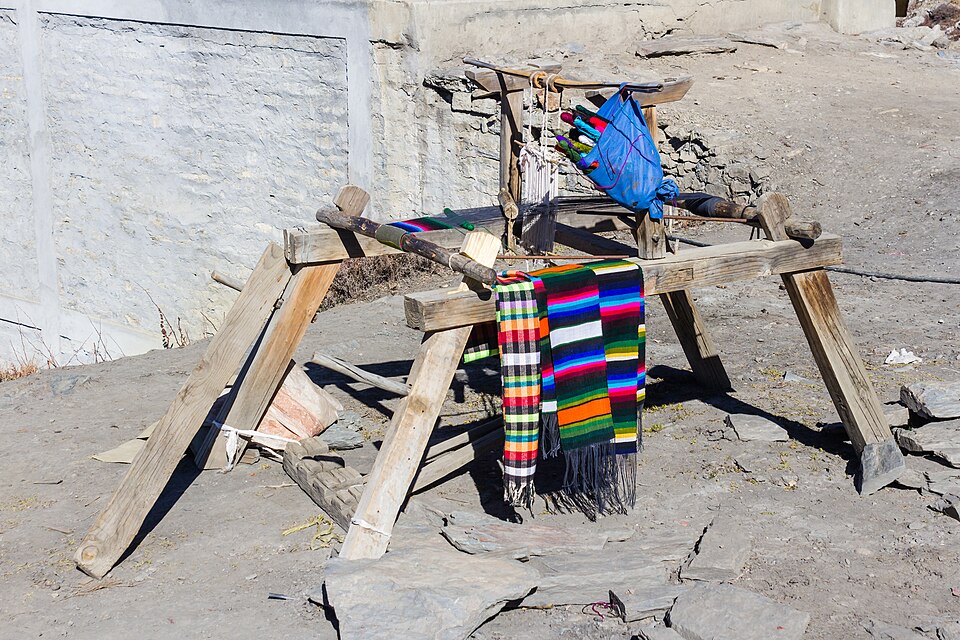 A handloom used for Paithani or Magar hat weaving. (Image: Bijay Chaurasia, CC BY-SA 4.0, via Wikimedia Commons)
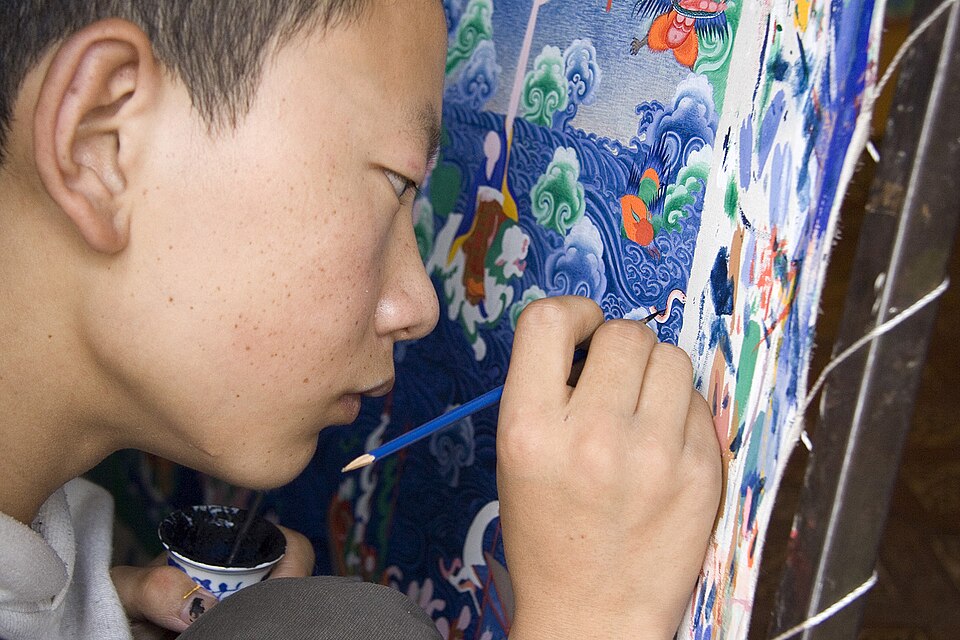 A Buddhist scroll painting from Nepal. (Image: Luca Galuzzi (Lucag), CC BY-SA 2.5, via Wikimedia Commons)
Based on the NEB +2 Science syllabus for English (Eng), unit 9.
Discussion
Loading…