PhysicsUnit 236 min read
DC Circuits – Ohm’s Law, Series/Parallel, Kirchhoff’s Rules, Wheatstone Bridge
Unit 23 of Physics covers DC circuits: Ohm’s law, resistance combinations, Kirchhoff’s laws, Wheatstone bridge, and practical applications like voltmeters, ammeters, and potentiometers—essential for solving circuit problems in exams.
What is a DC Circuit?
A DC (Direct Current) circuit is an electrical circuit where the current flows in one direction and has a constant magnitude. Unlike AC (Alternating Current), DC does not change direction over time.
Key Components of a DC Circuit:
- Battery (or Cell): Provides the voltage (V) or electromotive force (emf) to drive the current.
- Resistor: Opposes the flow of current (measured in ohms, Ω).
- Conductors (Wires): Allow current to flow with negligible resistance.
- Switch: Controls the flow of current (open = no current, closed = current flows).
Ohm’s Law
Ohm’s law states that the current (I) flowing through a conductor is directly proportional to the voltage (V) across it and inversely proportional to its resistance (R).
Mathematically: or or
Worked Example 1: Calculating Current
A battery of 12 V is connected to a resistor of 4 Ω. Find the current flowing through the circuit. Solution: Using : Answer: The current is 3 A.
Resistance in Series and Parallel
Resistors can be connected in series or parallel, changing the equivalent resistance of the circuit.
1. Resistors in Series
- Resistors are connected end-to-end.
- The same current flows through all resistors.
- The total resistance (R_eq) is the sum of individual resistances:
2. Resistors in Parallel
- Resistors are connected across the same two points.
- The voltage across each resistor is the same.
- The total resistance (R_eq) is given by: or
Worked Example 2: Equivalent Resistance
Find the equivalent resistance of two resistors, 6 Ω and 3 Ω, connected:
- In series
- In parallel
Solution:
- Series:
- Parallel: Answer:
- Series: 9 Ω
- Parallel: 2 Ω
Kirchhoff’s Laws
Kirchhoff’s laws help analyze complex circuits with multiple loops and branches.
1. Kirchhoff’s Current Law (KCL)
- The total current entering a junction is equal to the total current leaving it.
- Mathematically:
2. Kirchhoff’s Voltage Law (KVL)
- The sum of all voltage drops in a closed loop is zero.
- Mathematically:
Worked Example 3: Applying Kirchhoff’s Laws
In the circuit below, find the currents and .
Solution:
Apply KCL at the junction: (Here, is the current through the 6 Ω resistor.)
Apply KVL in the loop:
Solve the equations:
- From , and using Ohm’s law:
- Substitute and solve: Answer:
Wheatstone Bridge
A Wheatstone bridge is used to measure unknown resistance by balancing two legs of a bridge circuit.
Principle:
- When the bridge is balanced, the voltage across the galvanometer (G) is zero.
- The condition for balance is: where is the unknown resistance.
Worked Example 4: Finding Unknown Resistance
In a Wheatstone bridge, , , , and the bridge is balanced. Find .
Solution: Using the balance condition: Answer: The unknown resistance .
Practical Applications of DC Circuits
- Voltmeter: Measures voltage across a component. Connected in parallel.
- Has high resistance to minimize current draw.
- Ammeter: Measures current through a circuit. Connected in series.
- Has low resistance to avoid affecting the circuit.
- Potentiometer: A variable resistor used to adjust voltage or current in a circuit.
- Battery Charging Circuits: Use resistors and diodes to regulate charging.
Common Mistakes to Avoid
- Mixing series and parallel rules: Always identify how resistors are connected.
- Ignoring polarity in KVL: Voltage drops and rises must be accounted for with signs.
- Assuming all circuits are simple: Complex circuits require Kirchhoff’s laws.
- Forgetting units: Always include units (V, A, Ω) in answers.
NEB Board-Style Questions
Short Answer Questions
- State Ohm’s law and define resistance.
- How are resistors connected in series? Give one advantage of series connection.
- What is the condition for a Wheatstone bridge to be balanced?
- Differentiate between an ammeter and a voltmeter.
Long Answer Questions
Derive the formula for equivalent resistance of two resistors connected in parallel. A 6 Ω and a 3 Ω resistor are connected in parallel to a 12 V battery. Calculate:
- The equivalent resistance.
- The current through each resistor.
- The total current drawn from the battery.
In the circuit shown below, find the current through each resistor using Kirchhoff’s laws.
Explain the working principle of a Wheatstone bridge. How is it used to measure unknown resistance?
Exam Tip
- Always draw the circuit: Label all components and connections clearly.
- Use Kirchhoff’s laws for complex circuits: Label currents and voltages in loops.
- Check units: NEB often deducts marks for missing units.
- Practice numerical problems: Most exam questions are numerical.
- Memorize key formulas:
- Ohm’s law:
- Series resistance:
- Parallel resistance:
- Wheatstone bridge balance:
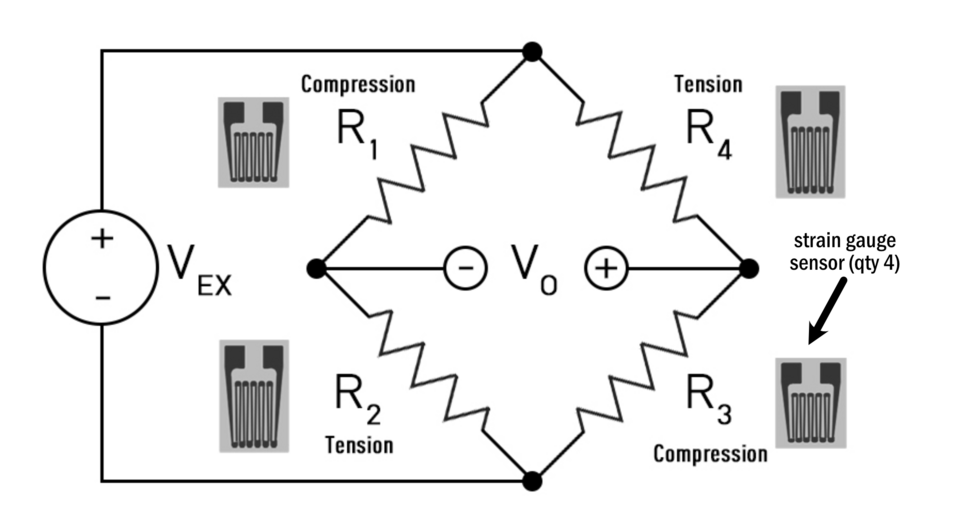 Practical application of resistance measurement (Image: Dabrams3, CC BY-SA 4.0, via Wikimedia Commons)
Based on the NEB +2 Science syllabus for Physics (Phy), unit 23.
Discussion
Loading…