BiologyUnit 1010 min read
Economic Botany: Uses, Cultivation & Importance
Unit 10 of Biology explores how plants benefit humans—food, medicine, fiber, fuel, and industry—while covering cultivation techniques, economic importance, and conservation of useful species.
TAKEAWAYS:
- Economic botany studies plants used for food, medicine, fiber, and industry.
- Crops like rice, wheat, and medicinal plants (e.g., Aloe vera) are cultivated using specific techniques.
- Plant products (e.g., rubber, spices, timber) drive global trade and economies.
- Overuse of plants leads to deforestation and biodiversity loss.
- Biotechnology helps improve crop yield and quality sustainably.
What is Economic Botany?
Economic botany is the study of plants that provide economic benefits to humans. These plants are used for:
- Food (rice, wheat, potatoes)
- Medicine (neem, turmeric, Digitalis)
- Fiber (cotton, jute, hemp)
- Fuel (firewood, biogas from plants)
- Industry (rubber, spices, timber)
Why is it important? Plants are the primary source of food, medicine, and raw materials for industries. Without them, modern life would be impossible.
Classification of Economic Plants
Economic plants can be grouped based on their uses:
mindmap
  root((Economic Plants))
    Food Crops
      Cereals["Rice, Wheat, Maize"]
      Pulses["Beans, Lentils"]
      Vegetables["Potato, Carrot"]
    Medicinal Plants
      Ayurvedic["Neem, Ashwagandha"]
      Allopathic["Digitalis, Quinine"]
    Fiber Plants
      Natural["Cotton, Jute, Hemp"]
      Synthetic["Rayon (from wood pulp)"]
    Fuel Plants
      Firewood["Sal, Pine"]
      Biofuel["Jatropha, Sugarcane"]
    Industrial Plants
      Rubber["Rubber Tree"]
      Spices["Cardamom, Cinnamon"]
      Timber["Teak, Pine"]
1. Food Crops
Food crops are the most important economic plants because they feed the world’s population.
Major Food Crops
| Type | Examples | Nutritional Value |
|---|---|---|
| Cereals | Rice, Wheat, Maize | Carbohydrates, proteins |
| Pulses | Lentils, Chickpeas | Proteins, fiber |
| Vegetables | Potato, Carrot, Tomato | Vitamins, minerals |
| Fruits | Apple, Banana, Mango | Vitamins, sugars |
How are they cultivated?
- Rice & Wheat: Grown in fertile soil with proper irrigation.
- Potatoes: Need cool climates and well-drained soil.
- Fruits: Require warm climates and regular pruning.
2. Medicinal Plants
Medicinal plants are used to treat diseases and are a major part of traditional medicine.
Important Medicinal Plants
| Plant | Uses | Active Compound |
|---|---|---|
| Neem | Antiseptic, insect repellent | Azadirachtin |
| Aloe Vera | Skin burns, wounds | Aloin |
| Turmeric | Anti-inflammatory, wound healing | Curcumin |
| Digitalis | Heart diseases | Digoxin |
How are they used?
- Neem leaves are crushed and used as a natural pesticide.
- Aloe vera gel is applied to heal burns.
- Turmeric is used in Ayurvedic medicines.
3. Fiber Plants
Fiber plants provide raw materials for textiles and paper.
Types of Fiber Plants
| Type | Examples | Uses |
|---|---|---|
| Natural Fibers | Cotton, Jute, Hemp | Clothing, ropes, bags |
| Synthetic Fibers | Rayon (from wood pulp) | Artificial silk, fabrics |
How is cotton grown?
- Sowing: Seeds are planted in warm soil.
- Growth: Plants grow for 3-4 months.
- Harvesting: Cotton balls are picked by hand or machine.
4. Industrial Plants
Industrial plants provide raw materials for factories.
Important Industrial Plants
| Plant | Product | Uses |
|---|---|---|
| Rubber Tree | Natural Rubber | Tires, shoes, toys |
| Teak | Timber | Furniture, construction |
| Sugarcane | Sugar | Food, biofuel |
| Cinnamon | Spice | Food flavoring, medicine |
How is rubber extracted?
- Tapping: Latex is collected from the rubber tree.
- Coagulation: Latex is mixed with acid to form rubber sheets.
- Processing: Sheets are dried and rolled into sheets.
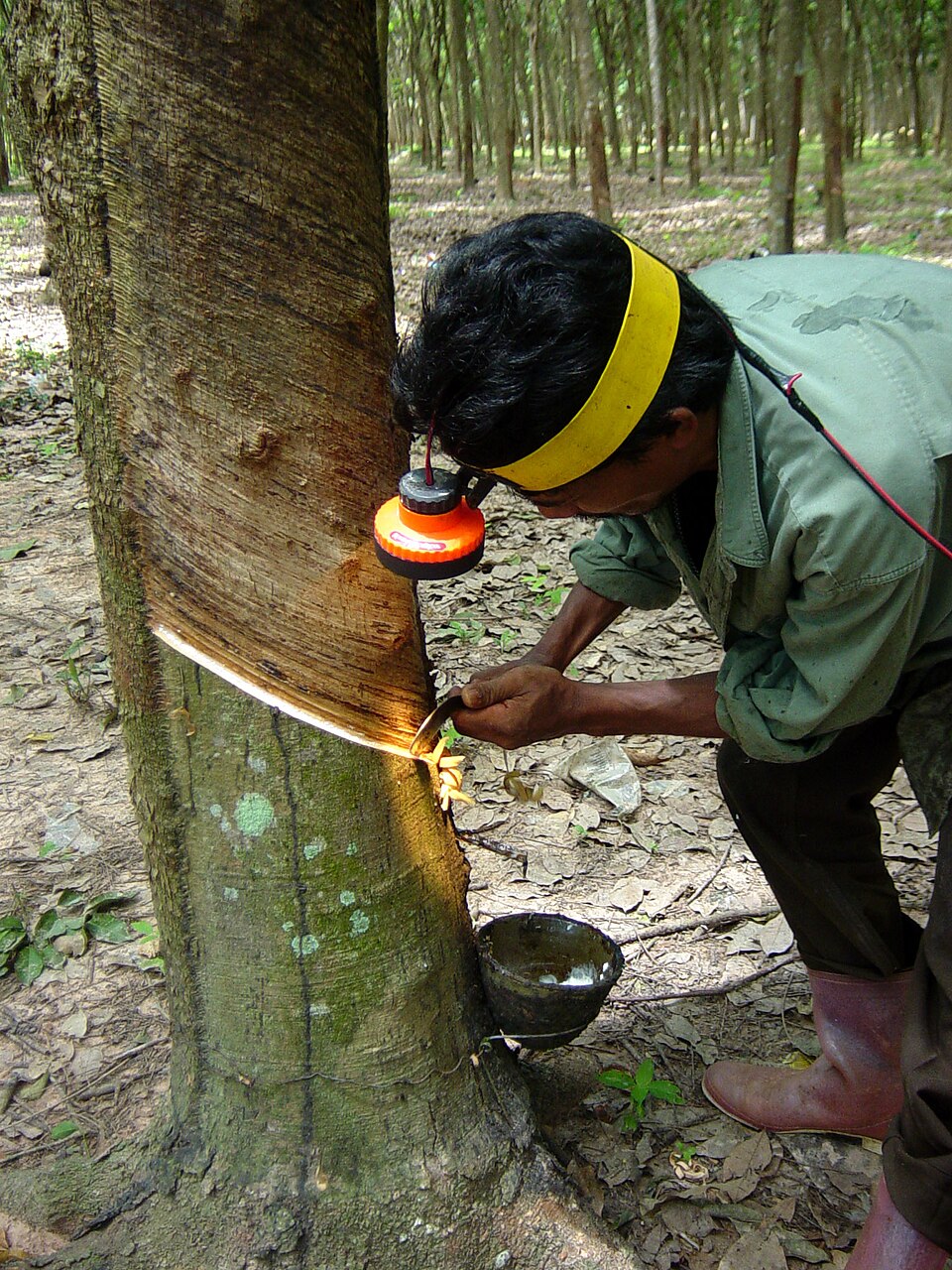 A worker tapping a rubber tree and collecting latex. (Image: Blue Plover, CC BY-SA 3.0, via Wikimedia Commons)
5. Fuel Plants
Fuel plants provide energy sources like firewood and biogas.
Types of Fuel Plants
| Type | Examples | Uses |
|---|---|---|
| Firewood | Sal, Pine, Oak | Cooking, heating |
| Biogas | Cow dung + plant waste | Cooking fuel, electricity |
How is biogas produced?
- Mixing: Plant waste + cow dung + water.
- Fermentation: Microbes break down waste in an airtight digester.
- Gas Collection: Biogas (methane + CO₂) is stored and used for cooking.
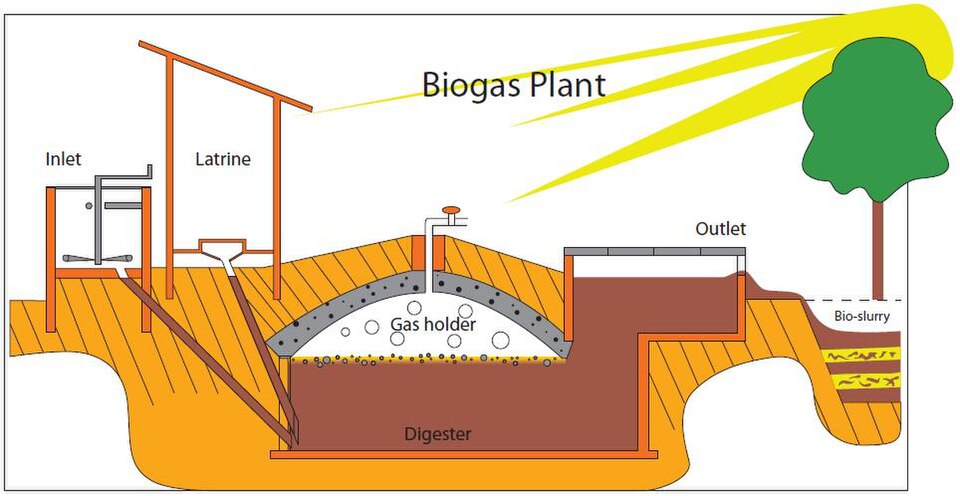 A labelled biogas digester showing input (waste) and output (gas). (Image: Fmarree, Public domain, via Wikimedia Commons)
6. Spices and Condiments
Spices add flavor and aroma to food and have medicinal uses.
Important Spices
| Spice | Plant Source | Uses |
|---|---|---|
| Turmeric | Curcuma longa | Food coloring, medicine |
| Cardamom | Elettaria cardamomum | Tea, sweets, digestion aid |
| Cinnamon | Cinnamomum verum | Baking, anti-inflammatory |
| Clove | Syzygium aromaticum | Toothpaste, antiseptic |
How are spices cultivated?
- Turmeric: Grown in warm, humid climates.
- Cardamom: Needs shade and regular watering.
- Cinnamon: Requires well-drained soil.
Challenges in Economic Botany
- Deforestation: Cutting trees for timber and agriculture destroys habitats.
- Overuse of Pesticides: Harms soil and pollinators (e.g., bees).
- Climate Change: Droughts and floods affect crop yield.
- Loss of Biodiversity: Many medicinal plants are becoming rare.
How can we solve these?
- Sustainable Farming: Use organic methods instead of chemicals.
- Afforestation: Plant more trees to replace cut ones.
- Conservation: Protect endangered plant species.
Biotechnology in Economic Botany
Biotechnology helps improve crop quality and yield.
Applications of Biotechnology
| Technique | Example | Benefit |
|---|---|---|
| Genetic Engineering | Drought-resistant crops | Higher yield in dry areas |
| Tissue Culture | Rapid multiplication of plants | Faster production of medicinal plants |
| CRISPR Editing | Disease-resistant crops | Less use of pesticides |
Example: Golden Rice
- What is it? Rice genetically modified to produce vitamin A.
- Why is it important? Prevents blindness in children who eat rice as a staple food.
Exam Tip: How to Score Full Marks
Define Key Terms:
- Example: "Economic botany is the study of plants used for economic benefits like food, medicine, and fiber."
Compare and Contrast:
- Example: "Compare natural fibers (cotton) and synthetic fibers (rayon)."
- Natural: Made from plants, biodegradable.
- Synthetic: Made from chemicals, non-biodegradable.
- Example: "Compare natural fibers (cotton) and synthetic fibers (rayon)."
Explain Cultivation Methods:
- Example: "Describe how rice is cultivated in Nepal."
- Steps: Sowing → Transplanting → Irrigation → Harvesting.
- Example: "Describe how rice is cultivated in Nepal."
Discuss Economic Importance:
- Example: "Why is the rubber tree important for the economy?"
- Provides raw material for tires, shoes, and industrial products.
- Example: "Why is the rubber tree important for the economy?"
Solve Problem-Based Questions:
- Example: "How can biotechnology help in increasing wheat production?"
- Answer: Genetic engineering for drought resistance, tissue culture for faster growth.
- Example: "How can biotechnology help in increasing wheat production?"
NEB Board-Style Questions (Practice)
Short Answer Questions (5 marks each)
- Define economic botany. Give two examples of medicinal plants and their uses.
- Describe the process of rubber extraction from the rubber tree.
- What are the advantages and disadvantages of using synthetic fibers over natural fibers?
- How does biogas production help in reducing environmental pollution?
- Explain the importance of spices in economic botany.
Long Answer Questions (10 marks each)
- Describe the cultivation of rice in Nepal. What are the challenges faced by farmers?
- Explain the role of biotechnology in improving crop yield. Give examples.
- Discuss the economic importance of timber plants. How can deforestation be controlled?
- Compare and contrast natural and synthetic fibers with examples.
- How do medicinal plants contribute to the economy of Nepal? Give examples.
Summary
- Economic botany studies useful plants for food, medicine, fiber, fuel, and industry.
- Food crops (rice, wheat) feed the world.
- Medicinal plants (neem, aloe) treat diseases.
- Fiber plants (cotton, jute) make textiles.
- Industrial plants (rubber, spices) drive trade.
- Biotechnology helps improve crops sustainably.
- Conservation is key to protecting plant resources.
Remember: Plants are the backbone of the economy—without them, industries and medicine would collapse!
Final Tip: Always relate theory to real-life examples in exams. For instance, if asked about economic importance, mention how rubber trees help Nepal’s economy by exporting rubber products. Good luck! 🌱
Based on the NEB +2 Science syllabus for Biology (Bio), unit 10.
Discussion
Loading…