BiologyUnit 1711 min read
Human Diseases & Immunity: Pathogens, Defense, Vaccines & Immunity
Unit 17 of Biology explores how diseases spread in humans, how our immune system fights infections, and how vaccines protect us—covering pathogens, immunity types, and common diseases like HIV, cancer, and allergies with NEB-style examples.
What is a Disease?
A disease is any condition that disrupts normal body functions. It can be caused by:
- Pathogens (disease-causing agents like bacteria, viruses, fungi, protozoa, and worms).
- Non-infectious causes (genetics, lifestyle, or environment).
Types of Diseases
mindmap
  root((Diseases))
    Infectious
      Caused by pathogens
      Spreads from person to person
      Examples: TB, Malaria, COVID-19
    Non-Infectious
      Not contagious
      Caused by genetics, aging, or lifestyle
      Examples: Diabetes, Cancer, Heart Disease
Pathogens: The Disease-Causing Agents
Pathogens are microorganisms that invade the body and cause illness. Let’s classify them:
| Type | Example | How It Spreads | Disease Caused |
|---|---|---|---|
| Bacteria | Mycobacterium tuberculosis | Air droplets, contaminated water | Tuberculosis (TB) |
| Viruses | HIV | Blood, sexual contact, mother-to-child | AIDS |
| Fungi | Candida albicans | Warm, moist environments (e.g., skin folds) | Thrush, Athlete’s foot |
| Protozoa | Plasmodium falciparum | Mosquito bites (Anopheles) | Malaria |
| Helminths | Ascaris lumbricoides | Contaminated food/water | Ascariasis (roundworm) |
How Do Pathogens Enter the Body?
Pathogens can enter through:
- Respiratory tract (e.g., flu viruses via coughing/sneezing).
- Gastrointestinal tract (e.g., food poisoning from bacteria like E. coli).
- Skin (e.g., fungal infections like ringworm).
- Genitourinary tract (e.g., STIs like HIV).
- Blood (e.g., hepatitis B via needles).
Example: If you drink contaminated water with Vibrio cholerae (a bacterium), it infects your intestines, causing cholera (severe diarrhea and dehydration).
The Immune System: Your Body’s Defense
The immune system protects you from pathogens using two main lines of defense:
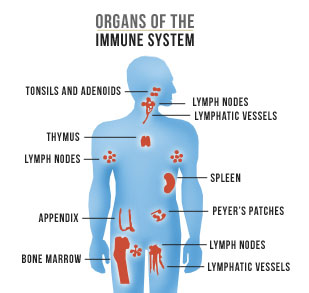 Key immune organs: thymus, bone marrow, lymph nodes, spleen, and tonsils (Image: AIDS.gov, Public domain, via Wikimedia Commons)
1. Innate (Non-Specific) Immunity
- First line of defense: Physical barriers like skin and mucus membranes.
- Second line of defense: Cells like macrophages and natural killer (NK) cells that attack any invader.
- Inflammatory response: Redness, swelling, and fever to trap pathogens.
2. Adaptive (Specific) Immunity
- Antibodies: Proteins that recognize and neutralize specific pathogens (e.g., IgG, IgM).
- Lymphocytes: B-cells (produce antibodies) and T-cells (kill infected cells).
- Memory cells: Remember past infections for faster response next time.
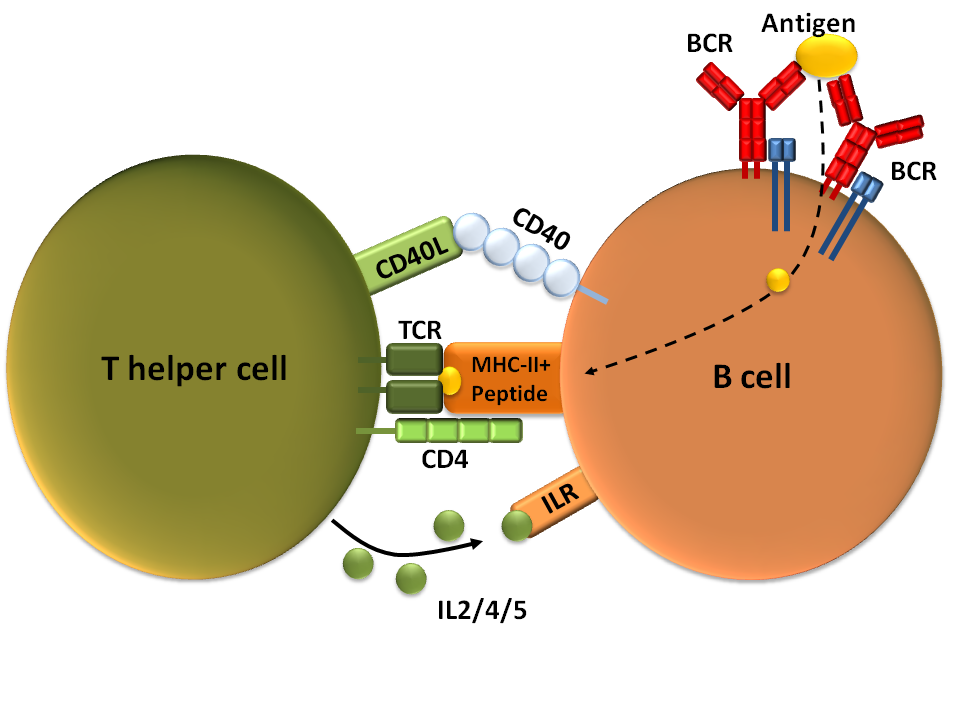 Adaptive immunity activation process (Image: Altaileopard, Public domain, via Wikimedia Commons)
Example: When you get measles, your B-cells produce antibodies against the measles virus. If you’re exposed again, memory cells help you recover faster or avoid symptoms entirely.
Types of Immunity
| Type | How It Works | Example |
|---|---|---|
| Natural Active | You get sick and recover, building immunity. | Chickenpox |
| Natural Passive | Antibodies pass from mother to baby (e.g., breast milk). | Newborn immunity |
| Artificial Active | Vaccines introduce a weakened pathogen to trigger immunity. | MMR vaccine (Measles, Mumps, Rubella) |
| Artificial Passive | Ready-made antibodies are injected (e.g., antivenom for snake bites). | Rabies immunoglobulin |
Vaccines: How They Work
Vaccines train your immune system to recognize and fight pathogens before you get sick. They contain:
- Weakened (live) pathogens (e.g., oral polio vaccine).
- Killed pathogens (e.g., rabies vaccine).
- Toxoids (detoxified toxins, e.g., tetanus vaccine).
- Subunit vaccines (only parts of the pathogen, e.g., HPV vaccine).
Example: The COVID-19 vaccine uses mRNA to teach your cells to make a harmless piece of the virus. Your immune system then produces antibodies to fight COVID-19 if you’re exposed.
- Vaccine enters body → 2. Immune system detects pathogen → 3. B-cells produce antibodies → 4. Memory cells form → 5. Future infection is neutralized.
Common Human Diseases
1. HIV/AIDS
- Cause: HIV (Human Immunodeficiency Virus) attacks CD4 cells (a type of T-cell).
- Transmission: Blood, semen, vaginal fluids, mother-to-child.
- Symptoms: Fever, weight loss, opportunistic infections (e.g., pneumonia).
- Prevention: Safe sex, needle exchange, antiretroviral therapy (ART).
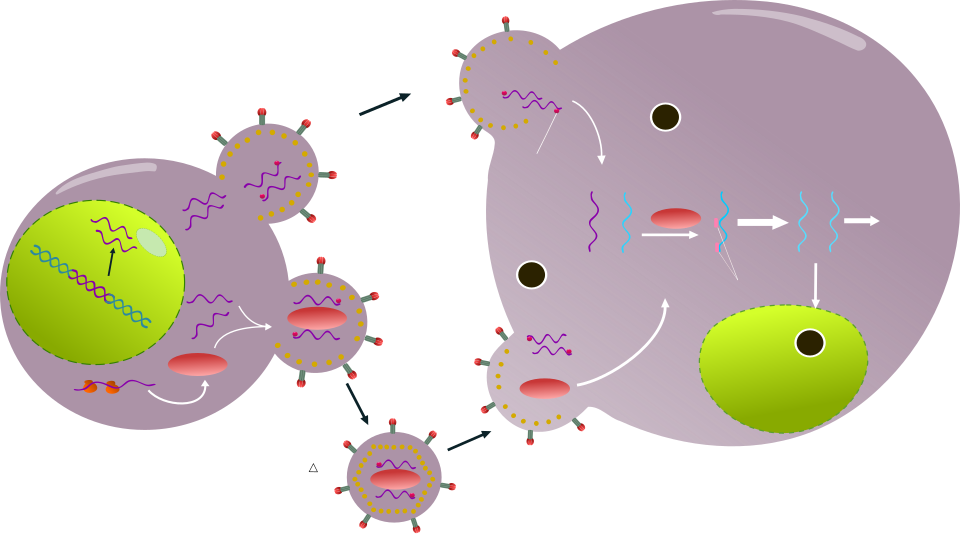 A labeled diagram showing how HIV infects CD4 cells. (Image: JS, CC0, via Wikimedia Commons)
2. Cancer
- Cause: Uncontrolled cell division due to mutations (e.g., smoking causes lung cancer).
- Types:
- Carcinoma (skin, lung).
- Sarcoma (bone, muscle).
- Leukemia (blood cells).
- Treatment: Surgery, chemotherapy, radiation, immunotherapy.
3. Allergies
- Cause: Overreaction to harmless substances (allergens) like pollen or peanuts.
- Response: Histamine release → sneezing, itching, swelling.
- Treatment: Antihistamines, epinephrine (for severe reactions).
| Normal Immune Response | Allergic Response |
|---|---|
| Attacks only pathogens | Attacks harmless substances |
| No histamine release | Histamine released → inflammation |
Immunity Disorders
- Immunodeficiency:
- Weak immune system (e.g., AIDS, SCID – Severe Combined Immunodeficiency).
- Causes: Genetic defects, HIV, chemotherapy.
- Autoimmune Diseases:
- Immune system attacks the body’s own cells (e.g., rheumatoid arthritis, diabetes type 1).
- Hypersensitivity:
- Overreaction to allergens (e.g., anaphylaxis from bee stings).
NEB-Style Questions and Solutions
Short Answer Questions
Q1: Differentiate between active and passive immunity with examples. Answer:
| Active Immunity | Passive Immunity |
|---|---|
| Body produces its own antibodies. | Antibodies are received externally. |
| Long-lasting (memory cells). | Short-term (no memory). |
| Example: Vaccination (e.g., MMR). | Example: Breast milk (IgA antibodies). |
Q2: How does a vaccine prevent disease? Answer: A vaccine introduces a harmless version of a pathogen (or its parts) to the body. This triggers the immune system to produce antibodies and memory cells. If the real pathogen later invades, the immune system recognizes it and quickly destroys it before illness occurs.
Long Answer Question
Q3: Explain the innate and adaptive immune responses with examples. How are they different? Answer: The immune system has two main branches:
Innate Immunity (Non-Specific)
- How it works:
- Physical barriers: Skin blocks pathogens; mucus traps them.
- Cells: Macrophages and NK cells eat or kill invaders.
- Inflammation: Redness, swelling, and fever isolate the infection.
- Example: When you cut your finger, white blood cells rush to the site to prevent infection.
- Limitations: Cannot "remember" past infections; same response every time.
- How it works:
Adaptive Immunity (Specific)
- How it works:
- Antibodies (from B-cells) bind to specific pathogens.
- T-cells destroy infected cells.
- Memory cells "remember" the pathogen for faster future responses.
- Example: After recovering from mumps, you’re immune for life because memory cells exist.
- Advantages: Highly targeted; improves with repeated exposure.
- How it works:
Key Difference:
| Feature | Innate Immunity | Adaptive Immunity |
|---|---|---|
| Specificity | Non-specific (attacks anything) | Specific (targets one pathogen) |
| Memory | No memory | Has memory cells |
| Speed | Fast (minutes to hours) | Slower (days to weeks) |
| Cells Involved | Macrophages, NK cells | B-cells, T-cells |
NEB Board-Style Practical/Application Question
Q4: A student sneezes repeatedly after touching a cat. Explain the immune response involved and how it can be managed. Answer:
- Allergen Exposure: The cat’s dander (skin flakes) acts as an allergen.
- Immune Overreaction:
- The student’s immune system mistakes the allergen for a pathogen.
- Mast cells release histamine, causing:
- Sneezing, itchy eyes, runny nose.
- Management:
- Antihistamines (e.g., cetirizine) block histamine effects.
- Avoidance: Keep cats out of the bedroom.
- Immunotherapy: Gradual exposure to reduce sensitivity over time.
Exam Tip: How to Score Full Marks
- Define Key Terms Clearly:
- Always start with definitions (e.g., "A vaccine is...").
- Use Diagrams:
- Draw flowcharts for immune responses or tables for comparisons (e.g., active vs. passive immunity).
- Link Theory to Examples:
- NEB loves real-world applications. Relate concepts to diseases like HIV, cancer, or allergies.
- Explain Step-by-Step:
- For processes (e.g., how vaccines work), write numbered steps.
- Common Mistakes to Avoid:
- ❌ Saying "vaccines give lifelong immunity" (some require boosters, e.g., tetanus).
- ❌ Confusing innate and adaptive immunity (innate = fast but non-specific; adaptive = slow but specific).
- Practice NEB-Style Questions:
- Focus on short definitions, comparisons, and explanations with examples.
Final Reminder:
- Pathogens = Disease-causing agents (bacteria, viruses, etc.).
- Immunity = Body’s defense (innate = fast but general; adaptive = slow but specific).
- Vaccines = Train immunity before infection.
- Diseases = Caused by pathogens or non-infectious factors (e.g., cancer).
Good luck for your NEB exam! 🚀
Based on the NEB +2 Science syllabus for Biology (Bio), unit 17.
Discussion
Loading…