PhysicsUnit 1110 min read
Acoustic Phenomena: Sound, Echo, Reverberation, Noise, Music
Unit 11 of Physics explores how sound travels, reflects, and interacts with our ears—covering definitions, speed of sound, echo formation, reverberation, noise pollution, and musical instruments, with solved examples and NEB-style questions.
TAKEAWAYS:
- Sound is a longitudinal wave that travels through a medium (air, water, solids) by compressions and rarefactions.
- The speed of sound depends on the medium’s temperature and elasticity, not frequency.
- Echo and reverberation are reflections of sound, but echo is distinct (delay ≥ 0.1 s), while reverberation is continuous.
- Noise is unwanted sound (disruptive, random), while music is organized sound (pleasing, periodic).
- Musical instruments produce sound via vibrations of strings, air columns, or membranes, classified by their sound production method.
What is Sound?
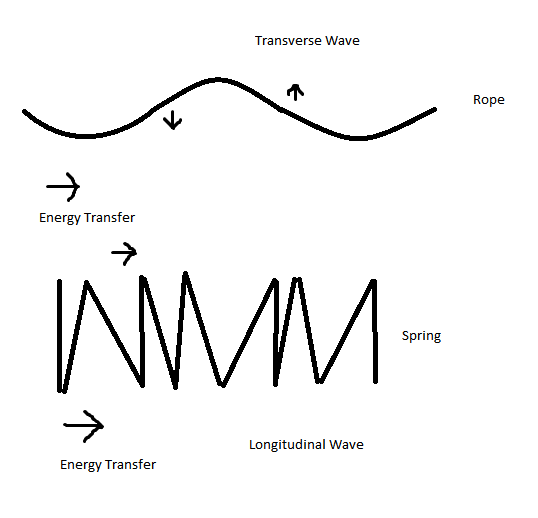
Sound is a longitudinal wave that travels through a medium (solid, liquid, or gas) by creating regions of compression (high pressure) and rarefaction (low pressure). Unlike transverse waves (e.g., light), sound waves move parallel to the direction of energy transfer.
- Source of sound: Vibrating objects (e.g., vocal cords, guitar strings, tuning fork).
- Medium: Sound cannot travel in a vacuum (e.g., no sound in space).
- Detector: Our ears (or microphones) detect sound waves and convert them into signals our brain interprets.
Speed of Sound
The speed of sound () in a medium depends on:
- Elasticity (stiffness) of the medium: Higher elasticity → faster speed.
- Density of the medium: Lower density → faster speed.
- Temperature: Speed increases with temperature (for gases).
Formula: where:
- = elasticity (bulk modulus for fluids, Young’s modulus for solids),
- = density of the medium.
Speed of sound in different media (at 20°C):
| Medium | Speed (m/s) | Reason |
|---|---|---|
| Air | 343 | Low density, low elasticity |
| Water | 1482 | Higher density, higher elasticity |
| Steel | 5100 | Very high elasticity |
Effect of temperature on speed of sound in air: where is temperature in °C.
- At 0°C:
- At 20°C:
Echo and Reverberation
When sound waves hit a hard surface, they reflect back. If the reflected sound reaches our ears after a delay, we hear an echo. If the reflections are continuous and overlapping, we hear reverberation.
Echo
- Condition for echo: The reflected sound must reach the listener after at least 0.1 seconds (minimum perceptible delay).
- Formula:
where:
- = speed of sound,
- = time delay between original sound and echo.
Example: A person stands 171.5 m from a cliff. If the speed of sound is 343 m/s, how long will it take to hear the echo? Solution:
Reverberation
- Occurs in enclosed spaces (e.g., concert halls, auditoriums).
- Problem: Excessive reverberation makes speech/music unclear.
- Solution: Use sound-absorbing materials (e.g., curtains, carpets, acoustic panels) to reduce reflections.
flowchart TD
    A["Sound Source"] -->|"Direct Sound"| B["Listener"]
    A -->|"Reflection"| C["Hard Surface"]
    C -->|"Echo/Reverb"| B
    D["Absorbing Material"] -->|"Reduces Reflection"| C
Noise and Music
| Feature | Noise | Music |
|---|---|---|
| Nature | Unwanted, random | Organized, periodic |
| Frequency | Irregular, broad range | Specific frequencies (notes) |
| Effect | Disruptive, harmful to health | Pleasing, therapeutic |
| Example | Traffic, machinery | Guitar, flute, sitar |
Noise Pollution
- Sources: Vehicles, factories, loudspeakers, construction.
- Effects:
- Hearing loss (prolonged exposure > 85 dB).
- Stress, sleep disturbances, cardiovascular problems.
- Solutions:
- Use earplugs or noise-canceling headphones.
- Plant trees (natural sound absorbers).
- Enforce noise regulations (e.g., silent zones near hospitals).
Decibel Scale (dB)
- Measures loudness of sound (logarithmic scale).
- Threshold of hearing: 0 dB (barely audible).
- Pain threshold: 120 dB (e.g., jet engine).
| Sound Level (dB) | Source |
|---|---|
| 0 | Threshold of hearing |
| 30 | Whisper |
| 60 | Normal conversation |
| 85 | Heavy traffic |
| 120 | Jet engine |
Musical Instruments
Musical instruments produce sound via vibrating strings, air columns, or membranes. They are classified based on how they produce sound:
| Type | Example | Sound Production Method |
|---|---|---|
| Stringed | Guitar, Sitar | Vibrating strings |
| Wind | Flute, Trumpet | Vibrating air column |
| Percussion | Drum, Tabla | Vibrating membrane or solid surface |
| Electronic | Synthesizer | Electronic signals converted to sound |
How Stringed Instruments Work
- Frequency of vibration depends on:
- Length of string: Shorter string → higher frequency.
- Tension: Higher tension → higher frequency.
- Mass per unit length: Thicker string → lower frequency.
- Formula for frequency of a stretched string:
where:
- = length of string,
- = tension,
- = mass per unit length.
Example: A guitar string has a length of 0.6 m, tension of 81 N, and mass per unit length of . What is its fundamental frequency? Solution:
How Wind Instruments Work
- Open pipe: Both ends open (e.g., flute). Fundamental frequency:
- Closed pipe: One end closed (e.g., clarinet). Fundamental frequency:
Example: A flute (open pipe) is 0.6 m long. If the speed of sound is 340 m/s, what is its fundamental frequency? Solution:
Applications of Acoustic Phenomena
SONAR (Sound Navigation and Ranging):
- Used in ships and submarines to detect objects underwater by sending sound pulses and measuring echoes.
- Formula for distance: (where is the time delay of the echo).
Ultrasound in Medicine:
- High-frequency sound waves (>20 kHz) used to create images of internal organs (e.g., pregnancy scans).
Architectural Acoustics:
- Designing concert halls to optimize sound quality (e.g., using curved ceilings to reflect sound evenly).
Noise Control:
- Soundproofing buildings to reduce noise pollution.
Exam Tip: How to Score Full Marks
Understand the difference between echo and reverberation:
- Echo is a single reflection heard after ≥0.1 s.
- Reverberation is multiple reflections creating a continuous sound.
Memorize the speed of sound formulas:
- In air: .
- In solids/liquids: .
- For strings: .
- For pipes: (open) or (closed).
Practice numerical problems:
- Always label units (m/s, Hz, etc.).
- Show step-by-step calculations.
Compare noise and music:
- Noise is random and harmful; music is organized and pleasing.
Diagrams are key:
- Draw compression-rarefaction waves for sound.
- Sketch echo/reverberation scenarios in exams.
NEB Board-Style Questions (Practice)
Short Answer (2 marks each)
- Define echo and state the condition required for it to be heard distinctly.
- Why does sound travel faster in steel than in air?
- Differentiate between noise and music with one example each.
- How does increasing the tension in a guitar string affect its frequency?
Long Answer (5 marks each)
- A person claps near a cliff and hears an echo after 2 seconds. If the speed of sound is 340 m/s, how far is the cliff? Explain the principle of echo formation.
- Explain how a flute (open pipe) and a clarinet (closed pipe) produce different notes for the same length. Derive the formula for their fundamental frequencies.
- Describe the harmful effects of noise pollution. Suggest three measures to control it in urban areas.
Numerical (3 marks each)
- Calculate the speed of sound in air at 15°C using the given formula.
- A string of length 0.5 m and mass 0.01 kg is stretched with a tension of 100 N. Find its fundamental frequency.
- An open organ pipe has a fundamental frequency of 256 Hz. If the speed of sound is 340 m/s, what is its length?
Summary Table: Key Concepts
| Concept | Formula/Definition | Example/Application |
|---|---|---|
| Speed of sound | or | 343 m/s in air at 20°C |
| Echo | Clapping near a mountain | |
| Reverberation | Multiple reflections in enclosed spaces | Concert halls |
| Noise pollution | >85 dB harmful to hearing | Traffic noise |
| Musical notes | Guitar strings | |
| Open pipe | Flute | |
| Closed pipe | Clarinet |
 A labelled diagram showing compressions and rarefactions in a sound wave. (Image: Amir Menad, Public domain, via Wikimedia Commons)
Based on the NEB +2 Science syllabus for Physics (Phy), unit 11.
Discussion
Loading…