Principles of ManagementUnit 711 min read
Staffing – Recruitment, Selection, Training, Appraisal & Retention
Unit 7 of Principles of Management: this note explains staffing concepts, the end‑to‑end staffing process, recruitment & selection techniques, training, performance appraisal, compensation and retention, with real‑world Nepali examples and exam‑focused tips.
Key points
- Staffing links organisational goals with the right people at the right time.
- The staffing process is a systematic cycle: forecasting → recruitment → selection → induction → training → appraisal → compensation → retention → termination.
- Internal and external recruitment each have distinct advantages; the choice depends on skill needs, cost and time.
- Selection combines objective tests and structured interviews to minimise bias.
- Continuous training, clear appraisal systems and fair compensation are key to employee motivation and low turnover.
- Legal, ethical and cultural considerations shape all staffing decisions in Nepal.
1. What is Staffing?
Staffing is the managerial function of acquiring, developing, and retaining a competent workforce that enables an organization to achieve its objectives. It integrates human‑resource planning with recruitment, selection, training, appraisal, compensation and retention.
Objectives of Staffing
| Objective | Why it matters |
|---|---|
| Right fit | Aligns employee skills with job requirements, boosting productivity. |
| Cost efficiency | Minimises over‑staffing and reduces turnover expenses. |
| Legal compliance | Ensures adherence to labour laws and anti‑discrimination statutes. |
| Employee development | Builds a talent pipeline for future leadership. |
| Organisational culture | Reinforces values and work ethics across the firm. |
2. The Staffing Process
flowchart LR
    A["Forecasting manpower needs"] --> B["Recruitment"]
    B --> C["Selection"]
    C --> D["Induction & Orientation"]
    D --> E["Training & Development"]
    E --> F["Performance Appraisal"]
    F --> G["Compensation & Rewards"]
    G --> H["Retention Strategies"]
    H --> I["Termination (if required)"]
    I --> A
2.1 Manpower Forecasting
- Quantitative methods: trend analysis, ratio analysis, regression.
- Qualitative methods: Delphi technique, managerial judgment.
Worked Example: A Daraz logistics hub expects a 20 % rise in orders during the festive season. Using trend analysis of past three years, it forecasts a need for 8 additional warehouse operatives and 2 supervisors for the next quarter.
2.2 Recruitment
Recruitment is the search for candidates who can fill the identified vacancies. It can be internal (promotions, transfers) or external (advertisements, agencies, online portals).
2.2.1 Internal vs. External Recruitment
mindmap
  root(("Recruitment Sources"))
    Internal
      Promotions
      Transfers
      Employee referrals
    External
      Job portals (eSewa Jobs, LinkedIn)
      Campus recruitment
      Recruitment agencies
Social media (Facebook, TikTok)| Aspect | Internal Recruitment | External Recruitment |
|---|---|---|
| Cost | Low (advertising, training) | Higher (advertising, agency fees) |
| Time | Faster (familiar candidates) | Slower (screening many applicants) |
| Motivation | Boosts morale, career path visibility | Brings fresh ideas, new skills |
| Risk | Potential for limited perspective | Higher turnover risk if fit is poor |
2.3 Selection
Selection filters applicants to identify the best fit for the job. A typical multi‑stage process includes:
- Application screening – resume & cover‑letter check.
- Written/online tests – aptitude, technical knowledge.
- Psychometric assessments – personality, cognitive ability.
- Structured interview – behavioural (STAR) and situational questions.
- Assessment centre – role‑plays, group discussions, case studies.
- Background verification – references, criminal record, education.
Worked Example: Daraz selects a Customer Service Supervisor. After shortlisting 30 resumes, candidates take an online communication test (score ≥ 75 %). Ten proceed to a panel interview using the STAR method, and the final two attend a one‑day assessment centre. The candidate with the highest composite score receives the job offer.
2.4 Induction & Orientation
A formal induction familiarises new hires with organisational policies, culture, health‑and‑safety, and job‑specific duties. Effective induction reduces early turnover by up to 30 %.
2.5 Training & Development
| Training Type | Description | Example in Nepal |
|---|---|---|
| On‑the‑job | Coaching, job rotation, mentoring. | Ncell’s “Field Coach” program for sales agents. |
| Off‑the‑job | Classroom, workshops, e‑learning. | Nabil Bank’s “Leadership Academy” for middle managers. |
| Technical | Skill‑specific (e.g., POS system). | eSewa staff trained on digital payment gateway. |
| Soft‑skill | Communication, teamwork, problem‑solving. | Himalayan Java’s barista training on customer service. |
2.6 Performance Appraisal
Appraisal evaluates employee contributions and informs compensation, promotion, and development decisions. Common methods:
- Rating scales (e.g., 1‑5 Likert).
- Management by Objectives (MBO) – targets set jointly.
- 360‑degree feedback – peers, subordinates, supervisors.
- Behaviorally Anchored Rating Scales (BARS) – specific behavioural examples.
Worked Example: A Ncell sales executive has an MBO target of ₹1.2 crore monthly sales. Quarterly appraisal compares actual sales to target, adds a customer‑satisfaction score, and determines a 12 % performance bonus.
2.7 Compensation & Rewards
Compensation comprises fixed pay (salary, wages) and variable pay (bonuses, commissions, profit‑sharing). Non‑monetary rewards include recognition, flexible work hours, and career development opportunities.
| Component | Fixed | Variable | Non‑monetary |
|---|---|---|---|
| Base salary | ✔ | ||
| Performance bonus | ✔ | ||
| Health insurance | ✔ | ||
| Employee of the Month | ✔ | ||
| Skill‑based pay | ✔ | ✔ |
2.8 Retention Strategies
- Career pathing – clear promotion ladders.
- Work‑life balance – flexible schedules, remote work.
- Employee engagement – surveys, town‑hall meetings.
- Competitive compensation – market‑aligned salary structures.
- Recognition programs – “Star Performer” awards.
2.9 Termination
When performance or organisational fit cannot be improved, termination (voluntary or involuntary) follows legal procedures, exit interviews, and knowledge transfer to minimise disruption.
3. Legal & Ethical Considerations
- Labour Act, 2074 (2017) – minimum wage, working hours, termination notice.
- Gender Equality Act – prohibits discrimination in recruitment.
- Data privacy – handling applicant information per Personal Data Protection Act.
- Ethical hiring – avoid nepotism, ensure fairness, provide reasonable accommodation.
4. Real‑World Applications
4.1 In the real world
- Ncell uses internal promotion for its regional sales managers, applying the staffing principle of career pathing to retain top talent and reduce recruitment costs.
- Daraz runs a digital recruitment portal (Daraz Careers) that automates job posting, applicant tracking, and online testing, exemplifying the modern recruitment‑selection cycle.
- Nabil Bank employs competency‑based selection for loan officers, using psychometric tests and structured interviews to ensure analytical ability and customer‑service orientation, directly linking staffing to loan‑approval accuracy.
4.2 Worked Example Tied to a Real Situation
Scenario: Nabil Bank plans to open a new branch in Pokhara and needs 4 loan officers within three months.
- Forecasting – Based on market research, each officer can handle 150 loan applications per month; projected demand = 600 applications → 4 officers.
- Recruitment – Post on “Jobs Nepal” and campus drives at Pokhara University. Internal posting for existing staff is also announced.
- Selection –
- Screening: 120 resumes received, 30 shortlisted.
- Aptitude test: Minimum 70 % required; 22 pass.
- Structured interview: STAR questions on handling difficult borrowers.
- Background check: Verify credit‑risk training certificates.
- Induction – Two‑day orientation covering bank policies, anti‑money‑laundering (AML) procedures, and the bank’s digital loan platform.
- Training – Six‑week blended program: three weeks classroom on credit analysis, three weeks on‑the‑job shadowing senior officers.
- Appraisal – MBO: each officer must achieve a ₹25 million loan disbursement target in the first quarter, plus a customer‑satisfaction score ≥ 85 %.
- Compensation – Fixed salary + 5 % commission on each approved loan, plus health insurance.
- Retention – Quarterly career‑development workshops and a “Top Performer” recognition ceremony.
The systematic staffing cycle ensures the new branch is staffed with qualified, motivated officers, reducing the risk of loan defaults and enhancing customer trust.
5. Visual Summary
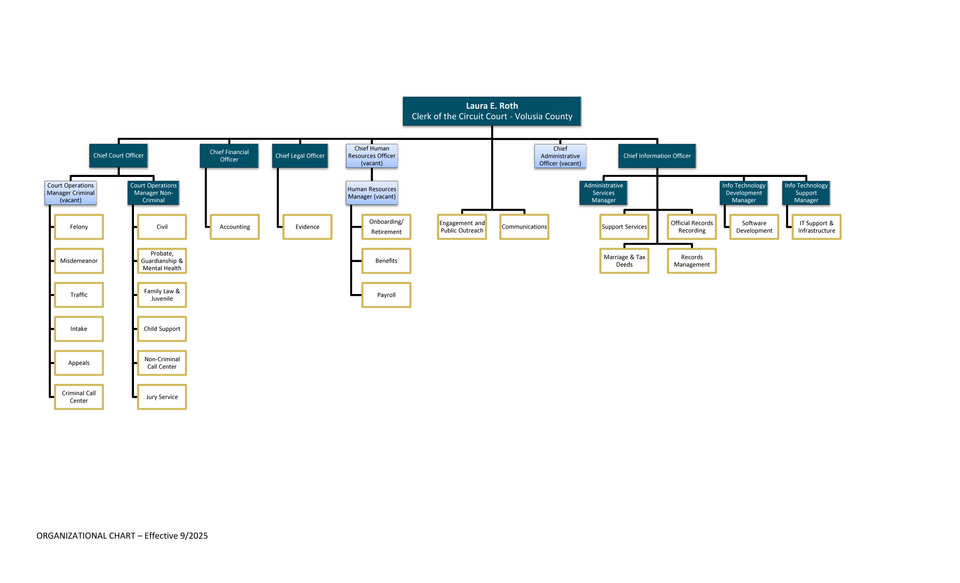 Sample hierarchical structure showing reporting lines for staffing roles (Image: Volusia County Clerk's Office, Public domain, via Wikimedia Commons)
 Recruiter conducting a structured interview with a candidate (Image: Ann Rosener, Public domain, via Wikimedia Commons)
6. Comparison of Recruitment Channels
flowchart LR
    A["Traditional Media"] --> B["Newspapers"]
    A --> C["Radio"]
    D["Digital Media"] --> E["Job Portals (eSewa Jobs)"]
    D --> F["Social Media (Facebook, LinkedIn)"]
    G["Campus Outreach"] --> H["University Job Fairs"]
G --> I["Internship Programs"]| Channel | Reach | Cost | Speed | Typical Use |
|---|---|---|---|---|
| Newspapers | Local | Medium | Slow | Senior‑level, government jobs |
| Radio | Regional | Low | Slow | Seasonal hiring (e.g., tourism) |
| Job Portals | Nationwide | Low‑Medium | Fast | Technical & mid‑level roles |
| Social Media | Global | Low | Very fast | Branding, entry‑level positions |
| Campus Fairs | Youth | Low | Medium | Internships, graduate trainee programs |
7. Advantages & Disadvantages of Key Staffing Practices
| Practice | Advantages | Disadvantages |
|---|---|---|
| Internal Promotion | Motivates staff, reduces onboarding time, preserves culture. | May limit fresh ideas, creates vacancy at lower level. |
| Online Recruitment | Wide reach, cost‑effective, data‑driven analytics. | High volume of unqualified applications, digital divide in rural areas. |
| Assessment Centres | Holistic evaluation, predicts job performance. | Expensive, time‑consuming, requires trained assessors. |
| MBO Appraisal | Aligns individual goals with organisational objectives. | Over‑emphasis on quantifiable targets, may ignore teamwork. |
| Variable Pay | Drives performance, links reward to results. | Can encourage short‑termism, may cause stress. |
8. Emerging Trends in Staffing (2024‑2025)
- AI‑driven resume screening – tools like HireVue use natural language processing to rank candidates.
- Gig‑economy staffing – platforms such as “Upwork Nepal” for project‑based hires.
- Employee experience platforms – integrated HRIS (e.g., SAP SuccessFactors) for seamless onboarding, learning, and appraisal.
- Diversity & inclusion metrics – mandatory reporting on gender and ethnic representation in large Nepali firms.
Exam tip
- Remember the staffing cycle: a one‑sentence flow (forecast → recruit → select → induct → train → appraise → reward → retain → terminate). Write it as a quick bullet list in the answer.
- Tables are your friend: for comparison questions (e.g., internal vs external recruitment, selection methods), present a concise 2‑column table.
- Case‑study questions: identify the stage (forecasting, recruitment, etc.), list the tools used (trend analysis, structured interview), and explain the rationale (cost, speed, fit).
- Definitions: keep them under 25 words; examiners award marks for precise, textbook‑style definitions.
- Diagram: a mermaid flowchart of the staffing process earns extra marks for visual clarity.
Focus on linking each staffing function to organisational objectives and real‑world examples; that demonstrates depth of understanding and scores full marks.
Based on the PU BBA (PU) syllabus for Principles of Management, unit 7.
Discussion
Loading…