General PsychologyUnit 77 min read
Motivation & Emotion: Theories, Types & Applications
Unit 7 of General Psychology explores the psychological forces driving behavior (motivation) and the emotional responses shaping our experiences, covering theories, biological/psychological bases, and real-world applications in workplaces and daily life.
Core Concepts: Motivation and Emotion
1. Motivation: The Engine of Behavior
Motivation is the internal or external force that drives individuals to act toward a goal. It explains why people behave the way they do—whether it’s studying for an exam, working overtime, or even procrastinating.
Theories of Motivation
Three major theories explain motivation:
| Theory | Key Idea | Example in Nepal |
|---|---|---|
| Drive Reduction | Behavior is motivated by the need to reduce internal tension (e.g., hunger, thirst). | A student studies hard to reduce anxiety before exams. |
| Incentive | People are motivated by external rewards or punishments. | Employees work harder for bonuses (e.g., Daraz’s referral incentives). |
| Humanistic | Self-actualization (fulfilling potential) is the ultimate motivator. | A teacher volunteers at a rural school to achieve personal fulfillment. |
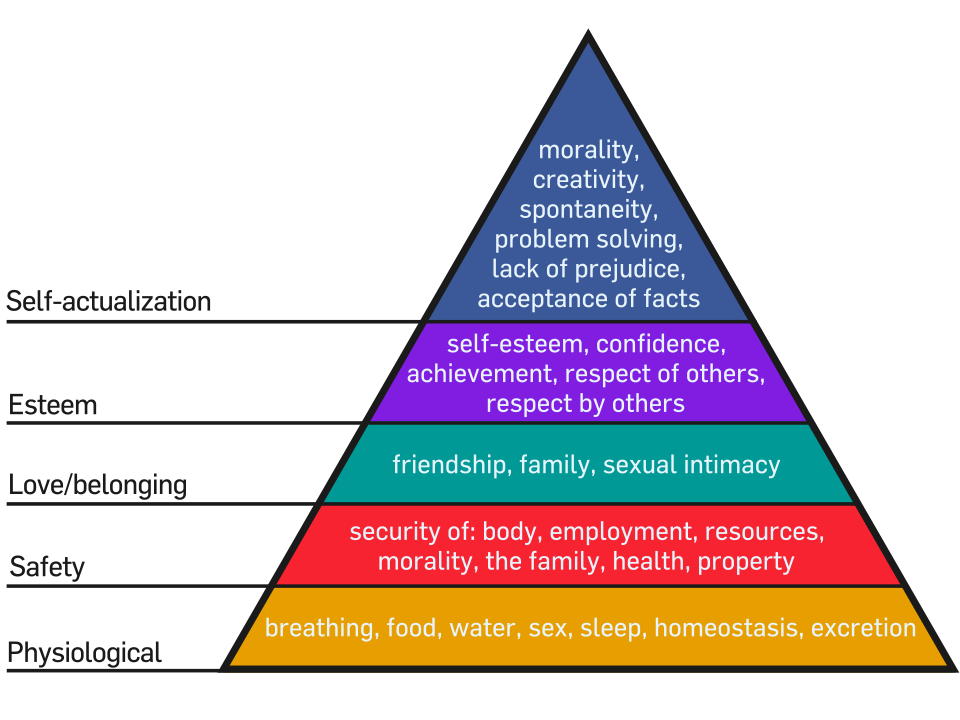 Shows the pyramid of physiological, safety, love, esteem, and self-actualization needs. (Image: User:Factoryjoe, CC BY-SA 3.0, via Wikimedia Commons)
Types of Motivation
- Intrinsic Motivation: Driven by internal satisfaction (e.g., painting for joy).
- Extrinsic Motivation: Driven by external rewards (e.g., studying for grades).
- Achievement Motivation: Desire to master skills or outperform others (e.g., NEPSE traders).
WORKED EXAMPLE: Pathao Rider’s Motivation A Pathao delivery rider works late nights not just for money (extrinsic) but also to prove his skills (achievement) and feel proud (intrinsic). His motivation mix:
- Extrinsic: ₹500/day earnings.
- Intrinsic: Pride in fast deliveries.
- Achievement: Becoming a "Top Rider" on the app.
2. Emotion: The Psychological Experience
Emotions are brief, intense reactions to events, involving:
- Physiological changes (heart rate, adrenaline).
- Behavioral expressions (facial expressions, body language).
- Cognitive interpretations (thoughts like "I’m angry").
Theories of Emotion
Three key theories explain how emotions arise:
| Theory | Process | Real-World Link |
|---|---|---|
| James-Lange | Stimulus → Physiological response → Emotion (e.g., "I tremble, so I’m afraid"). | A student’s hands shake before an exam → feels nervous. |
| Cannon-Bard | Stimulus → Emotion + Physiological response happen simultaneously. | Seeing a snake → heart races and you feel fear at the same time. |
| Schachter-Singer | Emotion = Physiological arousal + Cognitive label (e.g., "This is excitement!"). | Watching a horror movie: heart races → if you label it "fun," you enjoy it. |
Basic Emotions vs. Complex Emotions
- Basic Emotions (universal, innate):
- Happiness, sadness, fear, anger, surprise, disgust.
- Complex Emotions (culturally learned):
- Pride, shame, guilt, jealousy (e.g., a Nepali bride feeling lajja at a wedding).
WORKED EXAMPLE: Ncell Customer Service A customer calls Ncell complaining about poor network. The agent’s emotional intelligence determines the outcome:
- Low EQ: Agent snaps ("It’s not my fault!") → customer hangs up (negative emotion escalates).
- High EQ: Agent listens, apologizes, offers a solution → customer feels valued (emotion resolves).
3. Biological Bases of Motivation and Emotion
The brain and hormones play crucial roles:
Brain Structures Involved
graph TD
    A["Amygdala"] -->|"Detects fear/threat"| B["Hypothalamus"]
    B -->|"Triggers fight/flight"| C["Adrenal Glands"]
    C -->|"Releases adrenaline"| D["Heart & Muscles"]
    E["Prefrontal Cortex"] -->|"Regulates emotions"| F["Amygdala"]
    G["Hippocampus"] -->|"Links emotions to memory"| H["Long-term storage"]
Hormones and Emotions
- Adrenaline/Noradrenaline: Fight-or-flight response (e.g., during a traffic jam in Kathmandu).
- Oxytocin: "Love hormone" (e.g., bonding between parents and children).
- Cortisol: Stress hormone (e.g., students before exams).
WORKED EXAMPLE: Khalti Payment Stress When a user forgets their Khalti PIN, their body releases cortisol, increasing heart rate. The app’s emotion design (calm UI, helpful error messages) reduces frustration by:
- Acknowledging the issue: "We see you’re stuck—let’s fix this."
- Offering solutions: "Try resetting your PIN."
- Positive reinforcement: "You’re almost there!"
4. Applications in Real Life
In the Real World
eSewa’s Motivation Design
- Incentive Theory: Users get discounts for referring friends (extrinsic motivation).
- Achievement Motivation: Leaderboards show top users (e.g., "You’re in the Top 10%!").
NTC’s Customer Emotion Management
- Cannon-Bard Theory: When a customer complains about slow internet, NTC agents simultaneously feel empathy (emotion) and offer solutions (behavior).
- Schachter-Singer: If an agent labels the situation as "a technical glitch" (cognitive label), the customer’s frustration decreases.
Daraz’s Employee Motivation
- Maslow’s Hierarchy: Daraz ensures employees’ safety needs (stable income) and esteem needs (promotions) are met to boost productivity.
- Intrinsic Motivation: Employees who love problem-solving (e.g., logistics challenges) stay engaged.
5. Exam Tips
- Theories: Know James-Lange vs. Cannon-Bard vs. Schachter-Singer—exams often ask for comparisons.
- Motivation Types: Differentiate intrinsic vs. extrinsic with real examples (e.g., studying for knowledge vs. grades).
- Emotion in Workplaces: Link Ncell/Khalti/eSewa scenarios to theories (e.g., "How would Schachter-Singer explain a Khalti user’s panic?").
- Brain Structures: Memorize amygdala (fear), hypothalamus (hormones), prefrontal cortex (control).
- Hierarchy of Needs: Apply to Nepali contexts (e.g., "Why do rural farmers prioritize food over self-actualization?").
KEY VISUAL SUMMARY
mindmap
  root((Motivation & Emotion))
    Theories
      Drive Reduction
      Incentive
      Humanistic
    Types
      Intrinsic
      Extrinsic
      Achievement
    Emotion Theories
      James-Lange
      Cannon-Bard
      Schachter-Singer
    Brain Structures
      Amygdala
      Hypothalamus
      Prefrontal Cortex
    Real-World Apps
      eSewa (Incentives)
      Ncell (Emotion Management)
      Daraz (Maslow’s Hierarchy)
Based on the PU BBA (PU) syllabus for General Psychology, unit 7.
Discussion
Loading…