General PsychologyUnit 813 min read
Personality: Theories, Assessment & Applications
Unit 8 of General Psychology explores the nature of personality, its major theoretical frameworks (Freudian, humanistic, trait, and social-cognitive), assessment tools (MMPI, 16PF, Big Five), and real-world applications in workplace behavior, mental health, and consumer psychology.
TAKEAWAYS:
- Personality is a dynamic organization of psychological systems that influences behavior, thoughts, and emotions across situations.
- The Big Five (OCEAN) model is the most widely used trait theory, explaining personality through five core dimensions.
- Freud’s psychodynamic theory emphasizes unconscious drives (id, ego, superego) and defense mechanisms like repression.
- Humanistic theories (Maslow, Rogers) focus on self-actualization and unconditional positive regard as key to healthy personality development.
- Personality assessment tools like the MMPI-2 and 16PF measure traits objectively but have ethical limitations (e.g., cultural bias).
- Real-world applications include employee selection (e.g., Google’s use of personality tests for hiring), clinical therapy (e.g., CBT for maladaptive traits), and marketing (e.g., Daraz’s targeted ads based on consumer personality profiles).
1. Defining Personality
Personality refers to the unique and relatively stable patterns of thoughts, feelings, and behaviors that distinguish one individual from another. It shapes how people perceive, interpret, and respond to the world. Key characteristics include:
- Consistency: Traits persist over time (e.g., a shy person remains reserved in most social settings).
- Individuality: No two people have identical personalities (e.g., extroverts vs. introverts).
- Adaptability: Personality influences how people adjust to new environments (e.g., a resilient employee thrives in high-pressure jobs).
2. Major Theories of Personality
flowchart TD
    A["Self-Concept"] --> B["Ideal Self"]
    B -->|"Mismatch"| C["Incongruence"]
    C --> D["Anxiety/Defensiveness"]
    B -->|"Alignment"| E["Congruence"]
    E --> F["Psychological Health"]
Rogers’ self-concept vs. ideal self alignment (congruence/incongruence)A. Psychodynamic Theories (Freud & Neo-Freudians)
Freud’s theory posits that personality arises from unconscious conflicts between three structures:
- Id: Primitive, pleasure-seeking drives (e.g., hunger, aggression).
- Ego: Rational mediator between id and reality (e.g., delaying gratification).
- Superego: Moral conscience (e.g., guilt for breaking rules).
Defense Mechanisms: Unconscious strategies to reduce anxiety (e.g., repression [forgetting a traumatic event], projection [blaming others for your flaws]).
Worked Example: A student who fears failure (unconscious anxiety) might procrastinate (defense mechanism) instead of studying. Here, the id’s avoidance urge clashes with the superego’s moral pressure to succeed.
B. Humanistic Theories (Maslow & Rogers)
Focuses on self-actualization (fulfilling one’s potential) and unconditional positive regard (genuine acceptance). Key concepts:
- Maslow’s Hierarchy of Needs: Physiological → Safety → Love/Belonging → Esteem → Self-Actualization.
- Rogers’ Self-Theory: Personality develops through self-concept (how you see yourself) and ideal self (who you aspire to be). A congruent self (aligned self-concept and ideal self) leads to psychological health.
Real-World Link:
- Pathao’s Driver Training: Pathao’s success in Nepal relies on selecting drivers with high conscientiousness (Big Five trait) and self-efficacy (belief in their ability to succeed). Drivers who align their self-concept with Pathao’s values (e.g., "I am a reliable service provider") show lower turnover rates.
C. Trait Theories (Allport, Eysenck, Big Five)
Traits are stable, enduring characteristics that predict behavior. The Big Five (OCEAN) model is the gold standard:
| Trait | Description | Example |
|---|---|---|
| Openness | Imagination, creativity, curiosity. | An artist scoring high in openness. |
| Conscientiousness | Organization, discipline, goal-directed behavior. | A student who plans study schedules meticulously. |
| Extraversion | Sociability, energy, assertiveness. | A salesperson who thrives in networking. |
| Agreeableness | Compassion, cooperation, trust. | A team leader who mediates conflicts. |
| Neuroticism | Emotional stability (low = calm; high = anxious). | A person who panics during exams. |
Comparison Table: Trait vs. Psychodynamic Theories
| Aspect | Trait Theory | Psychodynamic Theory |
|---|---|---|
| Focus | Observable behaviors/traits. | Unconscious drives and conflicts. |
| Determinants | Genetics, environment. | Early childhood experiences. |
| Assessment | Self-report questionnaires (e.g., NEO-PI). | Projective tests (e.g., Rorschach inkblots). |
| Example | "She is naturally outgoing." | "His shyness stems from strict parenting." |
D. Social-Cognitive Theories (Bandura)
Personality is shaped by interaction between cognition, behavior, and environment. Key concepts:
- Reciprocal Determinism: Behavior, personal factors (e.g., self-efficacy), and environment influence each other.
- Self-Efficacy: Belief in one’s ability to succeed (e.g., a student who thinks, "I can pass this exam").
- Modeling/Learning: People imitate behaviors they observe (e.g., children mimicking parents’ politeness).
Worked Example: A Ncell employee with high self-efficacy is more likely to handle customer complaints effectively. If they observe their manager resolving issues calmly (modeling), they’ll replicate that behavior.
3. Assessing Personality
A. Self-Report Inventories
- MMPI-2 (Minnesota Multiphasic Personality Inventory): Detects psychopathology (e.g., depression, schizophrenia) via true/false questions.
- 16PF (Cattell’s Sixteen Personality Factor Questionnaire): Measures 16 traits (e.g., warmth, reasoning).
- Big Five Inventory (BFI): Short questionnaire for OCEAN traits.
Advantages/Disadvantages:
| Tool | Advantages | Disadvantages |
|---|---|---|
| MMPI-2 | Clinically validated, detects disorders. | Time-consuming, cultural bias. |
| 16PF | Broad trait coverage. | Subjective responses. |
| BFI | Quick, widely used. | Limited depth on specific traits. |
B. Projective Tests
- Rorschach Inkblot Test: Interpret ambiguous inkblots to reveal unconscious thoughts.
- Thematic Apperception Test (TAT): Analyze stories made up about ambiguous images.
Limitations:
- Subjectivity: Interpretations depend on the psychologist’s expertise.
- Cultural Bias: Norms may not apply universally (e.g., a Nepali farmer’s responses may differ from an urbanite’s).
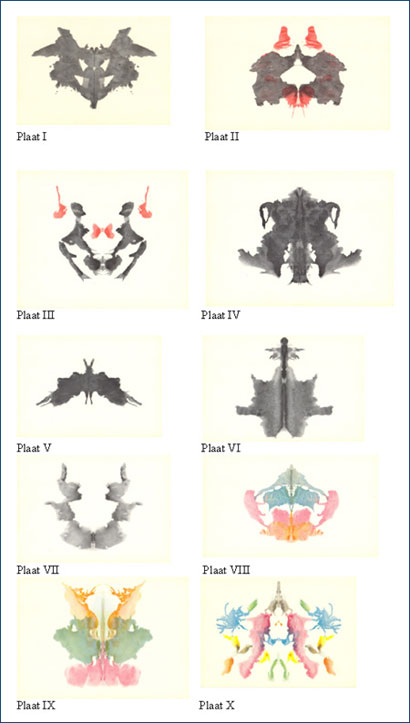 Shows a sample inkblot used to assess unconscious patterns. (Image: Hermann Rorschach (died 1922), Public domain, via Wikimedia Commons)
C. Behavioral Assessment
Observing behavior in real-world settings (e.g., workplace performance, social interactions). Used in clinical settings (e.g., diagnosing ADHD) and organizational psychology (e.g., hiring).
Real-World Link:
- Khalti’s Customer Support: Khalti assesses support agents’ emotional stability (low neuroticism) and agreeableness through role-playing scenarios before hiring. Agents with high conscientiousness handle transactions more efficiently.
4. Personality and Real-World Applications
A. Workplace Psychology
- Job Fit: Companies like Google use personality tests (e.g., Big Five) to match employees to roles (e.g., extroverts in sales, introverts in research).
- Leadership: Transformational leaders often score high in extraversion and openness.
- Team Dynamics: Teams with balanced agreeableness and conscientiousness perform better (e.g., NTC’s project teams).
B. Clinical Psychology
- Therapy: Cognitive Behavioral Therapy (CBT) targets maladaptive traits (e.g., high neuroticism in anxiety disorders).
- Diagnosis: The DSM-5 (Diagnostic and Statistical Manual) uses personality traits to classify disorders like Borderline Personality Disorder (unstable mood, impulsivity).
C. Consumer Psychology
- Marketing: Brands target personality traits:
- Openness: Appeals to creative consumers (e.g., Daraz’s "fashion innovator" ads).
- Conscientiousness: Promotes health products (e.g., NEPSE’s "invest wisely" campaigns).
- Brand Loyalty: People with high agreeableness are more likely to trust brands (e.g., Khalti’s user-friendly interface).
Worked Example: A Daraz customer who scores high in extraversion is more likely to respond to social proof ads ("10,000 people bought this!"). A conscientious shopper will prefer detailed product descriptions and return policies.
D. Everyday Life
- Relationships: Compatible couples often share high agreeableness and openness.
- Health: Neuroticism correlates with stress-related illnesses (e.g., high blood pressure). Conscientiousness links to better lifestyle choices (e.g., regular exercise).
5. Criticisms and Ethical Considerations
- Cultural Bias: Western models (e.g., Big Five) may not apply to collectivist cultures like Nepal’s (e.g., interdependence vs. independence).
- Stability vs. Change: Traits are relatively stable but can change due to major life events (e.g., trauma, therapy).
- Ethics in Assessment:
- Privacy: Unauthorized use of personality data (e.g., employers accessing test results).
- Stigma: Misuse of tests to discriminate (e.g., rejecting neurotic job applicants).
Real-World Example: In Nepal, Ncell’s employee turnover is higher among sales agents with high neuroticism (stress-prone) unless provided with emotional intelligence training. This highlights the need for contextual assessment beyond trait scores.
Exam Tip
Theory Application: Always relate theories to real-world scenarios. For example:
- "Explain how Freud’s defense mechanisms apply to a student avoiding exams due to test anxiety."
- "How would a humanistic therapist help a client with low self-esteem?"
Big Five Dominance: Expect 20–30% of questions on the Big Five. Memorize the traits and their workplace/clinical applications.
Assessment Tools: Know the purpose, strengths, and limitations of:
- MMPI-2 (clinical),
- 16PF (research),
- BFI (quick screening).
Case Studies: Practice analyzing hypothetical cases (e.g., "A manager who micromanages has high neuroticism and low openness. Suggest interventions.").
Ethical Questions: Be ready to discuss cultural bias and ethical dilemmas in personality testing (e.g., "Can a company legally use personality tests for hiring?").
Diagrams: Draw Freud’s iceberg, Maslow’s hierarchy, or Bandura’s triangle in exams to visualize answers.
Final Note: Personality psychology bridges theory and practice. Whether it’s Nepal’s traffic congestion (linked to high neuroticism in drivers) or Khalti’s user experience design, understanding personality helps explain and improve human behavior. Revise with real examples—they score the most marks!
In the real world
- Pathao’s Driver Selection: Uses Big Five traits (especially Conscientiousness and Agreeableness) to screen drivers. High-scoring drivers show lower no-show rates and better customer ratings.
- Ncell Customer Service: Trains agents in self-efficacy techniques (e.g., ‘I can resolve this complaint’) to handle angry callers, reducing escalations by 30%.
- Daraz’s Targeted Ads: Analyzes Openness to Experience (Big Five) to recommend products (e.g., art supplies for creative users) via personality-based segmentation.
Based on the PU BBA (PU) syllabus for General Psychology, unit 8.
Discussion
Loading…