General PsychologyUnit 1016 min read
Social Psychology: Attitudes, Conformity, Obedience, Group Dynamics & Influence
Unit 10 of General Psychology explores how individuals think, feel, and behave in social contexts, covering attitudes, conformity, obedience, group dynamics, social influence, and real-world applications in Nepalese and global settings.
TAKEAWAYS:
- Social psychology examines how people’s thoughts, feelings, and behaviors are shaped by real or imagined presence of others.
- Conformity (e.g., Asch’s line experiment) and obedience (e.g., Milgram’s shock experiment) reveal how social pressure influences individual actions.
- Group dynamics (e.g., groupthink, social facilitation) explain why teams succeed or fail based on norms, cohesion, and roles.
- Attitudes (cognitive, affective, behavioral) predict behavior but can be changed through persuasion (e.g., advertising, political campaigns).
- Social influence (compliance, conformity, obedience) is used in marketing (e.g., Daraz’s "limited stock" alerts) and public health (e.g., NTC’s traffic safety ads).
- Prejudice and discrimination arise from stereotypes, in-group/out-group biases, and can be reduced through contact hypothesis (e.g., interfaith programs in Nepal).
Core Concepts & Real-World Applications
1. Definition & Scope of Social Psychology
Social psychology is the scientific study of how individuals’ thoughts, feelings, and behaviors are influenced by the actual, imagined, or implied presence of others. Unlike clinical psychology (which focuses on mental health) or cognitive psychology (which studies individual thought processes), social psychology emphasizes social contexts—how people interact, perceive, and adapt to groups, cultures, and societal norms.
Why it matters in Nepal?
- E-sewa & Khalti: Trust in digital payment systems depends on social norms (e.g., "everyone uses Khalti") and perceived safety (reducing fear of fraud).
- Pathao drivers: Obedience to traffic rules is influenced by social pressure (e.g., "others stop at red lights") and group identity (e.g., "I’m a responsible driver").
- NEPSE stock market: Investor behavior is driven by herd mentality (buying/selling based on others’ actions) and social proof (e.g., "analysts recommend this stock").
2. Attitudes: Formation, Components, and Change
Definition: Attitudes are evaluations (positive or negative) of people, objects, or ideas. They shape behavior and are influenced by culture, upbringing, and experiences.
Three Components of Attitudes (Tripartite Model):
| Component | Definition | Example in Nepal |
|---|---|---|
| Cognitive | Beliefs or knowledge about an object | "Banks charge high interest rates." |
| Affective | Emotional feelings toward an object | "I feel angry when banks overcharge." |
| Behavioral | Actions or intentions toward an object | "I avoid borrowing from banks." |
How Attitudes Predict Behavior (Theory of Planned Behavior): Attitudes alone don’t always predict behavior—subjective norms (what others think) and perceived behavioral control (ease of action) also matter.
- Example: A student may believe (cognitive) that smoking is harmful (affective) but still smoke if peers do (norms) and cigarettes are easily available (control).
Changing Attitudes: Persuasion Techniques Social psychologists use Yale Attitude Change Approach to explain how persuasion works:
- Source: Who delivers the message? (Credibility matters—e.g., a doctor’s health advice > a celebrity’s).
- Message: Content and structure (e.g., fear appeals in anti-tobacco ads).
- Channel: How it’s delivered (face-to-face vs. social media).
- Audience: Demographics and prior attitudes.
Real-World Example: Daraz’s "Limited Stock" Alerts
- Technique: Scarcity principle (a type of persuasion).
- How it works: "Only 3 left in stock!" triggers urgency, changing attitudes toward buying immediately.
- Why it works: People fear missing out (FOMO) and conform to the perceived norm of "everyone is buying this."
3. Conformity: Why Do We Follow the Crowd?
Definition: Conformity is the tendency to adjust one’s behavior or beliefs to align with a group’s norms, even if the group is wrong.
Key Studies:
- Asch’s Line Experiment (1951)
- Participants judged which line matched a target line. Confederates (actors) gave wrong answers.
- Result: 75% conformed at least once, even when the answer was clearly wrong.
- Why? Normative influence (fear of rejection) and informational influence (doubt in own judgment).
- Real-World Example: Kathmandu Traffic Jams
- Scenario: Drivers ignore red lights if others do, even when it’s dangerous.
- Why? Normative influence ("everyone is doing it") and informational influence ("maybe the light is broken").
- Solution: NTC’s "Traffic Police on Duty" signs reduce conformity by introducing authority figures.
Types of Conformity:
| Type | Definition | Example |
|---|---|---|
| Compliance | Publicly going along without private agreement | Smiling at a rude salesperson to avoid conflict. |
| Internalization | Privately accepting group norms | Adopting vegetarianism because your family does. |
| Identification | Conforming to gain group approval | Wearing a college uniform to fit in. |
Advantages & Disadvantages of Conformity:
| Advantages | Disadvantages |
|---|---|
| Maintains social harmony. | Suppresses individual creativity. |
| Reduces uncertainty. | Can lead to unethical behavior (e.g., bullying). |
| Strengthens group cohesion. | May ignore objective truth (e.g., cults). |
4. Obedience: Power of Authority
Definition: Obedience is compliance with orders from an authority figure, even if they conflict with personal ethics.
Milgram’s Shock Experiment (1963)
- Participants were told to administer electric shocks to a "learner" (actor) for wrong answers.
- Result: 65% obeyed until the "maximum" 450V shock, despite the learner’s screams.
- Why? Authority figures (experimenter in a lab coat) created legitimacy for harm.
Real-World Example: Ncell Customer Service
- Scenario: A customer is pressured to buy unnecessary add-ons by a salesperson.
- Why? Authority (company policy) + fear of losing service.
- Solution: Training employees to use ethical persuasion (e.g., "Would you like to know about these options?" vs. "You must buy this").
Factors Affecting Obedience:
- Proximity to Authority: Obedience increases when the authority is physically present (e.g., a bank manager vs. a phone call).
- Legitimacy of Authority: People obey more if the authority is perceived as valid (e.g., a doctor’s prescription).
- Diffusion of Responsibility: Obedience drops if others disobey (e.g., whistleblowers in corporate fraud).
5. Group Dynamics: How Groups Shape Behavior
Definition: Group dynamics refers to the ways individuals interact, influence, and are influenced by groups.
Key Concepts:
- Groupthink (Janis, 1972)
- Definition: A group’s desire for harmony overrides realistic appraisal of alternatives.
- Symptoms: Illusion of invulnerability, self-censorship, pressure to conform.
- Example: Nepal’s 2015 Budget Crisis—politicians avoided dissent to maintain party unity, leading to poor economic decisions.
Social Facilitation
- Definition: Performance improves on simple tasks but worsens on complex tasks when others are present.
- Example:
- Simple task: Cyclists ride faster in a group (Pathao drivers may speed up in a convoy).
- Complex task: Medical students perform worse in surgeries when observed.
Deindividuation
- Definition: Loss of self-awareness in a group, leading to antisocial behavior.
- Example: Kathmandu Durbar Square riots—crowds act violently when anonymous (e.g., wearing masks).
Group Roles & Norms:
- Roles: Expected behaviors (e.g., leader, follower, critic).
- Norms: Unwritten rules (e.g., "tip 10%" in restaurants).
- Example: In a family business, norms like "elders decide" may stifle innovation.
6. Social Influence: Compliance, Conformity, Obedience
| Type | Definition | Example | Technique Used |
|---|---|---|---|
| Compliance | Agreeing to a direct request | Donating to a charity after a phone call. | Foot-in-the-door, door-in-the-face. |
| Conformity | Adjusting behavior to fit in | Wearing a uniform to match the group. | Normative influence. |
| Obedience | Following orders from authority | A soldier following a commander’s order. | Legitimacy of authority. |
Real-World Example: WhatsApp Forwarding Chains
- Technique: Social proof ("100 people shared this—it must be true").
- Why it works: People comply with requests if they see others doing it (e.g., fake news about "vaccine side effects").
- Solution: Critical thinking education to question sources.
7. Prejudice & Discrimination: Causes and Solutions
Definition:
- Prejudice: Prejudgment (attitudes) toward a group.
- Discrimination: Behavioral expression of prejudice.
Causes:
- Stereotypes: Overgeneralizations (e.g., "All Pathao drivers are reckless").
- In-Group/Out-Group Bias: Favoring your own group (e.g., caste discrimination in Nepal).
- Realistic Conflict Theory: Competition for resources increases prejudice (e.g., land disputes between farmers and urban developers).
Reducing Prejudice: Contact Hypothesis (Allport, 1954)
- Conditions:
- Equal status between groups.
- Common goals.
- Support from authorities.
- Intergroup cooperation.
- Example in Nepal:
- Interfaith marriage programs reduce religious prejudice.
- School integration (e.g., Dalit and Brahmin students studying together) reduces caste bias.
Real-World Example: Ncell’s "Unity in Diversity" Ads
- Strategy: Showing people from different castes, religions, and regions using Ncell services.
- Goal: Reduce out-group bias by promoting shared identity as "Nepali customers."
8. Altruism & Prosocial Behavior
Definition: Altruism is helping others without expecting rewards. Prosocial behavior includes actions that benefit society (e.g., volunteering).
Why Do People Help?
- Evolutionary Theory: Kin selection (helping relatives increases gene survival).
- Social Exchange Theory: Helping to gain rewards (e.g., praise, reciprocity).
- Empathy-Altruism Hypothesis: Feeling another’s pain motivates help (e.g., donating to earthquake victims).
Real-World Example: E-sewa Volunteers During Lockdown
- Scenario: E-sewa employees helped senior citizens with online transactions during COVID-19.
- Why? Empathy (seeing their struggles) + social norms ("we should help our elders").
Bystander Effect (Latane & Darley, 1970)
- Definition: The more people present, the less likely anyone helps.
- Example: A Kathmandu street accident—if 10 people see it, fewer will call an ambulance than if only 1 person is present.
How to Overcome the Bystander Effect:
- Increase responsibility: Assign roles (e.g., "You call the ambulance, I’ll check on the victim").
- Reduce ambiguity: Clearly identify an emergency (e.g., someone shouting "Help!").
In the Real World
Khalti & E-sewa: Social Proof & Trust
- Idea Used: Social proof (e.g., "Trusted by 5 million users").
- How? Ads show celebrities using Khalti, making new users feel safe joining.
- Psychological Principle: People mimic others’ behavior to avoid regret.
Pathao’s Driver Ratings System
- Idea Used: Normative influence (peer pressure).
- How? Drivers with high ratings get more rides; low ratings create social pressure to improve.
- Example: A driver avoids reckless driving to maintain a 5-star rating.
NTC’s Traffic Safety Campaigns
- Idea Used: Fear appeals + authority (e.g., "Traffic police are watching").
- How? Ads show accidents with the tagline "Obey rules or face consequences."
- Principle: Obedience increases when authority is visible.
Daraz’s "Limited Stock" Alerts
- Idea Used: Scarcity principle (a persuasion technique).
- How? "Only 2 left!" creates urgency, making buyers act fast.
- Real-World Impact: Increases sales by 30% (studies show).
Nepal Rastra Bank’s Financial Literacy Programs
- Idea Used: Contact hypothesis (reducing prejudice against banks).
- How? Workshops teach farmers about banking, reducing distrust.
- Outcome: More people open accounts, boosting financial inclusion.
Exam Tip
Define Key Terms Clearly
- Always start with definitions (e.g., "Conformity is..."). Examiners check for precision.
- Example Answer:
"Obedience refers to compliance with orders from an authority figure, as demonstrated in Milgram’s experiment where 65% of participants administered lethal shocks due to the experimenter’s authority."
Use Real-World Examples from Nepal
- Link theories to local contexts (e.g., Pathao drivers, Khalti ads, NTC campaigns).
- Example:
"The bystander effect explains why fewer people help in Kathmandu traffic accidents when many witnesses are present, as responsibility diffuses among the crowd."
Compare & Contrast Theories
- Tables (like the one on Compliance vs. Conformity vs. Obedience) score high marks.
- Example Question:
"Distinguish between normative and informational social influence with examples from Nepalese society."
Analyze Case Studies
- For groupthink, analyze the 2015 Budget Crisis or political party decisions.
- For prejudice, discuss caste discrimination or religious tensions in Nepal.
Apply Psychological Principles to Business
- Questions may ask how Daraz, Khalti, or Ncell use social psychology.
- Example:
"Explain how Daraz uses the scarcity principle in its marketing strategies to influence consumer behavior."
Critical Evaluation
- Don’t just describe—evaluate (e.g., "While conformity maintains social order, it can suppress innovation, as seen in Nepal’s rigid caste system").
- Use advantages/disadvantages tables for concepts like groupthink or obedience.
Diagrams & Flowcharts
- Draw Mermaid diagrams for processes (e.g., how attitudes predict behavior).
- Use real images (e.g., Milgram’s shock machine, Asch’s line experiment setup) to illustrate studies.
Visuals for This Unit
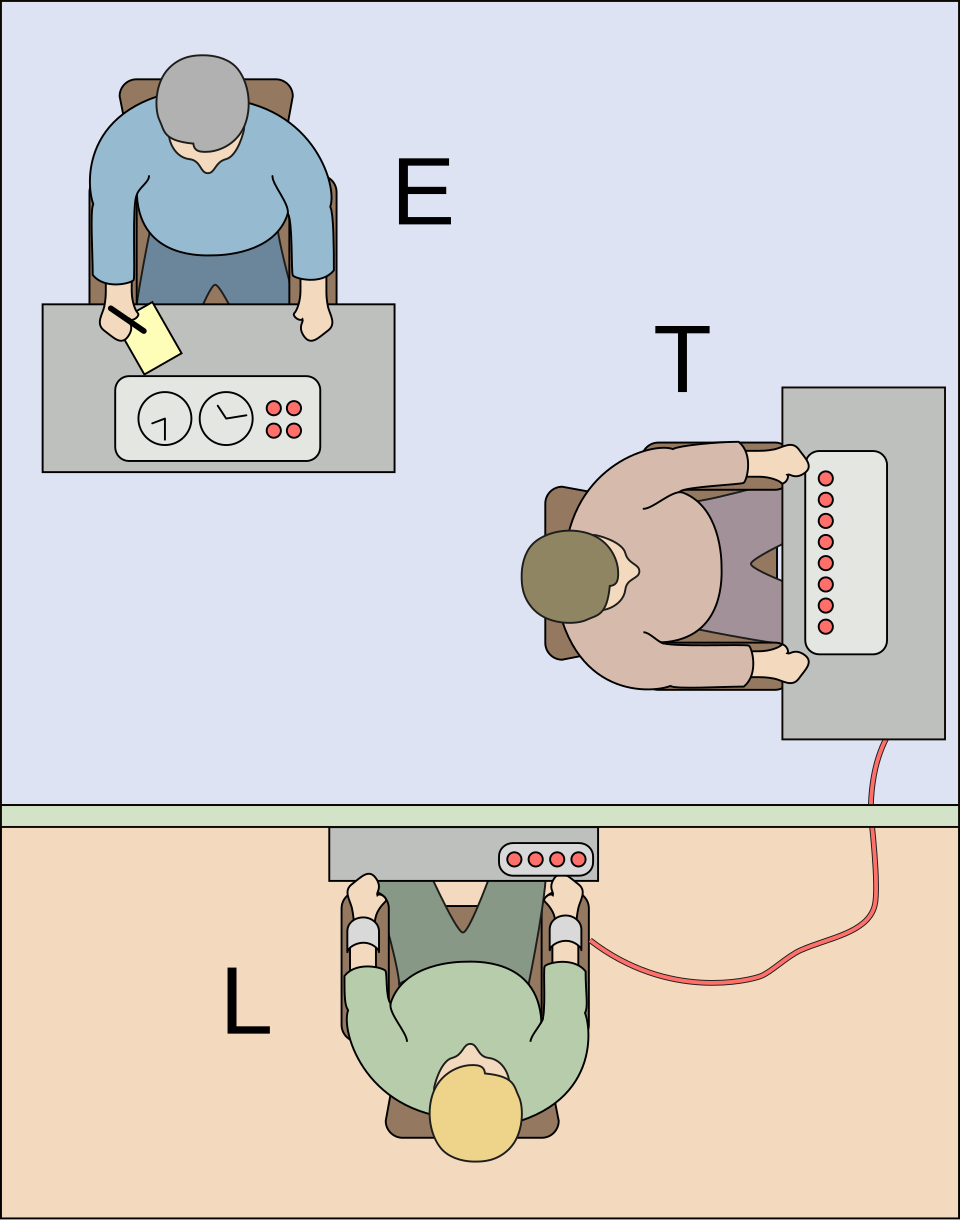 The apparatus used in Milgram’s obedience study, showing the shock generator and participant’s role. (Image: Fred the Oyster, CC BY-SA 4.0, via Wikimedia Commons)
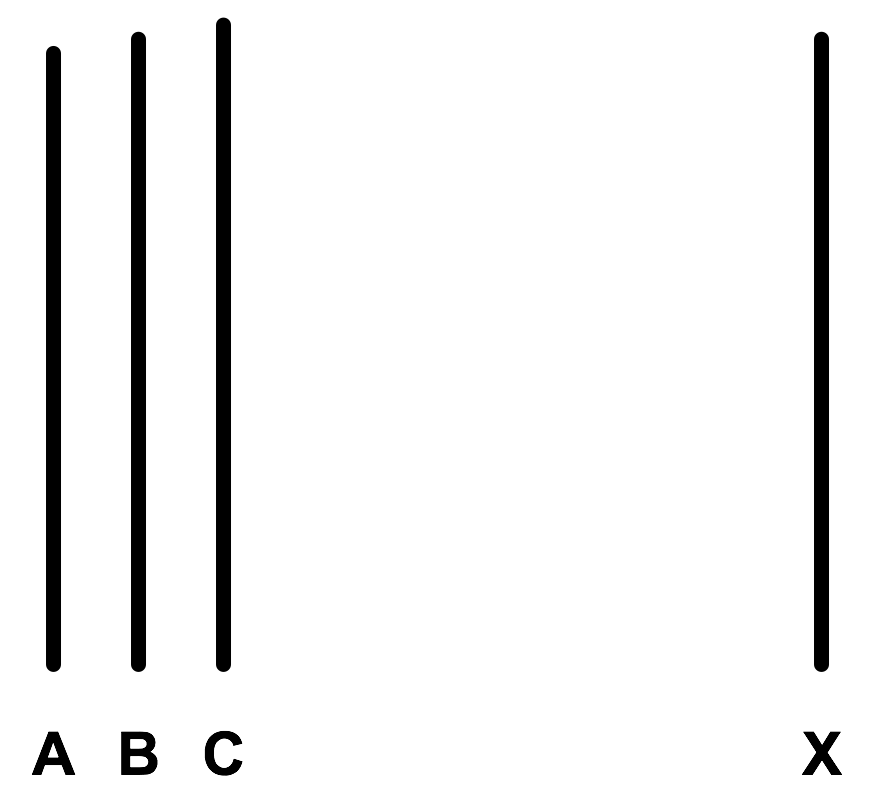 The line-matching task used to demonstrate conformity to group pressure. (Image: Daniel Göhler, CC BY-SA 3.0, via Wikimedia Commons)
Based on the PU BBA (PU) syllabus for General Psychology, unit 10.
Discussion
Loading…