Fundamentals of EntrepreneurshipUnit 89 min read
Legal Forms of Business in Nepal – Types, Registration, and Implications
Unit 8 of Fundamentals of Entrepreneurship: explains the legal structures available to entrepreneurs in Nepal, the registration process, compliance requirements, comparative advantages, and real‑world applications.
Key points
- Entrepreneurs must choose a legal form that balances liability, capital, and control.
- Registration with the Ministry of Law, Justice and Parliamentary Affairs (MLJPA) and the Office of the Company Registrar (OCR) is mandatory for most forms.
- Each legal form has distinct tax, reporting, and ownership implications.
- Understanding the legal framework reduces future litigation and operational risks.
- Compliance obligations (annual returns, audits, tax filings) differ by form and must be met to maintain good standing.
1. Why Legal Form Matters
Choosing the right legal structure determines:
- Liability – personal assets protected or not.
- Capital raising – ability to issue shares or attract partners.
- Taxation – corporate tax vs. personal income tax.
- Management – centralized vs. distributed control.
- Compliance – reporting frequency and complexity.
2. Types of Legal Forms in Nepal
| Legal Form | Legal Basis | Liability | Capital Requirement | Management Structure | Typical Use Cases |
|---|---|---|---|---|---|
| Sole Proprietorship | Companies Act 2063 (Section 2) | Unlimited personal liability | None (except for bank loans) | Owner alone | Small retail, freelance services |
| General Partnership | Companies Act 2063 (Section 5) | Unlimited joint liability | None | Partners share control | Small professional firms |
| Limited Partnership | Companies Act 2063 (Section 6) | General partners unlimited, limited partners limited | None | General partners manage | Investment funds, real‑estate |
| Limited Liability Partnership (LLP) | Companies Act 2063 (Section 7) | Limited to capital contribution | Minimum NPR 1,000,000 | Partners manage | Consulting, IT services |
| Private Limited Company (Pvt. Ltd.) | Companies Act 2063 (Section 8) | Limited to share capital | Minimum NPR 5,000,000 | Board of directors | Start‑ups, SMEs |
| Public Limited Company (Ltd.) | Companies Act 2063 (Section 9) | Limited to share capital | Minimum NPR 25,000,000 | Board of directors, shareholders | Listed companies, large enterprises |
| Cooperative Society | Cooperative Act 2072 | Limited to contribution | Minimum NPR 1,000,000 | General assembly | Agriculture, credit unions |
| Non‑Profit Organization (NPO) | NPO Act 2075 | Limited | None | Board of trustees | NGOs, charities |
| Franchise | Franchise Act 2074 | Depends on franchisee agreement | Varies | Franchisee manages | Fast food, retail chains |
2.1 Merkle‑style Classification Diagram
3. Registration Process Overview
| Step | Action | Authority | Documents | Time |
|---|---|---|---|---|
| 1 | Name reservation | OCR | Proposed names | 1–3 days |
| 2 | Draft constitution / partnership deed | Self | Constitution (for companies), Deed (for partnerships) | 1–2 days |
| 3 | Obtain PAN & TAN | Inland Revenue Department | PAN, TAN application | 1–2 days |
| 4 | File incorporation/registration | OCR | Form 1 (companies), Form 2 (partnerships) | 5–10 days |
| 5 | Receive Certificate of Incorporation | OCR | Certificate | 1 day |
| 6 | Register with local municipality | Municipality | Trade license | 1–2 weeks |
3.1 Worked Example: Registering an LLP for a Food Delivery Service
- Name Reservation – “Kathmandu Food Delivery LLP” submitted to OCR.
- Draft LLP Agreement – Includes capital contribution (NPR 2,000,000 each), profit sharing 40:30:30, and management roles.
- PAN/TAN – Each partner applies; PAN issued in 2 days.
- File Form 1 – Submit to OCR with agreement, PAN copies, and bank proof of capital.
- OCR Review – 7 days; no objections.
- Certificate Issued – LLP registered on 12th March 2024.
- Local Trade License – Obtained from Kathmandu Metropolitan City.
Result: Partners now have limited liability, can raise additional capital by admitting new partners, and must file annual returns and audited financial statements.
4. Comparative Advantages & Disadvantages
| Feature | Sole Proprietorship | General Partnership | LLP | Pvt. Ltd. | Public Ltd. |
|---|---|---|---|---|---|
| Liability | Unlimited | Unlimited | Limited | Limited | Limited |
| Capital Raising | Limited | Limited | Limited | Shares, equity | Shares, equity |
| Taxation | Personal income tax | Personal income tax | Corporate tax (20%) | Corporate tax | Corporate tax |
| Compliance | Minimal | Minimal | Annual audit, returns | Annual audit, returns | Annual audit, returns, SEBI |
| Control | Owner only | Partners | Partners | Board | Shareholders |
| Duration | Perpetual only if registered | Perpetual | Perpetual | Perpetual | Perpetual |
| Cost of Formation | Low | Low | Medium | High | Very high |
4.1 Advantages & Disadvantages Summary
| Legal Form | Advantages | Disadvantages |
|---|---|---|
| Sole Proprietorship | Simple, low cost, full control | Unlimited liability, limited capital |
| General Partnership | Shared responsibility, easy formation | Unlimited liability, potential conflicts |
| Limited Partnership | Limited partners protected | General partners still liable |
| LLP | Limited liability, flexible management | Requires annual audit, higher cost |
| Private Limited | Limited liability, easier capital raise | More compliance, higher cost |
| Public Limited | Access to capital markets, credibility | Heavy regulation, disclosure obligations |
5. Compliance & Ongoing Obligations
| Obligation | Frequency | Who Must File | Penalties |
|---|---|---|---|
| Annual Return | Yearly | All companies, LLPs | Fine, possible dissolution |
| Audit | Annual | Companies with turnover > NPR 25M, LLPs | Fine, legal action |
| Tax Filing | Quarterly/Annual | All entities | Penalties, interest |
| Company Secretary Appointment | Continuous | Pvt. Ltd., Public Ltd. | Fine, revocation |
| Board Meeting Minutes | As per bylaws | Board | Legal disputes |
6. Real‑World Applications
6.1 Daraz Nepal Pvt. Ltd.
- Legal Form: Private Limited Company.
- Why: Enables equity financing from investors (e.g., Alibaba), limits liability of founders, and facilitates compliance with e‑commerce regulations.
6.2 eSewa Pvt. Ltd.
- Legal Form: Private Limited Company.
- Why: Requires robust corporate governance for handling digital payments, protects customer data, and allows raising venture capital.
6.3 Nabil Bank Ltd.
- Legal Form: Public Limited Company.
- Why: Listed on NEPSE, needs to comply with SEBI regulations, issue shares to public, and maintain high transparency.
6.4 Pathao Pvt. Ltd.
- Legal Form: Private Limited Company.
- Why: Supports rapid scaling, attracts foreign investment, and limits personal liability of founders.
6.5 Kathmandu Traffic Management System (KTM) – Hypothetical LLP
- Legal Form: LLP.
- Why: Multiple stakeholders (city government, tech firm, logistics company) share liability and profits while maintaining operational flexibility.
7. In the Real World
- Daraz uses a Private Limited structure to issue shares to investors and to separate business assets from personal assets of founders.
- eSewa operates as a Private Limited to comply with the Payment and Settlement Systems Act, ensuring that customer funds are protected under corporate liability limits.
- Nabil Bank is a Public Limited company, allowing it to list on NEPSE, issue bonds, and attract institutional investors while adhering to strict audit and disclosure norms.
- Pathao chose a Private Limited to facilitate venture capital funding and to provide a clear governance structure for its rapid expansion across Nepal.
8. Exam Tip
- Understand the distinctions between liability, capital, and compliance for each legal form.
- Memorize key statutory references (e.g., Companies Act 2063, Cooperative Act 2072).
- Practice comparative tables: be able to fill in advantages/disadvantages quickly.
- Be ready to explain a registration flow for at least one form (e.g., LLP or Pvt. Ltd.).
- Use real‑world examples to illustrate why a particular form is chosen by a company.
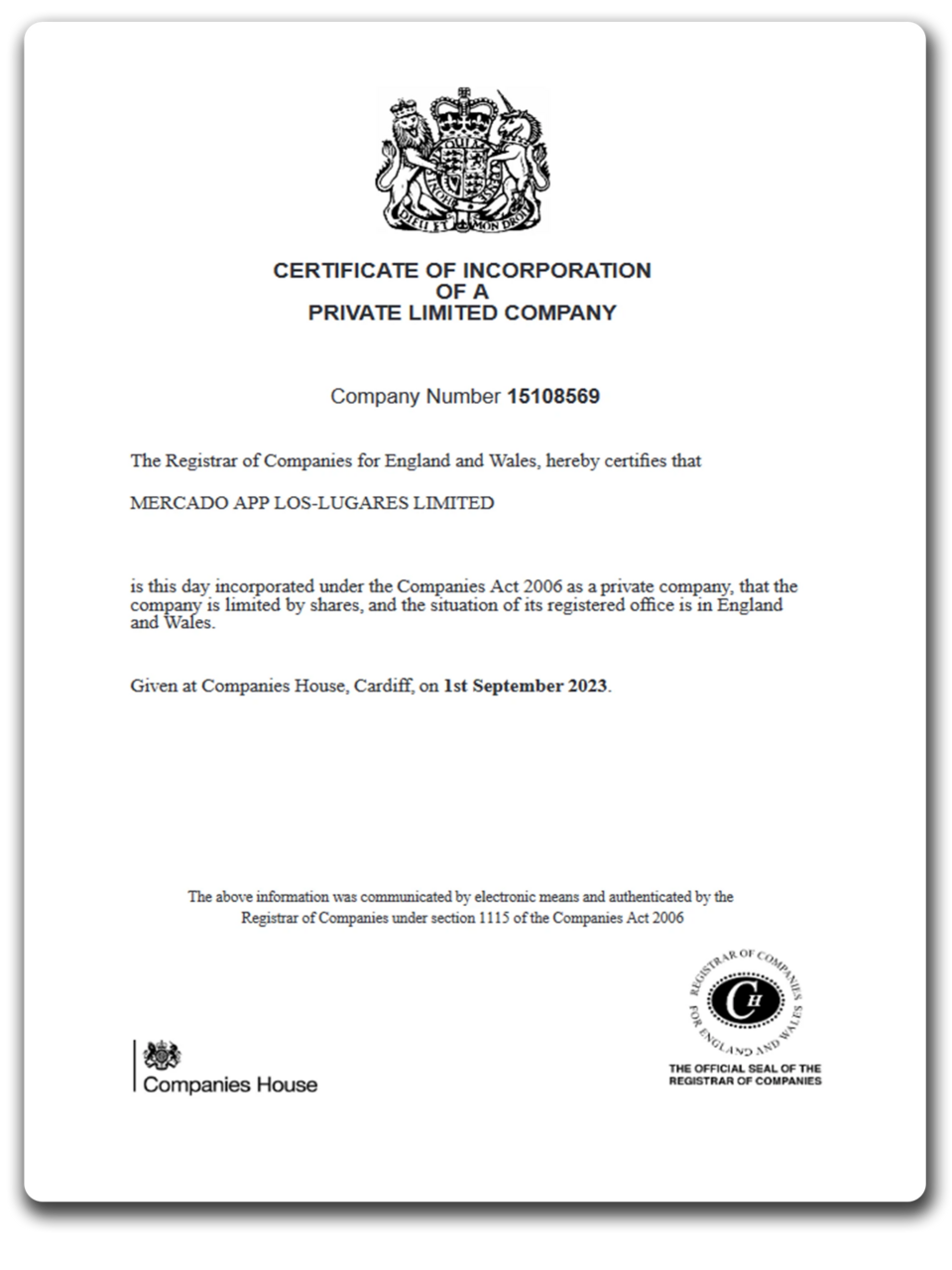 Official certificate issued by OCR after incorporation (Image: Luis124124, CC BY-SA 4.0, via Wikimedia Commons)
Based on the PU BBA (PU) syllabus for Fundamentals of Entrepreneurship, unit 8.
Discussion
Loading…