Fundamentals of EntrepreneurshipUnit 710 min read
Startup Financing: Funding Sources, Valuation, and Capital Structure
Unit 7 of Fundamentals of Entrepreneurship: this note explains the spectrum of startup financing options, the mechanics of valuation, capital structure decisions, and practical examples relevant to Nepali entrepreneurs.
Key points
- Startup financing blends equity, debt, and hybrid instruments tailored to growth stages.
- Valuation methods translate future cash flows into present value, guiding investment decisions.
- Capital structure balances risk and control, influencing cost of capital and ownership dilution.
- Government schemes and local banks provide accessible funding for SMEs in Nepal.
- Understanding funding mechanics is essential for drafting realistic business plans and attracting investors.
1. What is Startup Financing?
Startup financing refers to the process of acquiring capital to launch, grow, and sustain a new venture. It involves selecting appropriate funding sources, negotiating terms, and structuring the capital mix to align with the company’s strategic goals and risk appetite.
2. Funding Sources and Stages
| Stage | Typical Investors | Key Features | Example in Nepal |
|---|---|---|---|
| Pre‑seed | Founders, Friends & Family, Angel Investors | Small amounts, high risk, informal terms | A local food‑tech founder raising ₹10 Lac from family |
| Seed | Angel Networks, Seed Funds, Early‑stage VC | ₹20–₹100 Lac, convertible notes, SAFE | eSewa’s seed round with angel investors |
| Series A | Venture Capital, Corporate VC | ₹1–₹5 Cr, equity, board seats | Daraz’s Series A from Sequoia India |
| Series B‑C | Growth VC, Private Equity | ₹5–₹20 Cr, strategic partnerships | Pathao’s Series B with SoftBank |
| IPO | Public Market | ₹20 Cr+, regulatory compliance | Ncell’s IPO on NEPSE |
2.1 Self‑Financing and Friends & Family
- Definition: Capital sourced from the entrepreneur’s savings or close contacts.
- Pros: Full control, no repayment obligations.
- Cons: Limited amount, personal risk.
2.2 Angel Investors
- Definition: High‑net‑worth individuals investing in early‑stage companies.
- Typical Terms: Equity 5–20 %, board seat, mentorship.
2.3 Venture Capital (VC)
- Definition: Institutional investors providing large sums for high‑growth potential.
- Key Terms: Preferred equity, liquidation preference, anti‑dilution protection.
2.4 Crowdfunding
- Reward‑based: Backers receive a product or service.
- Equity‑based: Investors receive shares; regulated by securities laws.
2.5 Bank Loans and SME Grants
- Bank Loans: Fixed interest, repayment schedule, collateral required.
- Government Grants: Non‑repayable, often tied to innovation or employment targets.
2.6 Incubators & Accelerators
- Provide seed capital, mentorship, and workspace.
- Example: Chaudhary Group’s Startup Hub offers ₹5 Lac seed and office space.
2.7 Convertible Instruments
- Convertible Note: Debt that converts to equity at a discount during a future financing round.
- SAFE (Simple Agreement for Future Equity): Similar to convertible note but without interest or maturity date.
3. Capital Structure Decisions
Capital structure is the mix of debt and equity that a company uses to finance its operations. The goal is to minimize the weighted average cost of capital (WACC) while maintaining flexibility and control.
3.1 Debt vs Equity
| Feature | Debt | Equity |
|---|---|---|
| Cost | Interest rate (often lower) | Equity premium (higher) |
| Risk | Fixed repayment | Variable returns |
| Control | No ownership dilution | Ownership dilution |
| Covenants | Restrictive covenants | None |
| Tax Shield | Interest deductible | No tax shield |
3.2 Hybrid Instruments
- Mezzanine Debt: Subordinated debt with equity kicker.
- Preferred Stock: Dividend preference, convertible to common.
3.3 Capital Budgeting Metrics
- Net Present Value (NPV):
- Internal Rate of Return (IRR): Discount rate that makes NPV zero.
- Payback Period: Time to recover initial investment.
4. Valuation Methods
Valuation estimates the worth of a startup to set equity stakes and negotiate investment terms.
4.1 Cost Approach
- Value based on the cost to recreate the business (equipment, IP).
- Useful for asset‑heavy businesses.
4.2 Market Approach
- Comparable company analysis (CCA) or precedent transactions.
- Requires a market of similar companies.
4.3 Income Approach
- Discounted Cash Flow (DCF): Projects future cash flows and discounts them to present value.
where is terminal value.
4.4 Venture Capital Method
- Estimate exit valuation, discount back to present.
- Formula: \text{Pre‑money Valuation} = \frac{\text{Exit Valuation}}{(1+r)^n \times \text{Ownership %}}
4.5 Scorecard Method
- Adjust a benchmark valuation based on qualitative factors (team, market, product).
4.6 Berkus Method
- Assign monetary value to key risk factors (idea, prototype, quality of management).
5. Worked Example: Valuing an eSewa‑Like FinTech Startup
| Assumptions | Value |
|---|---|
| Revenue 2025 | ₹50 Cr |
| Growth rate | 30 % per year for 5 years |
| Operating margin | 20 % |
| Capital expenditures | ₹5 Cr annually |
| Discount rate | 25 % (high risk) |
| Terminal growth | 3 % |
Step 1: Project Cash Flows
- 2025:
- 2026:
- 2027:
- 2028:
- 2029:
Step 2: Discount Cash Flows
- 2025:
- 2026:
- 2027:
- 2028:
- 2029:
Step 3: Terminal Value
Discounted TV:
Step 4: Total Enterprise Value
Cr
Step 5: Pre‑money Valuation
Assume investor wants 20 % equity:
Cr
Thus, the startup is valued at ₹54.84 Cr pre‑money, and the investor would pay ₹10.96 Cr for 20 % stake.
6. Funding Lifecycle Flowchart
flowchart TD
  A["Idea & Business Plan"] --> B["Self‑Financing"]
  B --> C["Friends & Family"]
  C --> D["Angel Investors"]
  D --> E["Seed Round"]
  E --> F["Series A"]
  F --> G["Series B/C"]
  G --> H["IPO / Exit"]
  H --> I["Return to Investors"]
7. Capital Structure Decision Tree
8. Comparison Table: Equity vs Debt Financing
| Criterion | Equity | Debt |
|---|---|---|
| Cost | Higher (equity premium) | Lower (interest) |
| Control | Dilution of ownership | No dilution |
| Risk | Shared with investors | Fixed repayment |
| Tax Treatment | No tax shield | Interest deductible |
| Flexibility | High (no covenants) | Low (covenants, collateral) |
| Exit | Sale or IPO | Repayment |
9. Real‑World Applications
9.1 eSewa – Angel & Bank Funding
- Idea Used: Digital payment platform.
- Funding: Angel investors (20 % equity) + bank loan (₹5 Cr).
- Result: Rapid scaling of merchant network in Kathmandu.
9.2 Daraz – Venture Capital & IPO
- Idea Used: E‑commerce marketplace.
- Funding: Series A (₹3 Cr VC), Series B (₹10 Cr VC), IPO (₹50 Cr).
- Result: Became Nepal’s largest online retailer.
9.3 Pathao – Convertible Notes
- Idea Used: On‑demand delivery & ride‑hailing.
- Funding: Convertible note (₹2 Cr) from angel, converted to equity at Series A.
- Result: Maintained founder control while attracting growth capital.
9.4 Nabil Bank – SME Loan Scheme
- Idea Used: Micro‑enterprise financing.
- Funding: Government‑backed SME loan (₹1 Cr) with low interest.
- Result: Supports 10,000+ local businesses.
10. In the Real World
| Product | Idea Applied | How It Works |
|---|---|---|
| eSewa | Equity + Debt | Angel investors provide equity for product development; bank loan finances infrastructure. |
| Daraz | Venture Capital | VC funds accelerate logistics and marketing; equity stake drives rapid growth. |
| Pathao | Convertible Notes | Early investors receive debt that converts to equity, preserving founder control until a larger round. |
| Nabil Bank SME Loan | Government‑backed Debt | Low‑interest loan with collateral, enabling small businesses to expand. |
Worked Real Situation: Bank Loan Interest Calculation
A startup borrows ₹10 Cr from Nabil Bank at 12 % per annum, 5‑year term, simple interest.
- Annual Interest:
- Total Interest:
- Total Repayment: ₹10 Cr + ₹6 Cr = ₹16 Cr
- Annual Repayment: ₹16 Cr / 5 = ₹3.2 Cr
11. Exam Tip
- Understand Definitions: Be ready to define equity, debt, convertible notes, SAFE, and valuation methods.
- Compare and Contrast: Use tables to show pros/cons of equity vs debt, or different funding stages.
- Apply Formulas: Practice NPV, IRR, and DCF calculations; show step‑by‑step work.
- Case Analysis: Discuss a real Nepali startup’s funding journey; highlight why specific instruments were chosen.
- Diagram Use: Include mermaid flowcharts for funding lifecycle or capital structure decisions.
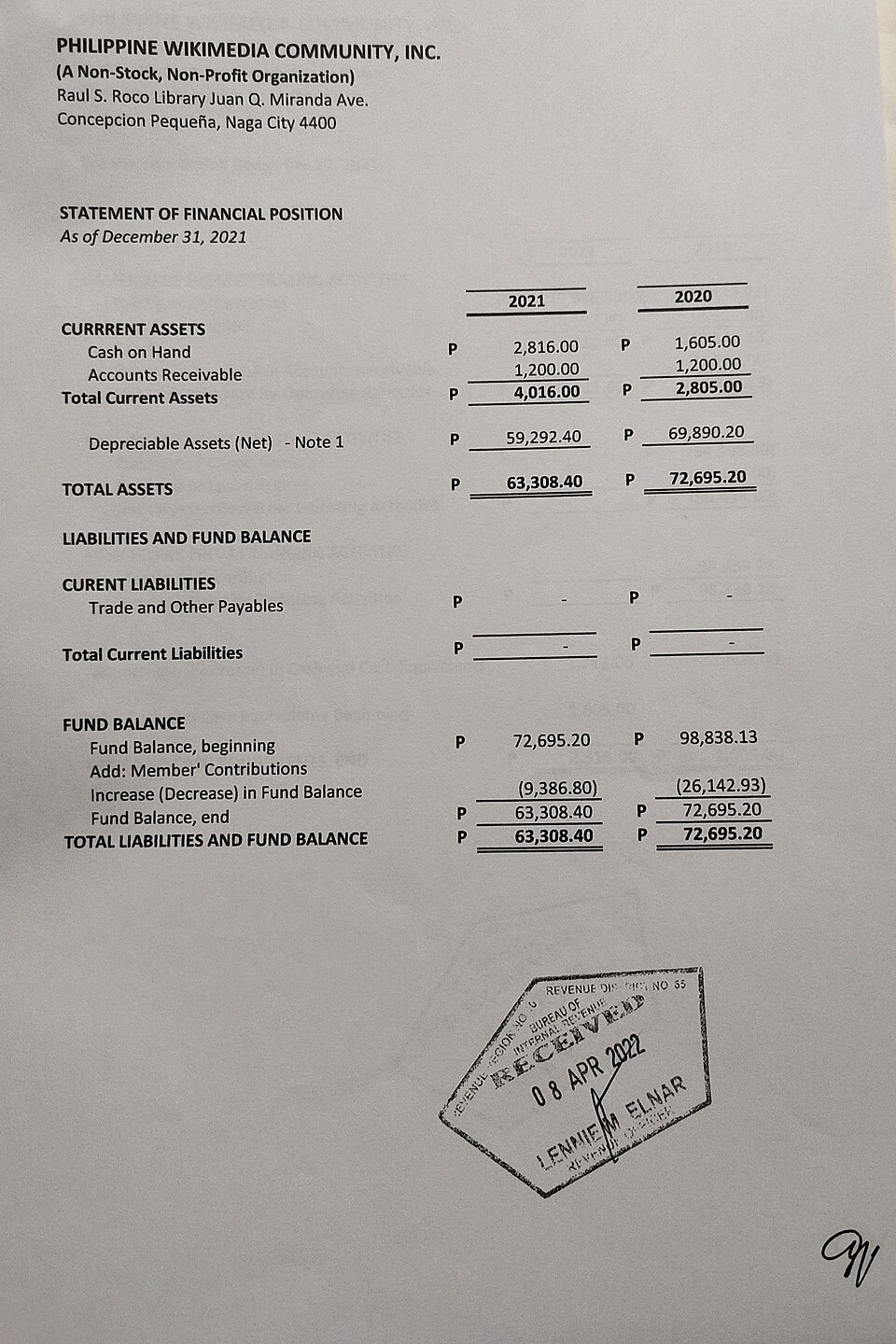 Balance sheet example (Image: Irvin Parco Sto. Tomas, CC BY-SA 4.0, via Wikimedia Commons)
 Equity share certificate illustration (Image: CC BY 4.0, via Wikimedia Commons)
Based on the PU BBA (PU) syllabus for Fundamentals of Entrepreneurship, unit 7.
Discussion
Loading…