Engineering ManagementUnit 217 min read
Management Functions: Planning, Organizing, Leading, Controlling
Unit 2 of Engineering Management explores the four core functions of management—planning, organizing, leading, and controlling—with real-world applications in Nepali and global companies, process flows, and decision-making frameworks.
TAKEAWAYS:
- Management functions are interdependent cycles (planning → organizing → leading → controlling → feedback to planning) that ensure goals are met efficiently.
- Planning involves setting objectives, forecasting, and decision-making (e.g., Daraz’s inventory planning for monsoon sales).
- Organizing structures resources (human, financial, technological) into departments/teams (e.g., Ncell’s network operations vs. customer service).
- Leading motivates teams through communication, leadership styles, and conflict resolution (e.g., Pathao’s rider incentives during peak demand).
- Controlling uses metrics (KPIs, audits) to correct deviations (e.g., NTC monitoring internet speeds in Kathmandu).
- Engineering projects (e.g., hydropower plants) require integrated management functions—planning timelines, organizing crews, leading safety protocols, and controlling costs.
1. Definition and Scope of Management Functions
Management functions are the four dynamic processes that transform inputs (resources, ideas) into outputs (products, services, results). They are cyclical, not linear, meaning each function influences the others.
Key Idea:
"Management is doing things right; leadership is doing the right things." —Peter Drucker (adapted for engineering contexts)
Why It Matters for Engineers:
- Engineers design systems (hardware/software), but managers execute those systems.
- Example: A smart grid project (like Nepal’s ongoing micro-hydro grids) requires:
- Planning (load forecasting, budgeting).
- Organizing (teams for civil, electrical, IT work).
- Leading (motivating contractors during monsoon delays).
- Controlling (ensuring power quality meets NEPSE standards).
2. The Four Management Functions
A. Planning: The Foundation
Definition: Planning is the proactive process of setting goals, developing strategies, and allocating resources to achieve them. It answers:
- What needs to be done?
- How will it be done?
- When will it be completed?
- Who will do it?
- How much will it cost?
Types of Plans (with Engineering Examples):
| Type of Plan | Description | Example in Nepal/Global |
|---|---|---|
| Strategic Plan | Long-term (3–5+ years), organization-wide | Ncell’s 5G rollout plan (2023–2027). |
| Tactical Plan | Mid-term (1–3 years), department-level | Daraz’s warehouse expansion in Chitwan. |
| Operational Plan | Short-term (daily/weekly), task-specific | NTC’s daily internet traffic monitoring. |
| Contingency Plan | Backup for risks (e.g., disasters) | Kathmandu Metro’s power outage protocol. |
Planning Process (Mermaid Flowchart):
flowchart TD
    A["Set Objectives"] --> B["Analyze Environment"]
    B --> C["Develop Premises"]
    C --> D["Identify Alternatives"]
    D --> E["Evaluate Alternatives"]
    E --> F["Select Best Plan"]
    F --> G["Implement Plan"]
    G --> H["Monitor & Control"]
    H -->|"Feedback"| A
Worked Example: Pathao’s Rider Scheduling
- Problem: During Dashain/Tihar, demand spikes 300% in Kathmandu.
- Planning Steps:
- Forecast demand using historical data (e.g., 2022 spike = +250%).
- Set goals: Hire 5,000 temporary riders; train 1,000 in 7 days.
- Allocate resources: Partner with bike rental shops; use Khalti for instant payments.
- Contingency: If rains delay training, use virtual simulations.
Real-World Tie-In:
- eSewa’s Bill Payment System:
- Planning: Forecasts peak usage during festival seasons (e.g., Janai Purnima).
- How it works: Scales servers in AWS during high traffic; uses load balancers to distribute requests.
B. Organizing: Structuring Resources
Definition: Organizing is grouping resources (people, money, technology) into a structured framework to achieve goals efficiently. It involves:
- Division of work (specialization).
- Departmentalization (grouping tasks).
- Authority & responsibility (who reports to whom).
- Span of control (how many subordinates report to one manager).
Organizational Structures (Mermaid Tree Diagrams):
Functional Structure (Common in Engineering Firms):
flowchart TD
  A["CEO"] --> B["CTO"]
  A --> C["COO"]
  A --> D["CFO"]
  B --> E["Hardware Team"]
  B --> F["Software Team"]
  B --> G["QA Team"]
  C --> H["Operations"]
  C --> I["Logistics"]
- Example: Himalayan Java (functional silos for roasting, packaging, sales).
Divisional Structure (Product/Region-Based):
flowchart TD
  A["CEO"] --> B["Smart Grid Division"]
  A --> C["Renewable Energy Division"]
  A --> D["IT Solutions Division"]
  B --> E["Project Managers"]
  B --> F["Engineers"]
- Example: Nepal Electricity Authority (NEA) divides by region (East, West, Kathmandu Valley).
Matrix Structure (Project-Based):
flowchart TD
  A["Project Lead"] --> B["Mechanical Engineer"]
  A --> C["Electrical Engineer"]
  A --> D["Civil Engineer"]
  B -->|"Reports to"| E["Mechanical Dept."]
  C -->|"Reports to"| F["Electrical Dept."]
- Example: Toyota’s hybrid car development (engineers report to both project and functional managers).
Advantages/Disadvantages:
| Structure | Advantages | Disadvantages | Best For |
|---|---|---|---|
| Functional | Clear expertise, low duplication | Slow cross-department coordination | Stable environments (e.g., manufacturing) |
| Divisional | Fast decision-making, focused goals | High costs, redundancy | Diverse products (e.g., Chaudhary Group) |
| Matrix | Flexible, innovative | Conflict over authority, complex | R&D projects (e.g., NASA missions) |
Worked Example: Nabil Bank’s Loan Processing
- Organizational Design:
- Loan Department (specialized in retail, corporate, housing loans).
- Risk Assessment Team (analyzes credit scores, collateral).
- IT Team (manages the loan management system).
- Span of Control: Each loan officer handles 50–100 applications (balanced workload).
Real-World Tie-In:
- Daraz’s Fulfillment Centers:
- Organized by zones (e.g., Kathmandu, Pokhara, Biratnagar).
- Cross-functional teams: Pickers, packers, shippers, quality checkers.
- Tech integration: RFID tags track inventory in real time (like Walmart’s system).
C. Leading: Influencing People
Definition: Leading is the process of motivating, directing, and influencing employees to achieve organizational goals. It includes:
- Communication (clarity, feedback).
- Leadership styles (autocratic, democratic, laissez-faire).
- Conflict resolution.
- Team building.
Leadership Styles (with Engineering Examples):
| Style | Description | Example in Nepal/Global | When to Use |
|---|---|---|---|
| Autocratic | Top-down, manager makes decisions | Military operations (e.g., Nepal Army logistics) | Crises (e.g., earthquake relief) |
| Democratic | Collaborative, team input | Google’s "20% time" for innovation | R&D teams (e.g., Himalayan Java’s coffee blends) |
| Laissez-Faire | Hands-off, employees self-manage | Open-source projects (e.g., Linux kernel devs) | Creative roles (e.g., UI designers) |
| Transformational | Inspires change through vision | Elon Musk (Tesla/SpaceX) | Startups, disruptive innovation |
Motivation Theories (Mermaid Mindmap):
mindmap
  root((Motivation Theories))
    Maslow["Maslow’s Hierarchy of Needs"]
      Physiological
      Safety
      Social
      Esteem
      Self-Actualization
    Herzberg["Two-Factor Theory"]
      Hygiene Factors (Salary, Conditions)
      Motivators (Achievement, Recognition)
    McGregor["Theory X vs. Y"]
      X["Pessimistic: Employees dislike work"]
      Y["Optimistic: Employees seek responsibility"]
    Vroom["Expectancy Theory"]
      Effort → Performance → Reward
Worked Example: NTC’s Internet Speed Incentives
- Problem: Slow internet in rural areas due to poor infrastructure.
- Leading Strategy:
- Democratic approach: Involve local engineers in planning (e.g., community meetings in Sindhupalchowk).
- Motivation: Offer performance bonuses for teams that expand coverage fastest.
- Conflict resolution: Mediate disputes between NTC and tower providers (e.g., Ncell, Smart).
Real-World Tie-In:
- Pathao’s Rider Motivation:
- Gamification: Leaderboards for top riders (e.g., "Rider of the Month").
- Incentives: Higher pay during peak hours (e.g., 20% bonus for Dashain nights).
- Feedback: Riders rate passengers; Pathao suspends repeat complainers.
D. Controlling: Ensuring Goals Are Met
Definition: Controlling is the process of monitoring performance, comparing it to standards, and taking corrective action. It includes:
- Setting performance standards (KPIs, budgets).
- Measuring performance (audits, reports).
- Correcting deviations (reallocating resources, retraining).
Steps in Controlling (Mermaid Flowchart):
flowchart TD
    A["Establish Standards"] --> B["Measure Performance"]
    B --> C["Compare with Standards"]
    C --> D["Identify Deviations"]
    D --> E["Analyze Causes"]
    E --> F["Take Corrective Action"]
    F -->|"Feedback"| A
Tools for Controlling:
| Tool | Description | Example |
|---|---|---|
| Budgetary Control | Tracks income vs. expenses | Nabil Bank’s monthly loan disbursement limits |
| Quality Control | Ensures product/service meets standards | ISO certification for Himalayan Java |
| Performance Appraisals | Evaluates employee effectiveness | Annual reviews at NTC for engineers |
| Audit | Independent verification of records | NEA’s energy consumption audits |
Worked Example: Daraz’s Order Fulfillment Delay
- Problem: 30% of orders delayed during Diwali due to warehouse bottlenecks.
- Controlling Steps:
- Standard: 90% orders delivered in 24 hours.
- Measurement: Tracked delays via ERP system.
- Deviation: 70% on-time rate (below standard).
- Action:
- Hired 500 temporary workers.
- Reorganized warehouse into "fast-moving" and "slow-moving" zones.
Real-World Tie-In:
- NEPSE’s Stock Market Monitoring:
- Controlling Mechanism: Real-time tracking of trade volumes, price fluctuations.
- Corrective Action: If a stock crashes (e.g., NMB Bank in 2020), NEPSE may halt trading temporarily.
3. Integration of Management Functions
Management functions are not isolated; they overlap and reinforce each other. For example:
Case Study: Kathmandu Traffic Management (KTM)
| Function | Application | Real-World Example |
|---|---|---|
| Planning | Forecast peak hours (7–9 AM, 6–8 PM) | Install traffic lights at 40 intersections. |
| Organizing | Assign police, signal technicians | 10 teams for different zones (e.g., Thapathali). |
| Leading | Motivate police to enforce rules | Bonuses for teams reducing accidents by 20%. |
| Controlling | Monitor congestion via cameras | Fine vehicles violating red lights (Khalti payments). |
Visual Integration (Mermaid Cycle):
flowchart LR
    A["Planning"] --> B["Organizing"]
    B --> C["Leading"]
    C --> D["Controlling"]
    D -->|"Feedback"| A
4. Management Functions in Engineering Projects
Engineering projects (e.g., hydropower plants, software development) require all four functions to succeed. Let’s trace a mini-hydro project in Nepal:
| Phase | Planning | Organizing | Leading | Controlling |
|---|---|---|---|---|
| Feasibility Study | Assess river flow, cost, ROI | Hire geologists, civil engineers | Assign team leads | Review environmental impact reports |
| Design | Blueprint, material specs | Architect, structural engineers | Weekly design reviews | Check against safety codes (e.g., NEA standards) |
| Construction | Timeline, budget, risk assessment | Laborers, electricians, foremen | Daily toolbox talks on safety | Inspect concrete strength weekly |
| Commissioning | Test runs, handover to NEA | Operations team, maintenance crew | Train local technicians | Monitor power output vs. forecasts |
**Real-World Example: ** West Seti Hydroelectric Project (27 MW)
- Planning: Forecasted 10-year payback period.
- Organizing: 300+ workers divided into civil, mechanical, and electrical teams.
- Leading: Used transformational leadership to inspire workers during landslides.
- Controlling: Real-time monitoring of turbine efficiency via SCADA systems.
## In the Real World
Khalti’s Payment System:
- Planning: Forecasted 500% user growth post-COVID (2021).
- Organizing: Separate teams for merchant onboarding, fraud detection, and customer support.
- Leading: Democratic style—engineers suggest tech upgrades (e.g., UPI integration).
- Controlling: KPIs: 99.9% uptime; fraud detection rate <0.5%.
NTC’s Internet Expansion:
- Planning: "Digital Nepal" goal—connect 90% of households by 2025.
- Organizing: Matrix structure—engineers report to both network ops and project teams.
- Leading: Autocratic during crises (e.g., 2015 earthquake repairs).
- Controlling: Monthly speed tests in 100+ locations; fines for ISPs underperforming.
Daraz’s Supply Chain:
- Planning: Uses AI to predict demand (e.g., rice spikes before monsoon).
- Organizing: Warehouses by product type (electronics, groceries, fashion).
- Leading: Gamifies warehouse workers with leaderboards for fastest pickers.
- Controlling: RFID tracking ensures no stockouts (like Amazon’s system).
## Exam Tip
How This Unit Is Tested in PU Exams:
Definitions & Concepts (20%):
- Expect short-answer questions on:
- Difference between tactical and operational plans.
- Span of control vs. chain of command.
- Herzberg’s motivators vs. hygiene factors.
- Example Question:
"Explain the controlling function with a real-world example from a Nepali company."
- Expect short-answer questions on:
Process Diagrams (20%):
- Draw flowcharts for:
- Planning process.
- Organizing structure (e.g., functional vs. divisional).
- Controlling cycle.
- Tip: Use Mermaid syntax in exams if allowed; label every step.
- Draw flowcharts for:
Case Studies (30%):
- Scenario-based questions (e.g., "How would you plan Pathao’s expansion into Pokhara?").
- Compare two companies (e.g., "How does Nabil Bank’s organizing structure differ from Himalayan Java’s?").
- Example Question:
"A software firm is missing deadlines. Analyze the possible failures in planning, organizing, leading, or controlling and suggest solutions."
Numerical Problems (15%):
- Budgeting/forecasting (e.g., "Calculate Daraz’s warehouse space needed for 10,000 orders/day").
- KPI calculations (e.g., "If NTC’s target is 95% uptime but actual is 88%, what’s the deviation?").
- Tip: Always show step-by-step calculations with units.
Long Answer (15%):
- Integrated questions (e.g., "Explain how all four management functions apply to building a smart grid in Nepal").
- Structure Your Answer:
- Introduction: Define management functions briefly.
- Body: One paragraph per function with real examples.
- Conclusion: Link back to engineering relevance.
Common Mistakes to Avoid:
- Vague examples: Don’t say "a company"; name Daraz, NTC, or Nabil Bank.
- Ignoring Nepal context: Exams love local cases (e.g., traffic, hydropower, remittance apps).
- Skipping diagrams: Always draw flowcharts for processes (planning, controlling).
- Mixing theories: Know when to use Maslow (motivation) vs. Herzberg (job satisfaction).
High-Score Strategy:
- Use bullet points for definitions (examiners love clarity).
- Relate to engineering (e.g., "In software development, planning is like writing a project charter").
- Memorize 2–3 case studies (e.g., Pathao’s rider motivation, NTC’s speed tests).
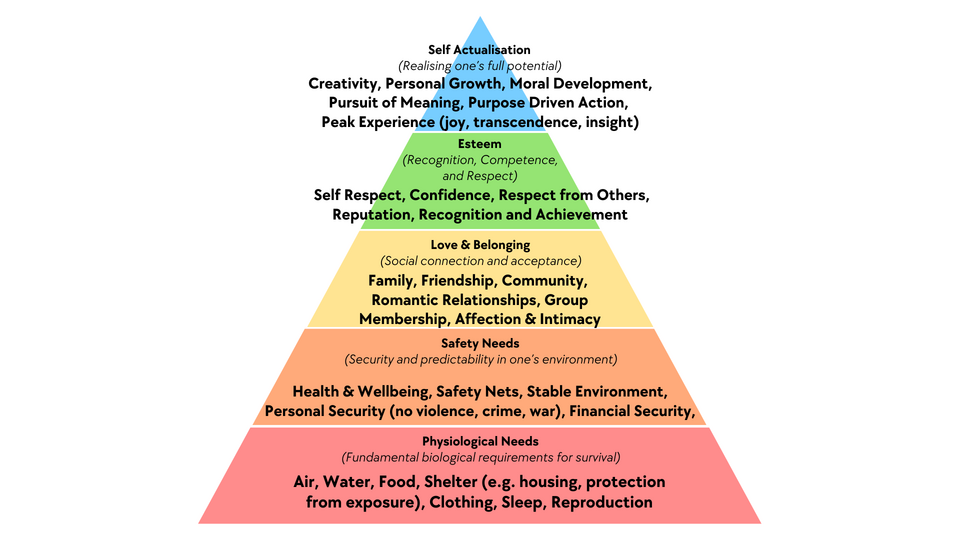 Five-level pyramid with self-actualization at the top (Image: Hamish.croker, CC BY-SA 4.0, via Wikimedia Commons)
Based on the PU BE Computer (PU) syllabus for Engineering Management (MGT320), unit 2.
Discussion
Loading…