Principles of ManagementUnit 814 min read
Control & Performance Management: Systems, Tools & TQM
Unit 8 of Principles of Management covers control systems (types, steps, and essentials), performance management (metrics, rewards), Total Quality Management (tools and principles), and how these apply in Nepali businesses like Nabil Bank and NTC. Includes real-world cases, process flows, and exam-focused comparisons.
TAKEAWAYS:
- Control is a feedback loop (plan-do-check-act) that ensures goals are met by comparing actual vs. planned performance.
- Effective control systems must be timely, flexible, accurate, and cost-effective—Nepal’s NTC uses real-time traffic monitoring to adjust schedules dynamically.
- Total Quality Management (TQM) uses tools like PDCA, Pareto analysis, and fishbone diagrams to eliminate defects (e.g., Himalayan Java’s coffee quality checks).
- Performance management relies on SMART goals, KPIs, and reward systems—Nabil Bank links bonuses to loan recovery rates.
- Control systems can be preventive (budgets), concurrent (inspections), or corrective (audits)—Daraz uses all three to manage order fulfillment.
- Limitations of control include cost, resistance to change, and over-control—small Nepali firms often skip formal systems due to budget constraints.
1. Definition and Nature of Control
Control is the process of monitoring, comparing, and correcting organizational performance to ensure goals are achieved. It is a cyclical, ongoing function of management, not a one-time activity.
Why Control Matters
- Ensures efficiency: Prevents waste (e.g., NTC’s fuel consumption tracking).
- Adaptability: Helps organizations respond to changes (e.g., Pathao adjusting driver incentives during festivals).
- Accountability: Holds employees and departments responsible (e.g., bank branch managers’ loan default targets).
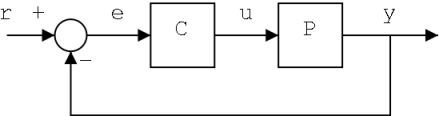 A labeled flow showing input (goal) → output (performance) → feedback → correction. (Image: en:User:Ap, CC BY-SA 3.0, via Wikimedia Commons)
2. Essentials of an Effective Control System
For a control system to work, it must have these 5 key characteristics (critical for exams!):
| Essential | Explanation | Example in Nepal |
|---|---|---|
| Timeliness | Data must be available when needed to take corrective action. | NTC’s real-time traffic cameras adjust signal timings instantly. |
| Accuracy | Data must be precise and reliable. | Nabil Bank’s automated loan default alerts use exact repayment records. |
| Flexibility | System must adapt to changes in goals or environment. | Daraz’s dynamic inventory control adjusts stock levels based on demand forecasts. |
| Economy | Cost of control should not exceed benefits. | Small shops use manual sales logs instead of expensive software. |
| Acceptability | Employees must accept and use the system. | Khalti’s fraud detection AI is transparent to users, reducing distrust. |
Mermaid Diagram: Control System Cycle
flowchart TD
    A["Goal Setting"] --> B["Performance Measurement"]
    B --> C["Comparison (Actual vs. Planned)"]
    C --> D{"Decision Point"}
    D -->|"Corrective Action Needed"| E["Corrective Action"]
    D -->|"No Action Needed"| F["Continue"]
    E --> B
    F --> B
3. Steps in the Control Process
The control process follows a 4-step cycle (often tested in exams):
Establish Standards
- Define quantifiable goals (e.g., NTC’s target: reduce traffic delays by 15%).
- Tools: Budgets, quotas, quality standards.
Measure Performance
- Collect real-time data (e.g., Ncell’s call drop rates, Daraz’s delivery times).
- Methods: Reports, audits, customer feedback.
Compare Performance to Standards
- Identify deviations (e.g., a bank branch misses its monthly loan target).
- Analysis: Variance analysis (favorable/unfavorable).
Take Corrective Action
- Preventive: Train staff (e.g., NTC’s driver safety workshops).
- Concurrent: Adjust processes (e.g., Pathao rerouting drivers during strikes).
- Corrective: Discipline or rewards (e.g., Nabil Bank’s bonus for top performers).
Worked Example: NTC’s Traffic Control
- Standard: Maximum 30-minute delays on Ring Road.
- Measurement: GPS data shows average delay = 45 minutes.
- Deviation: +15 minutes (unfavorable).
- Action: NTC adds signals and launches a public awareness campaign.
4. Types of Control Systems
Control can be classified based on timing and scope:
| Type | Definition | Example |
|---|---|---|
| Preventive Control | Aims to avoid problems before they occur. | Nabil Bank’s credit checks before approving loans. |
| Concurrent Control | Monitors during operations to ensure standards are met. | Daraz’s real-time order tracking for delivery partners. |
| Corrective Control | Takes action after a problem is detected. | NTC’s fines for traffic violations after accidents occur. |
| Strategic Control | Focuses on long-term goals (e.g., SWOT analysis). | Himalayan Java’s 5-year sustainability plan. |
| Operational Control | Manages daily tasks (e.g., budgets, schedules). | Khalti’s fraud detection algorithms for transactions. |
Mermaid Diagram: Control Types
5. Total Quality Management (TQM)
TQM is a customer-focused approach to eliminate defects and improve processes. Key principles:
- Customer satisfaction (internal and external).
- Employee involvement (everyone contributes to quality).
- Continuous improvement (PDCA cycle).
Tools of TQM
| Tool | Purpose | Example in Nepal |
|---|---|---|
| PDCA Cycle | Plan-Do-Check-Act for continuous improvement. | Himalayan Java uses PDCA to reduce coffee spoilage. |
| Fishbone Diagram | Identifies root causes of problems. | NTC analyzes why traffic jams occur (e.g., poor road design, driver behavior). |
| Pareto Analysis | Focuses on the 20% of causes that create 80% of problems. | Daraz identifies top 20% of order delays to fix first. |
| Benchmarking | Compares performance with industry leaders. | Nabil Bank studies HDFC Bank’s digital loan processes. |
| Six Sigma | Reduces defects to 3.4 per million. | Ncell aims for 99.999% network reliability. |
- People: Driver errors, pedestrians.
- Process: Poor signal timing, lack of lanes.
- Technology: Faulty traffic lights.
- Environment: Festivals, construction.
6. Performance Management
Performance management links employee goals to organizational success using:
A. Performance Appraisal Methods
| Method | Description | Example |
|---|---|---|
| 360-Degree Feedback | Feedback from peers, subordinates, and supervisors. | Nabil Bank’s manager evaluations include input from team members. |
| Management by Objectives (MBO) | Sets SMART goals collaboratively. | NTC’s engineers set targets for reducing accidents. |
| Balanced Scorecard | Measures financial, customer, internal, and learning metrics. | Daraz tracks delivery speed, customer ratings, and employee training hours. |
B. Reward Systems
Rewards motivate performance and can be:
- Financial: Bonuses, profit-sharing (e.g., Nabil Bank’s loan recovery bonuses).
- Non-Financial: Recognition, promotions (e.g., Employee of the Month at Himalayan Java).
- Intrinsic: Job satisfaction, growth opportunities (e.g., leadership training at Pathao).
Mermaid Diagram: Performance Management Cycle
flowchart LR
    A["Set Goals (SMART)"] --> B["Monitor Performance"]
    B --> C["Provide Feedback"]
    C --> D{"Performance Meets Goals?"}
    D -->|"Yes"| E["Rewards & Recognition"]
    D -->|"No"| F["Corrective Action/Coaching"]
    E --> G["Motivation Boost"]
    F --> G
    G --> B
7. Limitations of Control Systems
While control is essential, it has challenges:
- Costly: Small businesses may skip formal systems.
- Resistance: Employees may ignore controls if they feel micromanaged.
- Over-Control: Too much control can stifle creativity (e.g., rigid rules at NTC slow down emergency responses).
- Lag Time: Some issues are detected too late (e.g., Daraz’s stockouts during Diwali).
Case Study: NTC’s Control Challenges
- Problem: Over-reliance on manual traffic reports leads to delays.
- Solution: Invested in AI-powered traffic prediction (but requires high costs).
- Lesson: Balance control efficiency with practicality.
8. Control in Nepali Businesses: A Case Study
Company: Nabil Bank Control System in Action:
- Preventive: Credit scoring models to avoid bad loans.
- Concurrent: Real-time fraud detection for transactions.
- Corrective: Loan recovery teams for defaults.
- Performance Metrics:
- Loan Default Rate (<5% target).
- Customer Satisfaction Score (measured via surveys).
- Employee Productivity (loans processed per day).
Why It Works:
- Data-Driven: Uses CRM systems to track customer interactions.
- Employee Training: Regular workshops on compliance and ethics.
- Customer Feedback: Monthly surveys to adjust services.
## In the Real World
NTC’s Traffic Management
- Idea Used: Concurrent control + real-time data.
- How: Traffic cameras and AI algorithms adjust signal timings dynamically to reduce congestion. During Dashain, NTC pre-loads high-traffic routes into GPS apps.
Khalti’s Fraud Detection
- Idea Used: Preventive control + machine learning.
- How: Khalti’s system flags suspicious transactions (e.g., sudden large payments) before they complete. Uses behavioral biometrics (typing speed, device ID) to detect hackers.
Daraz’s Order Fulfillment
- Idea Used: Operational control + Pareto analysis.
- How: Daraz identifies top 20% of slow delivery zones (e.g., Kathmandu’s old city) and deploys more delivery partners there. Also uses predictive analytics to stock best-selling items.
Nabil Bank’s Loan Approvals
- Idea Used: Preventive control + benchmarking.
- How: Before approving a loan, Nabil Bank compares the applicant’s credit score against industry benchmarks. If the score is low, they require collateral or a co-signer.
## Exam Tip
Control Process is a Cycle
- Always explain control as a feedback loop: Plan → Do → Check → Act.
- Example Answer:
"The control process begins with setting standards (e.g., NTC’s target of 30-minute delays). Performance is measured via GPS data, compared to the standard, and corrective actions (e.g., adding signals) are taken if deviations exceed 10%."
Essentials of Control = 5 Points
- Memorize the 5 characteristics (timeliness, accuracy, etc.) and link them to Nepali examples.
- Example:
"NTC’s traffic control system is effective because it is timely (real-time cameras) and flexible (adjusts to festivals). However, it lacks economy in rural areas where cameras are costly."
TQM Tools = High Marks
- PDCA, Fishbone, Pareto are favorite exam topics.
- Example:
"Himalayan Java uses Pareto analysis to focus on the 20% of coffee beans that cause 80% of quality complaints, such as improper roasting."
Performance Management = SMART Goals + KPIs
- Always tie rewards to measurable outcomes.
- Example:
"Nabil Bank’s performance appraisal uses MBO, where branch managers set SMART goals like ‘reduce loan defaults by 15% in 6 months’ and are rewarded based on achievement."
Case Studies = Full Marks
- NTC, Nabil Bank, Daraz, Khalti are safe bets for real-world applications.
- Structure:
- Problem (e.g., traffic jams).
- Control method used (e.g., real-time cameras).
- Outcome (e.g., 12% reduction in delays).
Avoid Common Mistakes
- ❌ "Control is only for big companies." → Wrong! Even small shops use cash flow tracking.
- ❌ "TQM is only about quality." → Wrong! It’s about customer satisfaction and employee involvement.
- ❌ Ignoring limitations → Always mention cost and resistance as challenges.
Final Checklist for Full Marks: ✅ Define control and its 4-step process. ✅ List 5 essentials of control with Nepali examples. ✅ Explain TQM tools (PDCA, Fishbone, Pareto) with real cases. ✅ Link performance management to reward systems. ✅ Discuss limitations of control. ✅ Use at least 2 Nepali company examples (NTC, Nabil Bank, Daraz, etc.).
Based on the TU BBS syllabus for Principles of Management (MGT213), unit 8.
Discussion
Loading…