English IUnit 718 min read
Grammar Mastery: Tenses, Articles, Prepositions, and Sentence Structure
Unit 7 of English I covers essential grammar rules, including verb tenses (present, past, future), articles (a/an/the), prepositions (time, place, direction), and sentence construction (simple, compound, complex). It also explores common errors, punctuation, and practical applications in professional and everyday writi
Grammar and Language Usage: A Comprehensive Guide
Grammar is the backbone of effective communication. In English I (ENG101), Unit 7 focuses on verb tenses, articles, prepositions, and sentence structure—key components that ensure clarity, precision, and correctness in writing and speaking. Mastering these elements will help you excel in exams, professional writing, and real-world communication.
1. Verb Tenses: Present, Past, and Future
Tenses indicate when an action happens—whether it is ongoing, completed, or yet to occur. English has 12 verb tenses, but this unit emphasizes the most commonly used ones:
1.1 Present Tenses
| Tense | Form | Example | Usage |
|---|---|---|---|
| Simple Present | Subject + base verb (s/es) | She works in a hotel. | Habits, general truths, fixed schedules |
| Present Continuous | Subject + am/is/are + V-ing | They are serving guests now. | Actions happening at the moment |
| Present Perfect | Subject + have/has + V3 | He has worked here for 5 years. | Past actions with present relevance |
| Present Perfect Continuous | Subject + have/has + been + V-ing | She has been training for months. | Duration of actions up to now |
Worked Example: "The chef cooks (Simple Present) every day, but right now, he is preparing (Present Continuous) a special dish for VIP guests. He has worked (Present Perfect) here since 2020, and by next month, he will have completed (Future Perfect) 10 years of service."
Real-World Application:
- eSewa App: When you check your balance, the system uses Present Simple ("Your balance is Rs. 5,000") and Present Continuous ("We are processing your payment").
- Ncell Customer Service: "Your bill has been generated (Present Perfect), and by tomorrow, it will be sent (Future Simple) to your email."
1.2 Past Tenses
| Tense | Form | Example | Usage |
|---|---|---|---|
| Simple Past | Subject + V2 | She visited Kathmandu last week. | Completed actions in the past |
| Past Continuous | Subject + was/were + V-ing | They were dining when the power went out. | Ongoing past actions |
| Past Perfect | Subject + had + V3 | By the time we arrived, the flight had departed. | Past actions before another past action |
| Past Perfect Continuous | Subject + had been + V-ing | She had been working for 8 hours before the break. | Duration before a past event |
Worked Example: "Last night, the hotel manager checked (Simple Past) all rooms before closing. While he was walking (Past Continuous) through the lobby, a guest complained (Simple Past) about noise. The manager realized that the cleaning staff had left (Past Perfect) the vacuum running too long."
Real-World Application:
- Pathao Ride: "Your driver had started (Past Perfect) the trip before you confirmed (Simple Past) the ride. By the time you reached (Simple Past), he was already driving (Past Continuous) toward your destination."
- NEPSE Stock Reports: "The stock rose (Simple Past) sharply yesterday because analysts had predicted (Past Perfect) a positive quarterly report."
1.3 Future Tenses
| Tense | Form | Example | Usage |
|---|---|---|---|
| Simple Future | Subject + will/shall + V1 | She will join the team next month. | Predictions, promises, future plans |
| Future Continuous | Subject + will be + V-ing | At 5 PM, they will be serving dinner. | Actions in progress at a future time |
| Future Perfect | Subject + will have + V3 | By next year, she will have graduated. | Actions completed before a future time |
| Future Perfect Continuous | Subject + will have been + V-ing | She will have been studying for 4 hours by then. | Duration before a future event |
Worked Example: "Next week, the hotel will host (Simple Future) a wedding. By 6 PM, the catering team will have prepared (Future Perfect) the entire banquet, and the bride and groom will be dancing (Future Continuous) on the stage. The photographer will have captured (Future Perfect) every moment by midnight."
Real-World Application:
- Khalti Payment Alerts: "Your transaction will be processed (Future Continuous) within 2 minutes. By tomorrow, the merchant will have received (Future Perfect) the payment."
- Daraz Order Tracking: "Your order will ship (Simple Future) by Friday. By Sunday, it will have reached (Future Perfect) your location."
2. Articles: A, An, The
Articles define whether a noun is specific or general. Misusing them can change meaning entirely.
2.1 Rules for Articles
| Article | Usage | Example |
|---|---|---|
| A/An | Used for non-specific nouns (singular, countable) | She is a chef. (any chef) |
| An before vowel sounds (a, e, i, o, u) | He is an experienced manager. | |
| The | Used for specific nouns (known to both speaker and listener) | The chef prepared dinner. (a particular chef) |
| Used with superlatives, unique things, and plural nouns with adjectives | The Himalayas are tall. (unique) <br> The poor need help. (plural with adjective) | |
| No Article | Used with plural nouns (general), uncountable nouns, and abstract nouns | Water is essential. (uncountable) <br> Happiness is subjective. (abstract) |
Common Mistakes: ❌ "She works in a bank." (Correct if referring to any bank; vague) ✅ "She works in the bank on Thapathali." (specific) ❌ "The honesty is important." (Incorrect—use "Honesty is important")
Worked Example: "A hotel needs a good manager, an efficient staff, and the best customer service. The guests expect the comfort of a well-decorated room and the reliability of the housekeeping team."
Real-World Application:
- Hotel Booking Websites (e.g., Agoda, OYO):
- "Book a room in the best hotel in Kathmandu." (A = any room, the = specific hotel)
- "The breakfast included in the package is delicious." (The = specific meal)
- NTC Advertisements:
- "NTC provides the fastest internet service in Nepal." (The = claims uniqueness)
3. Prepositions: Time, Place, and Direction
Prepositions show relationships between words (e.g., time, location, direction). They are essential for clarity in sentences.
3.1 Common Prepositions by Category
| Category | Prepositions | Example |
|---|---|---|
| Time | at, on, in, by, until, during, since | She arrives at 8 AM. <br> The event is on Friday. <br> The meeting is in December. |
| Place | in, on, at, inside, outside, near, between | The key is in the drawer. <br> The book is on the table. <br> She lives near the hotel. |
| Direction | to, towards, from, into, out of, across | The path leads to the restaurant. <br> He walked across the bridge. |
| Agent/Instrument | by, with, using | The letter was written by her. <br> He cut the cake with a knife. |
Worked Example: "The conference at the Radisson Hotel starts on Monday at 9 AM. Delegates should arrive by 8:30 AM. The welcome drink will be served in the lobby before the session begins at 9:30. After the talk, guests can explore nearby attractions using the hotel’s shuttle service."
Real-World Application:
- Google Maps Navigation:
- "Turn left at the traffic light near the school." (Direction + Place)
- "You will arrive in 5 minutes by following this route." (Time + Direction)
- Bank Loan Agreements:
- "Repayments are due by the 15th of every month until the loan term ends." (Time)
- "The interest rate is calculated based on your credit score." (Agent)
- Pathao Ride Confirmation:
- "Your driver is near your location and will arrive in 3 minutes." (Place + Time)
4. Sentence Structure: Simple, Compound, and Complex
Sentences can be simple (one clause), compound (two independent clauses), or complex (one independent + one or more dependent clauses).
4.1 Types of Sentences
| Type | Structure | Example | Punctuation Rule |
|---|---|---|---|
| Simple | Subject + Verb + Object | She works in a hotel. | No conjunctions needed. |
| Compound | Two independent clauses + FANBOYS (for, and, nor, but, or, yet, so) | She works hard, but she needs a break. | Comma + conjunction. |
| Complex | Independent clause + subordinate clause (who, which, because, although, etc.) | She left because she was tired. | No comma if sub. clause first; comma if after main clause. |
Worked Example:
- Simple: "The chef prepared the meal." (1 clause)
- Compound: "The chef prepared the meal, and the guests enjoyed it." (2 clauses joined by and)
- Complex: "Although the chef was tired, he prepared the meal beautifully." (Subordinate clause + main clause)
Real-World Application:
- eSewa Transaction Confirmation:
- Simple: "Payment successful." (Direct, no extra info)
- Compound: "Your payment was successful, so you can now download the receipt." (Adds consequence)
- Complex: "Because your internet was slow, the payment took longer than usual." (Explains reason)
- Hotel Housekeeping Notice:
- Compound: "Please keep the room clean, or we will charge a fee." (Condition)
- Complex: "If you lose your key, report it immediately to the front desk." (Condition + action)
5. Common Grammar Errors and How to Avoid Them
| Error Type | Incorrect Example | Correct Example | Explanation |
|---|---|---|---|
| Subject-Verb Agreement | She is happy, but the team are excited. | She is happy, and the team is excited. | Plural subject needs plural verb. |
| Misplaced Apostrophes | The chef’s are working hard. | The chefs are working hard. / The chef’s knife is sharp. | Apostrophes show possession or contractions. |
| Incorrect Prepositions | She is afraid from spiders. | She is afraid of spiders. | Some verbs require specific prepositions. |
| Run-on Sentences | I love cooking it is my passion. | I love cooking; it is my passion. / I love cooking because it is my passion. | Use punctuation or conjunctions to separate clauses. |
| Incorrect Article Usage | He is a honest man. | He is an honest man. | "Honest" starts with a vowel sound. |
## In the Real World
Grammar is not just an academic exercise—it shapes how businesses, apps, and everyday communication function. Here’s how Unit 7’s concepts appear in real-life scenarios:
eSewa & Khalti (Digital Payments)
- Tenses: "Your transaction was processed (Past Simple) at 2:30 PM. By 3 PM, the merchant will have received (Future Perfect) the payment."
- Articles: "Select the payment method and enter a valid PIN."
- Prepositions: "Your money is in transit to the merchant by 5 PM."
Pathao & Uber (Ride-Hailing Apps)
- Future Tenses: "Your driver will arrive (Simple Future) in 3 minutes. By the time you reach, he will have started (Future Perfect) the trip."
- Prepositions: "Turn left at the traffic light near the school."
NEPSE (Stock Market)
- Past Perfect: "The stock had risen (Past Perfect) before the announcement was made."
- Articles: "The NEPSE index is a key indicator of Nepal’s economy."
Hotel Reservations (Booking.com, Agoda)
- Articles: "Book a room in the best hotel in Kathmandu."
- Prepositions: "Check-in at 2 PM, before the conference starts."
Bank Loan Agreements (NMB, Global IME)
- Future Continuous: "You will be paying (Future Continuous) Rs. 5,000 monthly until the loan matures."
- Prepositions: "Interest is calculated based on your credit score."
NTC & Ncell Customer Service
- Present Perfect: "Your internet has been restored (Present Perfect), and by now, you should be connected."
- Articles: "Select the plan that fits your needs."
## Exam Tip
The Grammar and Language Usage unit in ENG101 is highly practical—expect fill-in-the-blanks, sentence correction, and essay-based grammar questions. Here’s how to score full marks:
1. Tenses (20-30% of marks)
- Identify the time frame (past, present, future) before choosing a tense.
- Common exam traps:
- "She has gone to the market." (Present Perfect for an action with present result)
- "By next year, she will have worked here for 5 years." (Future Perfect for duration)
- Practice: Rewrite sentences using different tenses (e.g., "He left." → "He has left." / "He will leave tomorrow.").
2. Articles (15-20% of marks)
- Remember the 3 rules:
- A/An for singular countable nouns (general).
- The for specific nouns (known to both).
- No article for uncountable/abstract nouns.
- Exam trick: If a noun is unique (the sun, the Himalayas), use the. If it’s anyone’s, use a/an.
3. Prepositions (15-20% of marks)
- Learn phrases by heart:
- "afraid of", "interested in", "responsible for", "arrive at/in/on" (time/place).
- Common mistakes:
- ❌ "She is waiting you." → ✅ "She is waiting for you."
- ❌ "The meeting is at 5 o’clock in the morning." → ✅ "The meeting is at 5 o’clock in the morning." (Correct, but "on" is also used for days: "on Monday")
4. Sentence Structure (10-15% of marks)
- For compound sentences: Use FANBOYS (for, and, nor, but, or, yet, so) with a comma.
- For complex sentences: Identify the main clause (can stand alone) and the subordinate clause (cannot stand alone).
- Exam tip: If a sentence has two complete thoughts, it’s likely compound. If one part depends on the other, it’s complex.
5. Error Correction (10-15% of marks)
- Read carefully: The error might be in subject-verb agreement, articles, prepositions, or word choice.
- Strategy:
- Underline the subject.
- Check if the verb agrees (singular/plural).
- Ask: "Does this sentence need a/an/the?"
- Ensure prepositions make sense ("afraid of" not "afraid from").
6. Real-World Application (5-10% of marks)
- Some exams ask you to apply grammar in a professional context (e.g., writing a resume, email, or notice).
- Example:
- Incorrect: "I have worked in a hotel since 2 years." → Correct: "I have been working in a hotel for 2 years." (Present Perfect Continuous + "for" for duration)
Final Checklist Before Submitting:
✅ Tenses: Did I use the correct past/present/future form? ✅ Articles: Did I use a/an/the correctly, or omit them when needed? ✅ Prepositions: Does the phrase sound natural ("on time," "in time," "at the time"? ✅ Sentence Structure: Are compound sentences properly joined? Are complex sentences correctly punctuated? ✅ Error-Free: Did I proofread for spelling, agreement, and word choice?
Sample Exam Question & Answer
Question: Fill in the blanks with the correct form of the verb in brackets and choose the correct article or preposition.
- By next month, she _____ (work) here for 10 years.
- He is afraid _____ spiders.
- _____ honesty is the best policy.
- The meeting is scheduled _____ 3 PM _____ Friday.
Answer:
- will have been working (Future Perfect Continuous)
- of (Correct preposition)
- Honesty (No article for abstract nouns)
- at, on ("at 3 PM, on Friday")
Practice Exercise (Self-Assessment)
Rewrite the following sentences correcting grammar errors (tenses, articles, prepositions, or sentence structure):
- She is a honest person and she works in a bank.
- The manager said that the staff are lazy.
- I have been waiting you for an hour.
- By the time we reached, the train has already left.
- The hotel is located in the center of the city and it is very beautiful.
Answers:
- She is an honest person and she works in a bank.
- The manager said that the staff were lazy. (Subjunctive mood: "the staff be" is also correct in formal contexts.)
- I have been waiting for you for an hour.
- By the time we reached, the train had already left. (Past Perfect)
- The hotel is located in the center of the city, and it is very beautiful. (Added comma for clarity in compound sentence.)
Conclusion
Grammar is the foundation of clear communication. Whether you’re writing a resume, a professional email, or a travel narrative, mastering tenses, articles, prepositions, and sentence structure will make your writing polished and error-free.
Final Tip: Practice daily—read hotel brochures, news articles, and app notifications (eSewa, Pathao, NEPSE) and identify grammar patterns. The more you expose yourself to correct English usage, the more natural it becomes!
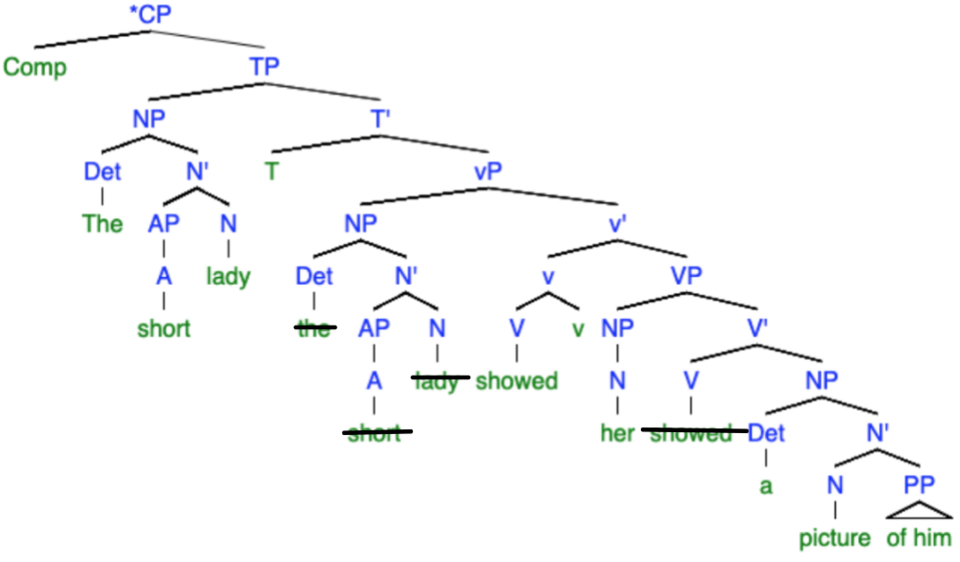 Simple, compound, and complex sentence breakdown (Image: Aleksr27, CC BY-SA 4.0, via Wikimedia Commons)
Based on the TU BHM syllabus for English I (ENG101), unit 7.
Discussion
Loading…