English IUnit 213 min read
Travel Narratives, Cultural Themes & Reading Skills
Unit 2 of English I explores how to analyze travel writing and cultural narratives, focusing on descriptive techniques, thematic analysis, and comprehension strategies for hospitality students.
TAKEAWAYS:
- Learn to identify narrative structures in travel writing (e.g., chronological vs. thematic organization)
- Master cultural analysis by comparing perspectives in narratives (e.g., tourist vs. local viewpoints)
- Practice comprehension techniques like summarizing, inferring, and evaluating cultural biases
- Understand descriptive language in travel writing (sensory details, figurative language)
- Apply critical reading skills to hospitality contexts (e.g., analyzing customer reviews or service narratives)
- Recognize universal themes in travel narratives (e.g., discovery, transformation, cultural exchange)
What Are Travel and Cultural Narratives?
Travel narratives are written accounts of journeys, blending factual details with personal reflections. They often explore:
- Physical landscapes (e.g., mountains, cities)
- Cultural encounters (e.g., traditions, customs)
- Emotional responses (e.g., awe, curiosity, conflict)
Cultural narratives go deeper, examining how people perceive and interpret cultures—whether as outsiders (tourists) or insiders (locals). These texts are common in:
- Travelogues (e.g., The Alchemist by Paulo Coelho)
- Memoirs (e.g., Eat, Pray, Love by Elizabeth Gilbert)
- Journalistic pieces (e.g., National Geographic articles)
Key Features of Travel Narratives
Travel narratives follow recognizable structures but vary in style. Compare these two common types:
| Chronological Narrative | Thematic Narrative |
|---|---|
| Follows a timeline (e.g., day-by-day journey). | Organized around ideas (e.g., "food as culture"). |
| Example: "Day 1: Arrived in Kathmandu; Day 2: Hiked to Nagarkot." | Example: "How street food in Nepal reflects its history." |
| Focuses on events and places. | Focuses on themes and insights. |
| Often descriptive (sensory details). | Often analytical (comparisons, reflections). |
Worked Example: A Hybrid Narrative Read this excerpt from a travel blog about Kathmandu’s traffic:
"The first time I rode a rickshaw through Thamel, the chaos overwhelmed me. Horns blared like a symphony, dust swirled like a sandstorm, and motorbikes wove between cars as if playing a deadly game of chess. But as I watched a group of schoolchildren laughingly dodge a cow, I realized this wasn’t just traffic—it was life. The honking wasn’t frustration; it was communication. The disorder was rhythm."
Analysis:
- Sensory details: "Horns blared like a symphony," "dust swirled like a sandstorm" (uses similes).
- Shift in perspective: From confusion to understanding (shows cultural adaptation).
- Theme: Traffic as a cultural experience, not just a problem.
Cultural Narratives: Perspectives Matter
Cultural narratives often contrast tourist vs. local viewpoints. For example:
- Tourist perspective: "The Durbar Square is so ancient and beautiful!" (focuses on aesthetics).
- Local perspective: "The square is our daily market, our history, and our struggles." (focuses on identity).
Real-World Example: eSewa and Digital Divides eSewa’s mobile payment system revolutionized Nepal, but its adoption tells a cultural story:
- Tourist view: "Nepal is so modern with eSewa!" (sees innovation).
- Local view: "Some villages still don’t have internet—eSewa excludes them." (sees inequality). Key Idea: Technology narratives reveal cultural gaps.
How to Analyze a Travel/Cultural Narrative
Use this step-by-step framework for comprehension:
Identify the narrator’s role:
- Are they a tourist, journalist, or local? Does this affect their bias?
- Example: A backpacker’s account of Pokhara will differ from a local fisherman’s.
Note descriptive techniques:
- Sensory language: "The aroma of momos sizzling in the street..."
- Figurative language: "The Himalayas stood like silent sentinels."
- Contrast: "While the hotels gleamed, the slums whispered stories of neglect."
Extract themes:
- Common themes in travel writing:
- Discovery (e.g., "I never knew Nepal had such diverse cultures!")
- Transformation (e.g., "The village changed me more than I changed it.")
- Cultural clash (e.g., "Their hospitality made me question my own assumptions.")
- Common themes in travel writing:
Evaluate cultural representations:
- Does the text romanticize or critique the culture?
- Example: "The ‘exotic’ portrayal of Nepali villages in travel magazines often ignores modern challenges."
Descriptive Language in Travel Writing
Travel narratives rely on vivid descriptions. Compare these techniques:
| Technique | Example | Effect |
|---|---|---|
| Simile | "The crowd moved like a river." | Creates a visual image. |
| Metaphor | "The city was a living museum." | Implies deeper meaning. |
| Personification | "The wind whispered through the bamboo." | Makes nature feel alive. |
| Hyperbole | "The food was the best I’d ever tasted!" | Emphasizes emotion. |
| Onomatopoeia | "The temple bells clanged loudly." | Engages the reader’s senses. |
Worked Example: Describing Kathmandu’s Durbar Square
"The red bricks of Durbar Square glowed under the setting sun, their centuries-old cracks telling stories of earthquakes and kings. The air hummed with the chatter of tourists and the rhythmic clap of wooden prayer wheels, while the scent of jasmine and incense clung to the stone steps like a ghost from the past."
Breakdown:
- Simile: "clung like a ghost" (connects past and present).
- Personification: "cracks telling stories" (gives life to bricks).
- Sensory details: Sight (red bricks), sound (chatter/clap), smell (jasmine).
Comparing Travel Narratives: A Case Study
Let’s analyze two accounts of Everest trekking:
| Aspect | Tourist’s Account (Backpacker Blog) | Sherpa’s Account (Local Guide) |
|---|---|---|
| Focus | Scenic beauty, personal achievement. | Physical challenges, community support. |
| Language | "The view from Base Camp was breathtaking!" | "The altitude makes your lungs scream." |
| Cultural Insight | "The Sherpas were so kind." | "We carry their dreams but they forget our names." |
| Tone | Awe, excitement. | Respect, frustration. |
| Theme | Personal triumph. | Collective struggle. |
Key Takeaway: The same journey can reveal different truths based on perspective.
In the Real World
Pathao’s Delivery Narratives
- Idea Used: Cultural adaptation in service.
- How: Pathao’s app describes how riders navigate Kathmandu’s traffic, blending local knowledge (e.g., "Take the shortcut via the temple steps—less traffic!") with global efficiency. Their blogs often highlight customer vs. rider perspectives (e.g., "Why do riders take longer routes?" vs. "Why do customers complain about delays?").
Nepal Tourism Board’s Brochures
- Idea Used: Thematic travel narratives.
- How: Their brochures organize Nepal into themes like "Adventure," "Culture," and "Spirituality" rather than just listing places. For example:
- "Adventure" section: "Conquer the Himalayas like a Sherpa."
- "Culture" section: "Walk where kings and gods once treaded."
- Real Example: A brochure might describe Lumbini not just as a birthplace but as "a living classroom of Buddhism."
Ncell’s "Connecting Nepal" Campaigns
- Idea Used: Digital cultural narratives.
- How: Ncell’s ads show how mobile technology bridges gaps, e.g., "A farmer in Surkhet uses USSD to learn about weather—no internet needed." This reflects a cultural narrative of inclusion vs. the tourist’s view of Nepal as "untouched by modernity."
Exam Tip: How to Score Full Marks
This unit is tested through:
- Comprehension passages (10–15 marks).
- Short-answer questions on themes/descriptive techniques (5 marks).
- Essay-style responses (15–20 marks).
Do This to Get Full Marks:
For comprehension:
- Summarize in 3 sentences (use the 5W framework: Who? What? When? Where? Why?).
- Quote and analyze 1–2 lines (e.g., "The simile ‘horns blared like a symphony’ shows...").
- Link to hospitality: "This narrative teaches us how cultural sensitivity improves service."
For essays:
- Structure: Introduction (theme + text details) → Body (analysis + examples) → Conclusion (real-world link).
- Use the framework:
- Identify the narrator’s perspective.
- Analyze descriptive techniques (name them!).
- Evaluate cultural biases or themes.
- Connect to hospitality (e.g., "Like a travel writer, hotel staff must balance authenticity and guest expectations.").
Avoid:
- Generic summaries ("The text is about travel").
- Overquoting without analysis.
- Ignoring the cultural or hospitality angle.
Sample Exam Questions and Answers
Question 1: Comprehension (10 marks)
Passage: "The first time I entered a Newari home, I was struck by the absence of clocks. The hosts moved not by the ticking of watches but by the scent of rice cooking and the call to prayer. My Swiss watch felt like a foreign object in that timeless space."
Answer:
Summary: The narrator describes their cultural shock upon entering a Newari home, where time is measured by sensory cues (smell, prayer calls) rather than clocks. This highlights a contrast between Swiss precision and Nepali cultural rhythms.
Analysis:
- Symbolism: The "Swiss watch" represents Western time-keeping; its foreignness shows cultural clash.
- Sensory language: "Scent of rice cooking" and "call to prayer" create an immersive atmosphere.
- Theme: Time as a cultural construct (some cultures value punctuality; others, fluidity).
Hospitality Link: In hotels, staff must respect guest cultural time perceptions. For example, a Swiss guest might expect punctual service, while a Nepali guest might prioritize relationship-building over schedules.
Question 2: Essay (15 marks)
Topic: "How do travel narratives reflect cultural differences? Use examples from Nepali and global contexts."
Answer: Travel narratives reveal cultural differences through perspective, language, and themes. Here’s how:
Perspective Shapes the Story
- Tourist view: Focuses on exoticism (e.g., "The terracotta roofs of Bhaktapur are like a fairy tale!"). Example: A Daraz blog might describe Kathmandu’s streets as "chaotic but charming," ignoring traffic’s real impact on locals.
- Local view: Highlights daily realities (e.g., "The same streets are our lifeline—our children play here, our goods are sold here."). Example: A Nepali journalist might write about Kathmandu’s air pollution, linking it to health crises.
Language Reveals Values
- Descriptive techniques differ:
- Tourists: Use romantic metaphors ("The Annapurna sunrise was a golden dream").
- Locals: Use practical terms ("The sunrise means another day of farming").
- Global example: In Eat, Pray, Love, Elizabeth Gilbert’s spiritual metaphors ("Bali was my soul’s home") contrast with a Balinese fisherman’s material focus ("Tourists come and go; we fish every day").
- Descriptive techniques differ:
Themes Expose Cultural Priorities
- Tourist narratives: Often center on personal growth ("This trip changed me"). Example: A WhatsApp status like "My solo trek taught me independence!"
- Local narratives: Center on community ("Our trek supports our village school"). Example: A Sherpa’s blog might detail how tourist fees fund local hospitals.
Hospitality Application In hotels, cultural narratives help staff:
- Adapt service styles (e.g., patience for Nepali guests vs. efficiency for Swiss guests).
- Avoid stereotypes (e.g., not assuming all Nepalis are "laid-back" or all tourists are "rich").
- Use local stories in marketing (e.g., "Stay where Sherpas stay").
Conclusion: Travel narratives are mirrors of culture. By analyzing them, we learn to see beyond surfaces—a skill crucial for hospitality professionals who serve diverse guests.
Practice Exercise
Analyze this excerpt from a travel blog about Pokhara’s lakeside:
"The Phewa Lake at sunset was a liquid ember, its reflection shimmering like scattered diamonds on black velvet. The air smelled of lotus and diesel fumes—a strange, beautiful contradiction. As I sipped my chai, a boatman sang a folk song, and I wondered if the lake had heard a thousand such songs before mine."
Tasks:
- Identify 3 descriptive techniques and their effects.
- What cultural theme does the "strange, beautiful contradiction" highlight?
- How might a hotel manager in Pokhara use this narrative style in their brochure?
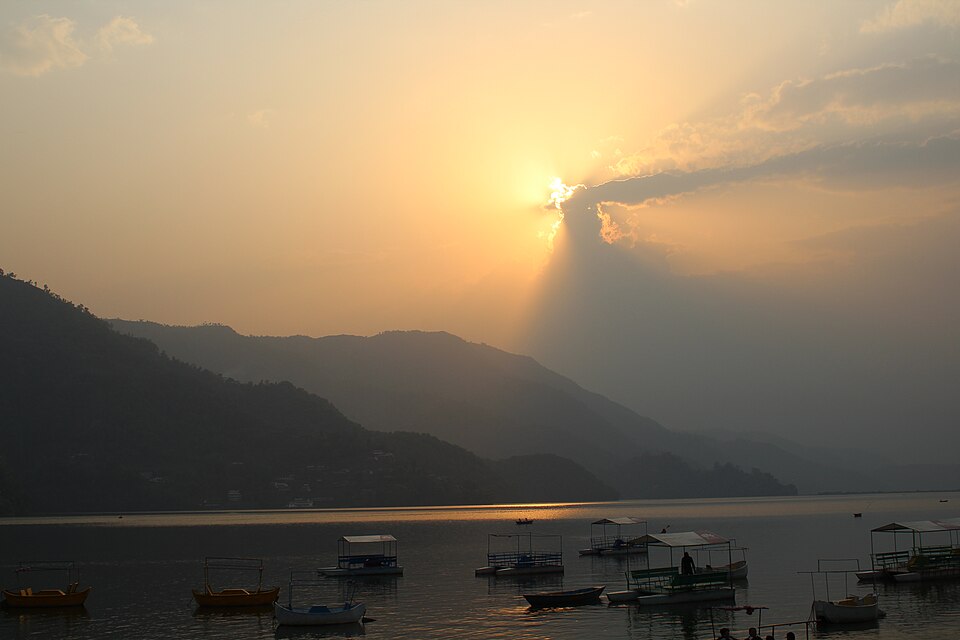 Pokhara’s Phewa Lake at dusk, reflecting colors on the water. (Image: Iamavinashk, CC BY-SA 4.0, via Wikimedia Commons)
Based on the TU BHM syllabus for English I (ENG101), unit 2.
Discussion
Loading…