Food Production And Patisserie IUnit 29 min read
Meat & Poultry: Types, Cuts, Fabrication & Quality
Unit 2 of Food Production And Patisserie I covers meat and poultry classification, fabrication techniques, quality assessment, and practical applications in hotel kitchens—essential for TU’s BHM151 exams and real-world culinary operations.
TAKEAWAYS:
- Meat fabrication transforms raw meat into usable cuts via bone removal, trimming, and portioning for efficiency and waste reduction.
- Quality in meat is judged by color, texture, marbling, and age (e.g., lamb vs. mutton), with grading systems like USDA or Nepali standards.
- Poultry includes birds like chicken, duck, and turkey, each with distinct cuts (e.g., breast vs. thigh) and preparation methods.
- Fabrication diagrams (e.g., beef, lamb) are exam staples—students must label cuts and uses accurately.
- Slaughtering processes (halal, kosher, traditional) impact meat quality, safety, and cultural acceptance.
- Real-world examples show how fabrication principles apply in hotels (e.g., portion control) and local markets (e.g., mutton cuts for choila).
1. Definitions: Meat, Poultry, and Fabrication
Meat
Meat refers to the edible flesh of mammals (e.g., beef, pork, lamb) used in culinary applications. It is a high-protein, nutrient-dense ingredient critical in global cuisines, including Nepali dishes like yomari (stuffed with meat) and choila (spicy mutton).
Poultry
Poultry encompasses domestic birds raised for meat or eggs, such as:
- Chicken (most common, versatile cuts)
- Duck (rich, fatty meat, used in duck confit)
- Turkey (larger cuts, festive dishes)
- Quail (small, tender, used in quail curry)
Meat Fabrication
Fabrication is the art and science of breaking down whole carcasses into usable cuts for cooking. It involves:
- Bone removal (e.g., deboning chicken legs).
- Trimming (removing fat, gristle, or excess skin).
- Portioning (standardized sizes for menus, e.g., 150g steaks).
- Aging (dry or wet aging to tenderize meat).
Why it matters: Fabrication reduces waste, ensures consistency, and meets kitchen demands (e.g., a 5-star hotel’s buffet needs pre-cut portions).
2. Types of Meat and Their Cuts
Meat is classified by animal source, age, and cut. Below are key examples with fabrication diagrams (exam focus).
A. Beef (Cow/Buffalo)
- Types:
- Young beef (tender, lean, e.g., steak).
- Old beef (tougher, used for stews like beef curry).
- Cuts and Uses:
B. Lamb/Mutton
- Difference:
- Lamb: Under 1 year (tender, pinkish lean).
- Mutton: Over 1 year (darker, stronger flavor, used in choila).
- Cuts and Uses:
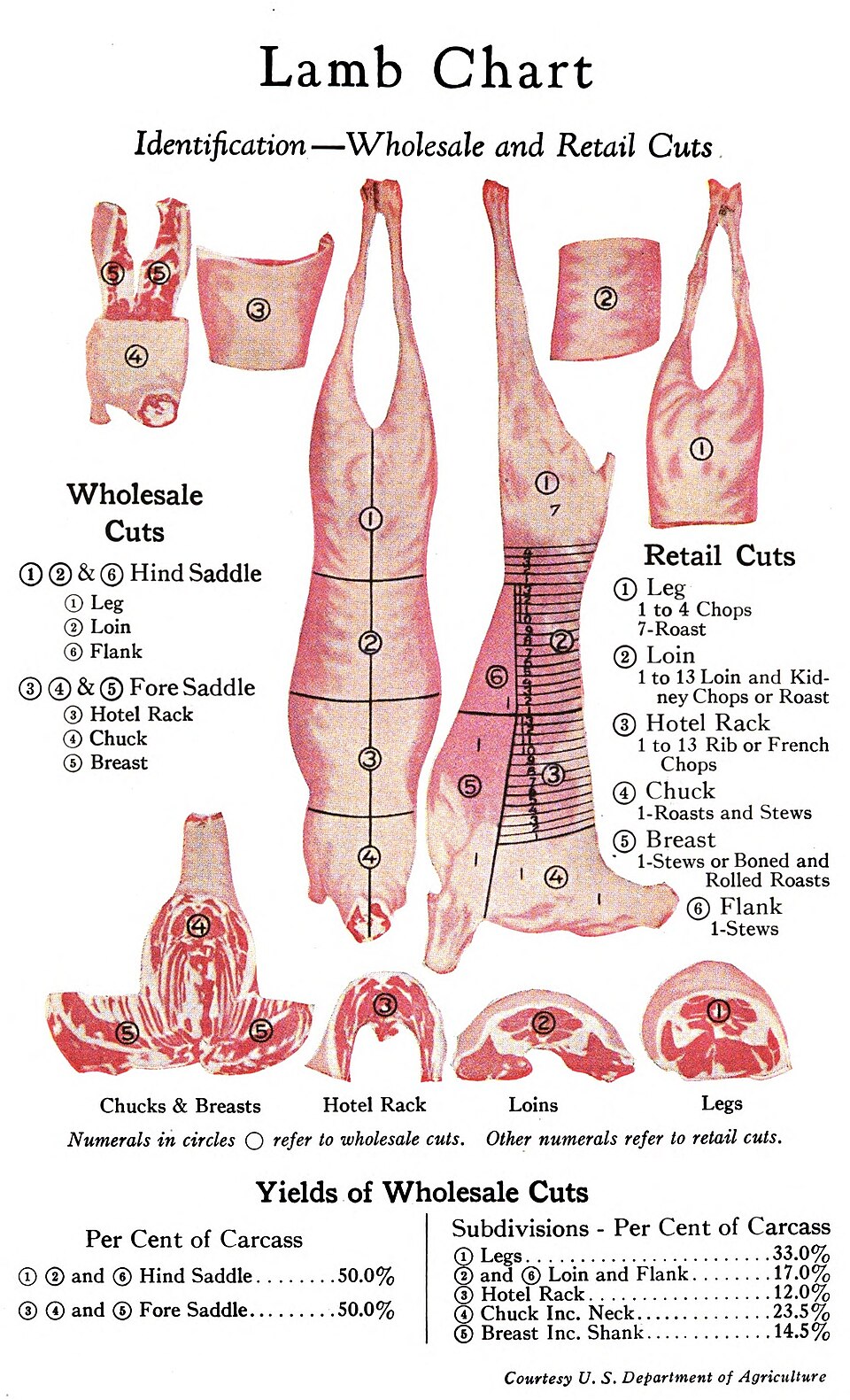 Highlights choila-friendly cuts (leg, shoulder). (Image: National Live Stock and Meat Board. Dept. of Home Economics, Public domain, via Wikimedia Commons)
C. Pork
- Cuts:
- Ham (cured, smoked, e.g., Nepali smoked pork).
- Bacon (belly, lean cuts).
- Loin (chops, tenderloin).
- Quality Note: Pork must be properly cooked (145°F/63°C internal temp) to avoid parasites.
3. Poultry Fabrication
Poultry is fabricated differently due to smaller size and bone structure. Key steps:
- Plucking: Remove feathers (scalding or mechanical).
- Evisceration: Remove organs (keep liver/heart for gizzard curry).
- Cutting:
- Whole: Roasted or fried (e.g., tarkari).
- Parts: Breast (tender, grilled), thighs (juicier), wings (for chicken wings).
4. Quality Assessment of Meat and Poultry
Quality is judged by sensory and physical traits. Use this checklist for exams:
| Factor | Meat | Poultry |
|---|---|---|
| Color | Bright red (beef), pink (lamb) | Pale pink (chicken), yellow (duck) |
| Texture | Firm, springy | Tender, juicy |
| Marbling | Fat streaks (tenderizes) | Minimal (except duck) |
| Odor | Mild, meaty | Fresh, no ammonia |
| Age | Lamb <1y, mutton >1y | Chicken <6 months ideal |
Grading Systems:
- USDA: Prime (best), Choice, Select (Nepal uses similar standards).
- Nepali Market: Choila mutton graded by fat content and age.
5. Slaughtering and Food Safety
Slaughtering affects quality, safety, and cultural acceptance. Key methods:
- Halal: Islamic method (sharp knife, dhabiha, no stunning).
- Kosher: Jewish method (quick slaughter, salted meat).
- Traditional: Local methods (e.g., buffalo slaughter in Nepal).
Safety Steps:
- Chilling: Rapid cooling to 4°C within 4 hours (prevents bacteria).
- Inspection: Check for E. coli, Salmonella (critical for poultry).
- Packaging: Vacuum-sealed for long shelf life.
6. Fabrication Worked Example: Nepali Choila Preparation
Scenario: A hotel kitchen needs to fabricate 5 kg of mutton for choila orders. Steps:
- Receive carcass: Whole mutton (leg, shoulder, ribs).
- Trim: Remove excess fat, skin, and connective tissue.
- Cut:
- Legs → bone-in chops (for choila).
- Shoulder → ground meat (for momos).
- Ribs → small pieces (for stews).
- Portion: 150g per serving (standard for buffets).
- Marinate: Mix with garlic, ginger, turmeric, and yogurt (24 hours).
Why this matters: Fabrication ensures consistent flavor and presentation, key for hotel standards.
## In the Real World
eSewa/Khalti (Nepal):
- Idea Used: Portion control in meat delivery.
- How: Restaurants order pre-fabricated cuts (e.g., 200g chicken breast) via apps to avoid waste. Fabrication ensures uniform sizes for momos or tarkari.
Daraz Food Orders:
- Idea Used: Meat grading for customer trust.
- How: Daraz sellers label meat as "Grade A" (tender, young) or "Grade B" (older, cheaper) based on marbling and color. Buyers choose based on quality points.
Nepalese Hotels (e.g., Hyatt Regency Kathmandu):
- Idea Used: Fabrication for buffet efficiency.
- How: Carcasses are pre-cut into standard portions (e.g., 120g beef strips) during off-hours. This reduces kitchen chaos during peak service and ensures consistent plating.
Pathao’s "Meat Box" Delivery:
- Idea Used: Poultry fabrication for convenience.
- How: Pathao partners with butchers to sell pre-cut chicken parts (boneless thighs, drumsticks) for home cooks. Fabrication adds value by saving time.
## Exam Tip
Diagrams Are Mandatory:
- Always draw labeled fabrication diagrams (beef, lamb, chicken) with cuts and uses. Use arrows to show bone removal.
- Example: For lamb, label leg (choila), loin (chops), and shoulder (ground meat).
Quality Checklist:
- Memorize the color, texture, marbling table for meat/poultry. Examiners test this in short-answer questions.
Fabrication Steps:
- For meat fabrication, list:
- Bone removal (e.g., deboning chicken legs).
- Trimming (fat, gristle).
- Portioning (standard weights).
- For poultry, emphasize plucking → evisceration → cutting.
- For meat fabrication, list:
Real-World Links:
- Tie answers to Nepali dishes (e.g., choila uses leg of mutton) or hotel operations (e.g., buffet portioning).
- Example: "Fabrication ensures the leg of lamb is cut into 150g portions for choila in hotel buffets, reducing waste and labor."
Slaughtering Safety:
- Know halal vs. kosher methods and chilling requirements (4°C within 4 hours). This is often tested in food safety questions.
## Quick Revision Table
| Topic | Key Points | Exam Focus |
|---|---|---|
| Meat Types | Beef (young/old), lamb (tender/mutton), pork (ham/bacon) | Cuts and uses |
| Poultry | Chicken (breast/thigh), duck (confit), turkey (festive) | Fabrication steps |
| Quality Factors | Color, texture, marbling, odor, age | Grading systems (USDA/Nepali) |
| Fabrication | Bone removal, trimming, portioning | Diagrams + worked examples |
| Slaughtering | Halal, kosher, traditional; chilling, inspection | Safety and cultural methods |
Based on the TU BHM syllabus for Food Production And Patisserie I (BHM151), unit 2.
Discussion
Loading…