Food Production and Patisserie IIUnit 96 min read
Pastry & Confectionery: Techniques, Recipes & Artistry
Unit 9 of Food Production and Patisserie II covers the science and craft of pastries and confections—from doughs and fillings to decorative techniques—with real-world applications in hotel kitchens, bakeries, and dessert menus.
Core Concepts
1. Definitions and Classification
Pastry and confectionery refer to baked or sweetened foods made from doughs, creams, fruits, and decorative elements. They are classified into:
- Pastries: Savory or sweet baked goods (e.g., pies, tarts, puff pastry).
- Confectionery: Sweetened treats (e.g., chocolates, candies, ice creams).
mindmap
  root((Pastry & Confectionery))
    Pastries
      Puff Pastry
      Shortcrust Pastry
      Filo Dough
      Choux Pastry
    Confectionery
      Chocolates
      Candies
      Ice Creams
      Gelatin Desserts
2. Key Ingredients and Their Roles
| Ingredient | Function | Example Use |
|---|---|---|
| Flour | Structure, texture (gluten development) | Puff pastry, croissants |
| Fat (Butter, Lard) | Tenderness, flakiness, moisture retention | Shortcrust pastry, pie dough |
| Sugar | Sweetness, browning, moisture retention | Caramel, meringues |
| Eggs | Binding, leavening, richness | Meringues, custards |
| Dairy (Milk, Cream) | Richness, moisture, flavor | Ice cream, cream puffs |
| Gelatin | Setting agent for mousses, aspics | Jellies, panna cotta |
3. Pastry Techniques
A. Dough Preparation
1. Puff Pastry
- Layers: 727272... (butter folded into dough in a 3-fold pattern).
- Key Step: Laminating (alternating layers of dough and butter).
- Worked Example:
- Ratio: 100g flour : 50g butter : 100ml water (per 100g dough).
- Folding: Turn dough 90°, fold into thirds (3-fold), repeat 6–8 times.
- Resting: Chill between folds to prevent butter melting.
2. Shortcrust Pastry
- Texture: Crumbly, crisp.
- Ratio: 2:1:1 (flour : fat : water).
- Use: Tarts, quiches, pie crusts.
flowchart TD
  A["Mix flour & fat"] --> B["Add water gradually"]
  B --> C["Knead lightly"]
  C --> D["Rest 30 min"]
  D --> E["Roll & blind-bake"]
3. Choux Pastry
- Structure: Light, hollow (steamed then baked).
- Use: Éclairs, cream puffs.
- Worked Example:
- Recipe: 125ml water, 50g butter, 1 pinch salt → boil → add 125g flour → cool → add 3 eggs.
- Baking: 200°C for 20–25 min until golden.
B. Fillings and Toppings
| Filling | Base Ingredients | Example Dessert |
|---|---|---|
| Pastry Cream | Eggs, milk, sugar, cornstarch | Éclairs, tarts |
| Chocolate Ganache | Chocolate + cream | Truffles, cake layers |
| Fruit Compote | Fruit + sugar + pectin | Cheesecakes, tarts |
| Meringue | Egg whites + sugar | Pavlovas, macarons |
4. Confectionery Techniques
A. Chocolate Work
- Tempering: Controlled heating/cooling to stabilize cocoa butter.
- Steps:
- Melt chocolate to 45–50°C.
- Cool to 27–28°C (seeding).
- Reheat to 31–32°C.
- Steps:
- Use: Glossy finish, snapping texture (e.g., Daraz’s online chocolate orders).
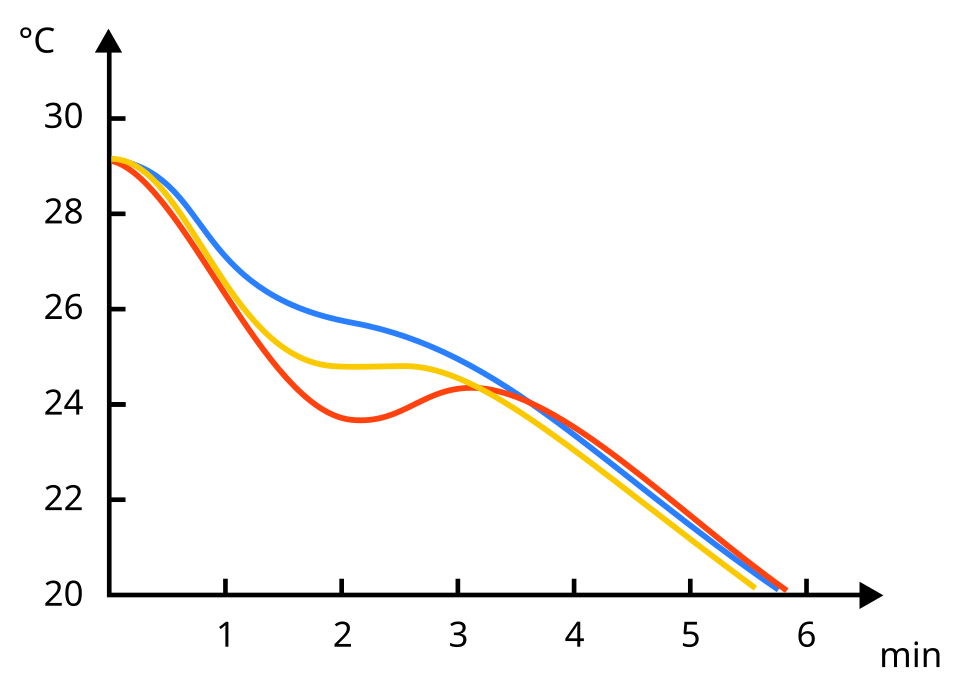 Temperature vs. time graph. (Image: SKopp, CC BY-SA 4.0, via Wikimedia Commons)
B. Sugar Work
- Caramelization: Heating sugar to 110–160°C for color/flavor.
- Types:
- Soft crack (140°C): Toffees.
- Hard crack (160°C): Brittles.
5. Decorative Techniques
- Piping: Use of pastry bags for borders (e.g., IMAGE: floral piping patterns labelled diagram).
- Mirror Glazing: Edible mirror finish (gelatin + sugar syrup).
- Chocolate Sculpting: Molding for centerpieces (e.g., IMAGE: chocolate figurine sculpting tools labelled diagram).
In the Real World
eSewa & Khalti Payments
- Idea Used: Tempering in chocolate-coated gift cards.
- How: eSewa’s promotional chocolate cards use tempered chocolate for a glossy, professional finish that resists melting during delivery.
Pathao’s Dessert Delivery
- Idea Used: Choux pastry for cream puffs in meal kits.
- How: Pathao’s dessert boxes include choux-based items (e.g., pistachio cream puffs) that stay light and crisp even after delivery.
Nepalese Hotels (e.g., Dwarika’s Hotel)
- Idea Used: Pastry cream in layered desserts.
- How: High-end hotels use pastry cream in mousse cakes to balance texture (creamy vs. crunchy) and extend shelf life for buffet service.
Worked Example: Kathmandu Traffic Jam Analogy
- Problem: Rush-hour traffic (like overworked pastry dough).
- Solution: Like laminating puff pastry, layering butter prevents dough from becoming tough—just as alternating lanes in traffic prevents gridlock.
Exam Tip
- Short Answer Questions (SAQs):
- Define laminating and its role in puff pastry.
- Compare shortcrust vs. puff pastry (use a table).
- Practical Questions:
- Calculate the egg ratio for 500g choux pastry.
- Describe the tempering process for 200g dark chocolate.
- Long Answer (LAQs):
- Explain 5 steps to prevent pastry from shrinking (e.g., chilling dough, proper rolling).
- Design a dessert menu using 3 pastries and 2 confections (include techniques).
Common Pitfalls:
- Forgetting to rest dough between folds (puff pastry fails).
- Overmixing shortcrust pastry (loses crumbly texture).
- Skipping seeding in tempering (chocolate seizes).
Visual Summary:
graph LR
  A["Pastry"] --> B["Dough Types"]
  A --> C["Fillings"]
  A --> D["Decorations"]
  C --> E["Pastry Cream"]
  C --> F["Ganache"]
  D --> G["Piping"]
  D --> H["Chocolate Work"]
Based on the TU BHM syllabus for Food Production and Patisserie II (BHM302), unit 9.
Discussion
Loading…