Hotel AccountingUnit 915 min read
Depreciation: Methods, Calculations & Hotel Applications
Unit 9 of Hotel Accounting covers depreciation—how to allocate the cost of fixed assets over their useful life, including straight-line, diminishing balance, and sum-of-years’ digits methods, with real-world hotel examples and exam-focused calculations.
TAKEAWAYS
- Depreciation spreads the cost of fixed assets (e.g., furniture, kitchen equipment) over their useful life, matching expenses to revenue.
- Three key methods (straight-line, reducing balance, sum-of-years’ digits) are used in hotels, each with pros/cons for tax and financial reporting.
- Residual value and depreciable amount are critical in calculations—ignore them, and your answer will be wrong.
- Partial-year depreciation applies when an asset is acquired mid-year (e.g., a new minibar in July).
- Disposal of assets requires reversing accumulated depreciation and recognizing a gain/loss—common in exam scenarios.
- Computerized accounting (e.g., Oracle Hospitality) automates depreciation entries, but you must still understand manual calculations for exams.
1. What is Depreciation?
Depreciation is the systematic allocation of the cost of a fixed asset (e.g., furniture, kitchen equipment, HVAC systems) over its useful life. It reflects the wear and tear or obsolescence of assets and ensures that the matching principle (revenue vs. expense) is followed in financial statements.
Why is it important in hotels? Hotels invest heavily in non-current assets (e.g., a $500,000 restaurant kitchen). Depreciation ensures that the cost of these assets is not fully expensed in Year 1 but spread over years, giving a true picture of profitability.
2. Key Terms
| Term | Definition | Example (Nepali Hotel Context) |
|---|---|---|
| Fixed Asset | Long-term tangible asset (e.g., building, machinery) used in operations. | A $2M banquet hall in a Kathmandu 5-star hotel. |
| Useful Life | Estimated period an asset will be used (e.g., 10 years for furniture). | 15 years for a hotel’s HVAC system. |
| Residual Value | Estimated value of an asset at the end of its useful life. | $50,000 for a used kitchen stove after 10 years. |
| Depreciable Amount | Cost of asset minus residual value. | $450,000 for a $500,000 minibar if residual value = $50K. |
| Accumulated Depreciation | Total depreciation charged to date (contra-asset account). | After 3 years: $135,000 (for the minibar above). |
| Book Value | Cost of asset minus accumulated depreciation. | $365,000 ($500K - $135K). |
3. Depreciation Methods (With Hotel Examples)
Hotels use three primary methods, each with advantages for tax and financial reporting.
A. Straight-Line Method (SLM)
How it works: Depreciation is constant each year. Formula:
Example: Daraz Delivery Van
- Cost: NPR 2,500,000
- Residual Value: NPR 200,000
- Useful Life: 5 years
- Annual Depreciation:
Journal Entry (Year 1):
| Date       | Particulars                     | Dr (NPR) | Cr (NPR) |
|------------|----------------------------------|----------|----------|
| 2024-01-01 | Depreciation Expense (Van)       | 460,000  |          |
|            | Accumulated Depreciation (Van)   |          | 460,000  |
When to use?
- Simple and easy to calculate.
- Best for assets with steady wear (e.g., furniture, linens).
Disadvantages:
- Does not reflect higher depreciation in early years (when assets are newer).
- Not tax-efficient in some countries (e.g., Nepal allows accelerated methods for tax).
B. Diminishing Balance Method (DBM)
How it works: Depreciation decreases each year by a fixed percentage (e.g., 20%). Formula:
Example: Hotel Kathmandu’s Restaurant Equipment
- Cost: NPR 1,000,000
- Residual Value: NPR 100,000
- Useful Life: 5 years
- Rate: 40% (since , but DBM often uses a higher rate like 40% for faster write-off).
Year-by-Year Calculation:
| Year | Opening Book Value | Depreciation (40%) | Closing Book Value |
|---|---|---|---|
| 1 | 1,000,000 | 400,000 | 600,000 |
| 2 | 600,000 | 240,000 | 360,000 |
| 3 | 360,000 | 144,000 | 216,000 |
| 4 | 216,000 | 86,400 | 129,600 |
| 5 | 129,600 | 51,840 | 77,760 (≈ Residual) |
Journal Entry (Year 1):
| Date       | Particulars                     | Dr (NPR) | Cr (NPR) |
|------------|----------------------------------|----------|----------|
| 2024-01-01 | Depreciation Expense (Equipment)| 400,000  |          |
|            | Accumulated Depreciation (Eqpt) |          | 400,000  |
When to use?
- Assets lose value faster early on (e.g., IT systems, kitchen appliances).
- Tax benefits in some countries (faster write-off).
Disadvantages:
- Complex calculations for exams.
- May not reach residual value exactly (adjust in final year).
C. Sum-of-Years’ Digits (SYD)
How it works: Depreciation is higher in early years and decreases over time. Formula:
- Sum the digits of the useful life (e.g., 5 years → 1+2+3+4+5 = 15).
- Multiply remaining life fraction by depreciable amount.
Example: Hotel Annapurna’s Furniture
- Cost: NPR 800,000
- Residual Value: NPR 80,000
- Useful Life: 4 years
- Sum of Digits: 1+2+3+4 = 10
Year-by-Year Calculation:
| Year | Fraction (Remaining Life/Sum) | Depreciation | Book Value |
|---|---|---|---|
| 1 | 4/10 | 280,000 | 520,000 |
| 2 | 3/10 | 210,000 | 310,000 |
| 3 | 2/10 | 140,000 | 170,000 |
| 4 | 1/10 | 70,000 | 100,000 |
Journal Entry (Year 1):
| Date       | Particulars                     | Dr (NPR) | Cr (NPR) |
|------------|----------------------------------|----------|----------|
| 2024-01-01 | Depreciation Expense (Furniture)| 280,000  |          |
|            | Accumulated Depreciation (Furn)  |          | 280,000  |
When to use?
- Assets with high early obsolescence (e.g., design trends in hotel interiors).
- More accurate than SLM for assets that degrade quickly.
Disadvantages:
- Complex for exams (fractions can be tricky).
- Less common in Nepal (SLM and DBM are preferred).
4. Partial-Year Depreciation
If an asset is purchased mid-year, depreciation is calculated proportionally.
Example: New Minibar in Hotel Thamel (Acquired July 1)
- Cost: NPR 300,000
- Useful Life: 5 years
- Method: Straight-Line
- Residual Value: NPR 30,000
- Annual Depreciation:
- Partial-Year Depreciation (July–Dec = 6/12):
Journal Entry (2024):
| Date       | Particulars                     | Dr (NPR) | Cr (NPR) |
|------------|----------------------------------|----------|----------|
| 2024-07-15 | Depreciation Expense (Minibar)   | 27,000   |          |
|            | Accumulated Depreciation (Minibar)|        | 27,000   |
5. Disposal of Assets
When an asset is sold or scrapped, two steps occur:
- Reverse accumulated depreciation (remove it from the asset’s cost).
- Recognize gain/loss on disposal.
Example: Selling a Used Coffee Machine
- Original Cost: NPR 200,000
- Accumulated Depreciation (3 years): NPR 120,000
- Book Value: NPR 80,000
- Selling Price: NPR 60,000
Journal Entries:
- Reverse Depreciation:
| Date | Particulars | Dr (NPR) | Cr (NPR) | |------------|----------------------------------|----------|----------| | 2024-12-31 | Accumulated Depreciation (Coffee Machine) | 120,000 | | | | Depreciation Expense (Coffee Machine) | | 120,000 | - Record Sale (Loss of NPR 20,000):
(Note: The second entry is a compound entry combining disposal and loss recognition.)| Date | Particulars | Dr (NPR) | Cr (NPR) | |------------|----------------------------------|----------|----------| | 2024-12-31 | Bank | 60,000 | | | | Coffee Machine | 200,000 | | | | Loss on Disposal | 20,000 | | | | Accumulated Depreciation (Coffee Machine) | | 120,000 | | | Bank | | 60,000 |
6. Depreciation in Computerized Accounting (Oracle Hospitality)
Modern hotels use software (e.g., Oracle Hospitality, SAP) to automate depreciation. However, exams test manual calculations, so you must:
- Understand how the system works (e.g., SLM vs. DBM settings).
- Reconcile software-generated reports with manual calculations.
Example Workflow in Oracle:
- Asset Master Data Entry:
- Cost, residual value, useful life, depreciation method.
- Automated Depreciation Run:
- System calculates and posts entries to GL (General Ledger).
- Financial Statements:
- Balance Sheet: Shows asset cost and accumulated depreciation.
- Income Statement: Shows depreciation expense.
Why it matters for exams:
- Questions may ask: "How would you set up depreciation for a new spa equipment in Oracle?"
- Answer: Define asset, select method (e.g., DBM at 25%), and run the depreciation module.
In the Real World
Hotels and businesses in Nepal use depreciation daily—here’s how:
eSewa & Khalti (Digital Payment Systems)
- Idea Used: Depreciation of servers and IT infrastructure
- How? eSewa’s data centers invest in high-end servers (cost: millions). They depreciate these over 3–5 years using straight-line or diminishing balance to spread the cost across transactions processed.
Nepal Telecom (NTC) & Ncell
- Idea Used: Depreciation of cell towers and network equipment
- How? A $50M cell tower (useful life: 10 years) is depreciated at $5M/year (SLM). This expense is passed to customers via service charges, keeping prices stable.
Hotel Yak & Yeti (Kathmandu)
- Idea Used: Depreciation of furniture and kitchen equipment
- Real Scenario: The hotel buys 100 new beds (NPR 50,000 each) in January 2024. Using SYD method (5-year life), the first year’s depreciation is: This reduces taxable income, improving cash flow.
Exam Tip
What Examiners Look For
✅ Correct method selection (e.g., SLM for furniture, DBM for tech). ✅ Accurate calculations (show all steps, especially fractions in SYD). ✅ Proper journal entries (Dr/Cr in T-account format). ✅ Handling partial years (e.g., "Asset bought in June—calculate 6/12 depreciation"). ✅ Disposal scenarios (reverse depreciation + gain/loss).
Common Mistakes to Avoid
❌ Ignoring residual value (always subtract it from cost). ❌ Wrong depreciation rate (e.g., using 20% for DBM when the question says 25%). ❌ Forgetting to adjust for partial years (always check the date). ❌ Mismatched Dr/Cr (e.g., crediting Depreciation Expense instead of Accumulated Depreciation). ❌ Not reconciling book value to residual value in final year.
Exam Strategy
- Read the question carefully—does it ask for SLM, DBM, or SYD?
- Show all calculations (even if not asked, partial marks are given for steps).
- Use T-accounts for disposal questions (clearly show asset, accumulated depreciation, and gain/loss).
- Practice numericals—hotels often use NPR amounts (e.g., NPR 500,000 for a safe).
flowchart TD
    A["Start: Asset Acquired"] --> B["Record Asset at Cost"]
    B --> C["Choose Depreciation Method\n(SLM/DBM/SYD)"]
    C --> D["Calculate Annual Depreciation"]
    D --> E["Post to:\n1. Dr Depreciation Expense\n2. Cr Accumulated Depreciation"]
    E --> F["End of Year: Update Book Value"]
    F --> G["Repeat Until Asset Disposed"]
    G --> H["At Disposal:\n1. Reverse Accumulated Depreciation\n2. Record Gain/Loss"]
    H --> I["Close Asset Account"]
Worked Example: Full Depreciation Schedule for a Hotel Safe
Scenario: Hotel Thamel buys a new safe on 1 January 2024 for NPR 250,000. Its useful life is 5 years, and it has a residual value of NPR 10,000. The hotel uses the diminishing balance method at 30%.
Solution:
Calculate Depreciable Amount:
Yearly Depreciation (30% DBM):
| Year | Opening Book Value | Depreciation (30%) | Closing Book Value |
|---|---|---|---|
| 1 | 250,000 | 75,000 | 175,000 |
| 2 | 175,000 | 52,500 | 122,500 |
| 3 | 122,500 | 36,750 | 85,750 |
| 4 | 85,750 | 25,725 | 60,025 |
| 5 | 60,025 | 18,008 | 42,017 (≈ Residual) |
- Journal Entries (Year 1):
| Date       | Particulars                     | Dr (NPR) | Cr (NPR) |
|------------|----------------------------------|----------|----------|
| 2024-01-01 | Safe                             | 250,000  |          |
|            | Bank                             |          | 250,000  |
| 2024-12-31 | Depreciation Expense (Safe)      | 75,000   |          |
|            | Accumulated Depreciation (Safe)  |          | 75,000   |
Exam Tip:
- If the question asks for only 3 years, stop at Year 3.
- Always round to the nearest rupee (e.g., 42,017 ≈ 42,000 if residual is NPR 40,000).
Comparison Table: Depreciation Methods
| Feature | Straight-Line (SLM) | Diminishing Balance (DBM) | Sum-of-Years’ Digits (SYD) |
|---|---|---|---|
| Depreciation Pattern | Constant each year | Decreases over time | High early, low later |
| Best For | Furniture, buildings | Tech, equipment | Assets with quick obsolescence |
| Tax Benefit | Lower early years | Higher early years | Moderate early years |
| Complexity | Low | Medium | High |
| Nepal Hotel Use Case | Restaurant chairs (NPR 50K each) | Kitchen ovens (NPR 2M) | Design trends (interiors) |
Final Checklist for Exams
Before submitting your answer, ensure: ✔ You’ve selected the correct method (as per the question). ✔ You’ve calculated depreciable amount (cost - residual). ✔ You’ve shown all steps (especially fractions in SYD). ✔ You’ve posted correct journal entries (Dr Expense, Cr Accumulated Depreciation). ✔ For disposal, you’ve reversed depreciation and calculated gain/loss. ✔ You’ve handled partial years if the asset was bought mid-year.
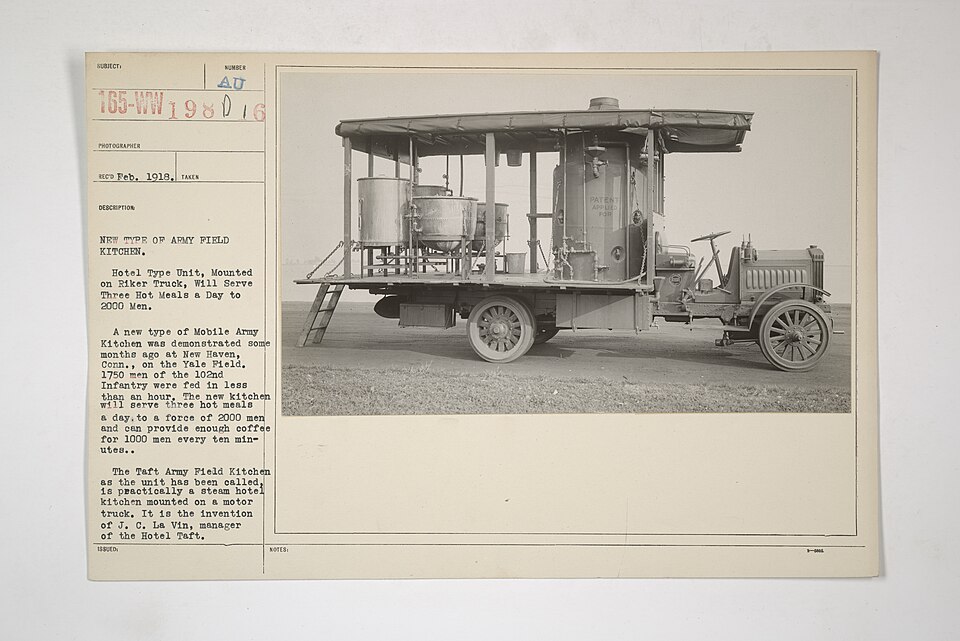 Assets like ovens and refrigerators are depreciated over time (Image: Public domain, via Wikimedia Commons)
Based on the TU BHM syllabus for Hotel Accounting (BHM324), unit 9.
Discussion
Loading…