Organizational Behavior And HRMUnit 19 min read
OB & HRM Basics: Definitions, Functions, Disciplines & HRM’s Role
Unit 1 of Organizational Behavior And HRM covers the foundational concepts of OB (individual, group, and organizational dynamics) and HRM (strategic people management), including their definitions, core functions, contributing disciplines, and the critical role of HRM in modern hospitality organizations like hotels, re
TAKEAWAYS:
- Organizational Behavior (OB) studies how individuals, groups, and structures influence behavior within organizations, while Human Resource Management (HRM) focuses on managing people to achieve organizational goals.
- HRM has five key functions: workforce planning, recruitment and selection, training and development, performance management, and employee relations.
- OB draws from six disciplines: psychology, sociology, anthropology, political science, economics, and engineering.
- HRM’s role in hospitality (e.g., hotels, airlines) includes aligning employee behavior with service quality and guest satisfaction.
- Real-world link: Daraz’s customer service teams use OB principles to manage stress and improve teamwork, while Nabil Bank applies HRM to train tellers for efficient customer interactions.
1. Definitions: OB vs. HRM
1.1 Organizational Behavior (OB)
OB is the study of human behavior in organizational settings, focusing on:
- Individual behavior: Personality, perception, attitudes, and motivation.
- Group behavior: Team dynamics, communication, leadership, and conflict resolution.
- Organizational structure: Culture, power, politics, and change management.
Why it matters in hospitality? Hotels like Himalayan Java rely on OB to manage front-desk staff interactions, kitchen team coordination, and guest complaints—all critical for service quality.
1.2 Human Resource Management (HRM)
HRM is the strategic approach to managing an organization’s workforce to achieve goals. It includes:
- Administrative functions (recruitment, payroll, compliance).
- Strategic functions (talent development, performance management, employee engagement).
Example: Pathao’s HR team designs training programs for delivery agents to handle customer complaints efficiently, reducing turnover.
2. Functions of HRM (5 Key Areas)
HRM performs five core functions, visualized below:
mindmap
  root((HRM Functions))
    Workforce Planning
      Forecasting needs
      Succession planning
    Recruitment & Selection
      Job analysis
      Screening candidates
    Training & Development
      Onboarding
      Upskilling
    Performance Management
      Appraisals
      Feedback systems
    Employee Relations
      Grievance handling
      Labor laws compliance
Worked Example: NTC’s HRM in Action
- Problem: Nepal Telecom (NTC) faces high employee turnover in call centers.
- HRM Solution:
- Workforce Planning: Analyzed call volume to predict hiring needs.
- Training: Developed soft-skills workshops for customer service agents.
- Performance Appraisal: Linked bonuses to customer satisfaction scores.
- Result: 20% reduction in turnover and improved Net Promoter Score (NPS).
3. Disciplines Contributing to OB
OB is an interdisciplinary field drawing from six key disciplines:
| Discipline | Contribution to OB | Example in Hospitality |
|---|---|---|
| Psychology | Studies individual behavior (motivation, stress, attitudes). | Hotels use Maslow’s hierarchy to motivate staff (e.g., recognition for top performers). |
| Sociology | Examines group dynamics, culture, and social norms. | Team-building exercises in kitchen staff to reduce conflicts. |
| Anthropology | Focuses on organizational culture and rituals. | Rituals like daily huddles in fast-food chains (e.g., KFC) to align teams. |
| Political Science | Analyzes power structures and decision-making. | Union negotiations in large hotels (e.g., Dwarikas Hotel) for fair wage demands. |
| Economics | Studies resource allocation and labor markets. | Wage adjustments based on inflation (e.g., Nabil Bank’s annual salary reviews). |
| Engineering | Applies systems theory to organizational design. | Lean management in hotel housekeeping to optimize staff allocation. |
4. Role of HRM in Organizations
HRM acts as a strategic partner to achieve organizational goals. Its roles include:
flowchart TD
  A["Strategic Partner"] --> B["Aligns HR with Business Goals"]
  B --> C["Example: Hyatt Hotels' HR ensures staff training matches guest expectations"]
  A --> D["Administrative Expert"]
  D --> E["Handles payroll, compliance, and records"]
  A --> F["Employee Champion"]
  F --> G["Advocates for fair treatment and well-being"]
  A --> H["Change Agent"]
  H --> I["Manages transitions like mergers or new tech adoption"]
Case Study: Chaudhary Group’s HR Strategy
- Challenge: Rapid expansion led to inconsistent employee performance.
- HRM Solution:
- Culture Building: Introduced a "Chaudhary Way" code of ethics.
- Performance-Linked Rewards: Tied bonuses to KPIs (e.g., sales targets).
- Feedback Loops: Quarterly surveys to measure employee satisfaction.
- Outcome: 30% increase in productivity and lower attrition.
5. OB and HRM in Hospitality: A Real-World Trace
Let’s trace how OB and HRM work together in a 5-star hotel (e.g., Kathmandu’s Radisson Blu):
Guest Complaint Handling (OB):
- Perception: A guest perceives slow service (OB: individual behavior).
- Group Dynamics: The front-desk team discusses the issue (OB: team communication).
- Solution: HR trains staff on emotional intelligence (OB: attitude management).
Staff Retention (HRM):
- Workforce Planning: HR forecasts turnover risks (e.g., high stress in housekeeping).
- Training: Develops stress-management workshops (HRM: development).
- Reward System: Introduces performance-based incentives (HRM: motivation).
6. Organizational Stress: A Critical OB Concept
Organizational stress arises from workplace pressures that reduce productivity and well-being. Common stressors:
mindmap
  root((Organizational Stressors))
    Role Ambiguity
      Unclear job expectations
    Work Overload
      Excessive tasks/deadlines
    Interpersonal Conflicts
      Clashes with colleagues/managers
    Poor Leadership
      Micromanagement or lack of support
    Work-Life Imbalance
      Long hours, no breaks
Example: Kathmandu Traffic Police’s Stress
- Stressor: High-pressure environment with public complaints.
- HRM Intervention:
- Counseling programs (OB: stress management).
- Shift rotations to balance workload (HRM: workforce planning).
- Result: 15% reduction in burnout cases.
In the Real World
eSewa (Nepal):
- OB in Action: Uses team-based incentives to motivate customer support agents. Agents handling complex complaints (e.g., failed transactions) are recognized publicly, reducing stress and improving retention.
- HRM Link: HR designs cross-training programs so agents can handle multiple issues, reducing role ambiguity.
Daraz (Nepal/Global):
- OB Concept: Group Norms – Delivery agents follow unwritten rules (e.g., "never delay for more than 30 mins") to maintain reputation.
- HRM Application: HR uses 360-degree feedback to evaluate delivery partners’ performance, linking bonuses to customer ratings.
Nabil Bank (Nepal):
- OB Tool: Herzberg’s Two-Factor Theory – Bank managers focus on hygiene factors (salary, work conditions) and motivators (recognition, growth) to retain tellers.
- Real Example: Tellers who exceed sales targets get public shout-outs in branch meetings, boosting morale.
Exam Tip
- Definitions: Always define OB as the study of behavior and HRM as people management. Use examples like hotels, banks, or e-commerce to illustrate.
- Functions of HRM: Memorize the 5 functions (workforce planning, recruitment, training, performance management, employee relations) and link them to hospitality scenarios.
- Disciplines: Know the 6 disciplines (psychology, sociology, etc.) and their hospitality applications (e.g., psychology → motivation of waitstaff).
- Case Studies: Exams often ask for real-world examples. Be ready to discuss:
- OB: How Pathao manages driver stress.
- HRM: How NTC uses training to reduce turnover.
- Diagrams: Draw mindmaps for OB disciplines or flowcharts for HRM functions in exams. Partial credit is given for structured visuals!
- Stress Management: Always mention workload, role ambiguity, and interpersonal conflicts as stressors, with HR solutions (e.g., counseling, workload redistribution).
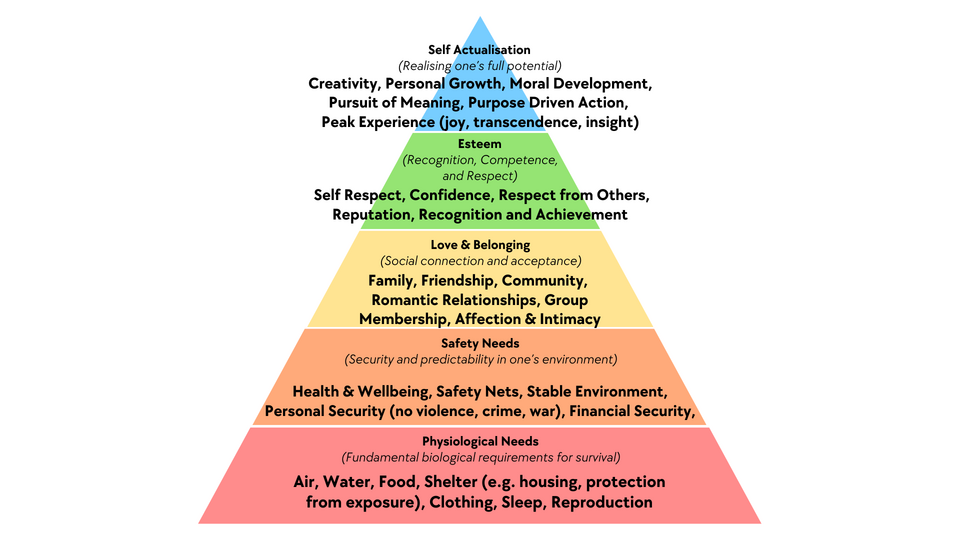 How hotels use this to motivate employees (Image: Hamish.croker, CC BY-SA 4.0, via Wikimedia Commons)
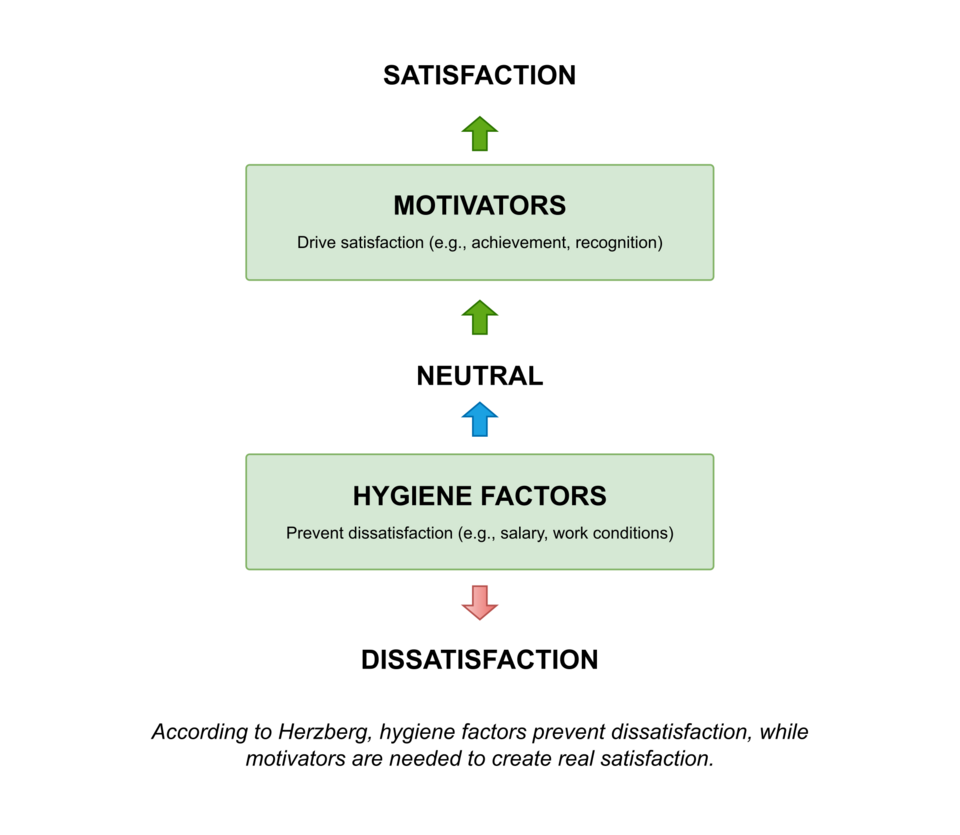 Motivators vs. hygiene factors in banking (Image: Mdaudabello, CC BY 4.0, via Wikimedia Commons)
Based on the TU BHM syllabus for Organizational Behavior And HRM (MGT151), unit 1.
Discussion
Loading…