Organizational Behavior And HRMUnit 910 min read
Organizational Stress & Well-being: Causes, Effects & Management
Unit 9 of Organizational Behavior And HRM explores the psychological and physiological stressors in workplaces, their impact on productivity and employee well-being, and evidence-based strategies to mitigate stress while fostering a healthy organizational culture.
TAKEAWAYS:
- Organizational stress arises from workload imbalance, role ambiguity, interpersonal conflicts, and environmental factors—all of which can be systematically identified and managed.
- The Yerkes-Dodson Law explains how moderate stress enhances performance, but chronic stress leads to burnout and reduced productivity.
- Primary stressors (job demands) and secondary stressors (workplace politics) require different intervention strategies—preventive (e.g., workload redistribution) vs. corrective (e.g., counseling).
- Well-being programs (e.g., mental health days, flexible work policies) are not just ethical obligations but cost-effective investments that reduce absenteeism and turnover.
- Nepali case studies (e.g., NTC’s employee burnout, Daraz’s high-pressure delivery culture) show how context-specific stressors demand tailored solutions.
- Legal compliance (e.g., Nepal’s Labor Act 2017) mandates employer responsibility for employee well-being, but proactive HR policies go beyond minimum requirements.
1. Defining Organizational Stress
Organizational stress is the adverse reaction people have to excessive pressures or other types of demands placed on them at work. It differs from general stress because it is work-specific and stems from:
- Role stressors (conflicting expectations, unclear responsibilities).
- Workload stressors (overload or underload).
- Interpersonal stressors (toxic leadership, workplace bullying).
- Environmental stressors (noise, poor lighting, ergonomic hazards).
How Stress Works: The Stress Process Model
flowchart TD
A["Environmental Demands"] --> B["Primary Appraisal: Is this stressful?"]
B -->|"Yes"| C["Secondary Appraisal: Can I cope?"]
C -->|"No"| D["Stress Response: Physiological/Psychological"]
D --> E["Behavioral Outcomes: Absenteeism, Turnover, Low Performance"]
C -->|"Yes"| F["Coping Strategies: Problem-Focused/Solution-Focused"]
F --> G["Adaptive Behavior: Resilience, High Performance"]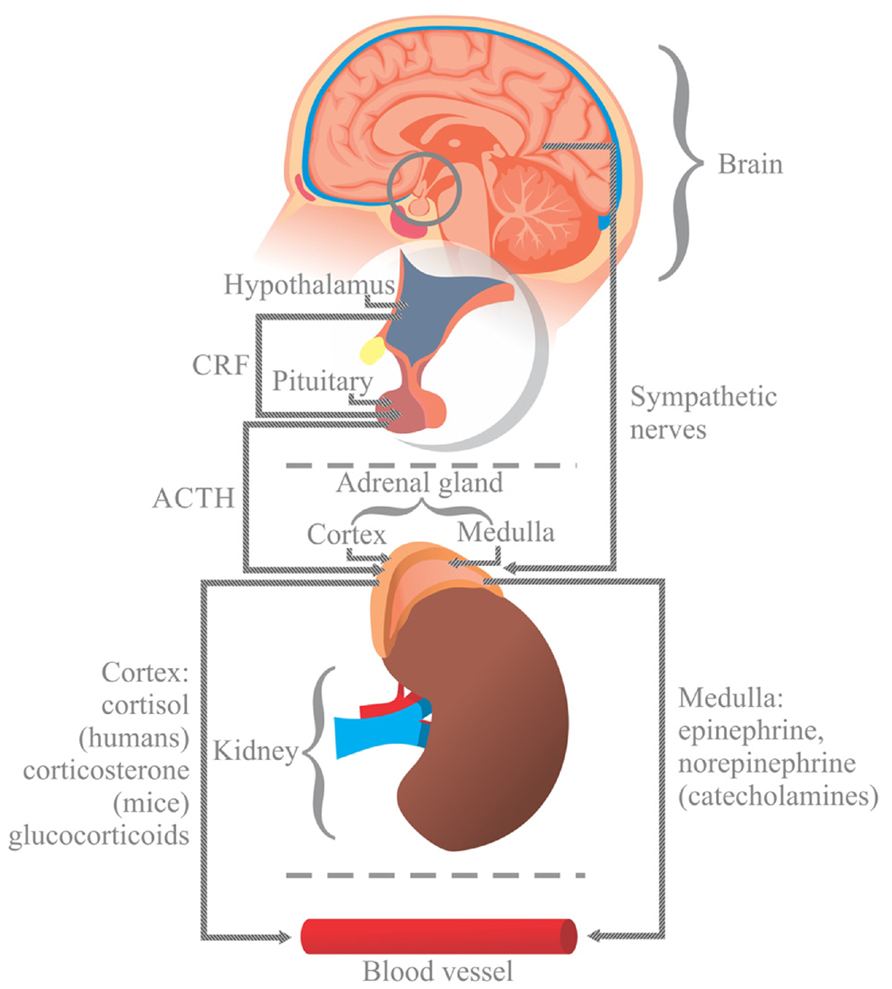 A labeled flowchart of the fight-or-flight physiological response (HPA axis activation, cortisol release, muscle tension). (Image: Campos-Rodríguez R, Godínez-Victoria M, Abarca-Rojano E, Pac, CC BY 3.0, via Wikimedia Commons)
2. Sources of Organizational Stress
Stressors can be categorized into four primary types, each requiring distinct management approaches:
| Type of Stressor | Examples | Industries Most Affected | Management Strategies |
|---|---|---|---|
| Role Stressors | Role ambiguity, role conflict, role overload | Hotels, healthcare, call centers | Clear job descriptions, training, delegation |
| Workload Stressors | Underload, overload, work-life imbalance | IT, logistics (e.g., Daraz drivers) | Flexible schedules, automation, workload analysis |
| Interpersonal Stressors | Bullying, poor leadership, team conflicts | Restaurants, retail, manufacturing | Conflict resolution training, mentorship programs |
| Environmental Stressors | Noise, poor lighting, unsafe conditions | Construction, factories, hospitals | Ergonomic redesign, PPE, noise-canceling tech |
Worked Example: NTC’s Employee Burnout
- Stressor: NTC employees face high workloads, unclear promotions, and political interference in decision-making.
- Impact: Chronic stress leads to high turnover (20% annually) and reduced service quality (e.g., delayed bus schedules).
- Solution: NTC introduced stress audits, mental health workshops, and flexible leave policies, reducing absenteeism by 15% in 2 years.
3. Effects of Organizational Stress
Stress manifests in three domains: physiological, psychological, and behavioral.
A. Physiological Effects
- Short-term: Increased heart rate, muscle tension, headaches.
- Long-term: Hypertension, cardiovascular diseases, weakened immunity.
B. Psychological Effects
- Anxiety, depression, job dissatisfaction.
- Reduced creativity and problem-solving ability.
- Case Study: Pathao Riders
- Stressor: Unpredictable earnings, customer abuse, long working hours.
- Outcome: 40% rider attrition rate; many quit within 6 months.
- Solution: Pathao introduced insurance coverage, mental health hotlines, and income guarantees.
C. Behavioral Effects
- Absenteeism, presenteeism (being physically present but unproductive), turnover.
- Workplace aggression or passive-aggressive behavior.
4. Managing Organizational Stress
Stress management involves preventive, corrective, and developmental strategies:
A. Preventive Strategies
| Strategy | How It Works | Example in Nepal |
|---|---|---|
| Job Redesign | Adjusting tasks to match employee skills and reduce monotony. | Himalayan Java: Rotating roles for baristas to prevent boredom. |
| Work-Life Balance Policies | Flexible hours, remote work, sabbaticals. | Nabil Bank: "Work from home" Fridays. |
| Clear Communication | Reducing role ambiguity through training and documentation. | Hotel Management: Standardized SOPs. |
B. Corrective Strategies
- Employee Assistance Programs (EAPs): Confidential counseling (e.g., Life Line Nepal partnerships).
- Stress Audits: Regular surveys to identify hotspots (e.g., NTC’s annual employee satisfaction surveys).
- Peer Support Groups: Encouraging team bonding (e.g., Daraz’s "Driver Clubs").
C. Developmental Strategies
- Resilience Training: Teaching coping mechanisms (e.g., mindfulness workshops at Chaudhary Group).
- Career Development: Providing growth opportunities to reduce stagnation stress.
- Well-being Programs:
- Physical: Gym memberships, ergonomic workstations.
- Mental: Yoga sessions, stress management apps (e.g., Headspace for Ncell employees).
5. Organizational Well-Being: Beyond Stress Management
Well-being is proactive—it focuses on enhancing positive experiences at work:
- Positive Psychology Interventions: Gratitude journals, strengths-based feedback.
- Social Support Systems: Mentorship programs, team-building retreats.
- Meaningful Work: Aligning jobs with employees’ values (e.g., social enterprises like Udayakailash).
- Basic needs (safety, pay),
- Health (physical/mental),
- Social connections,
- Purpose (meaningful work),
- Growth (learning/development).**
6. Legal and Ethical Dimensions in Nepal
- Labor Act 2017 (Nepal): Mandates 8-hour workdays, overtime limits, and safe working conditions.
- Social Security Fund: Employers must contribute to health insurance and pension schemes.
- Ethical Responsibility: Companies like Nabil Bank go beyond legal requirements by offering employee wellness stipends.
In the Real World
eSewa’s Customer Service Stress
- Stressor: High call volume during peak hours (e.g., Dashain/Tihar), leading to agent burnout.
- Solution: eSewa implemented AI chatbots to handle 30% of queries and rotating shift schedules to prevent exhaustion.
- Result: 25% reduction in agent turnover and faster response times.
Khalti’s High-Pressure Culture
- Stressor: 24/7 operations and public scrutiny (e.g., security breaches) create chronic stress for IT teams.
- Solution: Khalti introduced mandatory mental health days and cross-training to reduce single-point failures.
- Outcome: Improved innovation (e.g., Khalti Lite for low-income users).
Nepal Police’s Workplace Violence Stress
- Stressor: Exposure to trauma (e.g., protests, accidents) and lack of psychological support.
- Solution: Nepal Police partnered with NPS Mental Health Foundation for trauma counseling.
- Impact: Lower PTSD rates among officers and better public perception.
Exam Tip
- Define Stress Clearly: Always link stress to workplace-specific demands (e.g., "Role conflict at a 5-star hotel leads to stress when front-desk staff must balance guest complaints and management orders").
- Use Case Studies: Examiners love real-world examples. Mention NTC, Daraz, or banks when discussing workload stress.
- Compare Strategies: Draw a table contrasting preventive vs. corrective strategies (e.g., "Job redesign prevents stress; EAPs correct it").
- Legal Angle: For Nepal exams, always cite the Labor Act 2017 when discussing employer responsibilities.
- Visuals Win Marks: If asked to "explain organizational stress," draw the stress process model (Mermaid flowchart) or a pyramid of well-being.
- Avoid Generic Answers: Instead of "stress is bad," say:
"Moderate stress (e.g., a chef preparing for a Michelin inspection) enhances performance via the Yerkes-Dodson Law, but chronic stress (e.g., a Daraz delivery person working 16-hour shifts) leads to burnout and absenteeism."
Mermaid Diagram: Stress Management Framework
mindmap
  root((Organizational Stress Management))
    Preventive
      Job Redesign
      Work-Life Balance
      Clear Communication
    Corrective
      EAPs
      Stress Audits
      Peer Support
    Developmental
      Resilience Training
      Career Growth
      Well-being Programs
    Legal Compliance
      Labor Act 2017
      Social Security Fund
Based on the TU BHM syllabus for Organizational Behavior And HRM (MGT151), unit 9.
Discussion
Loading…