Nepalese Society And PoliticsUnit 711 min read
Nepal’s Global Ties: Institutions, Trade & Diplomacy
Unit 7 of Nepalese Society And Politics explores Nepal’s role in international relations, focusing on global institutions (UN, SAARC, BIMSTEC), trade agreements (India, China, ASEAN), and how these shape Nepal’s economy, security, and cultural exchange—with real-world examples from tourism, remittances, and infrastruct
TAKEAWAYS:
- Nepal’s foreign policy is shaped by geopolitical proximity (India/China) and institutional memberships (UN, SAARC, BIMSTEC), balancing sovereignty with economic dependence.
- Trade agreements (e.g., India’s MEA, China’s BRI) drive infrastructure (roads, energy) but create vulnerabilities like debt or transit fees.
- Remittances ($10B/year) and tourism ($1B/year) rely on global institutions (IMF, World Bank) and diplomatic ties (e.g., Nepal’s UN voting power).
- Cultural diplomacy (UNESCO, SAARC festivals) promotes Nepal’s heritage but risks commodification (e.g., Everest tourism).
- Challenges: Climate finance (COP28), labor rights (Gulf migration), and infrastructure costs (China’s debt traps) test Nepal’s agency.
- Exam focus: Link theory (e.g., "soft power") to real cases (e.g., Kathmandu’s air pollution from Indian emissions, or Daraz’s reliance on Chinese supply chains).
1. Nepal’s Place in Global Institutions: Memberships and Influence
Nepal’s foreign policy is built on membership in multilateral organizations, which provide aid, trade routes, and diplomatic leverage. These institutions shape Nepal’s economy, security, and cultural identity—but also create dependencies.
Key Institutions and Their Roles
2. Trade and Economic Dependencies: The India-China Dilemma
Nepal’s economy is highly dependent on trade with India and China, but this creates both opportunities and vulnerabilities.
A. Trade Agreements: MEA and BRI
| Agreement | Partner | Key Benefits | Risks | Real-World Example |
|---|---|---|---|---|
| MEA (Motor Vehicles Agreement) | India | Cheaper vehicles (e.g., Tata, Mahindra) | 100% tariff if India imposes sanctions | Pathao’s electric scooters (imported via MEA) |
| BRI (Belt and Road Initiative) | China | Infrastructure loans ($1.3B for roads) | Debt traps (e.g., Kyirong-Kathmandu highway) | China-Nepal Trans-Himalayan Railway (proposed) |
| ASEAN Observer Status | ASEAN | Market access for Nepali goods | Limited direct trade routes | Nepalese honey exports to Vietnam |
Worked Example: Daraz’s Supply Chain
Daraz (Alibaba’s Nepal arm) relies on:
- Chinese suppliers (90% of products, e.g., electronics, textiles).
- Indian transit routes (goods enter via Kolkata/Mumbai).
- Nepal’s high logistics costs ($300/container vs. $50 in India). Problem: If India raises transit fees (as in 2015), Daraz’s prices surge by 15–20%. Solution: Nepal lobbies BIMSTEC for alternative routes (e.g., via Bangladesh).
3. Remittances and Labor Migration: The $10 Billion Lifeline
Nepal’s $10 billion annual remittances (30% of GDP) are driven by global labor markets, but workers face exploitation.
Top Destinations and Challenges
pie
  title Nepalese Migrant Workers (2023)
  "Gulf Countries" : 45
  "Malaysia" : 25
  "India" : 15
  "Others" : 15
Key Issues:
- Kafala system (Gulf): Workers’ passports held by employers (e.g., Nepali maids in Saudi Arabia earn $200/month but pay $1,000 recruitment fees).
- Trafficking: 10,000+ Nepalis trapped in forced labor annually (ILO data).
- Diplomatic solutions: Nepal signs ILO Convention 189 (2017) to protect domestic workers.
Real-World Link:
- eSewa’s remittance service partners with Western Union to send money home, but charges 3–5% fees (vs. 1% in India).
- Nepal’s "No Job, No Visa" policy (2021) bans recruitment agents unless jobs are pre-approved.
4. Tourism and Cultural Diplomacy: Soft Power in Action
Nepal’s $1 billion tourism industry (2023) is a diplomatic tool, but over-reliance on Everest and UNESCO sites risks environmental and cultural backlash.
How Global Institutions Shape Tourism
| Institution | Role | Example |
|---|---|---|
| UNESCO | Protects heritage (e.g., Kathmandu Valley) | $5M UNESCO fund for earthquake recovery (2015) |
| World Bank | Funds infrastructure (e.g., airports) | $200M for Tribhuvan International Airport |
| SAARC | Promotes regional tourism | SAARC Festival of Tourism (2022) |
| IMF | Pressures Nepal to open skies | Qatar Airways flights to Kathmandu (2023) |
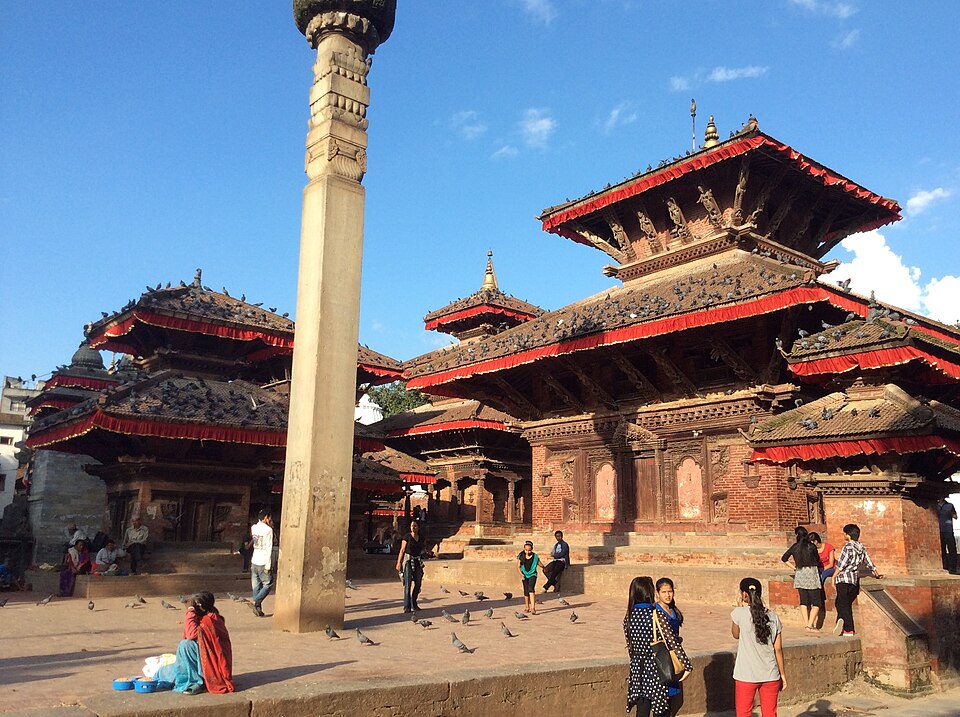 UNESCO-listed sites driving Nepal’s cultural tourism (Image: Anne Lemaistre, CC BY-SA 3.0 igo, via Wikimedia Commons)
Challenges:
- Overtourism: Everest base camp sees 40,000 climbers/year (vs. 1953’s 1).
- Climate change: Glacial retreat threatens trekking routes (e.g., Langtang Valley).
- Diplomatic leverage: Nepal uses UN climate forums (COP28) to demand $1 billion/year in adaptation funds.
Worked Example: NTC’s Airline Partnerships
- Nepal’s national carrier, NTC, partners with Qatar Airways (via SAARC open skies agreement) to fly to Europe.
- Problem: High fuel costs (60% of operating expenses) due to global oil price shocks.
- Solution: Nepal lobbies ASEAN for cheaper jet fuel access.
5. Security and Geopolitics: Balancing India and China
Nepal’s non-aligned foreign policy aims to avoid dependence, but geography forces choices.
Key Security Challenges
Real-World Cases:
- 2015 Blockade: India closed borders over Madhesi protests, halting fuel/medicine supplies. Nepal turned to China for oil (first time).
- 2022 Debt Crisis: Nepal’s $800M debt to China (for roads/ports) led to IMF negotiations to restructure loans.
- 2023 UN Vote: Nepal sided with Global South (Brazil, South Africa) on climate reparations, pleasing China but angering India.
6. Environmental Diplomacy: Climate Finance and Disaster Relief
Nepal is a climate-vulnerable country (ranked #4 in climate risk, ND-GAIN index) and uses global platforms to demand aid.
How Nepal Leverages Global Institutions
| Issue | Global Institution | Nepal’s Demand | Outcome |
|---|---|---|---|
| Glacial Lake Outbursts | UNFCCC | $500M for early warning systems | $100M approved (2023) |
| Air Pollution | WHO | Ban on Indian coal imports | Partial success (2022 Delhi smog talks) |
| Forest Fires | Green Climate Fund | $200M for firefighting drones | Pilot project in Chitwan (2024) |
Worked Example: Kathmandu’s Air Pollution
- Cause: 70% of PM2.5 comes from Indian coal plants (e.g., Bihar’s power stations).
- Diplomatic Move: Nepal files complaint at SAARC (2022), but India cites sovereignty.
- Alternative: Nepal installs $5M Chinese air purifiers in schools (BRI-funded).
In the Real World
Khalti’s Global Remittance Links
- Idea: Financial diplomacy through digital payments.
- How: Khalti partners with Western Union and FCMB (Nigeria) to let Nepali migrants send money via USSD codes (no internet needed).
- Impact: 30% of Nepali migrants in the Gulf now use Khalti, reducing hawala (informal) fees from 10% to 2%.
Daraz’s Supply Chain and BRI
- Idea: Transit dependency and geopolitical risks.
- How: Daraz’s $100M warehouse in Birgunj (India border) holds Chinese goods. If India blocks transit (as in 2015), Daraz faces $5M/day losses.
- Solution: Daraz lobbies BIMSTEC to build a Chittagong-Kathmandu rail link (via Bangladesh).
NTC’s Qatar Partnership and IMF Pressure
- Idea: Airlines as diplomatic tools.
- How: NTC’s Kathmandu-Doha flights (via SAARC open skies) help Gulf-bound Nepali workers. But high kerosene costs (linked to global oil prices) force NTC to cut flights to Europe.
- Real Cost: A round-trip Kathmandu-London ticket jumps from $800 to $1,200 in 2022 due to IMF-mandated fuel tax hikes.
Exam Tip
How to Score Full Marks (15/15) on This Unit
Link Theory to Real Cases
- If asked about regional organizations, don’t just list SAARC/BIMSTEC. Compare:
- SAARC’s failure (India-Pakistan tensions) vs. BIMSTEC’s success (Nepal-Bangladesh tea trade).
- Use Daraz’s supply chain to explain transit dependency.
- If asked about regional organizations, don’t just list SAARC/BIMSTEC. Compare:
Use Data and Examples
- Memorize 3 key stats:
- $10B remittances (30% of GDP).
- $1.3B BRI loans (40% of Nepal’s infrastructure).
- 80% of trade via India (but 65% of loans from China).
- Example: For labor migration, cite:
- 450,000 Nepalis in Gulf (ILO).
- $1,000 recruitment fee for a $200/month job.
- Memorize 3 key stats:
Structure Answers Like This Question: How can regional organizations help Nepal’s hospitality sector? Answer:
- SAARC: Promotes medical tourism (e.g., Kathmandu’s CIWEC hospitals treating Indian patients).
- BIMSTEC: ASEAN-style culinary festivals (e.g., Nepal-Thailand food Expo 2023).
- UNESCO: Heritage tourism (e.g., Lumbini’s $50M development plan).
- Challenge: Overtourism (Everest) → Solution: SAARC’s "Slow Tourism" initiative.
Avoid Common Mistakes
- ❌ Saying Nepal is non-aligned (it’s pro-Global South but pragmatic).
- ❌ Ignoring India’s veto power in SAARC (e.g., 2016 summit cancellation).
- ❌ Forgetting China’s debt diplomacy (e.g., Buddha Airport loan terms).
Pro Tip: For short-answer questions, use the PEEL method:
- Point (e.g., "BIMSTEC helps Nepal’s tea trade with Bangladesh").
- Example (e.g., "Nepal exports 500 tons of tea annually to Bangladesh via BIMSTEC routes").
- Explain (e.g., "This reduces transit costs by 30% vs. Indian routes").
- Link (e.g., "Thus, Nepal diversifies from India’s monopoly").
Based on the TU BHM syllabus for Nepalese Society And Politics (SOC312), unit 7.
Discussion
Loading…