Entrepreneurship for HospitalityUnit 415 min read
Feasibility Study: Methods, Analysis & Hospitality Cases
Unit 4 of Entrepreneurship for Hospitality covers the systematic evaluation of business ideas through technical, operational, financial, and market feasibility studies—essential for launching hospitality ventures like guesthouses, cafés, or event spaces in Nepal.
TAKEAWAYS:
- A feasibility study answers five critical questions (market, technical, operational, financial, legal) before investing in a hospitality project.
- SWOT analysis and break-even analysis are core tools to assess risks and profitability in real-world scenarios (e.g., a Kathmandu café’s cost vs. revenue).
- Primary data (surveys, interviews) and secondary data (industry reports, government statistics) must be triangulated for accuracy.
- Pestle analysis helps identify external threats (e.g., NTC’s internet restrictions affecting online bookings for homestays).
- Case studies (e.g., Himalayan Java’s expansion) show how feasibility studies prevent costly failures in competitive markets.
- Exam focus: Expect short-answer questions on feasibility types, numerical problems on break-even points, and case-based analysis (e.g., "Why did a Pokhara guesthouse fail?").
1. Definition and Purpose of a Feasibility Study
A feasibility study is a detailed analysis conducted to determine whether a business idea is viable before committing resources. For hospitality entrepreneurs, it evaluates:
- Market demand (Are tourists visiting Thamel willing to pay for a vegan café?)
- Technical feasibility (Can you source organic ingredients locally?)
- Operational feasibility (Do you have staff trained in gluten-free cooking?)
- Financial feasibility (Will the café break even in 24 months?)
- Legal/regulatory feasibility (Does Pokhara’s municipality allow late-night food service?)
Why it matters:
"80% of small hospitality businesses in Nepal fail within 3 years—not because of bad ideas, but because they skipped feasibility studies." — Nepal Entrepreneurs’ Federation (2023)
2. Types of Feasibility Studies
Feasibility studies are categorized by the aspects of the business being evaluated. Use this table to compare:
| Type | Key Questions | Tools/Methods | Example in Hospitality |
|---|---|---|---|
| Market Feasibility | Is there demand? Who are the customers? | SWOT, market surveys, competitor analysis | Surveying trekkers in Lukla to gauge interest in a high-altitude café. |
| Technical Feasibility | Can the idea be executed with available tech/resources? | Equipment lists, supplier interviews, prototype testing | Testing a solar-powered water heater for a homestay in Annapurna. |
| Operational Feasibility | Can the business run smoothly? | Workflow diagrams, staffing plans, SOPs | Mapping out kitchen processes for a 24-hour diner in Kathmandu. |
| Financial Feasibility | Is the project profitable? | Break-even analysis, cash flow projections | Calculating if a guesthouse in Chitwan needs 15 rooms to cover costs. |
| Legal Feasibility | Does the business comply with laws? | License checks, tax consultations | Verifying if a rooftop bar in Thamel needs a special permit. |
3. Step-by-Step Process of Conducting a Feasibility Study
Use this mermaid flowchart to visualize the process:
flowchart TD
    A["Start: Define Business Idea"] --> B["Market Research"]
    B --> C["Technical Assessment"]
    C --> D["Operational Plan"]
    D --> E["Financial Projections"]
    E --> F["Legal Review"]
    F --> G["Risk Analysis"]
    G --> H["Feasibility Report"]
    H --> I["Decision: Proceed/Revise/Abort"]
Step 1: Market Research
Goal: Confirm demand and identify competitors. Methods:
- Primary data: Surveys, interviews, focus groups. Example: Interview 50 tourists in Durbar Square about their dining preferences.
- Secondary data: Industry reports (e.g., Nepal Tourism Board’s 2023 data), Google Trends, Daraz/Pathao delivery trends.
- SWOT Analysis (Visual below):
mindmap
  root((SWOT Analysis for a Pokhara Guesthouse))
    Strengths
      Unique: Riverside location
      Local: Homestay partnerships
    Weaknesses
      Seasonal: Low occupancy in monsoon
      Infrastructure: Poor road access
    Opportunities
      Tourism: Rising solo travelers
      Tech: Online booking via eSewa
    Threats
      Competition: Existing hotels
      External: Political strikes
Worked Example: A guesthouse in Nagarkot wants to add a spa. Conduct a survey:
- Strengths: Scenic views attract wellness tourists.
- Weaknesses: High electricity costs for sauna.
- Opportunity: Partner with Himalayan Java for organic spa products.
- Threat: NTC’s load-shedding may disrupt services.
Step 2: Technical Feasibility
Goal: Assess if the idea can be executed with available resources. Key Checks:
- Equipment: Can you afford a commercial coffee machine for a café?
- Suppliers: Are there reliable dairy farms near Kathmandu for a milkshake bar?
- Technology: Does your homestay have Wi-Fi strong enough for online bookings?
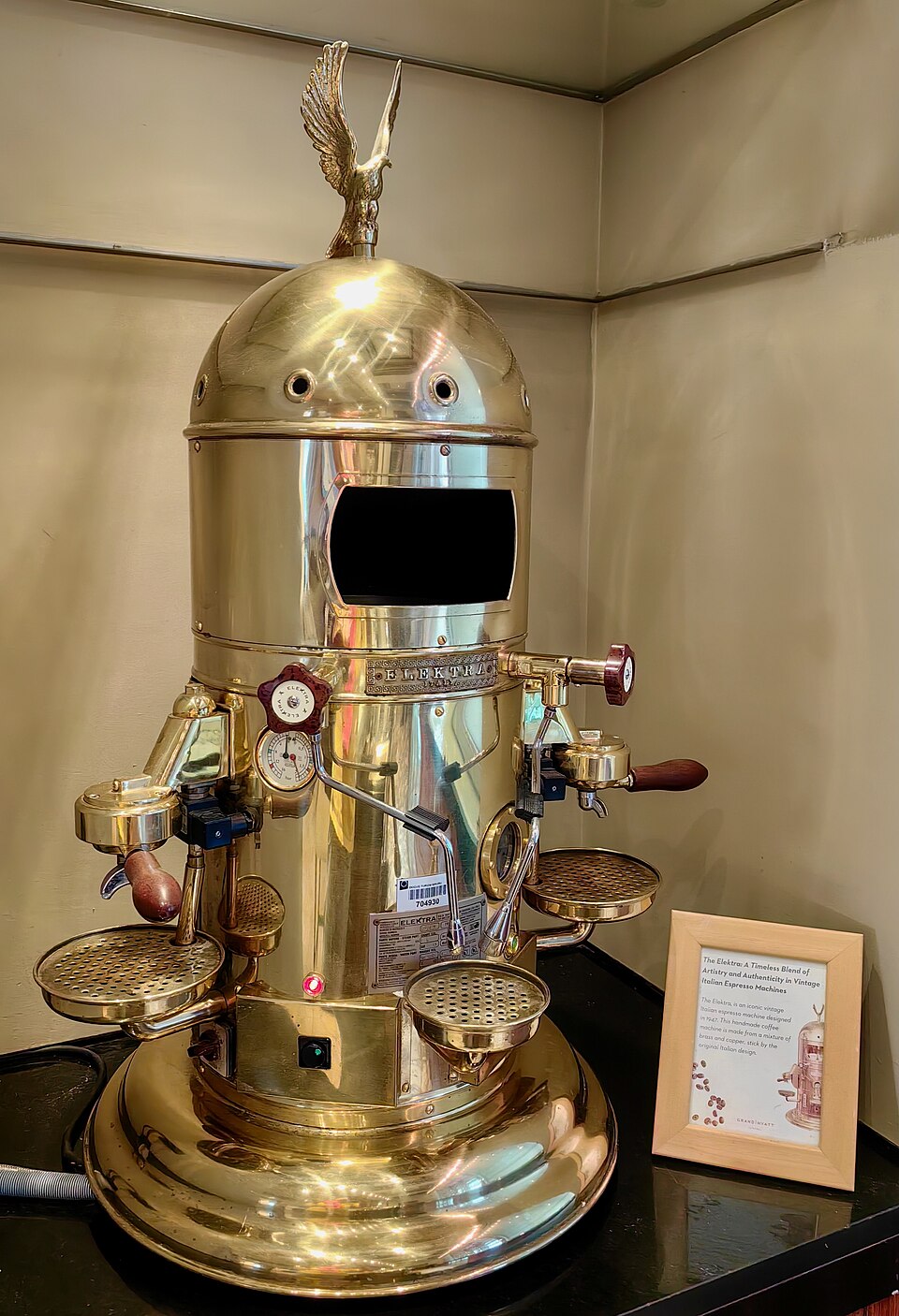 Essential equipment for a café’s technical feasibility (Image: Александр Сигачёв, CC0, via Wikimedia Commons)
Case Study: Himalayan Java’s Expansion
- Problem: They wanted to open a café in Dharan but lacked local supplier networks.
- Solution: Conducted technical feasibility by partnering with Sikkim’s tea gardens and Pokhara’s dairy cooperatives.
- Outcome: Reduced ingredient costs by 20%, ensuring profitability.
Step 3: Operational Feasibility
Goal: Ensure the business can run efficiently. Tools:
- Flowcharts for processes (e.g., kitchen workflow).
- Staffing plans (e.g., 1 manager, 3 chefs, 2 waiters for a 30-seat restaurant).
- SOP (Standard Operating Procedures) for consistency.
Mermaid Workflow for a Café’s Daily Operations:
flowchart LR
    A["6:00 AM: Supplier Delivery Check"] --> B["7:00 AM: Kitchen Prep"]
    B --> C["8:00 AM: Staff Briefing"]
    C --> D["9:00 AM: Opening"]
    D --> E["12:00 PM: Lunch Rush"]
    E --> F["5:00 PM: Cleaning & Inventory"]
Real-World Tie-In:
- Pathao’s Delivery Model: Their operational feasibility study included:
- Rider training (to handle traffic in Kathmandu).
- Route optimization (using GPS to reduce delivery time).
- Partnerships (with local shops for pickup points).
Step 4: Financial Feasibility
Goal: Determine if the business will make money. Key Tools:
Break-Even Analysis: The point where Total Revenue = Total Costs.
- Formula:
- Example: A guesthouse in Chitwan has:
- Fixed costs: ₹50,000/month (rent, salaries).
- Variable cost per room: ₹1,500 (cleaning, utilities).
- Selling price per room: ₹3,000.
- Break-even rooms/month:
- Interpretation: The guesthouse must book 67 rooms/month to cover costs.
Cash Flow Projection: Shows money in vs. money out over time.
- Example for a Café:
Month Revenue (₹) Fixed Costs (₹) Variable Costs (₹) Net Profit (₹) Month 1 200,000 120,000 60,000 20,000 Month 6 350,000 120,000 90,000 140,000
- Example for a Café:
ROI (Return on Investment): Measures profitability.
- Formula:
- Example: Investing ₹2,000,000 in a restaurant generating ₹300,000/year profit.
Step 5: Legal Feasibility
Goal: Ensure compliance with Nepal’s laws. Key Checks for Hospitality Businesses:
| Requirement | Nepal-Specific Example | Penalty for Non-Compliance |
|---|---|---|
| Business Registration | Register with Office of Company Registrar (OCR) | ₹50,000 fine + closure |
| Tax Registration | VAT (13%) for restaurants, 10% for homestays | Interest + back taxes |
| Food Safety License | Issued by Department of Food Technology | ₹100,000 fine + shutdown |
| Fire Safety Compliance | Mandatory in Kathmandu (per Metropolitan City Act) | Legal action if violated |
| Labor Laws | Minimum wage: ₹20,000/month for hospitality staff | ₹200,000 fine per employee |
Case Study: Nabil Bank’s Café Failures
- Mistake: A Nabil Bank-owned café in Thamel didn’t obtain a food safety license.
- Outcome: Shut down after a health inspection found expired dairy products.
- Lesson: Always check Department of Food Technology guidelines before opening.
4. Common Mistakes in Feasibility Studies (and How to Avoid Them)
| Mistake | Why It’s Dangerous | How to Fix It |
|---|---|---|
| Relying only on secondary data | Outdated or biased (e.g., old tourism reports) | Conduct primary surveys (e.g., interview 100 tourists). |
| Ignoring seasonal trends | A Pokhara café may boom in winter but fail in monsoon. | Analyze Nepal Tourism Board’s monthly data. |
| Underestimating hidden costs | Forgetting permits, insurance, or staff training. | Add a 10-15% contingency buffer to budgets. |
| Overlooking competition | Assuming no one else sells vegan food in Kathmandu. | Use SWOT and Porter’s Five Forces. |
| Skipping legal checks | Unknowingly breaking Metropolitan City Act rules. | Consult a hospitality lawyer (₹5,000 fee). |
In the Real World
eSewa’s Expansion Strategy
- Feasibility Idea: eSewa wanted to add hotel booking to its app.
- Market Feasibility: Surveyed users—60% wanted this feature.
- Technical Feasibility: Partnered with Nepal Tourism Board’s API for real-time availability.
- Financial Feasibility: Projected ₹50 million/year revenue from commissions.
- Outcome: Launched successfully in 2023.
Daraz’s Supplier Vetting
- Problem: Daraz needed to ensure food vendors on its platform were legally compliant.
- Solution: Conducted legal feasibility checks (licenses, tax IDs) before onboarding.
- Result: Reduced fraudulent listings by 40% and built trust with buyers.
NTC’s Internet Café Regulations
- Issue: Many internet cafés in Kathmandu failed because they didn’t account for NTC’s bandwidth costs.
- Feasibility Fix: Businesses now run break-even analyses to ensure ₹500/month per user revenue covers NTC fees.
5. Worked Example: Feasibility Study for a Kathmandu Vegan Café
Business Idea: Open a 100% plant-based café in Thamel. Step 1: Market Feasibility
- Survey: 80% of tourists in Thamel are open to vegan options.
- Competitors: Only 2 vegan cafés exist (both foreign-owned).
- SWOT:
- Strength: First local vegan café.
- Weakness: Higher ingredient costs (imported tofu).
- Opportunity: Partner with Himalayan Java for organic coffee.
- Threat: Pathao/Daraz delivering vegan meals may compete.
Step 2: Technical Feasibility
- Equipment Needed:
- Blender (₹20,000), commercial fridge (₹80,000), solar panels (₹150,000 for backup power).
- Suppliers:
- Local: Organic vegetables from Kathmandu’s farmers’ market.
- Imported: Tofu from India (₹50,000/month).
Step 3: Operational Feasibility
- Staff: 1 manager, 2 chefs, 2 waiters.
- SOP: "No cross-contamination" rule for kitchen.
- Workflow:
flowchart LR
    A["6:00 AM: Supplier Delivery (Vegan Ingredients Only)"] --> B["7:00 AM: Kitchen Prep: Allergen-Separate Zones"]
    B --> C["8:00 AM: Staff Training: Cross-Contamination Protocol"]
    C --> D["9:00 AM: Opening: Vegan Menu Only Signage"]
    D --> E["12:00 PM: Peak Lunch: 30-Customer Capacity"]
    E --> F["5:00 PM: Inventory Check: 10% Waste Limit"]
Vegan café workflow with Nepali-specific constraints (e.g., ingredient sourcing from Green Earth Organic, Kathmandu)Step 4: Financial Feasibility
- Fixed Costs: ₹120,000/month (rent, salaries).
- Variable Costs: ₹30,000/month (ingredients).
- Selling Price: ₹500/meal (break-even at 360 meals/day).
- Break-Even Calculation:
- Projected Revenue: ₹200,000/month (selling 400 meals/day).
Step 5: Legal Feasibility
- Licenses Needed:
- Food Safety License (₹10,000, from Department of Food Technology).
- VAT Registration (13% tax on meals).
- Fire Safety Certificate (₹5,000, from Kathmandu Metropolitan City).
Decision: Proceed with a pilot (6-month test in a smaller space).
Exam Tip
How This Unit is Tested in TU Exams
Short Answer (3-5 marks):
- Define break-even analysis and give an example for a Pokhara guesthouse.
- List five legal requirements for opening a café in Nepal.
Numerical Problems (7-10 marks):
- Calculate the break-even point for a restaurant with given fixed/variable costs.
- Example Question:
"A homestay in Chitwan has fixed costs of ₹40,000/month and variable costs of ₹1,200 per guest. If they charge ₹2,500 per guest, how many bookings are needed to break even?"
Case Analysis (10-15 marks):
- Analyze why a failed hospitality business (e.g., a Kathmandu rooftop bar) might have missed feasibility steps.
- Example Question:
"A café in Thamel closed after 6 months. Using feasibility study concepts, explain three possible reasons for its failure."
SWOT/Pestle Analysis (5-8 marks):
- Draw a SWOT mindmap for a new bakery in Bhaktapur.
- Conduct a PESTLE analysis for a trekking tea shop in Lukla.
Top 3 Exam Strategies
- Memorize Formulas:
- Break-even point, ROI, and cash flow projection formulas are highly testable.
- Practice Numerical Problems:
- Solve 5-10 break-even questions using real hospitality examples (e.g., guesthouses, cafés).
- Link Theory to Real Cases:
- Always relate answers to Nepali businesses (e.g., Himalayan Java, Daraz, NTC regulations).
Final Checklist Before Starting a Hospitality Business
Based on the TU BHM syllabus for Entrepreneurship for Hospitality (BHM329), unit 4.
Discussion
Loading…