Fundamentals of MarketingUnit 323 min read
Consumer & Org Buying Behaviour: Models, Influences & Decision-Making
Unit 3 of Fundamentals of Marketing explores the psychological, social, and organizational factors driving consumer and business purchasing decisions, including the buyer decision process, organizational buying behavior, and key influencing factors like culture, motivation, and perception.
Key Concepts and Models of Consumer Buying Behavior
1. Consumer Buying Decision Process
The consumer buying decision process is a structured sequence of steps that consumers follow when making purchasing decisions. It is influenced by both internal (psychological) and external (social/cultural) factors.
Stages of the Consumer Buying Decision Process
flowchart LR
    A["Problem Recognition"] --> B["Information Search"]
    B --> C["Evaluation of Alternatives"]
    C --> D["Purchase Decision"]
D --> E["Post-Purchase Behavior"]- Problem Recognition: The consumer identifies a need or want (e.g., hunger, desire for a new smartphone).
- Information Search: The consumer seeks information about products/services to satisfy the need. This can be internal (memory) or external (ads, reviews, word-of-mouth).
- Evaluation of Alternatives: The consumer evaluates different options based on criteria like price, quality, brand reputation, and features.
- Purchase Decision: The consumer decides which product/service to buy. This stage can be influenced by external factors like promotions or availability.
- Post-Purchase Behavior: The consumer evaluates the purchase after consumption. Satisfaction or dissatisfaction can lead to repeat purchases or negative word-of-mouth.
Example: Buying a Smartphone in Nepal
Imagine a student in Kathmandu wants to buy a new smartphone. The process unfolds as follows:
- Problem Recognition: The student’s current phone is outdated and slow.
- Information Search: The student reads reviews on Daraz, asks friends, and checks ads on Facebook.
- Evaluation of Alternatives: The student compares brands like Xiaomi, Samsung, and Apple based on price (Rs. 20,000–50,000), battery life, and camera quality.
- Purchase Decision: The student decides to buy a Xiaomi Redmi Note 12 due to its balance of price and features.
- Post-Purchase Behavior: If the phone performs well, the student may recommend it to friends; if not, they might leave a negative review on Daraz.
2. Factors Influencing Consumer Buying Behavior
Consumer decisions are shaped by a mix of psychological, social, cultural, and personal factors.
A. Psychological Factors
These are internal factors that influence how consumers perceive and respond to stimuli.
- Motivation: Consumers are driven by needs and wants. Maslow’s Hierarchy of Needs (physiological, safety, social, esteem, self-actualization) explains why people buy certain products. For example, a consumer buying a high-end car may be driven by the need for esteem or self-actualization.
- Perception: Consumers selectively perceive information. For instance, a consumer may ignore ads for competing brands if they are loyal to a specific brand (e.g., Coca-Cola vs. Pepsi).
- Learning: Past experiences influence future purchases. If a consumer had a bad experience with a product (e.g., a defective Daraz order), they are less likely to buy from that seller again.
- Beliefs and Attitudes: Consumers form beliefs about products based on advertising, reviews, or personal experiences. For example, a belief that "organic food is healthier" may lead to purchasing organic products from Himalayan Java.
B. Social Factors
These include the influence of family, friends, social class, and reference groups.
- Family: Family members play a significant role in purchasing decisions, especially for big-ticket items like cars or homes. For example, in Nepal, joint family decisions are common for major purchases.
- Reference Groups: Consumers are influenced by groups they admire or belong to. For instance, a student may buy a trendy backpack because their friends use it (e.g., Herschel backpacks).
- Social Class: Consumers in higher social classes may prefer premium brands (e.g., Mercedes, Rolex), while those in lower classes may opt for budget alternatives (e.g., Honda City vs. Tata Nano).
- Culture: Cultural values shape consumer behavior. For example, in Nepal, gifting Dhokos or Juju Dhau during Dashain is a cultural norm, driving demand for these products during the festival.
C. Personal Factors
These include age, occupation, lifestyle, and personality.
- Age: Consumers at different life stages have different needs. For example, a young professional may prioritize a smartphone with good camera quality, while an elderly person may prefer a simple, easy-to-use device.
- Occupation: A doctor may buy branded clothes (e.g., Allen Solly) to maintain a professional image, while a student may prefer budget-friendly options.
- Lifestyle: Consumers with active lifestyles (e.g., hikers) may buy outdoor gear from brands like Decathlon or Himalayan Trekking Gear.
- Personality: Innovative consumers are early adopters of new technology (e.g., buying the latest iPhone), while conservative consumers may wait for prices to drop.
D. Situational Factors
These are temporary factors that influence buying decisions at a specific time.
- Purchase Reason: Consumers may buy differently depending on whether they are purchasing for themselves, a gift, or an emergency. For example, buying flowers for a loved one (gift) vs. buying groceries (personal use).
- Time: Urgency affects decisions. For example, during the Tihar festival, consumers rush to buy Tihar supplies (flowers, sweets, diyas) quickly.
- Place: The shopping environment influences decisions. A consumer may buy premium products in a mall (e.g., KTM Mall) but opt for cheaper alternatives in a local market.
- Mood: Emotional states like happiness or stress can impact spending. For example, consumers may splurge after winning a lottery or buy comfort food when stressed.
Organizational Buying Behavior
Organizational buying behavior refers to the decision-making process by businesses, governments, and institutions when purchasing products/services for operational or resale purposes. Unlike consumer buying, organizational buying involves multiple stakeholders, complex processes, and formal procedures.
1. Key Characteristics of Organizational Buying
- Multiple Participants: Organizational buying involves a buying center, which includes:
- Users: Employees who will use the product (e.g., IT staff evaluating a new software).
- Influencers: Advisors who provide input (e.g., consultants, technical experts).
- Deciders: Authorities who approve the purchase (e.g., department heads, CEOs).
- Buyers: Purchasing agents who execute the order.
- Gatekeepers: Control information flow (e.g., receptionists, secretaries).
- Complex Process: Organizational buying often involves tendering, negotiations, and long-term contracts. For example, a university like TU may take months to select a new textbook publisher.
- Large Order Sizes: Businesses buy in bulk (e.g., a restaurant purchasing 100 kg of rice from a supplier).
- Reciprocity: Organizations may buy from suppliers who also buy from them (e.g., a bank buying IT services from a company that also uses the bank’s services).
- Leased/Owned Assets: Long-term agreements are common (e.g., leasing office space from Chaudhary Group).
2. Organizational Buying Process
The organizational buying process is more structured and involves multiple stages compared to consumer buying.
flowchart LR
    A["Problem Recognition"] --> B["General Need Description"]
    B --> C["Product Specification"]
    C --> D["Supplier Search"]
    D --> E["Proposal Solicitation"]
    E --> F["Supplier Selection"]
    F --> G["Order Routine Specification"]
G --> H["Performance Review"]- Problem Recognition: The organization identifies a need (e.g., Ncell needs new customer service software).
- General Need Description: The need is defined broadly (e.g., "We need a CRM system").
- Product Specification: Detailed requirements are outlined (e.g., "The system must integrate with our existing database").
- Supplier Search: Potential suppliers are identified (e.g., Salesforce, HubSpot).
- Proposal Solicitation: Suppliers submit bids or proposals.
- Supplier Selection: The organization evaluates proposals and selects a supplier (e.g., based on cost, reliability, and features).
- Order Routine Specification: The order is placed with specific terms (e.g., delivery date, payment schedule).
- Performance Review: The supplier’s performance is evaluated post-purchase (e.g., customer satisfaction, system efficiency).
Example: Ncell Purchasing New Network Equipment
Ncell, Nepal’s largest telecom operator, needs to upgrade its network infrastructure. The process involves:
- Problem Recognition: Ncell’s current network is outdated and cannot handle 5G demands.
- General Need Description: The company needs new base stations and fiber-optic cables.
- Product Specification: The equipment must support 5G, be energy-efficient, and compatible with existing systems.
- Supplier Search: Ncell contacts suppliers like Ericsson, Nokia, and Huawei.
- Proposal Solicitation: Suppliers submit detailed proposals with pricing and technical specifications.
- Supplier Selection: Ncell evaluates proposals based on cost, technology, and after-sales support. They may choose Ericsson due to its strong reputation in 5G.
- Order Routine Specification: Ncell places an order with delivery timelines and payment terms.
- Performance Review: After installation, Ncell monitors network performance and customer satisfaction.
3. Types of Organizational Buying Decisions
Organizational buying decisions can be categorized based on their complexity and frequency.
| Type of Decision | Description | Example |
|---|---|---|
| New Task Purchase | First-time purchase of a product/service. High involvement. | A hospital buying a new MRI machine for the first time. |
| Modified Rebuy | Purchase of a modified product/service (e.g., upgraded specifications). | A company switching from an old CRM to a newer version with AI features. |
| Straight Rebuy | Routine repurchase of the same product/service. Low involvement. | A school reordering the same brand of notebooks every year. |
4. Factors Influencing Organizational Buying
Organizational buying is influenced by environmental, organizational, interpersonal, and individual factors.
- Environmental Factors:
- Economic Conditions: Inflation, interest rates, and exchange rates affect purchasing power (e.g., Daraz may delay bulk orders during economic downturns).
- Technology: Advances in technology (e.g., AI, IoT) drive demand for new equipment (e.g., smart factories).
- Laws and Regulations: Government policies (e.g., import tariffs) influence supplier choices (e.g., NTC may prefer local telecom equipment manufacturers).
- Organizational Factors:
- Company Objectives: Aligns with the organization’s goals (e.g., a bank like Nabil Bank may prioritize secure IT systems).
- Purchasing Policies: Formal procedures for procurement (e.g., tendering processes).
- Resources: Budget constraints limit options (e.g., a small business may buy used equipment instead of new).
- Interpersonal Factors:
- Buyer-Seller Relationships: Trust and past experiences influence decisions (e.g., a company may continue buying from a supplier they’ve worked with for years).
- Conflict Resolution: Differences in opinions among buying center members can delay decisions.
- Individual Factors:
- Personal Traits: Decision-makers’ attitudes, risk tolerance, and innovativeness play a role (e.g., a tech-savvy CEO may prefer cloud-based solutions).
In the Real World
1. eSewa: Consumer Buying Behavior in Digital Payments
eSewa, Nepal’s leading digital wallet, leverages psychological and situational factors to drive consumer adoption:
- Convenience: Consumers use eSewa for quick payments (e.g., bus tickets, utility bills) due to time pressure (situational factor).
- Trust and Perception: eSewa’s branding as a secure platform (psychological factor) influences consumers to prefer it over cash.
- Social Influence: Word-of-mouth and peer recommendations (social factor) drive new users to sign up.
2. Daraz: Organizational Buying for Bulk Purchases
Daraz, Nepal’s largest e-commerce platform, caters to both consumers and businesses. For organizational buyers like small shops or restaurants:
- Bulk Discounts: Daraz offers discounts for large orders (e.g., 100 kg of rice), encouraging straight rebuy decisions.
- Supplier Relationships: Daraz maintains strong ties with suppliers (e.g., Himalayan Java for coffee), making it easier for businesses to modified rebuy products.
- Performance Review: Daraz provides analytics to businesses to evaluate supplier performance post-purchase.
3. NTC: Organizational Buying in Telecom Infrastructure
The Nepal Telecommunications Company (NTC) follows a structured organizational buying process when procuring equipment:
- New Task Purchase: When NTC upgrades its network to 5G, it undergoes a tendering process involving multiple suppliers (e.g., Ericsson, Huawei).
- Reciprocity: NTC may prioritize suppliers that also use its services (e.g., a supplier that relies on NTC for its own telecom needs).
- Regulatory Compliance: NTC must adhere to government laws (e.g., local content requirements), influencing supplier selection.
Case Study: Himalayan Java’s Consumer and Organizational Buying Strategies
Himalayan Java, a leading coffee brand in Nepal, uses a mix of consumer and organizational buying strategies to dominate the market.
Consumer Buying Behavior
- Psychological Factors: Himalayan Java markets its coffee as "pure, organic, and locally sourced", appealing to consumers’ beliefs and attitudes about health and sustainability.
- Social Factors: The brand leverages influencer marketing (e.g., coffee enthusiasts on Instagram) to create reference group influence.
- Situational Factors: During festivals like Dashain and Tihar, Himalayan Java runs limited-edition flavors (e.g., Tihar Special Coffee), capitalizing on purchase occasions.
Organizational Buying Behavior
- Bulk Purchases: Hotels and restaurants (e.g., Thamel-based cafes) buy Himalayan Java in bulk for their daily coffee needs (straight rebuy).
- Supplier Relationships: Himalayan Java maintains long-term contracts with local farmers, ensuring a steady supply of high-quality beans (reciprocity).
- Performance Review: The company provides training to organizational buyers (e.g., café owners) on coffee brewing techniques to ensure post-purchase satisfaction.
Exam Tip
How This Unit is Examined
This unit is typically tested through a mix of short answer questions, case studies, and scenario-based questions. Here’s how to prepare:
Definitions and Models:
- Be ready to explain the consumer buying decision process and organizational buying behavior models.
- Know the buying center roles (users, influencers, deciders, buyers, gatekeepers).
Factors Analysis:
- Questions may ask you to analyze how psychological, social, cultural, or situational factors influence a specific purchase (e.g., buying a smartphone, a car, or a business software).
- For example:
"How would Maslow’s Hierarchy of Needs explain a consumer’s decision to buy a luxury watch?" Answer: The consumer may be driven by esteem and self-actualization needs.
Case Studies:
- Expect real-world scenarios (e.g., Daraz bulk purchase, Ncell network upgrade, Himalayan Java marketing). Practice applying concepts to these cases.
- Example question:
"How does Daraz use organizational buying principles to attract small businesses?" Answer: Daraz offers bulk discounts, supplier relationships, and performance analytics, making it easier for businesses to straight rebuy or modified rebuy products.
Comparisons:
Be able to compare consumer and organizational buying behavior (e.g., decision process, factors, types of decisions).
Example table for quick revision:
Aspect Consumer Buying Organizational Buying Decision Process 5-step process (problem recognition to post-purchase) Complex, multi-stage (tendering, negotiations) Participants Individual or family Buying center (users, influencers, deciders) Order Size Small, individual purchases Large, bulk purchases Influence Factors Psychological, social, cultural, personal Environmental, organizational, interpersonal, individual Purchase Frequency Frequent, impulse buys Infrequent, planned purchases
Worked Examples:
- Practice tracing the buying process for real products/services (e.g., buying a car, a university textbook, or a restaurant’s kitchen equipment).
- Example:
"Trace the organizational buying process for a hospital purchasing a new X-ray machine." Answer:
- Problem Recognition: The hospital’s current X-ray machine is outdated.
- General Need Description: Need for a digital X-ray machine.
- Product Specification: Must support 3D imaging, be energy-efficient, and comply with health regulations.
- Supplier Search: Contacts Siemens, GE Healthcare, and local suppliers.
- Proposal Solicitation: Suppliers submit bids.
- Supplier Selection: Hospital chooses Siemens based on technology and after-sales support.
- Order Routine Specification: Places order with delivery and payment terms.
- Performance Review: Monitors machine performance and patient satisfaction.
Real-World Applications:
- Link concepts to Nepali businesses (e.g., eSewa, Daraz, NTC, Himalayan Java) and global brands (e.g., Coca-Cola, Apple).
- Example:
"How does Coca-Cola use consumer buying behavior principles in Nepal?" Answer: Coca-Cola leverages social factors (peer influence, celebrity endorsements) and psychological factors (brand loyalty, nostalgia) to drive sales.
Common Mistakes to Avoid
- Overlooking the Buying Center: In organizational buying questions, always identify the roles of participants.
- Ignoring Situational Factors: Many exam questions test how temporary factors (e.g., festivals, urgency) influence decisions.
- Mixing Consumer and Organizational Concepts: Clearly distinguish between individual and business buying behaviors.
- Not Using Examples: Always support answers with real-world examples (e.g., Daraz, Ncell, Himalayan Java).
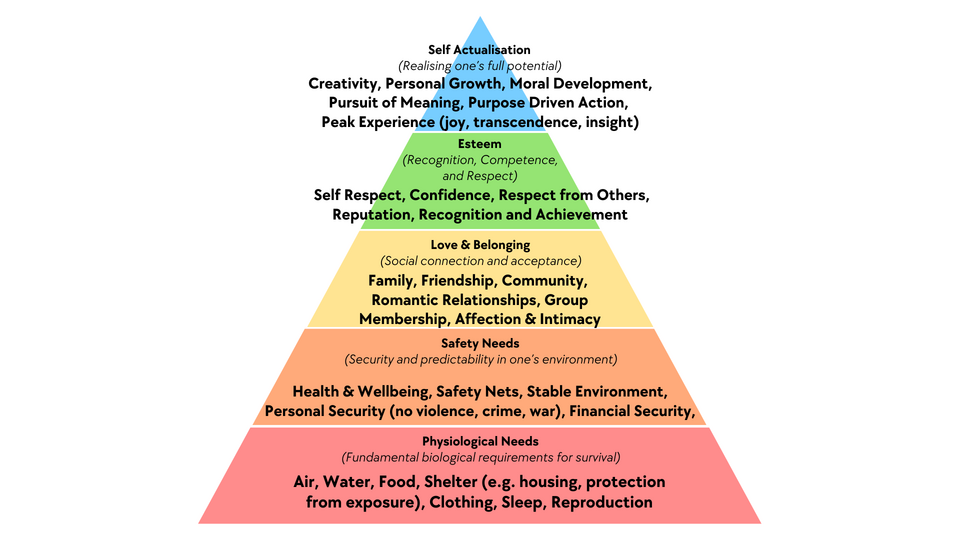 A labeled pyramid showing physiological, safety, social, esteem, and self-actualization needs. (Image: Hamish.croker, CC BY-SA 4.0, via Wikimedia Commons)
Based on the TU BIM syllabus for Fundamentals of Marketing (MKT201), unit 3.
Discussion
Loading…