Introduction To PsychologyUnit 211 min read
Biological Basis of Behavior: Brain, Genes, and Neurochemistry
Unit 2 of Introduction to Psychology explores how biological factors—such as the nervous system, genetics, and neurochemistry—shape human behavior, emotions, and mental processes, bridging biology and psychology.
TAKEAWAYS:
- The nervous system (central and peripheral) transmits signals via neurons, enabling behavior and cognition.
- Genetics influence behavior through inherited traits (e.g., temperament, disorders), while epigenetics shows how environment alters gene expression.
- Neurotransmitters (e.g., dopamine, serotonin) regulate mood, motivation, and learning, explaining disorders like depression or ADHD.
- Endocrine system hormones (e.g., adrenaline, oxytocin) link biology to stress, bonding, and survival responses.
- Evolutionary psychology explains adaptive behaviors (e.g., fear, aggression) as remnants of ancestral survival strategies.
- Neuroplasticity demonstrates how experiences reshape the brain, underpinning learning and recovery from trauma.
1. The Nervous System: The Body’s Communication Network
Behavior begins with electrical and chemical signals in the nervous system, divided into two main parts:
A. Central Nervous System (CNS)
The brain and spinal cord process information and coordinate responses.
Key Structures:
- Cerebrum: Controls voluntary movements, speech, thought, and memory (divided into four lobes).
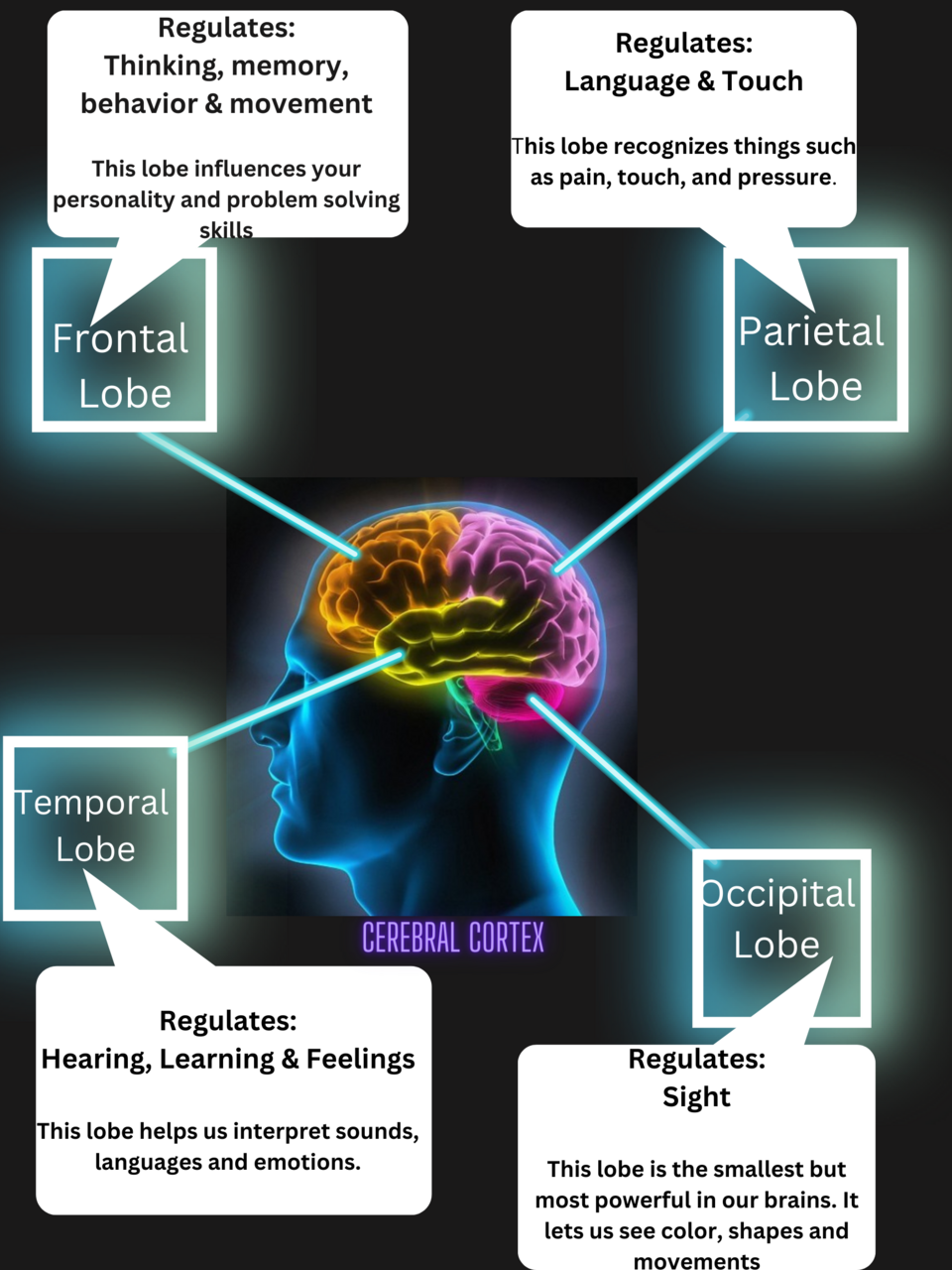 The four lobes (frontal, parietal, temporal, occipital) and their primary functions. (Image: Akirylxo, CC BY-SA 4.0, via Wikimedia Commons)
 - Cerebellum: Coordinates fine motor skills (e.g., writing, playing an instrument).
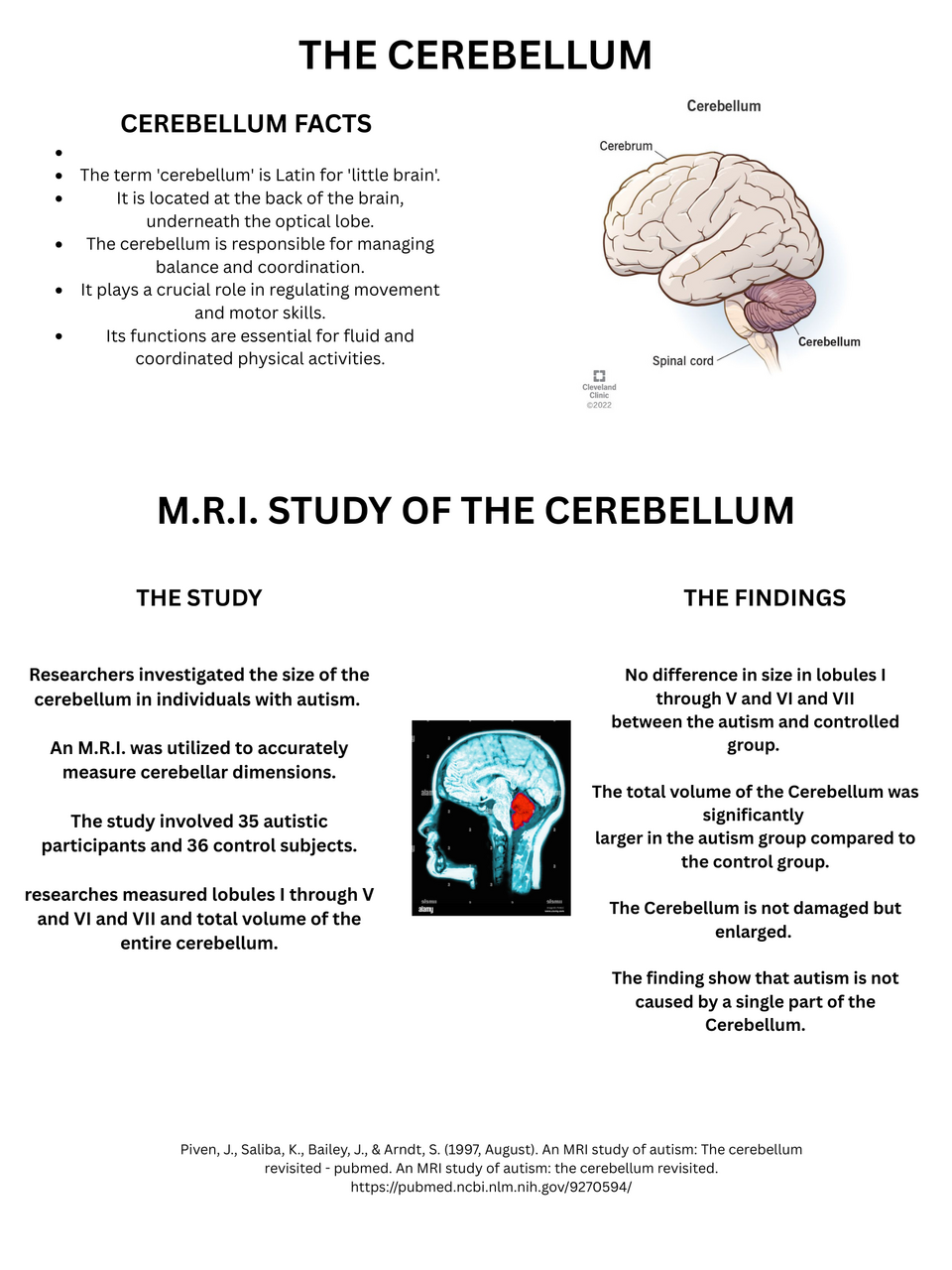 The little brain at the back of the skull, responsible for balance and coordination. (Image: Afernandez4036, CC0, via Wikimedia Commons)
 - Brainstem: Regulates vital functions like breathing and heart rate.
Worked Example: Imagine a student (Ramesh) freezes mid-exam after seeing a question on neuroanatomy. His amygdala (part of the limbic system) triggers a fear response, while the prefrontal cortex (frontal lobe) struggles to override it. This highlights how the CNS balances emotion and cognition.
B. Peripheral Nervous System (PNS)
Divided into:
- Somatic Nervous System: Controls voluntary movements (e.g., raising your hand).
- Autonomic Nervous System (ANS): Regulates involuntary functions like digestion or heartbeat.
- Sympathetic NS: "Fight or flight" (e.g., adrenaline release during stress).
- Parasympathetic NS: "Rest and digest" (e.g., slowing heart rate after exercise).
Comparison Table:
| System | Function | Example Behavior |
|---|---|---|
| Somatic NS | Voluntary movement | Typing on a laptop |
| Sympathetic NS | Emergency response | Racing heart during a test |
| Parasympathetic NS | Calm recovery | Slowed breathing after running |
2. Neurons: The Body’s Messengers
Neurons transmit signals via action potentials (electrical impulses) and neurotransmitters (chemicals).
Key Neurotransmitters and Their Roles:
| Neurotransmitter | Primary Role | Behavioral Impact | Disorder Linked To |
|---|---|---|---|
| Dopamine | Motivation, reward, movement | Low levels → apathy; high levels → addiction | Parkinson’s, ADHD |
| Serotonin | Mood regulation, sleep | Low levels → depression, anxiety | Depression, OCD |
| GABA | Inhibitory (calms neural activity) | Low levels → anxiety, seizures | Anxiety disorders |
| Glutamate | Excitatory (stimulates neural activity) | Overactivity → seizures, memory loss | Alzheimer’s, epilepsy |
Real-World Link: Pathao drivers rely on dopamine for motivation to work long hours. When dopamine levels drop (e.g., due to stress), they may feel less eager to deliver rides, illustrating how neurotransmitters drive occupational behavior.
3. Genetics and Behavior: Nature vs. Nurture
Genes influence behavior through:
- Heritability: Traits passed from parents (e.g., temperament, risk for disorders).
- Epigenetics: Environmental factors (e.g., trauma, diet) alter gene expression without changing DNA.
Example: Twin Studies
- Monozygotic (identical) twins share 100% of genes but may exhibit different behaviors due to environmental influences (e.g., upbringing, peer groups).
- Dizygotic (fraternal) twins share ~50% of genes but can have similar behaviors if raised in identical environments.
Worked Example: If two siblings both develop schizophrenia, it may be due to shared genes (heritability) and shared environment (e.g., family stress). This shows how biology and experience interact.
4. The Endocrine System: Hormones and Behavior
Hormones (chemical messengers) released by glands affect mood, stress, and social behavior.
Key Hormones and Their Roles:
| Hormone | Gland | Behavioral Role | Example Scenario |
|---|---|---|---|
| Adrenaline | Adrenal glands | Increases alertness, energy | Public speaking anxiety |
| Oxytocin | Pituitary gland | Promotes bonding, social trust | New parents bonding with babies |
| Testosterone | Testes/ovaries | Aggression, dominance | Leadership behaviors in males |
| Cortisol | Adrenal glands | Stress response | Exam-induced insomnia |
Real-World Link: eSewa’s customer service reps experience cortisol spikes during peak transaction hours (e.g., Diwali sales). Chronic stress from high workloads can impair their decision-making, showing how hormones affect workplace performance.
5. Evolutionary Psychology: Survival Behaviors
Evolutionary psychology explains behaviors as adaptations to ancestral environments (e.g., survival threats, mating strategies).
Key Concepts:
- Natural Selection: Traits that enhanced survival (e.g., fear of snakes) were preserved.
- Adaptive Behaviors:
- Fear: Heightened response to threats (e.g., spiders, heights).
- Aggression: Dominance hierarchies in groups.
- Attachment: Bonding with caregivers for survival.
Example: Mate Selection
- Humans prefer partners with symmetrical faces (sign of genetic health) or deep voices (indicating testosterone, linked to strength).
- Worked Example: In Daraz, users often choose sellers with high ratings (a modern "survival" signal for trustworthiness), mirroring evolutionary preferences for reliable partners.
6. Neuroplasticity: The Brain’s Ability to Change
The brain reorganizes itself based on experience, enabling learning and recovery.
Mechanisms:
- Synaptic Pruning: Weak connections are eliminated (e.g., during childhood).
- Long-Term Potentiation (LTP): Strengthens neural pathways (e.g., learning a language).
- Recovery from Injury: Brain areas compensate for damaged regions (e.g., stroke patients relearning speech).
Real-World Link: Pathao drivers develop neuroplasticity as they navigate Kathmandu’s chaotic traffic. Over time, their brains form efficient routes, reducing reaction time—a direct result of repeated exposure to complex environments.
In the Real World
Khalti’s Payment Security:
- Uses dopamine to motivate users to complete transactions quickly (reward system) and serotonin to reduce anxiety during payments. The app’s design leverages neurochemistry to create a seamless, stress-free experience.
NEPSE Stock Market Investors:
- Traders rely on cognitive biases (e.g., overconfidence) influenced by testosterone (risk-taking) and cortisol (stress during crashes). Understanding these biological factors helps investors manage emotions during volatile markets.
NTC’s Customer Service:
- Employees undergo training to recognize nonverbal cues (e.g., raised eyebrows = frustration) via the amygdala’s threat detection. This biological awareness improves conflict resolution in customer interactions.
Exam Tip
- Define and Explain: Always start with clear definitions (e.g., "The nervous system is the body’s electrical communication network...").
- Link Biology to Behavior: Use real-life examples (e.g., "Like Pathao drivers, our brains adapt to stress via cortisol...").
- Compare Systems: For questions like "Justify: Psychology encompasses various methods", contrast biological methods (e.g., fMRI scans) with behavioral methods (e.g., observation).
- Avoid Memorization: Focus on processes (e.g., how neurotransmitters work in synapses) and applications (e.g., how hormones affect workplace performance).
- Structure Your Answer:
- Introduction: Briefly define the topic (e.g., "The biological basis of behavior refers to...").
- Body: Cover nervous system → neurotransmitters → genetics → hormones → evolution → neuroplasticity with examples.
- Conclusion: Tie back to real-world relevance (e.g., "Understanding these factors helps explain why eSewa users feel motivated to complete transactions...").
Sample Answer Structure for Past Questions: Question: "Human behaviors cannot be completely understood without the knowledge of biological factors in human behavior." Justify. Answer:
- Nervous System: Controls voluntary/involuntary actions (e.g., heart rate during exams).
- Neurotransmitters: Regulate mood (e.g., serotonin deficiency → depression).
- Genetics: Inherited traits (e.g., risk for anxiety disorders).
- Hormones: Influence stress responses (e.g., adrenaline in emergencies).
- Evolution: Explains adaptive behaviors (e.g., fear of heights).
- Neuroplasticity: Shows how experience reshapes behavior (e.g., learning a new skill).
Example: A student’s amygdala triggers anxiety before exams (biological), while their prefrontal cortex attempts to regulate it (cognitive). Without understanding the brain’s role, we miss why some students freeze under pressure.
Visual Recap:
- Nervous System: CNS vs. PNS flowchart.
- Neuron Structure: Synapse and neurotransmitter release.
- Hormones: Endocrine system diagram.
- Evolutionary Behaviors: Fear response vs. mating strategies.
- Neuroplasticity: Brain adapting to new routes (like Pathao drivers).
Based on the TU BSW syllabus for Introduction To Psychology, unit 2.
Discussion
Loading…