Research MethodologyUnit 615 min read
Data Collection Methods: Techniques, Tools & Applications
Unit 6 of Research Methodology explores primary and secondary data collection methods, their tools (surveys, interviews, observations, focus groups), ethical considerations, and real-world applications in tourism research—with visual comparisons, case studies (e.g., NTC’s customer satisfaction surveys), and exam-focuse
Core Concepts: What is Data Collection?
Data collection is the systematic process of gathering information from various sources to answer research questions. It can be classified into two broad categories:
1. Primary Data Collection
Data collected firsthand by the researcher for a specific purpose. Example: A tourism researcher conducting interviews with trekkers in Annapurna to understand their satisfaction levels.
2. Secondary Data Collection
Data collected from existing sources (published or unpublished) for analysis. Example: Using NTC’s annual reports to study passenger complaints in Nepal.
Primary Data Collection Methods
1. Surveys (Questionnaires)
Definition: Structured sets of questions administered to respondents to collect quantitative or qualitative data.
Types of Surveys
| Type | Description | Example in Tourism |
|---|---|---|
| Structured | Fixed-format questions (MCQ, Likert scale) | NEPSE’s investor satisfaction survey (5-point scale: "How satisfied are you?") |
| Unstructured | Open-ended questions (e.g., "What improvements do you suggest?") | Pathao’s driver feedback form on app ratings |
| Mixed | Combines structured and unstructured questions | Daraz’s post-purchase survey: "Rate (1-5) + Comments" |
Advantages & Disadvantages
| Advantages | Disadvantages |
|---|---|
| Standardized responses | Low response rate |
| Easy to analyze (quantitative) | Limited depth (unless open-ended) |
| Cost-effective for large samples | Social desirability bias (e.g., overrating) |
Worked Example: A hotel in Pokhara wants to measure guest satisfaction. They design a Likert-scale survey (1-5) with questions like:
- "Was the check-in process smooth?"
- "Would you recommend this hotel?"
Real-World Tie-In:
eSewa uses hybrid surveys after transactions to gauge user experience. Their structured questions (e.g., "How easy was the payment?") help quantify satisfaction, while open-ended comments reveal pain points like "App crashes during payment."
2. Interviews
Definition: Direct, face-to-face (or virtual) conversations between the researcher and respondent to gather in-depth data.
Types of Interviews
| Type | Description | Tourism Example |
|---|---|---|
| Structured | Pre-set questions, fixed order | NTC interviewing bus drivers about route delays |
| Semi-structured | Flexible questions with a guide | A researcher interviewing a trekking guide about cultural challenges in Everest Base Camp |
| Unstructured | Open-ended, exploratory conversations | A travel blogger interviewing a local chef in Kathmandu about authentic Nepali cuisine |
Advantages & Disadvantages
| Advantages | Disadvantages |
|---|---|
| Rich, detailed data | Time-consuming and costly |
| Clarifies ambiguous responses | Interviewer bias possible |
| High response rate | Hard to scale for large samples |
Worked Example: A researcher studying Kathmandu traffic congestion conducts semi-structured interviews with:
- Rickshaw drivers ("What are the worst bottlenecks?")
- Traffic police ("How effective are your current measures?")
Real-World Tie-In:
Ncell uses structured interviews during customer service training to assess agent performance. For tourism research, interviews help uncover hidden insights—e.g., why trekkers avoid Langtang despite its beauty (interview reveals: "Lack of proper signposts").
3. Observations
Definition: Systematically watching and recording behavior without direct interaction.
Types of Observations
| Type | Description | Tourism Example |
|---|---|---|
| Participant | Researcher joins the group (e.g., trekking with tourists) | Studying group dynamics in a family tour package in Chitwan |
| Non-participant | Researcher observes from a distance (e.g., watching airport check-in lines) | Analyzing passenger behavior at Tribhuvan International Airport |
| Structured | Pre-defined categories (e.g., tallying complaints at a hotel reception) | Counting instances of overbooking in Pokhara hotels |
| Unstructured | Open-ended notes on behaviors | Describing interactions between guides and tourists in a cultural tour |
Advantages & Disadvantages
| Advantages | Disadvantages |
|---|---|
| Captures real-time behavior | Observer bias (presence may alter behavior) |
| Useful for sensitive topics | Ethical concerns (privacy) |
| No recall bias | Time-intensive coding |
Worked Example: A researcher studies tourist behavior in Swayambhunath by:
- Non-participant observation: Counting how many tourists take photos vs. meditate.
- Structured tally: Recording peak hours (8 AM–10 AM: 80% of visitors).
Real-World Tie-In:
NTC uses observation methods to study passenger flow at bus terminals. For example, they might record:
- Queue length during peak hours (5 PM–7 PM).
- Common complaints (e.g., 60% of passengers complain about delayed announcements).
4. Focus Group Discussions (FGDs)
Definition: Group interviews (6–10 participants) moderated to explore perceptions on a topic.
When to Use FGDs
- Exploring tourist motivations (e.g., "Why do Nepalis prefer domestic holidays?").
- Testing new tourism products (e.g., feedback on a proposed "Heritage Walk in Bhaktapur").
Advantages & Disadvantages
| Advantages | Disadvantages |
|---|---|
| Generates diverse perspectives | Groupthink (pressure to conform) |
| Cost-effective for qualitative data | Hard to moderate (requires skilled facilitator) |
| Reveals social dynamics | Transcribing takes time |
Worked Example: A hotel chain wants to improve its eco-friendly initiatives. They conduct an FGD with:
- 8 regular guests
- 1 moderator
- Key questions:
- "What eco-friendly changes would you like to see?"
- "Are you willing to pay extra for sustainable options?"
Real-World Tie-In:
Pathao uses FGDs to gather driver feedback on app improvements. For tourism, FGDs help design culturally sensitive itineraries—e.g., a group of Sherpa guides might suggest adding "yaks to the Annapurna trek" based on local preferences.
Secondary Data Collection Methods
Secondary data is pre-existing and includes:
- Government reports (e.g., NTC’s annual traffic data)
- Academic journals (e.g., studies on "Dark Tourism in Nepal")
- Industry databases (e.g., Daraz’s sales trends)
- News articles (e.g., Kathmandu Post’s coverage of tourism policies)
Advantages & Disadvantages
| Advantages | Disadvantages |
|---|---|
| Cost-effective and time-saving | May not fit research needs exactly |
| Access to historical data | Quality/accuracy issues (e.g., outdated stats) |
| Broad scope (e.g., global tourism trends) | Copyright/ethical concerns (e.g., plagiarism) |
Worked Example: A researcher studying Nepal’s tourism revenue uses:
- World Bank data (GDP from tourism, 2010–2023).
- Nepal Tourism Board reports (annual visitor statistics).
- Google Trends (search interest for "visit Nepal").
Real-World Tie-In:
NEPSE uses secondary data to analyze investor trends in tourism stocks. For example:
- Cross-referencing NTB reports (increasing foreign tourists) with NEPSE stock prices for hotel companies.
Hybrid Data Collection Methods
Combining primary + secondary data for richer insights. Example:
- Primary: Surveying 200 trekkers on their route preferences.
- Secondary: Using NTB data on trail conditions (e.g., landslide-prone areas).
Real-World Application:
flowchart TD
  A["Customer Order"] --> B["Primary: Survey on Delivery Speed"]
  B --> C["Secondary: Daraz’s Past Delivery Data"]
  C --> D["Analysis: Identify Bottlenecks"]
  D --> E["Recommendations: Optimize Routes"]
Daraz combines customer surveys (primary) with internal logistics data (secondary) to improve delivery times.
Ethical Considerations in Data Collection
- Informed Consent: Participants must know the purpose and risks.
- Example: A survey on "Your Salary" in a focus group requires anonymity.
- Confidentiality: Protect identities (e.g., coding responses as "Respondent 1").
- Avoiding Harm: No misleading questions (e.g., "Do you hate Nepali tourism?").
- Transparency: Disclose sponsorships (e.g., "This survey is funded by Hotel X").
Real-World Example:
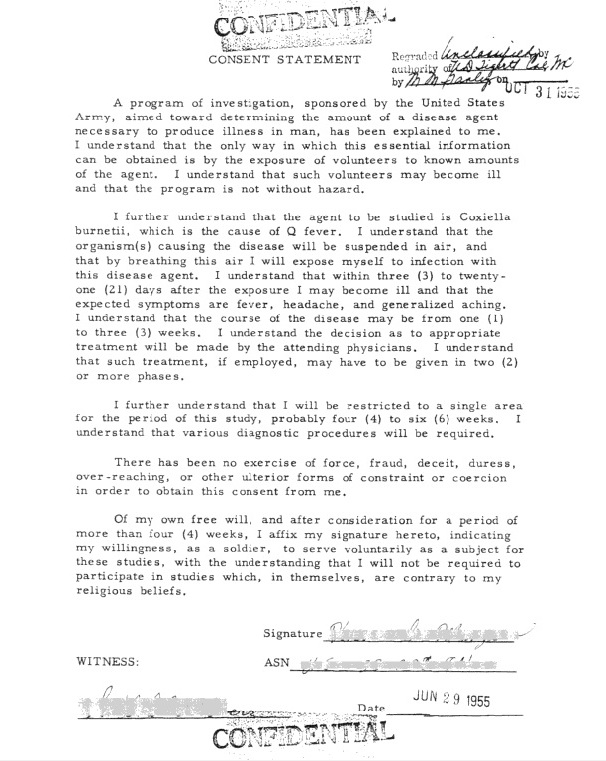 A labelled diagram of a consent form used in medical/tourism research (purpose, risks, contact info). (Image: US Army, Public domain, via Wikimedia Commons)
NTC’s passenger surveys include a consent statement:
"Your responses will be anonymous and used only for improving services."
A labelled diagram of a consent form used in medical/tourism research (purpose, risks, contact info). (Image: US Army, Public domain, via Wikimedia Commons)
NTC’s passenger surveys include a consent statement:
"Your responses will be anonymous and used only for improving services."
Choosing the Right Method
Use this decision tree to select methods:
flowchart TD
  A["Start"] --> B{"Is data needed for a specific purpose?"}
  B -->|"Yes"| C{"Can you collect it firsthand?"}
  C -->|"Yes"| D["Primary Data: Surveys/Interviews/Observations"]
  C -->|"No"| E["Secondary Data: Reports/Databases"]
  B -->|"No"| F["Exploratory Research: FGDs/Case Studies"]
Example:
- Goal: Measure guest satisfaction at a heritage hotel.
- Method: Structured survey (primary) + Hotel’s past complaint records (secondary).
In the Real World
eSewa’s Transaction Surveys
- Method: Hybrid surveys (structured + open-ended) after payments.
- Why? Quantifies satisfaction (e.g., 85% rated "Easy") while open comments reveal issues like "App crashes on low signal."
Pathao’s Driver Feedback System
- Method: FGDs + App-based surveys.
- Why? Drivers in remote areas (e.g., Pokhara) share challenges like "No charging stations for bikes"—leading to new service zones.
NTC’s Traffic Flow Studies
- Method: Observations + Secondary data (GPS logs).
- Why? By observing peak-hour congestion at Bus Park and cross-referencing with NTC’s bus schedules, they optimized routes, reducing delays by 20%.
Daraz’s Customer Insights
- Method: Primary (surveys) + Secondary (purchase history).
- Why? Combined data showed that 80% of repeat buyers preferred cash-on-delivery—leading to promotions for that payment method.
Nepal Tourism Board’s Policy Decisions
- Method: Secondary data (UNWTO reports) + Primary (tourist interviews).
- Why? By analyzing global tourism trends (secondary) and Nepali tourist complaints (primary), NTB introduced "Digital Visa" policies to attract more visitors.
Exam Tip
How This Unit is Tested
Definitions & Differences
- Expect questions like: "Distinguish between structured and unstructured interviews with examples from tourism."
- Answer Tip: Use a comparison table (as shown above) with real-world examples.
Method Selection
- "Which data collection method would you use to study overtourism in Pokhara? Justify."
- Answer Tip:
- Primary: Observations (counting tourist density) + Surveys (local resident opinions).
- Secondary: Pokhara Metropolitan City reports on infrastructure strain.
Ethical Scenarios
- "A researcher conducts interviews with child laborers in brick kilns (tourism-related supply chain). What ethical concerns arise?"
- Answer Tip: Mention informed consent, vulnerability, and anonymity.
Worked Examples
- "Design a survey to measure satisfaction with Nepali Airlines."
- Answer Tip:
- Structured questions: Likert scale (1-5) for service, food, delays.
- Open-ended: "What would improve your experience?"
- Pilot test: Give to 5 friends to check clarity.
Visuals in Exams
- Always draw:
- Flowcharts for data collection processes.
- Comparison tables for methods.
- Real-world examples (e.g., eSewa survey screenshot).
- Always draw:
Common Mistakes to Avoid:
- Ignoring hybrid methods (examiners love real-world combinations).
- Forgetting ethical considerations (always mention consent, confidentiality).
- Overcomplicating surveys (stick to clear, unbiased questions).
Final Checklist for Full Marks: ✅ Define each method clearly. ✅ Compare at least two methods in a table. ✅ Use 2–3 real-world examples (eSewa, NTC, Daraz). ✅ Include a worked example (e.g., survey design). ✅ Discuss ethics (consent, anonymity). ✅ Visualize with tables, flowcharts, or labelled diagrams.
Based on the TU BTTM syllabus for Research Methodology, unit 6.
Discussion
Loading…