Research MethodologyUnit 514 min read
Sampling Design: Types, Methods & Applications
Unit 5 of Research Methodology explores sampling design, covering probability vs. non-probability sampling, sampling techniques (random, stratified, cluster, systematic), sample size determination, and ethical considerations in tourism research—with real-world examples from NTC, Daraz, and NEPSE.
TAKEAWAYS:
- Sampling design ensures research findings are representative, generalizable, and cost-effective by selecting a subset of the population.
- Probability sampling (e.g., random, stratified) guarantees statistical validity, while non-probability sampling (e.g., convenience, snowball) is faster but less reliable for generalization.
- Stratified sampling is ideal for heterogeneous populations (e.g., tourists by nationality, income, or travel purpose).
- Cluster sampling reduces costs by grouping units (e.g., studying hotels in Lalitpur instead of all of Kathmandu).
- Sample size depends on population size, confidence level, and margin of error (use Krejcie & Morgan table or Sloven’s formula).
- Ethical sampling requires informed consent, anonymity, and avoidance of bias (e.g., not overrepresenting luxury tourists in budget research).
1. What is Sampling Design?
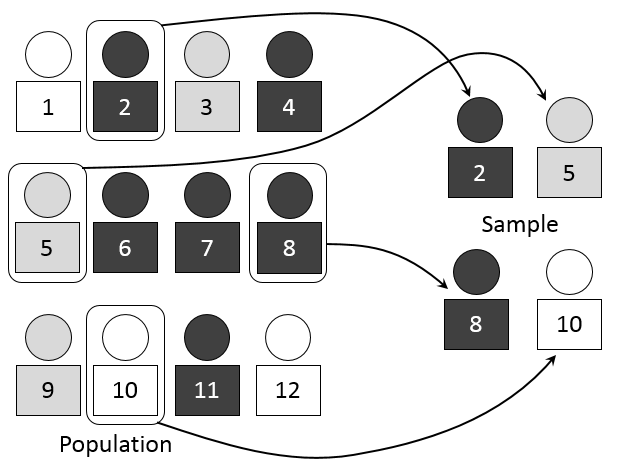
Sampling design is the methodology used to select a subset (sample) from a larger group (population) to make inferences about the whole. Poor sampling leads to biased or unreliable results, wasting time and resources.
Why sample?
- Cost-effective: Surveying 1,000 tourists is cheaper than 100,000.
- Time-saving: Data collection is faster with a smaller group.
- Feasible: Some populations (e.g., all tourists in Nepal annually) are too large to study entirely.
Key terms:
| Term | Definition |
|---|---|
| Population | Entire group of interest (e.g., all tourists visiting Pokhara in 2024). |
| Sample | Subset of the population (e.g., 500 tourists surveyed in Pokhara). |
| Sampling Frame | List of population members (e.g., NTA’s tourist arrival records). |
| Sampling Unit | Individual or group selected (e.g., a single tourist or a tour group). |
| Sampling Error | Difference between sample results and true population values. |
2. Probability vs. Non-Probability Sampling
The choice between these depends on research goals, budget, and time.
A. Probability Sampling (Scientific, Generalizable)
Every member has a known chance of selection, ensuring representativeness.
Advantages: ✔ Unbiased (everyone has equal chance). ✔ Statistically valid (can generalize to population). ✔ Margin of error calculable.
Disadvantages: ✖ Time-consuming and expensive. ✖ Requires complete sampling frame (hard for hidden populations like illegal tourists).
B. Non-Probability Sampling (Practical, Convenient)
Selection is not random; used when probability sampling is infeasible.
Advantages: ✔ Quick and cheap. ✔ Useful for exploratory research.
Disadvantages: ✖ Bias risk (e.g., overrepresenting temple visitors). ✖ Cannot generalize to entire population.
3. Probability Sampling Techniques
A. Simple Random Sampling (SRS)
Every member has an equal chance of selection (e.g., lottery method).
How to do it?
- List all population members (sampling frame).
- Assign random numbers (e.g., using Excel’s RAND() or randomizer tools).
- Select members matching your sample size.
Example:
- Population: 5,000 tourists in Pokhara.
- Sample size: 200.
- Method: Assign numbers 1–5000, pick 200 randomly.
 A jar with numbered balls being drawn. (Image: Dan Kernler, CC BY-SA 4.0, via Wikimedia Commons)
When to use?
- Small, accessible populations (e.g., guests at a single hotel).
- When bias must be avoided (e.g., market research for Daraz).
B. Stratified Sampling (Homogeneous Subgroups)
Population is divided into strata (groups with shared traits), then randomly sampled from each.
Example (Tourism Research):
- Stratum 1: Nepali tourists (30% of sample).
- Stratum 2: Indian tourists (40%).
- Stratum 3: Chinese tourists (20%).
- Stratum 4: Western tourists (10%).
Proportional vs. Non-Proportional:
| Type | Description | Example |
|---|---|---|
| Proportional | Sample matches population proportions. | 30% Nepali, 40% Indian in sample. |
| Non-Proportional | Equal sample from each stratum (if strata are small). | 50 tourists from each nationality group. |
When to use?
- Heterogeneous populations (e.g., tourists vary by nationality, income, purpose).
- Ensuring minority groups are represented (e.g., LGBTQ+ tourists).
C. Cluster Sampling (Group-Based)
Population is divided into clusters (natural groups), then random clusters are selected.
Example (Nepal Tourism):
- Clusters: Hotels in Kathmandu, Pokhara, Chitwan.
- Step 1: Randomly select 3 hotels from each city.
- Step 2: Survey all guests in those hotels.
Advantages: ✔ Cost-effective (no need for full sampling frame). ✔ Useful for large geographic areas.
Disadvantages: ✖ Clusters may not represent population (e.g., luxury hotels vs. budget guesthouses).
When to use?
- Geographically dispersed populations (e.g., studying tourists in all 77 districts).
- Limited budget/time (e.g., NTC surveying road users in 5 zones).
D. Systematic Sampling (Fixed Interval)
Select every k-th member from a list (e.g., every 10th tourist at an airport).
Steps:
- Determine sampling interval (k) = Population size / Sample size.
- Example: 10,000 tourists → 500 sample → k = 20.
- Randomly select a starting point (1–20).
- Select every 20th tourist after that.
Example:
- Population: Tourists arriving at Tribhuvan Int’l Airport (10,000/month).
- Sample: 500 tourists.
- Method: Start at tourist #7, then #27, #47, etc.
Advantages: ✔ Simpler than SRS. ✔ Good for ordered lists (e.g., arrival records).
Disadvantages: ✖ Risk of periodicity bias (e.g., if arrivals follow a pattern like weekends).
4. Non-Probability Sampling Techniques
A. Convenience Sampling (Accidental)
Select easiest-to-reach members (e.g., tourists at Swayambhunath).
Example:
- Surveying backpackers in Thamel instead of all tourists in Nepal.
When to use?
- Pilot studies.
- Exploratory research (e.g., testing a questionnaire).
Risks: ✖ Overrepresents certain groups (e.g., young, budget travelers). ✖ Underrepresents others (e.g., business tourists).
B. Purposive (Judgmental) Sampling
Researcher intentionally selects specific cases (e.g., expert trekkers).
Example:
- Studying Everest summitters instead of all trekkers.
When to use?
- Specialized knowledge needed (e.g., interviewing NTA officials).
- Small, unique populations (e.g., luxury hotel guests).
C. Snowball Sampling (Chain Referral)
Existing subjects recruit others (useful for hidden populations).
Example:
- Step 1: Interview a trekking guide.
- Step 2: Ask them to refer other guides.
- Step 3: Repeat.
When to use?
- Hard-to-reach groups (e.g., illegal guides, underground tourism operators).
D. Quota Sampling
Non-random but ensures proportions match population (like stratified but without randomness).
Example:
- Population: 60% Nepali, 20% Indian, 10% Chinese tourists.
- Sample: 60 Nepali, 20 Indian, 10 Chinese (but selected conveniently).
When to use?
- Quick surveys (e.g., exit polls at airports).
- Budget constraints.
5. Sample Size Determination
Too small → Unreliable results. Too large → Wasted resources.
Factors Affecting Sample Size:
- Population size (larger populations need bigger samples).
- Confidence level (90%, 95%, 99%).
- Margin of error (e.g., ±5%).
- Homogeneity of population (more homogeneous → smaller sample).
Formulas & Tables:
Krejcie & Morgan Table (most common in social sciences):
Population Size Minimum Sample Size 50 45 100 84 500 220 1,000 354 5,000 370 10,000+ 384 Sloven’s Formula (for large populations):
- = sample size
- = population size
- = margin of error (e.g., 0.05 for 5%)
Example:
- Population (N): 10,000 tourists in Pokhara.
- Margin of error (e): 5% (0.05).
- Calculation:
- Sample size: 385 tourists.
6. Ethical Considerations in Sampling
- Informed Consent: Participants must knowingly agree (e.g., survey forms with opt-out options).
- Anonymity/Confidentiality: Protect identities (e.g., not linking names to responses).
- Avoiding Bias: Do not overrepresent certain groups (e.g., only surveying young tourists).
- Voluntary Participation: No coercion (e.g., not forcing hotel staff to participate).
Example (Real-World Application):
- Nepal Tourism Board (NTB) surveys tourists but avoids pressuring them at immigration counters to ensure voluntary responses.
7. Common Sampling Mistakes to Avoid
| Mistake | Example | Fix |
|---|---|---|
| Undercoverage | Only surveying Kathmandu tourists. | Use cluster sampling for all regions. |
| Overcoverage | Surveying the same group repeatedly. | Use stratified sampling. |
| Non-response bias | Only wealthy tourists respond. | Offer multiple response modes (online, phone, in-person). |
| Sampling frame errors | Using outdated tourist arrival data. | Update sampling frame annually. |
In the Real World
eSewa & Khalti (Digital Payments)
- Idea Used: Stratified Sampling
- How? When testing user satisfaction, eSewa divides users by age groups (18–30, 31–50, 50+) and transaction frequency (daily, weekly, monthly) to ensure representative feedback.
Daraz (E-Commerce)
- Idea Used: Cluster Sampling
- How? Instead of surveying all 10 million users, Daraz selects random clusters of cities (Kathmandu, Pokhara, Biratnagar) and surveys 1,000 users per cluster to estimate nationwide satisfaction.
NTC (Road Safety Research)
- Idea Used: Systematic Sampling
- How? To study traffic violations, NTC uses every 50th vehicle passing a checkpoint (after random start) to avoid time-based bias (e.g., only surveying rush-hour traffic).
NEPSE (Stock Market Analysis)
- Idea Used: Stratified Random Sampling
- How? When analyzing investor behavior, NEPSE divides investors by income level (low, middle, high) and investment type (stocks, bonds, mutual funds) before randomly sampling within each group.
Pathao (Ride-Hailing)
- Idea Used: Convenience Sampling (with Quota Adjustments)
- How? Pathao conducts driver surveys at pickup points (convenient) but adjusts quotas to ensure equal representation from Kathmandu, Lalitpur, and Bhaktapur.
Exam Tip
Define Key Terms Clearly:
- Always explain probability vs. non-probability with examples.
- Differentiate stratified vs. cluster sampling (strata = homogeneous groups; clusters = natural groups).
Apply to Tourism Scenarios:
- Exams often ask: "How would you sample tourists in Nepal?"
- Best answer: Stratified cluster sampling (divide by region → then by nationality/income).
Calculate Sample Size:
- Memorize Krejcie & Morgan table for quick answers.
- For large populations, use Sloven’s formula.
Ethics & Bias:
- Always mention informed consent and avoiding bias in sampling.
- Example: "If I only survey backpackers in Thamel, my results won’t represent business tourists."
Diagrams Save Marks:
- Draw flowcharts for sampling methods (e.g., probability vs. non-probability).
- Label stratified vs. cluster sampling clearly.
Common Exam Questions:
- "Differentiate between stratified and cluster sampling with tourism examples."
- "How would you determine the sample size for a study on 20,000 tourists in Nepal?"
- "What are the ethical issues in sampling, and how would you address them in a tourist satisfaction survey?"
Based on the TU BTTM syllabus for Research Methodology, unit 5.
Discussion
Loading…