HistoryUnit 89 min read
The Cold War: Causes, Phases, Arms Race & End
Unit 8 of History explores the Cold War (1947–1991) between the USA and USSR, its origins, key events, proxy wars, arms race, and collapse—with visuals, comparisons, and NEB-style questions to master the topic.
TAKEAWAYS:
- The Cold War was an ideological clash between capitalist USA and communist USSR after WWII, marked by no direct war but proxy conflicts.
- It had three phases: early tensions (1947–1953), Cuban Missile Crisis (1962 peak), and détente/reform (1970s–1991).
- Proxy wars (Korea, Vietnam, Afghanistan) and the arms race (nuclear weapons) defined the era.
- The fall of the Berlin Wall (1989) and USSR’s collapse (1991) ended the Cold War.
- Nepal’s neutrality during the Cold War was a key foreign policy strategy.
- NEB exam focus: Causes, key events, arms race, and consequences (with map-based questions).
What Was the Cold War?
The Cold War was a long period of tension (1947–1991) between the United States (USA) and the Soviet Union (USSR). Unlike a "hot war," they never fought directly but competed in ideology, politics, and military power.
Why Did It Start?
After World War II (1939–1945), two superpowers emerged:
- USA: Capitalist, democratic, led by Harry Truman.
- USSR: Communist, authoritarian, led by Joseph Stalin.
Key Causes:
- Ideological Differences:
- USA believed in freedom, democracy, and free markets.
- USSR promoted communism (state control, no private property).
- Soviet Expansion:
- USSR took control of Eastern Europe (Poland, Hungary, etc.).
- USA saw this as a threat to democracy.
- Truman Doctrine (1947):
- USA promised to help countries resist communism (e.g., Greece, Turkey).
- Marshall Plan (1948):
- USA gave $13 billion to rebuild Europe (but not the USSR).
- Berlin Blockade (1948–49):
- USSR cut off West Berlin; USA airlifted supplies (Berlin Airlift).
Phases of the Cold War
The Cold War had three main phases:
1. Early Tensions (1947–1953)
- NATO (1949): USA + Western Europe vs. Warsaw Pact (1955): USSR + Eastern Europe.
- Korean War (1950–53): First proxy war (USA vs. China/North Korea).
- Arms Race Begins: Both sides built nuclear weapons.
2. Cuban Missile Crisis (1962) – The Closest to War
- USSR placed nuclear missiles in Cuba (near USA).
- USA blockaded Cuba; world feared nuclear war.
- Result: USSR removed missiles; USA removed missiles from Turkey.
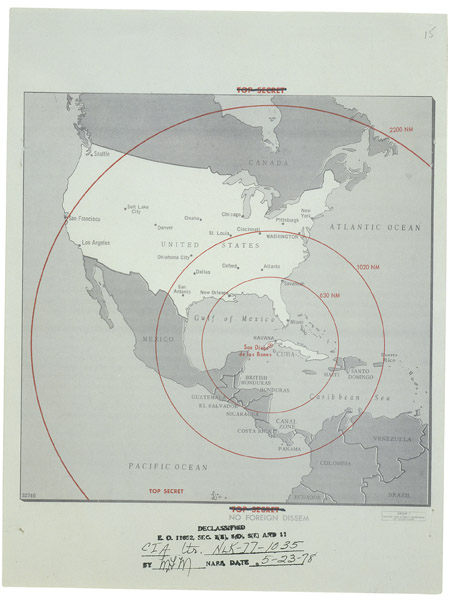 USA blockade vs. USSR missiles in Cuba (Image: Sorensen, Theodore Chaikin, 1928-2010, Public domain, via Wikimedia Commons)
3. Détente & Collapse (1970s–1991)
- Détente (1970s): USA & USSR reduced tensions (e.g., SALT treaties).
- Afghanistan War (1979–89): USSR invaded; USA supported Mujahideen (later Al-Qaeda).
- Reagan & Gorbachev (1980s):
- USA spent massive money on missiles (SDI "Star Wars").
- USSR’s economy collapsed due to Afghanistan war + arms race.
- 1989: Berlin Wall falls (symbol of Cold War end).
- 1991: USSR dissolves → Cold War ends.
Proxy Wars: Fighting Indirectly
Since the USA and USSR couldn’t fight directly, they supported other countries’ wars:
| War | USA Side | USSR Side | Outcome |
|---|---|---|---|
| Korean War | South Korea, UN forces | North Korea, China | Stalemate (1953) |
| Vietnam War | South Vietnam, USA | North Vietnam, USSR/China | North Vietnam wins (1975) |
| Afghanistan | Mujahideen (later Taliban) | USSR | USSR withdraws (1989) |
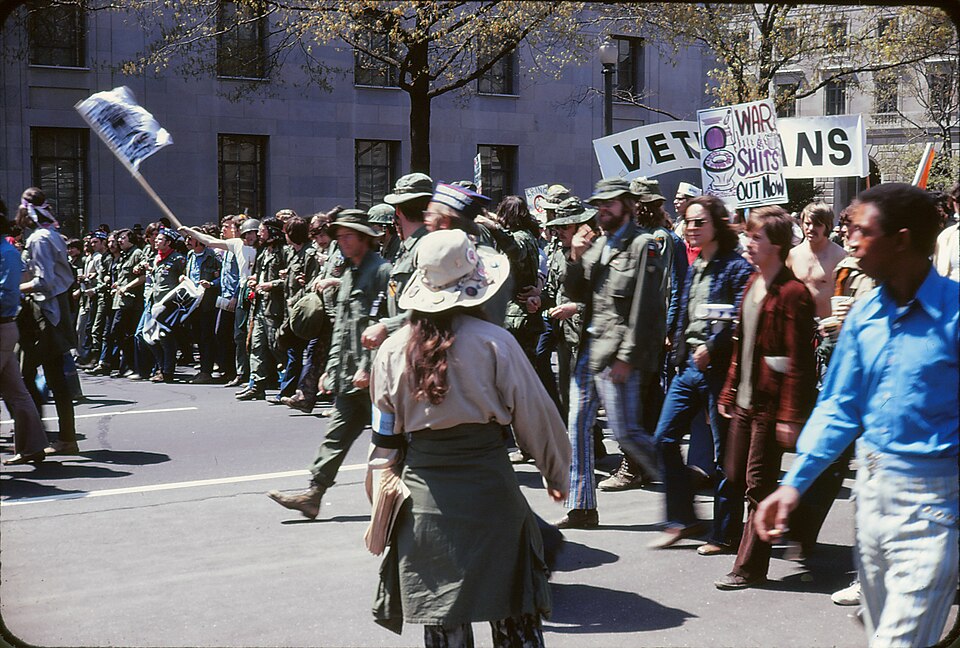 Anti-war movement in the USA (1960s–70s) (Image: Leena A. Krohn, CC BY-SA 3.0, via Wikimedia Commons)
The Arms Race: Nuclear Weapons & Space Race
Both superpowers built more and more weapons:
| Year | USA | USSR |
|---|---|---|
| 1945 | First atomic bomb (Hiroshima) | No nuclear weapons |
| 1949 | Hydrogen bomb (1952) | First atomic bomb (1949) |
| 1957 | Space Race begins (Sputnik) | Launched Sputnik 1 (first satellite) |
| 1961 | First man in space (1962) | Yuri Gagarin (1961) |
| 1969 | Moon landing (Apollo 11) | Behind in space race |
Why Did They Race?
- Deterrence: "If you attack, we’ll destroy you."
- Pride: Who was the strongest superpower?
- Fear: Both feared being left behind.
Nepal’s Neutrality During the Cold War
Nepal stayed neutral (not allied with either side) because:
- Geographic Location: Between India (pro-USA) and China (pro-USSR).
- Kingdom’s Policy: Wanted foreign aid from both sides.
- Avoided War: Nepal did not join any proxy wars.
How Did the Cold War End?
- USSR’s Economic Problems:
- Spent too much on arms race & Afghanistan war.
- Gorbachev’s reforms (Glasnost & Perestroika) failed.
- Berlin Wall Falls (1989):
- Symbol of communism’s failure.
- USSR Collapses (1991):
- 15 republics became independent (Russia, Ukraine, etc.).
- USA Wins (But No Celebration):
- USA became the sole superpower, but no peace treaty was signed.
Consequences of the Cold War
✅ Positive:
- UN formed (1945) to prevent future wars.
- Space technology (satellites, GPS).
- Human rights movements grew.
❌ Negative:
- Millions died in proxy wars (Vietnam, Korea).
- Nuclear weapons still threaten the world.
- Distrust between USA & Russia continues today.
Exam Tip: How to Score Full Marks
NEB exams test causes, events, and consequences. Follow this structure:
1. Short Answer Questions (SAQ)
Example Question: "What were the main causes of the Cold War?" Answer:
- Ideological differences (capitalism vs. communism).
- Soviet expansion in Eastern Europe.
- Truman Doctrine & Marshall Plan.
- Berlin Blockade & Airlift.
2. Long Answer Questions (LAQ)
Example Question: "Describe the Cuban Missile Crisis and its impact." Answer:
- Cause: USSR placed missiles in Cuba (1962).
- USA’s Response: Blockaded Cuba.
- Outcome: USSR removed missiles; USA removed missiles from Turkey.
- Impact: Détente began; world saw how close nuclear war was.
3. Map-Based Questions
- Label: USA, USSR, NATO, Warsaw Pact, Berlin, Cuba.
- Shade: Proxy war zones (Korea, Vietnam, Afghanistan).
4. Compare & Contrast
Example: "Compare the Korean War and Vietnam War."
| Aspect | Korean War (1950–53) | Vietnam War (1955–75) |
|---|---|---|
| Fighters | USA vs. North Korea/China | USA vs. North Vietnam/USSR |
| Outcome | Stalemate (DMZ still exists) | North Vietnam won |
| Impact | First proxy war | Led to USA’s anti-war movement |
Practice Questions (NEB Style)
- Define: What was the Truman Doctrine?
- Explain: Why did the Berlin Wall fall in 1989?
- Compare: How were the Korean War and Vietnam War different?
- Map Work: Draw a Cold War map showing NATO, Warsaw Pact, and proxy wars.
- Short Essay: "The arms race was the main reason for the Cold War’s end." Do you agree? Justify.
Final Summary
| Topic | Key Points |
|---|---|
| Causes | Ideology, Soviet expansion, Truman Doctrine, Berlin Blockade |
| Phases | Early tensions → Cuban Missile Crisis → Détente & Collapse |
| Proxy Wars | Korea, Vietnam, Afghanistan |
| Arms Race | Nuclear weapons, space race, SDI ("Star Wars") |
| Nepal’s Role | Neutrality, avoided war, got aid from both sides |
| End of Cold War | USSR collapse (1991), Berlin Wall fall (1989), USA as sole superpower |
Remember:
- Cold War = No direct fighting, but proxy wars & arms race.
- NEB loves maps, timelines, and comparisons.
- Practice short & long answers for full marks!
Good luck for your NEB exam! 🚀
Based on the NEB +2 Humanities syllabus for History (His), unit 8.
Discussion
Loading…