Life Skill EducationUnit 719 min read
Sexual & Reproductive Health: Anatomy, Rights, and Safe Practices
Unit 7 of Life Skill Education explains the biological, emotional, and legal aspects of sexual and reproductive health, covering anatomy, rights, safe practices, and common health issues—essential for informed decision-making and NEB exam success.
TAKEAWAYS:
- Understand the anatomy and functions of male and female reproductive systems to recognize normal vs. abnormal changes.
- Know your rights and responsibilities under Nepal’s laws (e.g., age of consent, reproductive autonomy) to protect yourself.
- Learn safe sexual practices (barrier methods, contraception) and how to access healthcare to prevent STIs and unintended pregnancies.
- Identify common reproductive health issues (PCOS, endometriosis, STIs) and their early warning signs.
- Recognize the role of consent, communication, and emotional well-being in healthy relationships.
- Prepare for NEB questions by linking theory (anatomy/rights) to real-life scenarios (e.g., case studies on consent or STI prevention).
1. Anatomy of the Reproductive System
Why it matters
Your body’s reproductive system is designed for reproduction, hormones, and overall health. Understanding it helps you:
- Recognize normal changes (e.g., menstruation, puberty).
- Detect early warning signs of problems (e.g., irregular periods, pain).
- Make informed choices about health and relationships.
Female Reproductive System
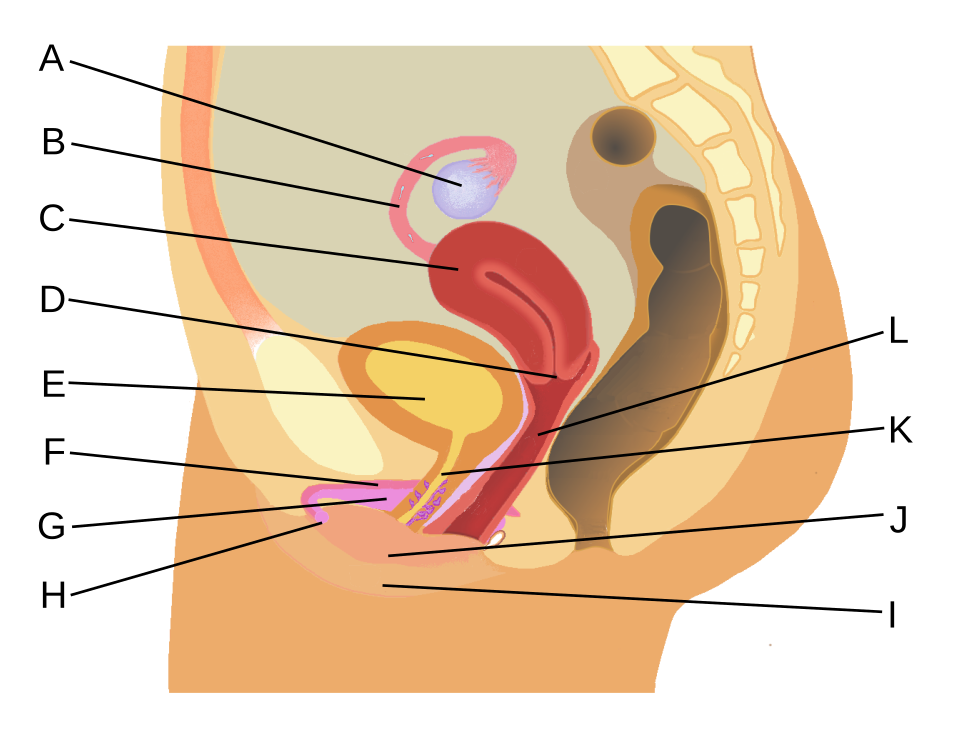 Label: Ovaries, fallopian tubes, uterus, cervix, vagina, and key hormones. (Image: RWhitwam, CC BY-SA 4.0, via Wikimedia Commons)
Key parts and functions:
| Part | Function |
|---|---|
| Ovaries | Produce eggs and hormones (estrogen, progesterone). |
| Fallopian Tubes | Transport eggs; site of fertilization. |
| Uterus | Houses and nourishes a fertilized egg; sheds lining during menstruation. |
| Cervix | Opens to allow sperm in/menstrual blood out; dilates during childbirth. |
| Vagina | Birth canal; receives penis during sex; exit for menstrual blood. |
| Vulva | External parts (labia, clitoris) for protection and sexual pleasure. |
Example: Why does a woman’s body temperature rise after ovulation?
- After an egg is released, progesterone (a hormone) rises, causing a slight temperature increase. This is used in natural family planning to track fertile days.
Male Reproductive System
Key parts and functions:
| Part | Function |
|---|---|
| Testes | Produce sperm and testosterone. |
| Epididymis | Stores and matures sperm. |
| Vas Deferens | Transports sperm to the urethra during ejaculation. |
| Seminal Vesicles | Adds fluid to sperm to form semen. |
| Prostate Gland | Produces alkaline fluid to nourish sperm. |
| Penis | Delivers sperm to the vagina; also urinates. |
| Urethra | Shared tube for sperm and urine (but never at the same time!). |
Example: Why do men need to urinate more frequently as they age?
- The prostate gland often enlarges with age, pressing on the urethra and slowing urine flow. This can cause frequent urination or difficulty starting/stopping.
2. Menstrual Cycle and Fertility
What is the menstrual cycle?
A 28-day cycle (varies from 21–35 days) where the uterus prepares for a possible pregnancy. If no pregnancy occurs, the lining sheds (menstruation).
timeline
title Menstrual Cycle Phases
phase 1: Day 1-5: Menstruation (uterine lining sheds)
phase 2: Day 6-14: Follicular Phase (egg matures in ovary; estrogen rises)
phase 3: Day 14: Ovulation (egg released)
phase 4: Day 15-28: Luteal Phase (progesterone prepares uterus; if no pregnancy, lining breaks down)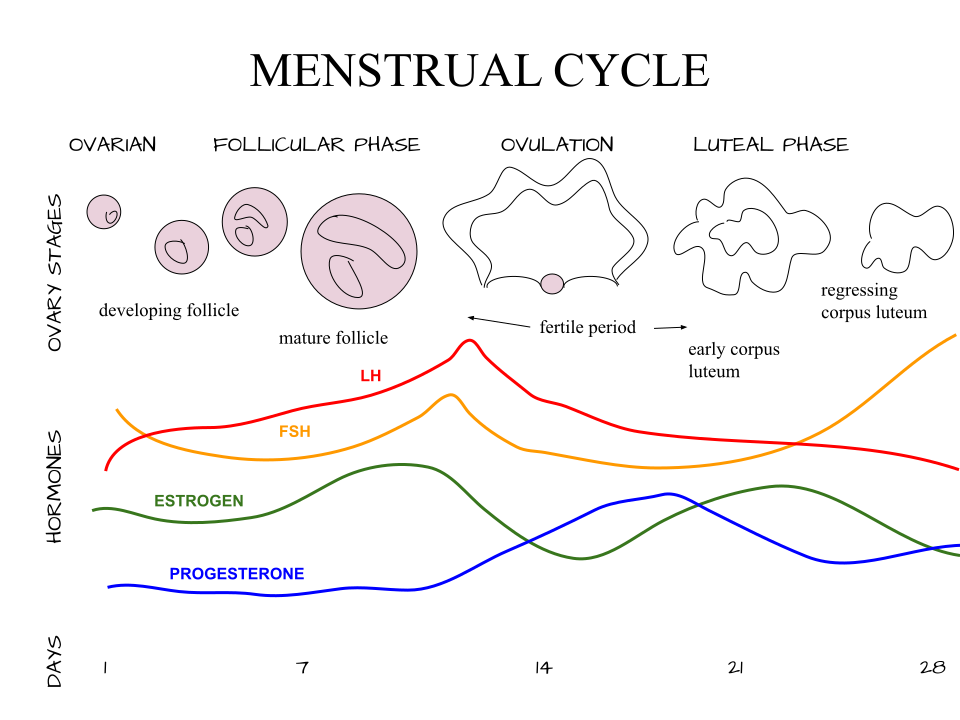 Label: Follicle, ovulation, corpus luteum, menstruation. (Image: Sydney Fought, CC BY-SA 4.0, via Wikimedia Commons)
Signs of ovulation:
- Mild pelvic pain (mittelschmerz).
- Increased cervical mucus (clear, stretchy like egg white).
- Slight rise in basal body temperature.
Example: Lila’s periods come every 32 days. Is this normal?
- Yes! Cycles can range from 21–35 days. Irregularity may occur due to stress, weight changes, or hormonal imbalances. If she’s concerned, she should consult a doctor.
3. Sexual and Reproductive Health Rights
Your Rights Under Nepal’s Laws
Nepal’s Reproductive Health Rights Act (2075) and Constitution (2072) guarantee:
- Right to information: Access to accurate, age-appropriate sex education.
- Right to healthcare: Free or subsidized services (e.g., contraception, STI testing).
- Right to consent: No one can force you into sexual activity (legal age of consent: 18).
- Right to privacy: Confidential healthcare services.
- Right to education: Learn about your body and relationships.
Example: Raju (17) wants to get tested for an STI. Can he go alone?
- Yes! Under Nepal’s laws, healthcare providers cannot share his information without consent. He has the right to privacy.
4. Safe Sexual Practices
Why is safe sex important?
Unprotected sex can lead to:
- Unintended pregnancy (risky for teens/young adults).
- Sexually Transmitted Infections (STIs) like HIV, syphilis, or HPV.
- Emotional trauma (e.g., coercion, regret).
Barrier Methods (Prevent STIs + Pregnancy)
| Method | How it works | Effectiveness | Pros | Cons |
|---|---|---|---|---|
| Condoms (male/female) | Covers penis/vagina to block sperm/STIs. | 98% (with perfect use) | Cheap, accessible, protects against STIs. | Can break; reduces sensation. |
| Diaphragm | Cup inserted before sex to block sperm. | 88–94% | Reusable; hormone-free. | Must be fitted by a doctor. |
| Female Condom | Lined pouch inserted into vagina. | 79–95% | Female-controlled; STI protection. | Harder to insert; less common. |
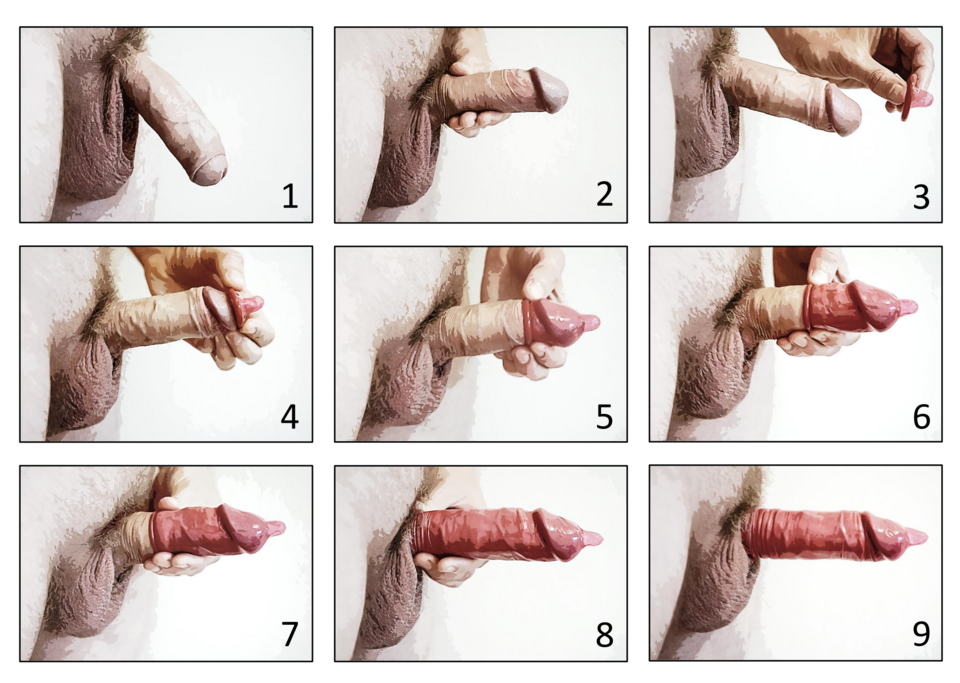 Caption: Step-by-step: How to put on a male condom. (Image: Piphil, CC BY-SA 4.0, via Wikimedia Commons)
Example: What should you do if a condom breaks during sex?
- Stop immediately and check for sperm leakage.
- Use emergency contraception (e.g., Plan B pill) within 72 hours.
- Get tested for STIs if either partner has symptoms.
- See a doctor for follow-up.
Contraception Methods
| Type | Examples | How it works | Effectiveness | Notes |
|---|---|---|---|---|
| Hormonal | Pill, patch, IUD, implant | Prevents ovulation or thickens cervical mucus. | 91–99% | Requires prescription; side effects possible. |
| Long-acting | Copper IUD, implant | Lasts 3–10 years; no daily action needed. | 99% | Highly effective; reversible. |
| Emergency | Plan B pill, copper IUD | Taken after unprotected sex to prevent pregnancy. | 75–95% | Not for regular use; side effects (nausea). |
Example: Priya forgot her birth control pill twice this month. What should she do?
- Take the missed pills as soon as she remembers (even if it means two pills in one day).
- Use a backup method (condoms) for the next 7 days.
- Check the pill pack instructions—some brands require extra precautions.
5. Common Reproductive Health Issues
A. Sexually Transmitted Infections (STIs)
Causes: Bacteria, viruses, or parasites spread through sexual contact (vaginal, anal, oral).
| STI | Caused by | Symptoms | Treatment | Prevention |
|---|---|---|---|---|
| Chlamydia | Bacteria | Painful urination, unusual discharge | Antibiotics (azithromycin) | Condoms; regular STI testing. |
| Gonorrhea | Bacteria | Green/yellow discharge, pelvic pain | Antibiotics (ceftriaxone) | Same as above. |
| HIV/AIDS | Virus | Flu-like symptoms, weight loss (late stage) | Antiretroviral therapy (ART) | Condoms; PrEP (pre-exposure prophylaxis). |
| HPV | Virus | Often no symptoms; can cause warts/cervical cancer | No cure; vaccine (Gardasil) | Vaccination; condoms. |
| Syphilis | Bacteria | Sores, rash, fever | Penicillin injections | Condoms; early treatment key. |
Example: Ram’s partner has HPV. Can he get it too?
- Yes. HPV spreads through skin-to-skin contact, so condoms don’t fully protect. Both partners should get vaccinated (Gardasil) if not already.
B. Polycystic Ovary Syndrome (PCOS)
What is it? A hormonal disorder where cysts (fluid-filled sacs) develop on the ovaries, causing:
- Irregular periods.
- Excess androgen (male hormones) → acne, hair growth on face/chin.
- Weight gain, infertility.
Example: Sita has PCOS and wants to get pregnant. What can help?
- Lifestyle changes: Exercise, balanced diet (low sugar, high fiber).
- Medications: Metformin (for insulin resistance), birth control pills (to regulate cycles).
- Fertility treatments: IVF or ovulation-inducing drugs (e.g., Clomid).
C. Endometriosis
What is it? Tissue similar to the uterine lining grows outside the uterus (e.g., on ovaries, fallopian tubes), causing:
- Severe pelvic pain (especially during periods).
- Pain during sex or urination.
- Infertility.
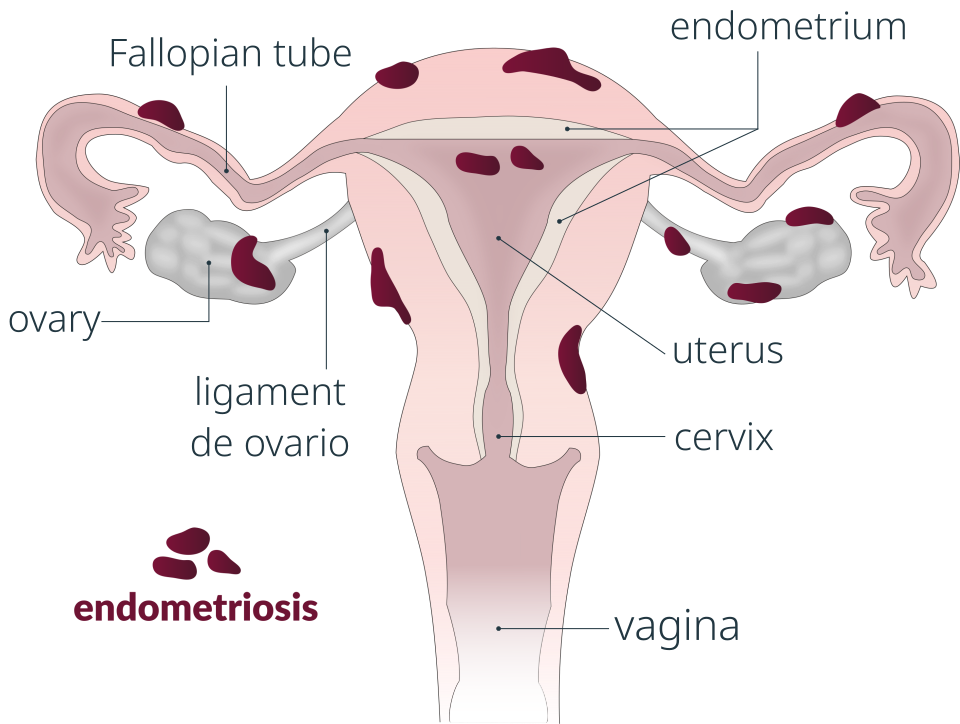 Caption: Uterine lining growing outside the uterus. (Image: Vega asensio, CC BY-SA 4.0, via Wikimedia Commons)
Example: How is endometriosis diagnosed?
- Pelvic exam (doctor checks for tenderness).
- Ultrasound or MRI (to see cysts or lesions).
- Laparoscopy (minor surgery with a camera to confirm).
6. Consent and Healthy Relationships
What is Consent?
- Freely given: No pressure, coercion, or threats.
- Reversible: Can be withdrawn anytime.
- Enthusiastic: Both parties must be excited and comfortable.
- Sober: Alcohol/drugs impair judgment—consent given while drunk is not valid.
Example: If someone says "no" but you keep trying, is that consent?
- No! Silence or hesitation does not equal consent. Always check in: "Are you sure? Do you want to stop?"
Red flags in relationships:
- Pressuring you for sex.
- Ignoring your boundaries.
- Controlling your access to contraception or healthcare.
7. Where to Get Help
| Issue | Where to Go | Contact Info (Nepal) |
|---|---|---|
| STI testing/treatment | Government hospitals, NGOs (e.g., FHI 360, Population Services International) | Toll-free: 1066 (Health Desk) |
| Contraception | Family Welfare Centers, private clinics | Nearest FWC (list online) |
| Sexual assault support | Maiti Nepal (helpline), police | Helpline: 10066 |
| Mental health support | Suicide Prevention Center Nepal | Helpline: 16600101010 |
Exam Tip: How to Score Full Marks in NEB Questions
NEB exams test conceptual understanding + real-life application. Here’s how to ace this unit:
1. Short Answer Questions (2–5 marks)
What they ask: Define terms, explain processes, or give examples. How to answer:
- Use simple, clear language (no jargon).
- Include key terms (e.g., "hormones," "consent," "barrier methods").
- Add one example if asked for an illustration.
Example Question: "Explain the role of progesterone in the menstrual cycle." Model Answer (5 marks):
- Progesterone is a hormone released by the ovaries after ovulation (5).
- It prepares the uterine lining for a fertilized egg by thickening it (5).
- If pregnancy does not occur, progesterone levels drop, causing the lining to shed (menstruation) (5).
- It also raises body temperature slightly, which can be tracked in natural family planning (5).
- Total: 5 marks (1 mark per point).
2. Case Study Questions (7–10 marks)
What they ask: Analyze a scenario and apply concepts (e.g., STI prevention, consent). How to answer:
- Identify the issue (e.g., unprotected sex, irregular periods).
- Link to theory (e.g., "This increases STI risk because...").
- Suggest solutions (e.g., "Use condoms; get tested").
- Add a real-world example if possible.
Example Question: "Ramesh (20) had unprotected sex with his partner. Two weeks later, he noticed a painful rash. What could be wrong? What should he do?" Model Answer (10 marks):
- Ramesh’s symptoms (painful rash) suggest a possible STI, such as syphilis (which causes sores/rashes) or herpes (2).
- Unprotected sex is a major risk factor for STIs like HIV, gonorrhea, or HPV (2).
- He should seek medical help immediately—STIs like syphilis are curable with penicillin if treated early (2).
- His partner should also get tested and treated to prevent reinfection (2).
- Prevention tips for the future:
- Always use condoms (2).
- Get regular STI screenings, especially if changing partners (2).
- Avoid alcohol/drugs before sex, as they impair judgment (2).
- Total: 10 marks (2 marks per point).
3. Diagram-Based Questions (5 marks)
What they ask: Label a diagram or explain a process (e.g., menstrual cycle, condom use). How to answer:
- Label all parts (e.g., ovary, uterus, cervix).
- Add arrows to show processes (e.g., "egg travels here").
- Write 2–3 sentences explaining the diagram’s purpose.
Example Question: "Label the parts of the female reproductive system in the diagram below and explain the role of the cervix." Model Answer (5 marks):
[Diagram with labeled parts: ovaries, fallopian tubes, uterus, cervix, vagina]
- The cervix is the lower part of the uterus that opens into the vagina (1).
- Its roles:
- Allows sperm to enter the uterus during fertilization (1).
- Blocks bacteria from entering the uterus (1).
- Dilates during childbirth to allow the baby to pass (1).
- Sheds menstrual blood from the uterus (1).
- Total: 5 marks (1 mark per role).
4. Essay Questions (15 marks)
What they ask: Discuss a broad topic (e.g., "Importance of reproductive health education"). How to answer:
- Introduction: Define the topic (1 mark).
- Body: 3–4 main points with examples (10 marks).
- Conclusion: Summarize and add a real-world application (4 marks).
Example Question: "‘Reproductive health education should be mandatory in schools.’ Justify this statement." Model Answer (15 marks): Introduction (1 mark): Reproductive health education teaches students about their bodies, rights, and safe practices—essential for making informed decisions.
Body (10 marks):
Prevents STIs and unintended pregnancies (3 marks):
- Many teens lack knowledge about condoms, contraception, or STI symptoms.
- Example: A 2022 study found 40% of Nepali teens didn’t know HIV could be prevented with condoms.
- Education reduces risks by promoting safe sex practices.
Empowers individuals to make healthy choices (3 marks):
- Students learn about consent, boundaries, and healthy relationships.
- Example: A girl who understands PCOS symptoms can seek help earlier than one who doesn’t.
Reduces stigma around reproductive issues (2 marks):
- Topics like menstruation, masturbation, and abortion are often taboo.
- Education normalizes discussions, helping students ask questions without shame.
Supports gender equality (2 marks):
- Boys learn about respecting women’s bodies; girls learn about their own rights.
- Example: Nepal’s Sexual Harassment Act (2074) relies on educated citizens to report abuse.
Conclusion (4 marks): Mandatory reproductive health education ensures every student grows up informed, safe, and confident. Schools should partner with doctors and NGOs to provide accurate, age-appropriate lessons. Without it, teens remain vulnerable to misinformation, exploitation, and health risks. Nepal’s future depends on healthy, educated citizens—education is the first step.
Quick Revision Checklist
Before the exam, ask yourself: ✅ Can I label the male/female reproductive systems from memory? ✅ Do I know the 4 phases of the menstrual cycle and their hormones? ✅ Can I list 3 barrier methods and their effectiveness? ✅ What are the symptoms of 2 common STIs (e.g., chlamydia, HPV)? ✅ What does consent look like in real life? (Example: "No" means no.) ✅ Where can someone in Nepal get free STI testing or contraception?
Final Tip: NEB loves real-life connections. Always think: "How does this concept affect a Nepali teen’s daily life?" Example: Instead of just defining PCOS, explain how a girl in Kathmandu might miss school due to painful periods and how education could help her manage it.
Good luck! You’ve got this. 🚀
Based on the NEB +2 Humanities syllabus for Life Skill Education (LSE), unit 7.
Discussion
Loading…