Mass CommunicationUnit 513 min read
Photojournalism: Ethics, Techniques & Impact
Unit 5 of Mass Communication explores how photojournalists capture news visually, covering ethics, camera techniques, editing, and the power of images in shaping public opinion—with NEB-style examples and exam tips.
TAKEAWAYS:
- Photojournalism combines photography and journalism to tell news stories visually, requiring ethical responsibility and technical skill.
- Key techniques include framing, lighting, and composition to create impactful images that convey emotion and truth.
- Editing and captioning are crucial to ensure accuracy and context in photojournalism.
- Photojournalism plays a vital role in shaping public opinion and holding power accountable.
- Ethical dilemmas like consent, manipulation, and invasion of privacy must be carefully considered.
- NEB exams test understanding of techniques, ethics, and real-world applications through short answers and case studies.
What is Photojournalism?
Photojournalism is a form of journalism that uses images to tell news stories. Unlike regular photography, it must follow journalistic ethics—meaning the images should be true, fair, and unbiased. A photojournalist’s job is to capture moments that inform, engage, and sometimes change public opinion.
Key Characteristics of Photojournalism
Why is it important?
- Power of Images: A single photograph can convey emotions and facts that words alone cannot.
- Global Reach: Images travel faster than text, making photojournalism a powerful tool in digital media.
- Accountability: Photojournalists document events that might otherwise be ignored or misrepresented.
The Role of a Photojournalist
A photojournalist is not just a photographer—they are storytellers who:
- Observe events carefully before capturing them.
- Decide which moments best represent the story.
- Edit images to ensure they are clear, ethical, and accurate.
- Write captions that explain the context without bias.
Ethical Considerations in Photojournalism
Ethics are the most important part of photojournalism. Breaking ethical rules can damage trust in media. Key ethical guidelines include:
| Ethical Principle | What It Means | Example |
|---|---|---|
| Truth & Accuracy | Images must represent reality without manipulation. | Not altering a photo to make a person look guilty when they are innocent. |
| Fairness | All sides of a story should be represented. | Including both protesters and police in a riot photo, not just one side. |
| Consent | People in photos should not be harmed or embarrassed without permission. | Not taking a close-up of a grieving family without their consent. |
| Privacy | Personal moments should not be intruded upon. | Not photographing someone in a hospital bed without their family’s okay. |
| Manipulation | Images should not be digitally altered to deceive. | Not cropping a photo to hide a corrupt official’s face. |
| Safety | Photojournalists must not put themselves or others in danger. | Not entering a war zone without proper protection. |
Photojournalism Techniques
To take powerful photojournalistic images, you need to master technical and creative skills:
1. Composition & Framing
Good composition makes an image clear and engaging. Key techniques:
- Rule of Thirds: Divide the frame into a 3x3 grid and place the subject where the lines intersect.
- Leading Lines: Use roads, fences, or shadows to guide the viewer’s eye.
- Depth of Field: Use a shallow depth of field (blurry background) to focus attention on the subject.
- Perspective: Shoot from different angles (low, high, eye-level) to tell a story.
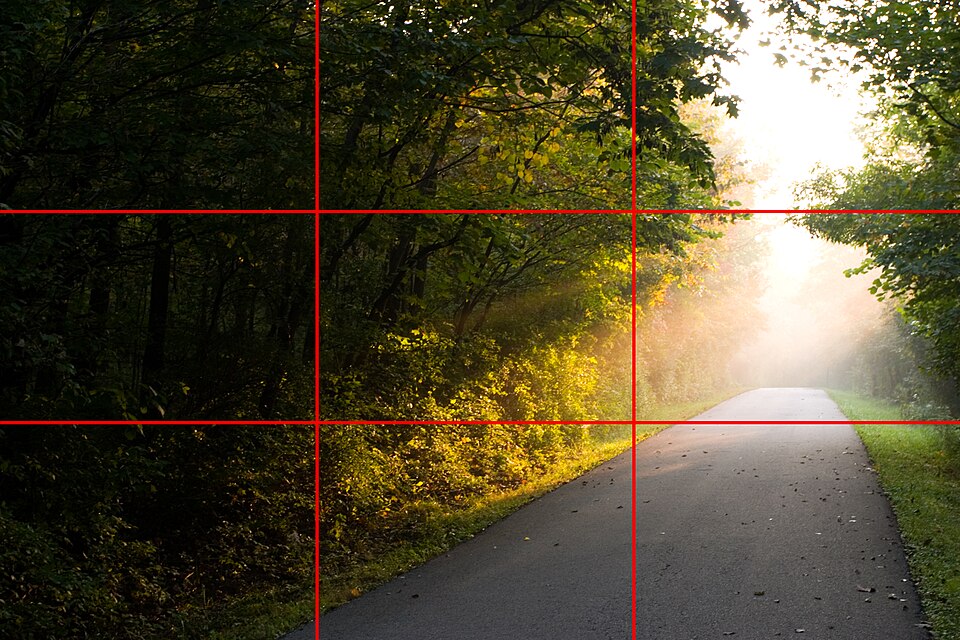 A camera viewfinder showing how to apply the rule of thirds. (Image: John R. Daily, CC BY-SA 2.5, via Wikimedia Commons)
2. Lighting
Lighting affects mood and clarity in photos.
- Natural Light: Best for outdoor shots (golden hour = best time).
- Artificial Light: Used in controlled settings (e.g., studio flashes).
- Avoid Harsh Shadows: Use diffusers or shoot in shade.
3. Camera Settings
- Aperture (f-stop): Controls depth of field (e.g., f/2.8 for blurry backgrounds).
- Shutter Speed: Freeze action (fast speed) or create motion blur (slow speed).
- ISO: Adjust for low light (but high ISO = grainy photos).
4. Editing & Post-Processing
Editing should enhance, not distort. Common tools:
- Cropping: Remove unnecessary elements.
- Color Correction: Fix white balance, brightness.
- Sharpness: Enhance details without overdoing it.
- Avoid Filter Overuse: NEB exams often test on unethical editing (e.g., adding fake objects).
Types of Photojournalism
Photojournalism covers many genres:
| Type | Description | Example |
|---|---|---|
| News Photography | Captures breaking news (protests, accidents, disasters). | A photo of a fire at a hospital. |
| Documentary | Long-term projects telling a story over time. | A series on child labor in Nepal. |
| Portrait | Focuses on people’s emotions and stories. | A refugee’s face showing hope. |
| Sports Photography | Action shots with fast shutter speeds. | A soccer player scoring a goal. |
| Street Photography | Candid moments in public spaces. | A child laughing in Kathmandu’s Durbar Square. |
| War Photography | High-risk coverage of conflicts (requires extreme ethics). | Images from the Ukraine war. |
The Power of Photojournalism
Photojournalism shapes public opinion and holds power accountable. Examples:
- The Napalm Girl (1972): A photo of a Vietnamese girl running from a napalm attack changed global opinion on the Vietnam War.
- The Hunger Project (1984): Kevin Carter’s photo of a vulture waiting for a starving child sparked debates on famine and media ethics.
- Local Impact: Photos of floods in Nepal or child trafficking have led to government action.
Challenges in Photojournalism
- Safety Risks: Covering wars, protests, or disasters can be dangerous.
- Ethical Dilemmas: Should you take a photo if it causes harm?
- Manipulation: Digital tools make it easy to fake images.
- Access & Permission: Some places (e.g., military zones) restrict photography.
- Bias: Unconscious choices (e.g., framing) can skew perception.
Photojournalism vs. Regular Photography
| Aspect | Photojournalism | Regular Photography |
|---|---|---|
| Purpose | Tell news stories | Art, personal, or commercial use |
| Ethics | Must be truthful and fair | Can be creative or staged |
| Editing | Minimal, no deception | Can be heavily edited |
| Caption | Explains context and adds value | Often decorative or unnecessary |
| Impact | Aims to inform and influence public opinion | Aims to entertain or express emotion |
NEB Exam Tips for Photojournalism
- Understand Ethics First: NEB often asks about ethical dilemmas (e.g., "Is it okay to take a photo of a dying person?").
- Practice Composition: Know rule of thirds, leading lines, and framing.
- Study Famous Photos: Be ready to discuss impact and ethics of iconic images.
- Caption Writing: Exams may ask you to write a caption for a given photo.
- Case Studies: Expect questions on real-world photojournalism scandals (e.g., fake photos in wars).
- Technical Terms: Memorize terms like aperture, shutter speed, ISO, and depth of field.
Example NEB-Style Questions:
"What are the three ethical principles a photojournalist must follow? Give an example of each." Answer:
- Truth & Accuracy: Never alter a photo to misrepresent reality (e.g., not cropping out a corrupt official).
- Fairness: Include all sides of a story (e.g., showing both protesters and police in a riot).
- Consent: Ask permission before photographing private moments (e.g., not taking a close-up of a grieving family).
"Explain the role of lighting in photojournalism with an example." Answer: Lighting affects mood and clarity. For example:
- Natural light during golden hour (sunset/sunrise) creates warm, emotional photos (e.g., a child playing in a slum).
- Artificial light in low-light situations (e.g., a candlelit protest) adds drama but must not overpower the subject.
"How does composition improve a photojournalistic image? Use the 'rule of thirds' in your answer." Answer: Composition guides the viewer’s eye and adds depth and impact. The rule of thirds divides the frame into a 9-grid. Placing the subject at the intersection points creates a balanced and engaging photo. For example:
- A protest leader should be placed at the top-left intersection to draw attention while keeping the background (crowd, police) in the other two-thirds.
Solved Example: Analyzing a Photojournalism Image
Question: "Analyze this photo (not shown) of a farmer holding a dried corn cob. What ethical and technical aspects should a photojournalist consider?"
Answer:
Ethical Considerations:
- Consent: Did the farmer agree to be photographed? If not, the photo may invade privacy.
- Context: Is the photo taken to show famine or poverty? The caption must explain the story behind it.
- Manipulation: Was the photo edited to make the farmer look poorer? (e.g., darkening the image unnaturally).
Technical Considerations:
- Lighting: Natural light would be best to avoid harsh shadows. If shot in shade, ensure the farmer’s face is well-lit.
- Composition: The farmer should be placed using the rule of thirds, with the corn cob leading the viewer’s eye.
- Perspective: A low angle (shooting up at the farmer) could emphasize struggle, while an eye-level shot feels more respectful.
Final Checklist for NEB Exam
✅ Know the 5 key ethical principles. ✅ Understand composition techniques (rule of thirds, leading lines). ✅ Memorize camera settings (aperture, shutter speed, ISO). ✅ Study famous photojournalism images and their impact. ✅ Practice writing captions for given photos. ✅ Be ready for case study questions on photojournalism scandals.
Remember: Photojournalism is not just about taking pictures—it’s about telling the truth through images. Stay ethical, stay technical, and always think like a storyteller. 📸✨
Based on the NEB +2 Humanities syllabus for Mass Communication (MC), unit 5.
Discussion
Loading…