Life Skill EducationUnit 138 min read
Entrepreneurship & Employability: Skills, Startups & Job Readiness
Unit 13 of Life Skill Education covers how to develop entrepreneurial mindsets, start small businesses, and prepare for jobs—including key skills, legal steps, funding options, and real-world challenges with solved examples and NEB-style questions.
TAKEAWAYS:
- Entrepreneurship means spotting opportunities, taking risks, and solving problems with a business idea—not just starting a company.
- Employability skills (like communication, teamwork, and adaptability) help you get hired or grow your own business.
- A business plan is a roadmap: it explains your idea, market, costs, and how you’ll make money.
- Government schemes (like YUWAA or SME loans) and banks offer funding for startups—know the eligibility rules.
- Success depends on hard work, persistence, and learning from failures—not just money or luck.
What is Entrepreneurship?
Entrepreneurship is turning an idea into a business to solve a problem or meet a need. It’s not just about making money—it’s about creativity, risk-taking, and hard work.
Key Traits of an Entrepreneur
mindmap
  root((Entrepreneurial Traits))
    Creativity["Creates new solutions"]
    Risk-Taking["Willing to try new things"]
    Problem-Solving["Finds answers to challenges"]
    Persistence["Doesn’t give up easily"]
    Independence["Works on their own terms"]
    Passion["Loves what they do"]
Example: Rajesh saw that students in his village struggled to find affordable stationery. He started a small shop selling notebooks, pens, and books at lower prices. His creativity (selling in bundles) and problem-solving (negotiating with suppliers) made his shop successful.
Employability Skills: What Employers Want
Even if you don’t start a business, employability skills help you get a job or grow in your career. These are skills like:
- Communication (speaking clearly, writing well)
- Teamwork (working with others)
- Adaptability (handling change)
- Time Management (meeting deadlines)
- Problem-Solving (finding solutions)
Example: A company hires two candidates—one knows coding (hard skill) but struggles to explain ideas (soft skill), while the other is less technical but communicates well. Who gets the job? The second candidate, because employers value both skills.
Steps to Start a Business (Business Plan Basics)
A business plan is like a recipe for your business. It should include:
| Section | What to Write | Example |
|---|---|---|
| Business Idea | What product/service will you sell? | Organic vegetable delivery in Pokhara |
| Market Research | Who are your customers? Who are your competitors? | Students, families; competitors = local grocers |
| Costs | How much will it cost to start? | ₹50,000 (rent, seeds, transport) |
| Revenue | How will you make money? | ₹10,000/month from 100 customers |
| Marketing Plan | How will people know about your business? | Facebook ads, word-of-mouth |
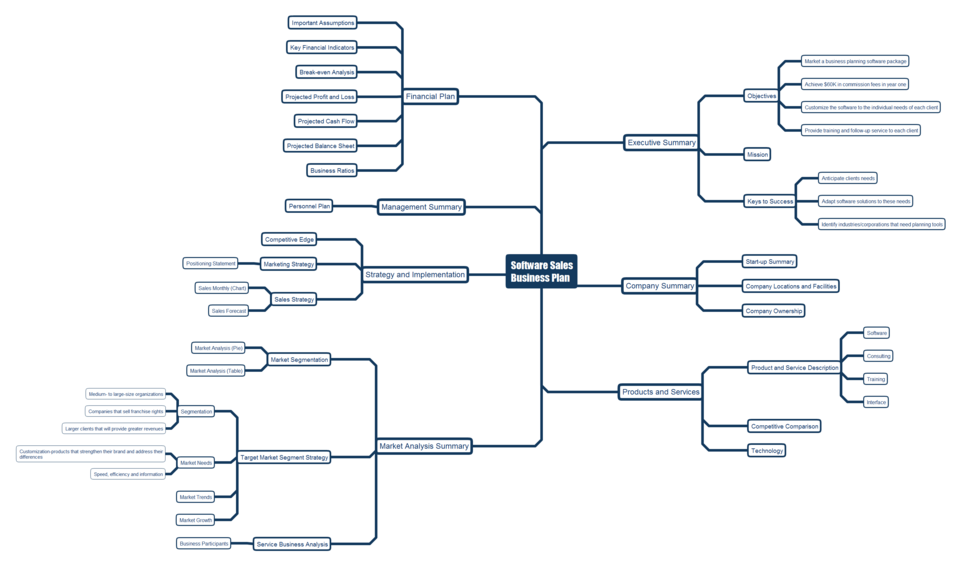 A simple flowchart showing the 5 steps above. (Image: CC BY-SA 4.0, via Wikimedia Commons)
Solved Example: Ram wants to start a tuition center. Write one point for each section of his business plan.
- Business Idea: Home tuition for Class 11–12 students in Math and Science.
- Market Research: Parents in his neighborhood spend ₹3,000–₹5,000/month on tuition.
- Costs: ₹20,000 (stationery, rent, ads).
- Revenue: ₹15,000/month from 10 students.
- Marketing Plan: Post on local Facebook groups and ask past students for referrals.
Funding Your Business: Loans and Grants
You don’t need a lot of money to start small. Here are three ways to fund your business:
| Source | How It Works | Example |
|---|---|---|
| Personal Savings | Use your own money. | Sita used ₹20,000 from her savings to buy a sewing machine. |
| Bank Loans | Borrow money and pay back with interest. | A bank gives a ₹50,000 loan at 10% interest for 2 years. |
| Government Schemes | Low-interest or free money for startups. | YUWAA (Youth Entrepreneurship Program) gives grants to young entrepreneurs. |
Exam Tip:
- NEB often asks: "What are two government schemes for young entrepreneurs in Nepal?" Answer: YUWAA (for youth) and SMEs Loan Scheme (for small businesses).
Challenges of Entrepreneurship
Starting a business isn’t easy. Common problems include:
- Not enough customers (low sales)
- High costs (expenses > income)
- Competition (other businesses selling the same thing)
- Legal issues (permits, taxes)
How to Overcome Them?
flowchart TD
  A["Problem: Low Sales"] --> B["Solution: Market Research"]
  B --> C["Find out what customers want"]
  C --> D["Adjust your product/service"]

  E["Problem: High Costs"] --> F["Solution: Budget Carefully"]
  F --> G["Track expenses, cut unnecessary costs"]

  H["Problem: Competition"] --> I["Solution: Unique Selling Point"]
  I --> J["Offer something different (e.g., better quality, lower price)"]
Example: Kamala’s bakery wasn’t selling enough cakes. She did market research and found people wanted gluten-free options. She added those to her menu, and sales doubled!
Entrepreneurship vs. Employment: Which is Better?
| Factor | Entrepreneurship | Employment (Job) |
|---|---|---|
| Freedom | You decide your own hours and work style. | You follow company rules. |
| Risk | You lose money if the business fails. | You get a fixed salary (safer). |
| Income | Unlimited (if successful), but unpredictable. | Fixed salary (predictable). |
| Skills Needed | Business, marketing, management skills. | Technical + soft skills (communication, teamwork). |
| Work-Life Balance | Often long hours at first. | Usually fixed working hours. |
Which is better?
- Choose entrepreneurship if you love independence and are ready for risks.
- Choose a job if you want stability and don’t want to handle business stress.
How to Improve Employability?
Even if you don’t start a business, you can make yourself job-ready by:
- Gaining experience (internships, part-time jobs).
- Learning new skills (coding, language, customer service).
- Building a network (connecting with professionals).
- Creating a resume (highlighting achievements, not just duties).
- Practicing interviews (mock interviews with friends).
Solved Example: How can a Class 12 student improve employability before graduation?
- Do an internship at a local NGO or shop.
- Learn Excel or basic accounting (useful for any job).
- Join a club (debate, sports) to improve teamwork skills.
- Make a simple resume listing skills like "communication" and "problem-solving."
Exam Tip: How NEB Tests This Unit
NEB usually asks:
Short questions (2–4 marks):
- "Define entrepreneurship."
- "List three employability skills."
- "What is a business plan?"
Long questions (6–8 marks):
- "Explain the steps to start a small business in Nepal."
- "Compare entrepreneurship and employment."
- "How can a youth get funding for a startup?"
Case studies (5–7 marks):
- "Ramesh wants to start a mobile repair shop. Write a business plan for him."
- "Why did Priya’s bakery fail? Suggest solutions."
Common Mistakes to Avoid: ❌ Writing vague answers (e.g., "Entrepreneurship is good" → Bad). ✅ Writing specific details (e.g., "Entrepreneurship involves identifying a market need, creating a product/service, and managing risks" → Good).
NEB-Style Question & Answer: Q: "What are two government schemes in Nepal that help young entrepreneurs? Explain one in detail." A: Two schemes are:
- YUWAA (Youth Entrepreneurship Program) – Gives training and grants to youth aged 18–35.
- SMEs Loan Scheme – Provides low-interest loans for small businesses.
Explanation of YUWAA:
- Eligibility: Nepalese citizens aged 18–35 with a business idea.
- Benefits: Free training, ₹50,000–₹500,000 grant, mentorship.
- How to apply? Visit the nearest YUWAA office with a business plan.
Final Checklist for Students
Before the exam, remember: ✔ Entrepreneurship = turning an idea into a business. ✔ Employability skills = communication, teamwork, adaptability. ✔ Business plan = idea + market + costs + revenue + marketing. ✔ Funding options = savings, bank loans, government schemes (YUWAA, SMEs). ✔ Challenges = low sales, high costs, competition → solve with research and innovation. ✔ Exam focus = definitions, steps, comparisons, case studies.
Good luck! 🚀
Based on the NEB +2 Management syllabus for Life Skill Education (LSE), unit 13.
Discussion
Loading…