Life Skill EducationUnit 710 min read
Sexual & Reproductive Health: Anatomy, Rights, Safety & Challenges
Unit 7 of Life Skill Education covers the biological, emotional, and social aspects of sexual and reproductive health—including anatomy, rights, safe practices, and common challenges like STIs, teen pregnancy, and gender-based violence—with clear examples and exam-focused tips for NEB’s Class 12 curriculum.
TAKEAWAYS:
- Anatomy matters: Understand the male and female reproductive systems, their functions, and how they work together during reproduction.
- Rights are protected: Know your sexual and reproductive rights (e.g., consent, privacy, healthcare access) and how to claim them.
- Safe sex saves lives: Learn about contraception methods, STI prevention, and why abstinence or barrier methods are critical.
- Teen pregnancy risks: Recognize the physical, emotional, and social consequences of early pregnancy and how to avoid it.
- Gender-based violence: Identify signs of abuse, know your legal protections, and understand how to seek help.
- Myths vs. facts: Separate cultural misconceptions from scientific truths about sexuality, menstruation, and fertility.
1. The Reproductive System: How It Works
1.1 Male Reproductive System
The male reproductive system produces, stores, and delivers sperm. Key parts:
- Testes: Produce sperm and testosterone (the male hormone).
- Epididymis: Stores and matures sperm.
- Vas deferens: Transports sperm from the epididymis to the urethra.
- Seminal vesicles & prostate gland: Add fluids to sperm to form semen.
- Penis: Delivers semen during sexual intercourse.
graph LR
A["Testes"] -->|"Produces"| B["Sperm"]
B --> C["Epididymis"]
C --> D["Vas deferens"]
D --> E["Seminal vesicles"]
E --> F["Prostate gland"]
F --> G["Urethra"]
G --> H["Penis"]
A -->|"Produces"| I["Testosterone"]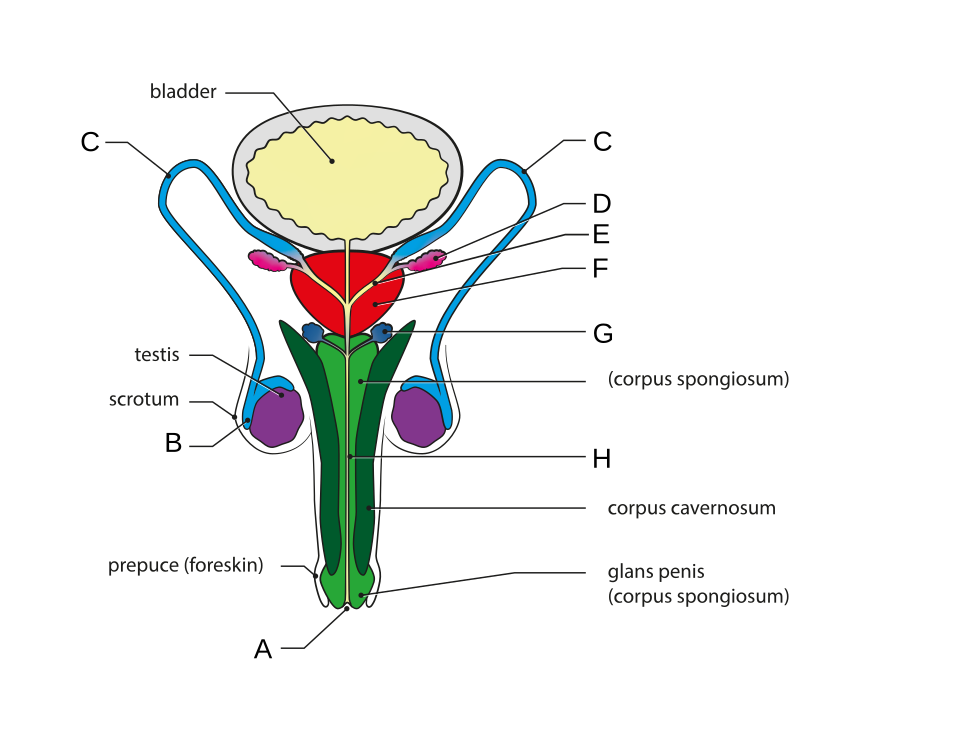 Label the testes, epididymis, vas deferens, and penis. (Image: RWhitwam, CC BY-SA 4.0, via Wikimedia Commons)
1.2 Female Reproductive System
The female system prepares the body for pregnancy and supports fetal development. Key parts:
- Ovaries: Release eggs (ova) and produce hormones like estrogen and progesterone.
- Fallopian tubes: Pathway for eggs to travel to the uterus; fertilization occurs here.
- Uterus: Houses and nourishes a fertilized egg.
- Cervix: Opens to allow sperm in and the baby out during birth.
- Vagina: Receives sperm and serves as the birth canal.
graph LR
A["Ovaries"] -->|"Releases"| B["Egg"]
B --> C["Fallopian tube"]
C --> D["Uterus"]
D --> E["Cervix"]
E --> F["Vagina"]
A -->|"Produces"| G["Estrogen/Progesterone"]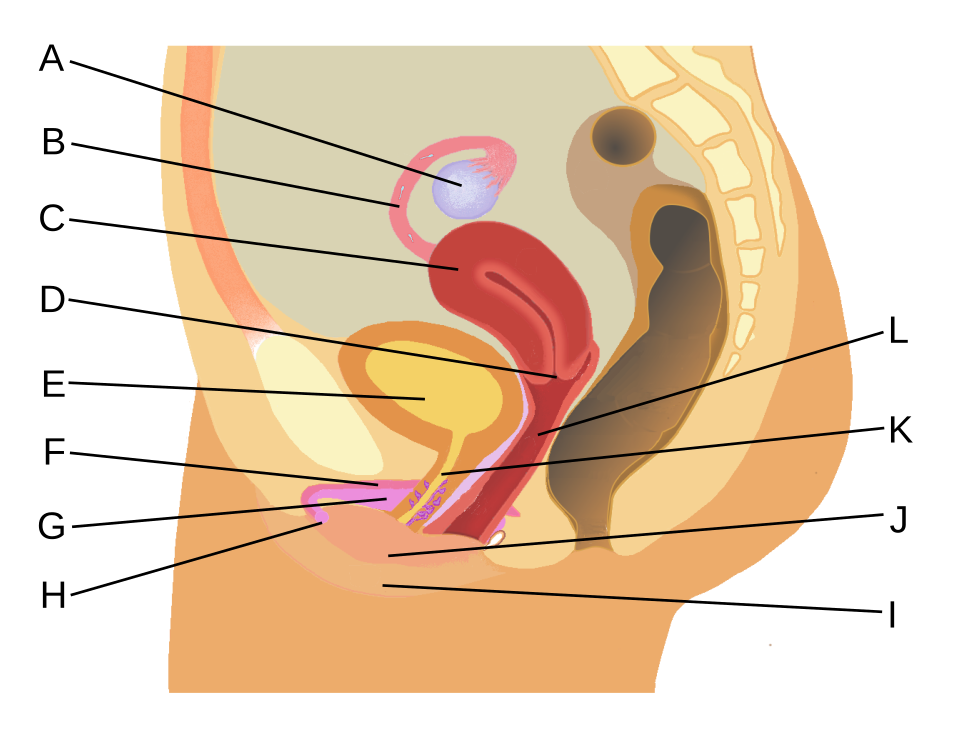 Label the ovaries, fallopian tubes, uterus, and cervix. (Image: RWhitwam, CC BY-SA 4.0, via Wikimedia Commons)
1.3 The Menstrual Cycle
The menstrual cycle is a monthly series of changes preparing the body for pregnancy. It lasts 28 days on average and involves:
- Follicular phase: An egg matures in the ovary (days 1–13).
- Ovulation: The egg is released (around day 14).
- Luteal phase: The uterus lining thickens (days 15–28).
- Menstruation: If no pregnancy occurs, the lining sheds (days 1–5).
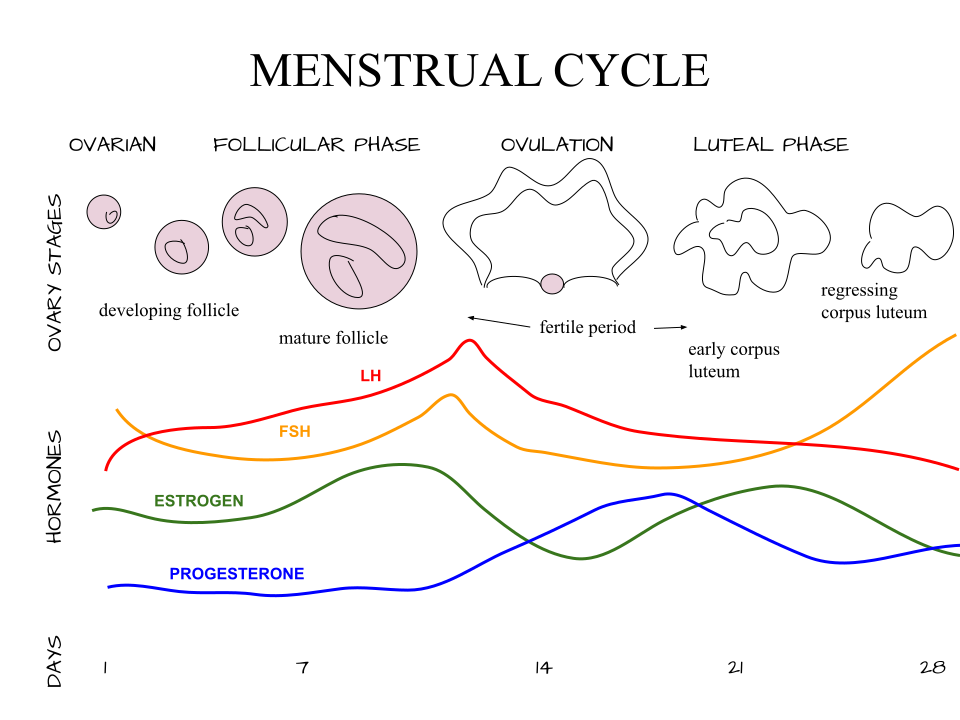 Show follicle growth, ovulation, and menstruation. (Image: Sydney Fought, CC BY-SA 4.0, via Wikimedia Commons)
2. Sexual and Reproductive Health Rights
Every person has the right to:
- Consent: Say "yes" or "no" to sexual activity without pressure.
- Privacy: Access sexual health information and services confidentially.
- Healthcare: Free or affordable medical care for reproductive needs (e.g., contraception, STI testing).
- Education: Learn about sexuality, relationships, and safe practices.
- Freedom from violence: Protection from sexual abuse or coercion.
Example: Rita (17) wants to use contraception but feels embarrassed to visit a clinic. Her right to privacy means she can ask a trusted doctor or counselor without her parents knowing, if she chooses.
3. Safe Sexual Practices
3.1 Contraception Methods
Contraception prevents pregnancy and STIs. Common types:
| Method | How It Works | Effectiveness (%) | Pros | Cons |
|---|---|---|---|---|
| Condoms | Blocks sperm from entering the uterus | 98 (male), 95 (female) | Protects against STIs | Must be used correctly every time |
| Pills | Hormones prevent ovulation | 99 | Reversible, convenient | Side effects (nausea, weight gain) |
| IUD (Intrauterine Device) | Copper or hormone device in uterus | 99+ | Long-term (3–10 years) | Insertion may cause discomfort |
| Implants | Hormone rod under the skin | 99 | Lasts 3–5 years | Requires a doctor’s visit |
| Sterilization | Permanent procedure (tubal ligation/vasectomy) | 99+ | Permanent solution | Irreversible |
3.2 STI Prevention
Sexually transmitted infections (STIs) like HIV, syphilis, and chlamydia spread through unprotected sex. Prevent them by:
- Using condoms every time.
- Getting regular STI tests (especially if changing partners).
- Avoiding alcohol/drugs that impair judgment.
- Getting vaccinated (e.g., HPV vaccine for cervical cancer prevention).
Example: Ram and Sita use condoms but forget once. They both get tested and are relieved to find no STIs. Regular testing gives peace of mind!
4. Teen Pregnancy: Risks and Solutions
4.1 Causes of Teen Pregnancy
- Lack of sex education.
- Peer pressure or lack of refusal skills.
- Limited access to contraception.
- Myths (e.g., "You can’t get pregnant the first time").
4.2 Consequences
| Physical | Emotional | Social/Economic |
|---|---|---|
| Higher risk of complications (e.g., preterm birth) | Stress, anxiety, or depression | Dropping out of school |
| Limited future health options (e.g., cervical cancer risk) | Guilt or shame | Financial dependence on parents |
4.3 How to Avoid It
- Delay sex until you’re emotionally and financially ready.
- Use contraception consistently.
- Talk to parents/teachers about concerns.
- Say "NO" firmly if pressured.
5. Gender-Based Violence and Abuse
5.1 Types of Abuse
- Physical: Hitting, forcing sex.
- Emotional: Threats, humiliation.
- Sexual: Rape, unwanted touching.
- Economic: Controlling money to trap someone.
5.2 Signs of Abuse
- Partner isolates you from friends/family.
- Controls what you wear or who you talk to.
- Blames you for their anger.
- Pressures you into sex.
5.3 How to Help
- Trust your instincts: If something feels wrong, it is.
- Tell someone: A teacher, counselor, or helpline (e.g., 1166 in Nepal).
- Seek legal help: File a complaint at the police station or Women’s Cell.
Example: Kiran’s boyfriend gets angry if Kiran talks to other boys. He calls her "loose" and checks her phone. This is emotional and digital abuse. Kiran should confide in her sister and report him.
6. Myths vs. Facts About Sexual Health
| Myth | Fact |
|---|---|
| "You can’t get pregnant the first time." | False: Pregnancy can happen anytime. |
| "Pulling out prevents pregnancy." | False: Pre-ejaculate may contain sperm. |
| "Only ‘bad’ girls get STIs." | False: Anyone can get an STI. |
| "Menstruation is dirty." | False: It’s a natural, healthy process. |
| "Homosexuality is a disease." | False: Sexual orientation is normal. |
Exam Tip: How to Score Full Marks
- Diagrams are key: Draw and label the male/female reproductive systems (3–4 marks).
- Compare methods: In questions about contraception, use a table to list pros/cons (e.g., "Why might someone choose an IUD over pills?").
- Real-life examples: For teen pregnancy or abuse, use hypothetical scenarios (e.g., "How would you advise a friend facing peer pressure?").
- Rights and laws: Memorize 3–4 rights (e.g., consent, privacy) and one helpline (e.g., 1166).
- Short-answer tips:
- For STI prevention, list 3 methods (condoms, testing, vaccination).
- For abuse signs, mention 2 physical + 1 emotional clue.
- Avoid myths: If asked to "debunk a myth," pick one from the table above and explain the science.
NEB Board-Style Questions (Practice!)
Short Answer (2 marks each)
- Draw and label the female reproductive system. What is the role of the cervix?
- List two hormonal and two barrier methods of contraception.
- Why is consent important in sexual relationships? Give one example.
- Name two STIs and one way to prevent them.
Long Answer (5–7 marks)
- "Teen pregnancy is a major problem in Nepal." Explain three causes and three consequences of teen pregnancy. How can schools help prevent it?
- Your friend is being emotionally abused by their partner. Write a step-by-step plan for how you would help them.
- Compare condoms and birth control pills in a table. Which would you recommend to a 19-year-old college student? Why?
Quick Revision Checklist
Before the exam, ask yourself: ✅ Can I label a reproductive system diagram? ✅ Do I know 3 contraception methods and their pros/cons? ✅ Can I list 3 rights and 3 signs of abuse? ✅ Do I know how to prevent STIs and where to get help? ✅ Can I debunk 2 myths about sexuality?
If yes, you’re ready for full marks! 🚀
Based on the NEB +2 Management syllabus for Life Skill Education (LSE), unit 7.
Discussion
Loading…