BiologyUnit 147 min read
Frog: Anatomy, Physiology & Economic Importance
Unit 14 of Biology explores the anatomy, physiology, and economic significance of frogs, covering their external and internal structures, reproductive biology, and role in ecosystems and research.
Frog: The Living Laboratory
Frogs are amphibians that live both in water and on land. They are important in biology because they show how animals change from water to land. This unit will help you understand their body parts, how they work, and why they are useful to humans.
1. Classification and Habitat
Frogs belong to the class Amphibia, order Anura (meaning "no tail"). They are cold-blooded (ectothermic) and have smooth, moist skin.
Habitat
- Found near ponds, rivers, and wetlands.
- Some live in trees (tree frogs).
- Others live in deserts (spadefoot toads).
Why is their habitat important?
- Their skin must stay moist to breathe.
- They lay eggs in water because their larvae (tadpoles) need water to grow.
2. External Anatomy
Frogs have special features that help them survive.
Key External Features
| Part | Function |
|---|---|
| Eyes | Bulging eyes help see above water while swimming. |
| Nostrils | Used for breathing air and smelling. |
| Tympanum | Eardrum for hearing (no outer ear). |
| Forelegs | Short, used for swimming and catching prey. |
| Hindlegs | Long and strong for jumping. |
| Webbed feet | Help in swimming. |
| Skin | Moist, thin, and permeable (allows gas exchange). |
Why do frogs have webbed feet?
- Webbing increases surface area, making them better swimmers.
- Helps them push water while moving.
3. Internal Anatomy
Frogs have organs similar to humans but adapted for their lifestyle.
Digestive System
- Mouth → Esophagus → Stomach → Small Intestine → Large Intestine → Cloaca (common exit for waste and eggs/sperm).
- Liver produces bile to digest fats.
- Pancreas releases enzymes for digestion.
Respiratory System
- Lungs: Used for breathing air.
- Skin: Helps in gas exchange (cutaneous respiration).
- Buccal Pumping: Frogs can pump air into their mouth and push it into lungs.
Circulatory System
- 3-chambered heart (2 atria, 1 ventricle).
- Red blood cells carry oxygen.
- Blood vessels: Arteries (carry blood away from heart), Veins (carry blood to heart).
Excretory System
- Kidneys filter waste (urea) from blood.
- Ureters carry urine to the cloaca.
- Bladder stores urine before excretion.
Nervous System
- Brain: Controls movement, senses, and behavior.
- Spinal Cord: Connects brain to body.
- Nerves: Carry signals to muscles and organs.
4. Reproduction and Life Cycle
Frogs have a fascinating life cycle with metamorphosis (big changes from larva to adult).
Steps in Life Cycle
- Mating: Male frogs croak to attract females. Males hug females (amplexus) during egg-laying.
- Eggs: Laid in water, covered in jelly.
- Tadpole (Larva): Hatches from egg, breathes through gills, has a tail, and eats algae.
- Metamorphosis: Tadpole loses tail, grows legs, and develops lungs.
- Adult Frog: Lives on land and water, breathes through lungs and skin.
flowchart TD
    A["Mating (Amplexus)"] --> B["Eggs in Water"]
    B --> C["Tadpole (Gills, Tail)"]
    C --> D["Metamorphosis (Legs grow, Tail shrinks)"]
    D --> E["Adult Frog (Lungs, Skin Breathing)"]
Why is metamorphosis important?
- Helps frogs adapt to different environments (water → land).
- Shows evolutionary changes from fish-like ancestors.
5. Economic and Scientific Importance
Frogs are useful in medicine, ecology, and research.
Uses of Frogs
| Field | Importance |
|---|---|
| Medicine | Used in drug testing (e.g., muscle contractions, anesthesia tests). |
| Ecology | Indicate environmental health (sensitive to pollution). |
| Food | Eaten in some cultures (e.g., frog legs in France). |
| Research | Studied for regeneration (some frogs regrow limbs). |
| Pest Control | Eat insects like mosquitoes and flies. |
Threats to Frogs
- Habitat loss (pollution, drying wetlands).
- Climate change (affects breeding).
- Disease (chytrid fungus kills many species).
Exam Tips for NEB Biology (Frog Unit)
- Label Diagrams: Always draw and label external and internal anatomy in exams.
- Example: Draw a frog’s digestive system with all organs.
- Life Cycle: Remember the 5 stages (mating → eggs → tadpole → metamorphosis → adult).
- Comparisons: Know how frogs differ from other animals (e.g., 3-chambered heart vs. 4-chambered in mammals).
- Applications: Mention 2-3 uses of frogs in medicine/ecology.
- Threats: List 3 major threats to frogs (habitat loss, disease, climate change).
- Short Questions:
- Why do frogs have webbed feet?
- How does a frog breathe?
- What is amplexus?
- Long Questions:
- Describe the digestive system of a frog with a diagram.
- Explain the life cycle of a frog with labeled stages.
NEB Board-Style Questions (Practice)
Short Answer Questions (5 marks each)
- Draw a labeled diagram of the external anatomy of a frog and explain the function of any three parts.
- What is metamorphosis? Describe the changes that occur during this process in frogs.
- Why are frogs important in medical research? Give two examples.
- How does the circulatory system of a frog differ from that of a human?
- What are the three main threats to frog populations? Explain one in detail.
Long Answer Questions (10 marks each)
- Describe the digestive system of a frog with the help of a labeled diagram. Explain the role of each organ.
- Explain the reproductive process of a frog, including amplexus and metamorphosis. Why is this process important for their survival?
- Frogs are indicator species for environmental health. Discuss how their presence or absence can tell us about pollution levels.
- Compare the respiratory system of a frog with that of a fish. How are they adapted to their habitats?
- Write short notes on:
- Economic importance of frogs.
- Differences between a tadpole and an adult frog.
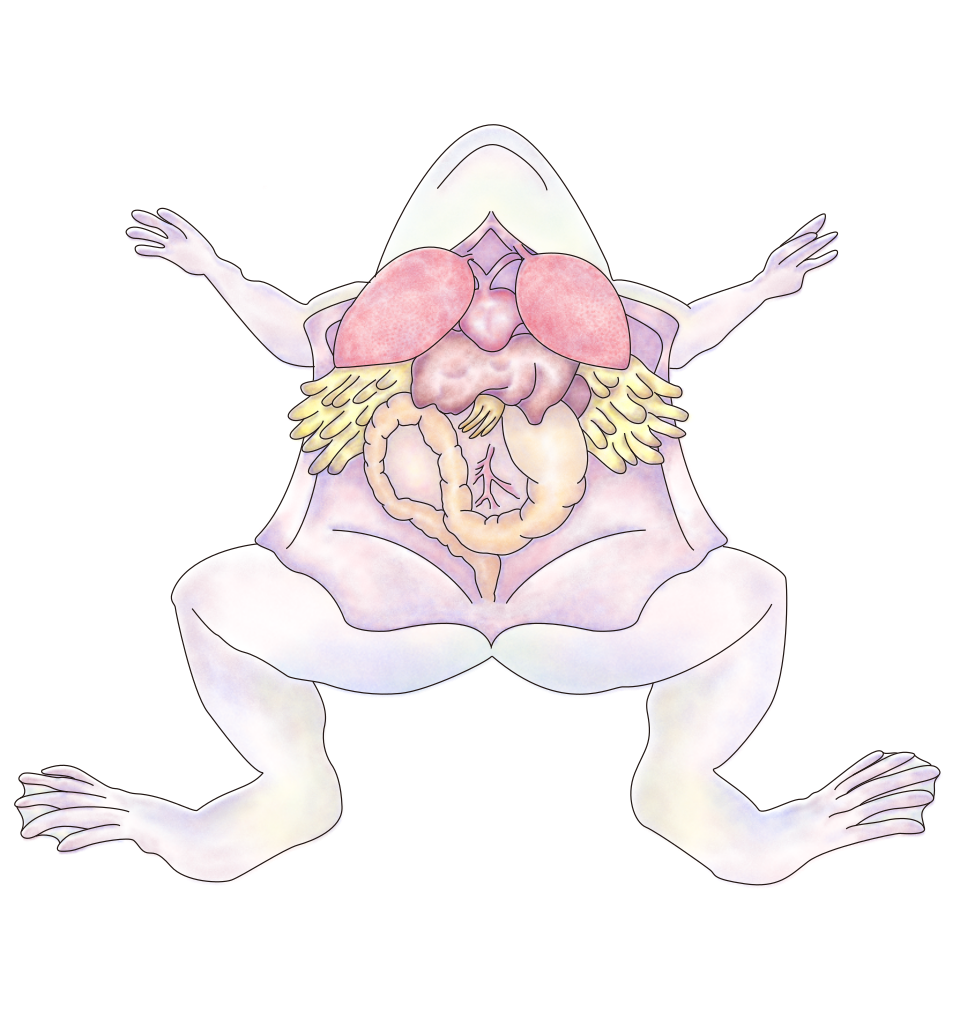 Internal organs of a frog’s digestive tract. (Image: DataBase Center for Life Science (DBCLS), CC BY 4.0, via Wikimedia Commons)
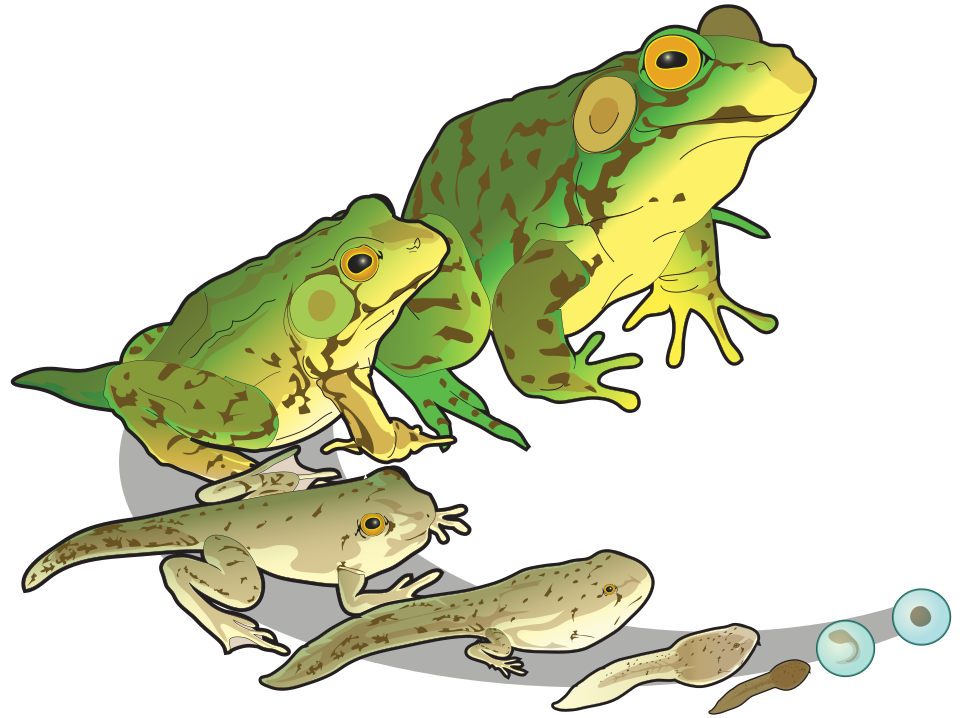 Egg → Tadpole → Adult with metamorphosis. (Image: LadyofHats, CC0, via Wikimedia Commons)
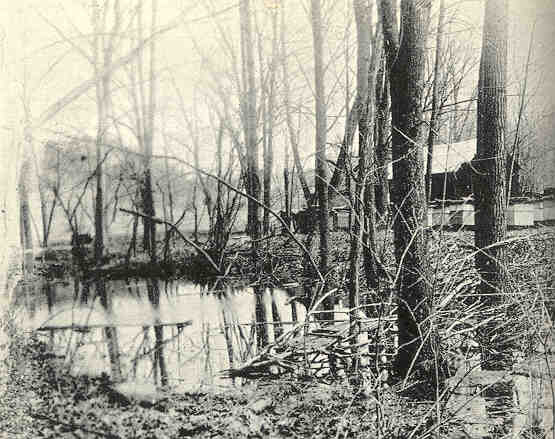 A frog near a pond (natural setting). (Image: Albert Hazen Wright, Public domain, via Wikimedia Commons)
Based on the NEB +2 Science syllabus for Biology (Bio), unit 14.
Discussion
Loading…