BiologyUnit 65 min read
Viruses and Lichens: Structure, Reproduction, and Symbiosis
Unit 6 of Biology explores the unique world of viruses (their structure, types, and replication) and lichens (their formation, types, and ecological roles), covering key concepts for NEB exams with clear definitions, diagrams, and solved examples.
Viruses: The Tiny Infectious Agents
What are Viruses?
Viruses are non-living particles that can only reproduce inside a living host cell. They are smaller than bacteria and consist of:
- A protein coat (capsid) that protects the genetic material.
- Genetic material (DNA or RNA) that carries instructions for replication.
- Some viruses also have an envelope (a lipid layer) derived from the host cell.
Types of Viruses Based on Genetic Material
Viruses can be classified based on their genetic material:
- DNA viruses (e.g., Herpes, Smallpox)
- RNA viruses (e.g., Influenza, HIV)
They can also be classified based on their shape:
- Helical (e.g., Tobacco Mosaic Virus)
- Polyhedral (e.g., Adenovirus)
- Complex (e.g., Bacteriophage)
How Do Viruses Reproduce?
Viruses cannot reproduce on their own. They infect a host cell and use its machinery to replicate. The process is called the lytic cycle (for viruses like bacteriophages) or the lysogenic cycle (for viruses like HIV).
Lytic Cycle (Steps):
- Attachment: Virus attaches to the host cell.
- Entry: Virus injects its genetic material into the host.
- Replication: Host cell replicates viral DNA/RNA.
- Assembly: New viruses are assembled inside the host.
- Release: Host cell bursts (lyses), releasing new viruses.
flowchart LR
    A["Virus Attaches to Host"] --> B["Viral DNA/RNA Enters Host"]
    B --> C["Host Replicates Viral Genetic Material"]
    C --> D["New Viruses Assemble"]
    D --> E["Host Cell Bursts, Releasing Viruses"]
Examples of Viral Diseases
| Virus | Disease | Host |
|---|---|---|
| HIV | AIDS | Humans |
| Influenza | Flu | Humans, Birds |
| Tobacco Mosaic | Plant Disease | Plants |
| Bacteriophage | Bacterial Infection | Bacteria |
Lichens: A Symbiotic Relationship
What are Lichens?
Lichens are symbiotic associations between:
- A fungus (provides structure and absorbs water/minerals).
- A photosynthetic partner (algae or cyanobacteria, provides food via photosynthesis).
They are pioneer species in ecological succession (e.g., growing on bare rocks).
Types of Lichens
Lichens are classified based on their thallus (body) structure:
- Crustose (crust-like, attached tightly to the substrate).
- Foliose (leaf-like, lobed).
- Fruticose (shrub-like, branched).
How Do Lichens Reproduce?
Lichens reproduce asexually through:
- Fragmentation (pieces break off and grow into new lichens).
- Soredia (tiny clusters of fungal hyphae and algae).
- Isidia (small, finger-like projections that break off).
flowchart TD
    A["Lichen Fragmentation"] --> B["New Lichen Grows"]
    C["Soredia Formation"] --> B
    D["Isidia Formation"] --> B
Ecological Importance of Lichens
- Indicators of air pollution (sensitive to sulfur dioxide).
- Food source for herbivores (e.g., reindeer in Arctic regions).
- Pioneer species in soil formation.
Comparison: Viruses vs. Lichens
| Feature | Viruses | Lichens |
|---|---|---|
| Living/Non-living | Non-living (need a host) | Living (symbiotic organism) |
| Structure | Protein coat + genetic material | Fungus + algae/cyanobacteria |
| Reproduction | Lytic or lysogenic cycle | Asexual (fragmentation, soredia) |
| Ecological Role | Cause diseases | Pioneer species, pollution indicators |
Exam Tip
Viruses:
- Remember the lytic vs. lysogenic cycle (NEB often asks for differences).
- Know examples of viral diseases (e.g., HIV, Influenza).
- Draw the structure of a virus (capsid, genetic material, envelope).
Lichens:
- Explain the symbiotic relationship (fungus + algae).
- Identify types of lichens (crustose, foliose, fruticose).
- Mention their role in ecology (pioneer species, pollution indicators).
NEB-style Questions (Practice):
Short Answer:
- "Describe the lytic cycle of a virus with a diagram."
- "What are soredia in lichens? How do they help in reproduction?"
Long Answer:
- "Explain the symbiotic relationship in lichens. How do they contribute to the ecosystem?"
- "Differentiate between DNA and RNA viruses with examples."
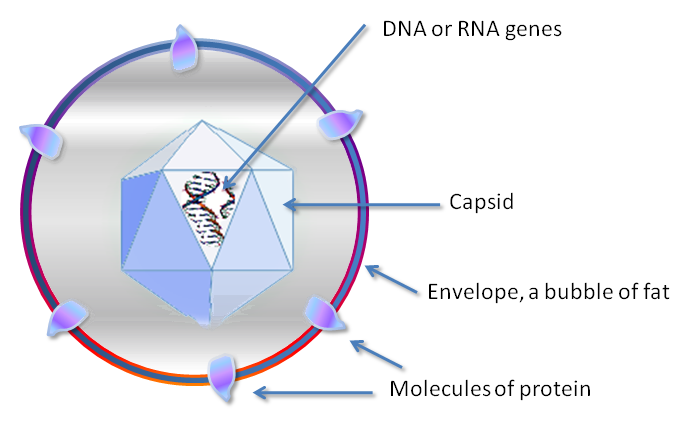 A labeled diagram of a virus showing capsid, genetic material, and envelope. (Image: GrahamColmTalk, CC BY-SA 3.0, via Wikimedia Commons)
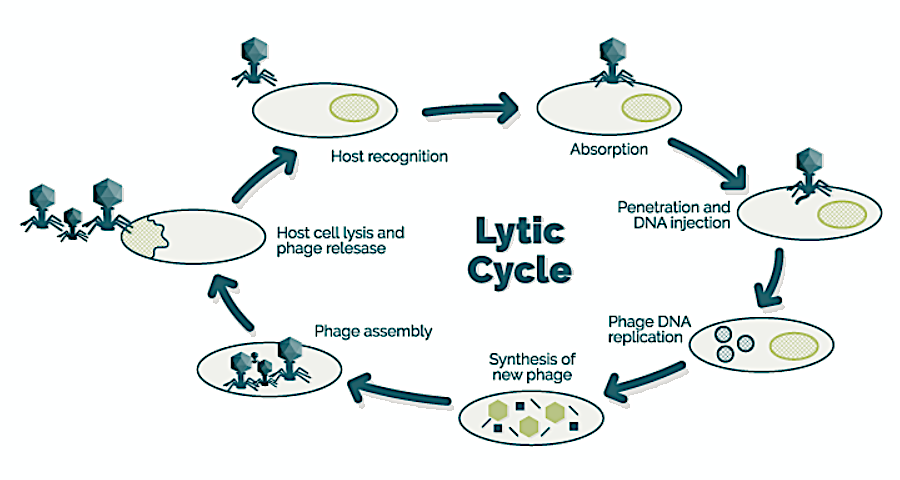 A flowchart showing the lytic cycle of a virus. (Image: University of Barcelona, CC BY 3.0, via Wikimedia Commons)
Based on the NEB +2 Science syllabus for Biology (Bio), unit 6.
Discussion
Loading…