BiologyUnit 149 min read
Endocrine System: Hormones, Glands & Homeostasis
Unit 14 of Biology explores the human endocrine system—its glands, hormones, feedback mechanisms, and roles in growth, metabolism, and homeostasis, with NEB-style questions and solved examples.
What is the Endocrine System?
The endocrine system is a chemical communication system that uses hormones (chemical messengers) to regulate body functions. Unlike the nervous system (which uses electrical signals), hormones travel through the bloodstream to target organs.
Key Features:
- Slow but long-lasting effects (minutes to hours/days).
- Works with the nervous system to maintain homeostasis (balance).
- Ductless glands (unlike exocrine glands like sweat glands).
Major Endocrine Glands & Their Hormones
Here’s a table of the main glands, their hormones, and functions:
| Gland | Hormone | Function |
|---|---|---|
| Pituitary | Growth Hormone (GH) | Stimulates growth, cell reproduction, and regeneration. |
| Thyroid-Stimulating (TSH) | Controls thyroid hormone release. | |
| Adrenocorticotropic (ACTH) | Stimulates adrenal cortex to release cortisol. | |
| Thyroid | Thyroxine (T₄) | Regulates metabolism, growth, and development. |
| Triiodothyronine (T₃) | Same as T₄ but more potent. | |
| Calcitonin | Lowers blood calcium levels. | |
| Parathyroid | Parathyroid Hormone (PTH) | Raises blood calcium levels (opposite of calcitonin). |
| Adrenal (Cortex) | Cortisol | Helps body respond to stress; regulates metabolism. |
| Aldosterone | Controls sodium and water balance (blood pressure). | |
| Adrenal (Medulla) | Adrenaline (Epinephrine) | "Fight or flight" response (increases heart rate, blood sugar). |
| Pancreas | Insulin | Lowers blood glucose (stores glucose as glycogen). |
| Glucagon | Raises blood glucose (breaks glycogen into glucose). | |
| Ovaries | Estrogen | Develops female secondary sex characteristics; regulates menstrual cycle. |
| Progesterone | Prepares uterus for pregnancy; maintains pregnancy. | |
| Testes | Testosterone | Develops male secondary sex characteristics; sperm production. |
| Pineal | Melatonin | Regulates sleep-wake cycles (circadian rhythm). |
How Hormones Work: Mechanism of Action
Hormones follow a 3-step process:
- Synthesis & Release: Glands produce hormones (e.g., thyroid releases T₄).
- Transport: Hormones travel via bloodstream to target cells.
- Action: Hormones bind to receptors on target cells, triggering a response.
Types of Hormone Receptors:
- Water-soluble hormones (e.g., insulin, adrenaline) → Bind to cell membrane receptors → Trigger second messengers (like cAMP).
- Lipid-soluble hormones (e.g., thyroid hormones, steroids) → Pass through cell membrane → Bind to nuclear receptors → Affect DNA transcription.
Feedback Mechanisms: How the Body Regulates Hormones
The endocrine system uses negative feedback to maintain balance.
Example 1: Blood Glucose Regulation (Insulin & Glucagon)
flowchart TD
    A["High Blood Glucose"] --> B["Pancreas releases Insulin"]
    B --> C["Cells absorb glucose"]
    C --> D["Blood glucose decreases"]
    D --> E["Pancreas stops insulin release"]
    E --> A

    F["Low Blood Glucose"] --> G["Pancreas releases Glucagon"]
    G --> H["Liver breaks glycogen into glucose"]
    H --> I["Blood glucose increases"]
    I --> F
Example 2: Thyroid Hormone Regulation (TSH & T₄)
flowchart TD
    A["Hypothalamus releases TRH"] --> B["Pituitary releases TSH"]
    B --> C["Thyroid releases T₄"]
    C --> D["T₄ inhibits TSH release"]
    D --> B
Disorders of the Endocrine System
| Disorder | Cause | Symptoms | Treatment |
|---|---|---|---|
| Diabetes Mellitus | Insulin deficiency (Type 1) or insulin resistance (Type 2) | Excessive thirst, frequent urination, weight loss | Insulin injections, diet control |
| Hyperthyroidism | Overactive thyroid (Graves’ disease) | Weight loss, anxiety, heat intolerance | Medication, surgery, radioactive iodine |
| Hypothyroidism | Underactive thyroid | Fatigue, weight gain, cold intolerance | Thyroid hormone replacement |
| Cushing’s Syndrome | Excess cortisol (from adrenal tumor) | Moon face, high blood pressure, muscle weakness | Surgery, medication to lower cortisol |
| Addison’s Disease | Adrenal insufficiency | Fatigue, low blood pressure, dark skin patches | Hormone replacement therapy |
Comparison: Endocrine vs. Nervous System
| Feature | Endocrine System | Nervous System |
|---|---|---|
| Messengers | Hormones (chemical) | Neurotransmitters (electrical + chemical) |
| Speed | Slow (seconds to days) | Fast (milliseconds) |
| Duration | Long-lasting | Short-lived |
| Target Area | Broad (whole body) | Specific (single organ/muscle) |
| Example | Adrenaline (fight or flight) | Nerve impulse to contract a muscle |
Solved Example: Blood Sugar Regulation
Question: Why does a diabetic patient feel weak and hungry even after eating? Answer:
- In Type 1 diabetes, the pancreas does not produce insulin.
- Without insulin, glucose cannot enter cells → cells starve (even though blood glucose is high).
- The body breaks down fat and protein for energy → weight loss, weakness, and hunger.
NEB-Style Questions & Answers
Short Answer Questions
What is the role of ADH (Antidiuretic Hormone)?
- Answer: ADH is released by the posterior pituitary when the body is dehydrated. It increases water reabsorption in the kidneys → concentrated urine and prevents dehydration.
Differentiate between Type 1 and Type 2 diabetes.
- Answer:
Type 1 Type 2 Autoimmune destruction of β-cells Insulin resistance Requires insulin injections Managed with diet, exercise, oral meds Usually diagnosed in childhood Often in adults (obesity-related)
- Answer:
Long Answer Question
Question: Describe the structure and functions of the thyroid gland. How does hypothyroidism affect the body? Answer:
Structure:
- Located in the neck, just below the larynx.
- Consists of two lobes connected by the isthmus.
- Made of follicles that store colloid (thyroglobulin + iodine).
Functions:
- Produces thyroxine (T₄) and triiodothyronine (T₃) → regulate metabolism.
- Secretes calcitonin → lowers blood calcium (opposes PTH).
Hypothyroidism Effects:
- Low metabolism → weight gain, fatigue, cold intolerance.
- Puffiness (myxedema) due to fluid retention.
- Slowed reflexes, depression, hair loss.
- Caused by: iodine deficiency, autoimmune disease (Hashimoto’s), or pituitary disorders.
- Treatment: Thyroid hormone replacement (levothyroxine).
Exam Tip: How to Score Full Marks
✅ Diagrams are key! Draw and label:
- Feedback loops (e.g., insulin-glucagon cycle).
- Gland locations (e.g., pituitary, thyroid, adrenal).
- Hormone pathways (e.g., TSH → T₄ regulation).
✅ Compare & contrast (e.g., endocrine vs. nervous system, Type 1 vs. Type 2 diabetes).
✅ Explain disorders with:
- Cause (e.g., autoimmune, tumor, deficiency).
- Symptoms (e.g., weight gain, fatigue).
- Treatment (e.g., hormone replacement, surgery).
✅ Use real-life examples (e.g., "Why do athletes use steroids?" → artificial testosterone disrupts natural hormone balance).
✅ Memorize key hormones & their targets (e.g., ADH → kidneys, oxytocin → uterus/breasts).
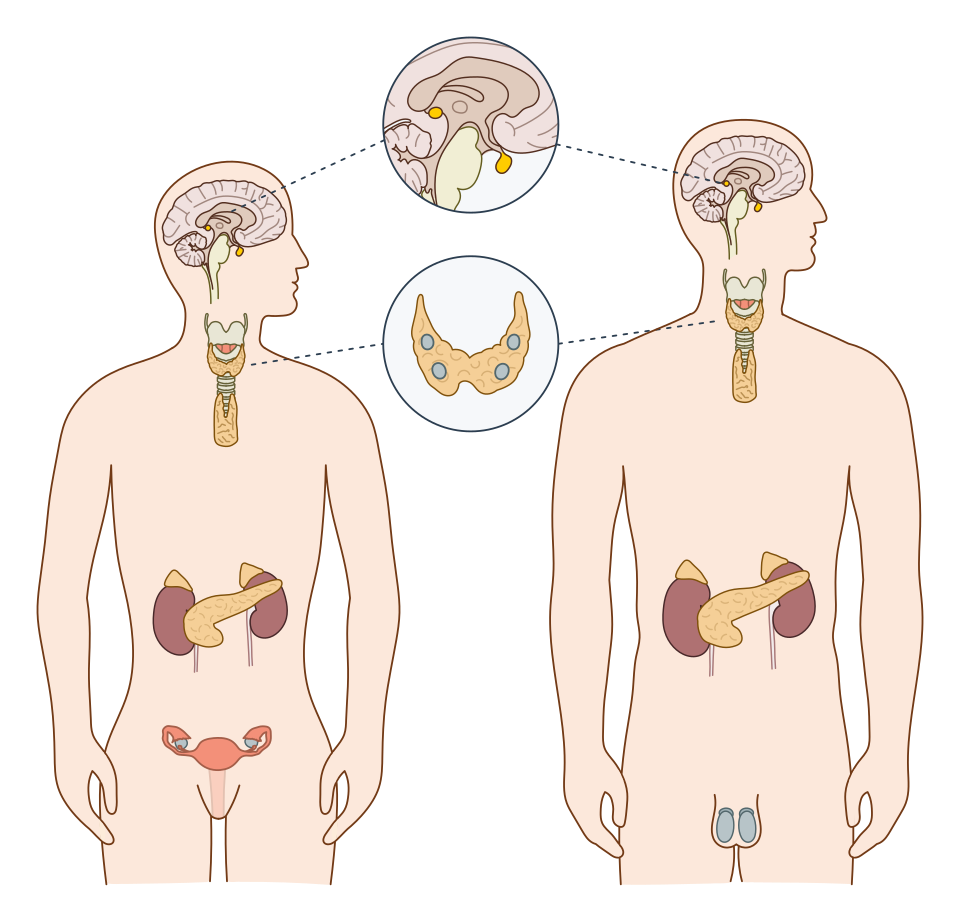 Labeled illustration of major endocrine glands (pituitary, thyroid, adrenal, pancreas, etc.) (Image: OpenStax & Tomáš Kebert & umimeto.org, CC BY-SA 4.0, via Wikimedia Commons)
 Negative feedback mechanism for blood glucose regulation (Image: GliderMaven, CC0, via Wikimedia Commons)
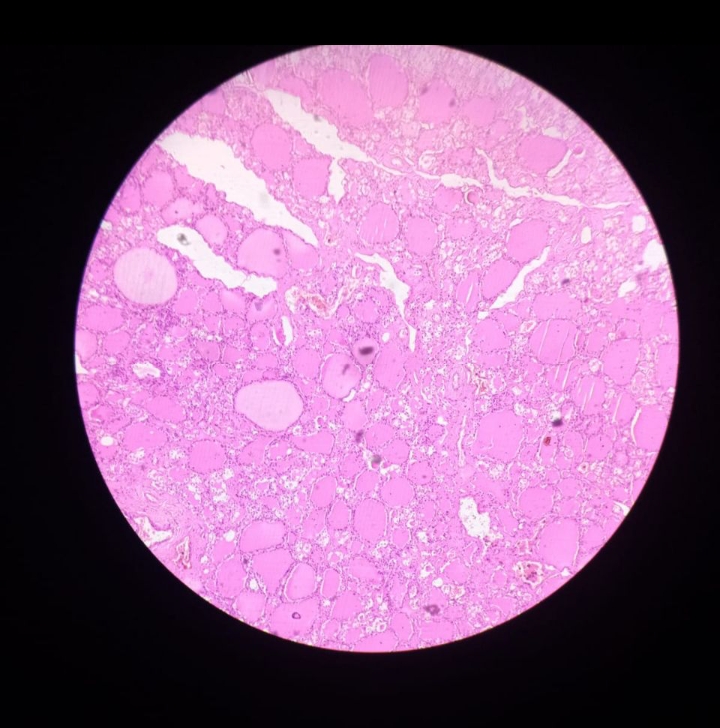 Microscopic structure of thyroid follicles storing colloid (Image: Bhavya akula, CC BY-SA 4.0, via Wikimedia Commons)
Based on the NEB +2 Science syllabus for Biology (Bio), unit 14.
Discussion
Loading…