General PsychologyUnit 210 min read
Biological Bases of Behaviour: Brain, Nervous System & Genetics
Unit 2 of General Psychology explores how biological structures—brain regions, neurons, hormones, and genetics—shape thoughts, emotions, and behaviors, with real-world applications in health, technology, and daily life.
TAKEAWAYS:
- The central nervous system (CNS) and peripheral nervous system (PNS) work together to process and transmit information, with the brain acting as the control center.
- Neurons communicate via electrical impulses and chemical neurotransmitters, influencing everything from reflexes to complex decision-making.
- Genetics and environment interact to shape personality, intelligence, and behavior, as seen in twin and adoption studies.
- Hormones (e.g., adrenaline, oxytocin) regulate emotions, stress responses, and social bonding.
- Localization of brain functions (e.g., Broca’s area for speech, amygdala for fear) explains how brain damage or disorders affect behavior.
- Biological psychology applies to real-world scenarios like addiction (dopamine), mental health (serotonin), and workplace productivity (circadian rhythms).
1. The Nervous System: Structure and Function
The nervous system is divided into two main parts:
- Central Nervous System (CNS): Brain and spinal cord (controls most functions).
- Peripheral Nervous System (PNS): Nerves outside the CNS, divided into:
- Somatic Nervous System (SNS): Controls voluntary movements (e.g., walking).
- Autonomic Nervous System (ANS): Regulates involuntary functions (e.g., heartbeat, digestion), further split into:
- Sympathetic NS: "Fight or flight" response (e.g., increased heart rate during stress).
- Parasympathetic NS: "Rest and digest" (e.g., slowing heart rate after danger passes).
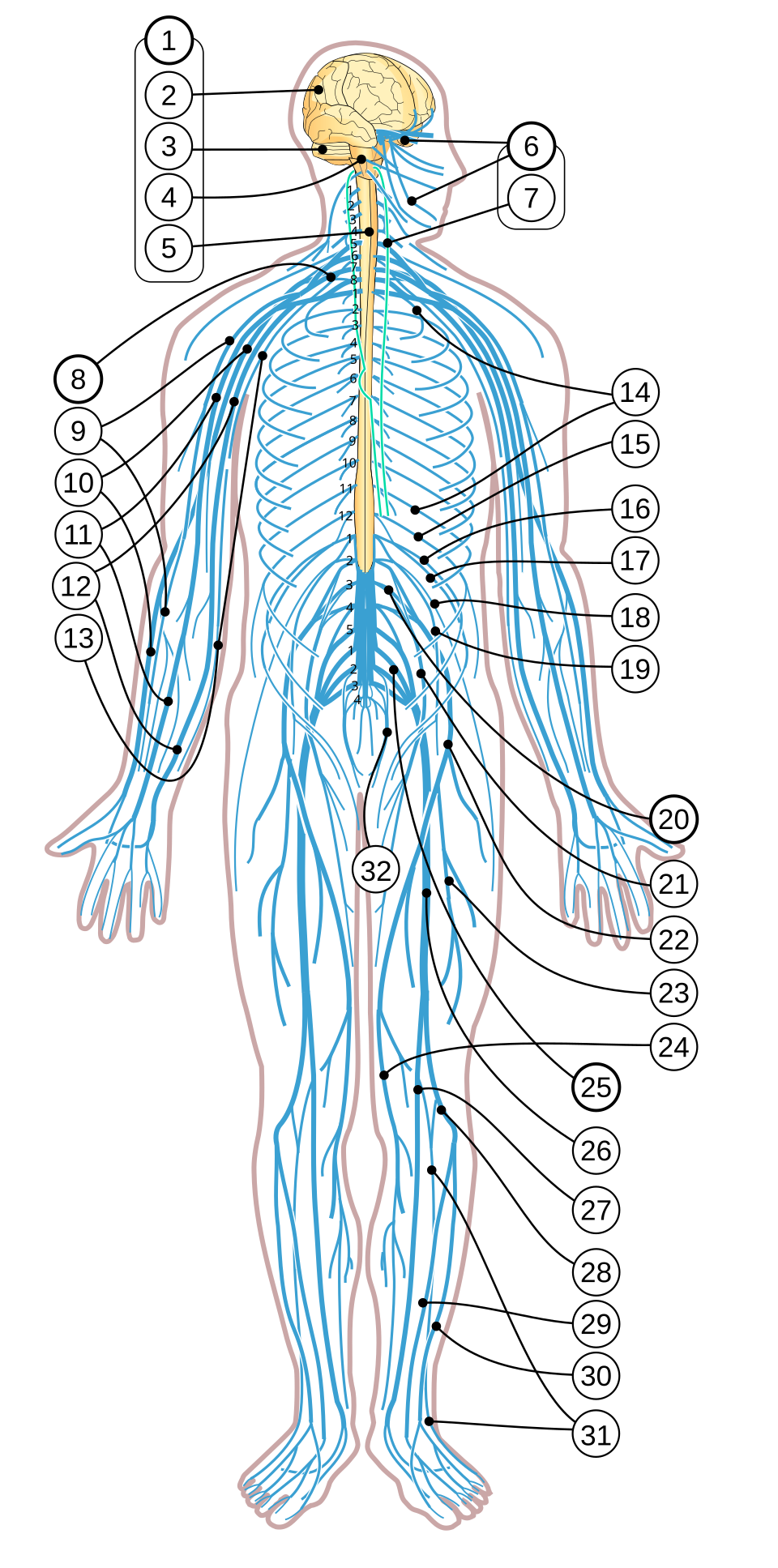 Shows the CNS (brain/spinal cord) and PNS divisions with labeled nerves. (Image: Medium69, Jmarchn, CC BY-SA 4.0, via Wikimedia Commons)
How It Works: The Neuron
Neurons (nerve cells) transmit information via electrical impulses (action potentials) and chemical signals (neurotransmitters).
- Dendrites: Receive signals.
- Cell body (soma): Processes signals.
- Axon: Transmits signals to other neurons/muscles.
- Myelin sheath: Insulates axons for faster transmission.
- Synapse: Gap where neurotransmitters (e.g., dopamine, serotonin) pass signals between neurons.
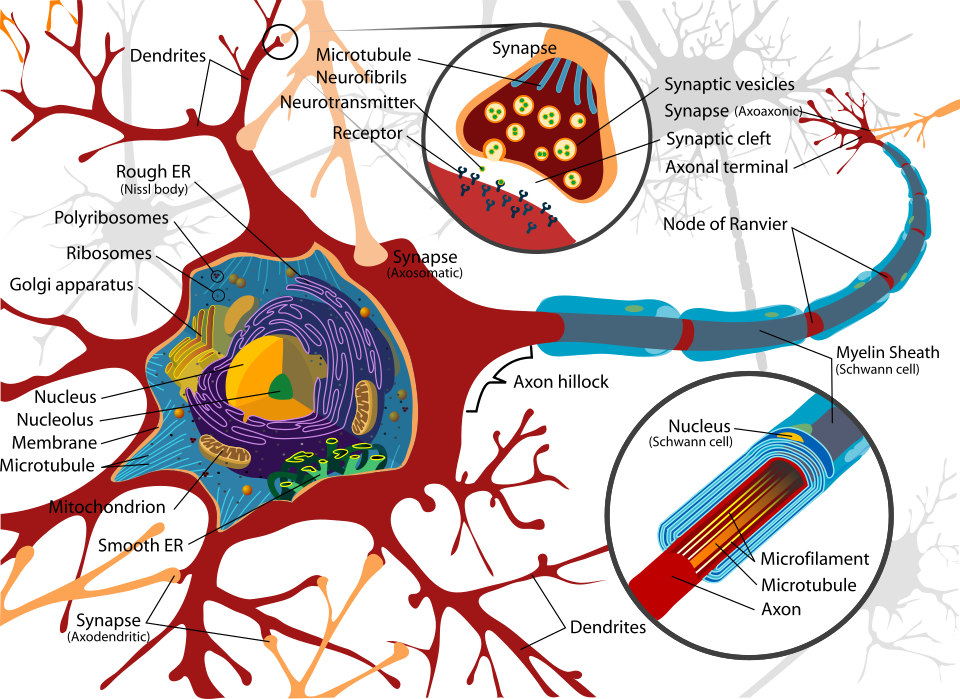 Highlights dendrites, axon, myelin sheath, and synapse. (Image: LadyofHats, Public domain, via Wikimedia Commons)
Worked Example: Reflex Arc When you touch a hot object:
- Sensory neuron detects pain → sends signal to spinal cord.
- Interneuron in spinal cord processes the signal.
- Motor neuron sends a response to withdraw your hand (involuntary). Why? The spinal cord bypasses the brain for faster reaction (biological efficiency).
2. The Brain: Localization of Function
The brain is divided into regions, each with specialized functions. Damage to one area can impair specific behaviors.
| Brain Region | Function | Real-World Example |
|---|---|---|
| Frontal Lobe | Decision-making, planning, speech | A stroke victim may lose ability to speak (Broca’s aphasia). |
| Parietal Lobe | Touch, spatial orientation | Difficulty recognizing objects by touch (e.g., after injury). |
| Temporal Lobe | Memory, hearing, language (Wernicke’s area) | Unable to understand speech (Wernicke’s aphasia). |
| Occipital Lobe | Vision | Blind spots or visual hallucinations after damage. |
| Cerebellum | Balance, coordination | Alcohol impairs cerebellum → unsteady walking. |
| Amygdala | Fear, emotion | Overactive amygdala → anxiety disorders. |
| Hippocampus | Memory formation | Alzheimer’s patients lose memories due to hippocampal damage. |
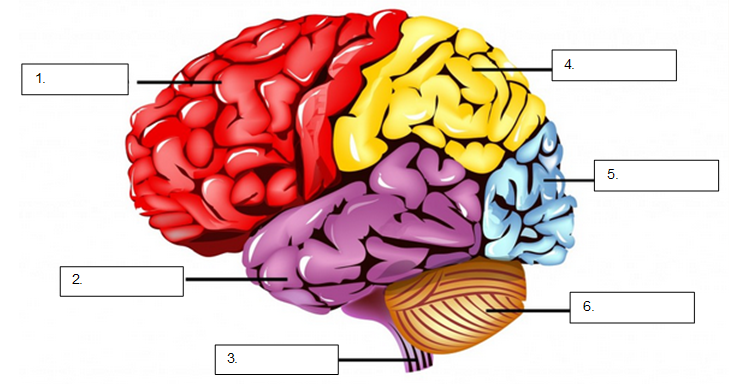 Shows frontal, parietal, temporal, and occipital lobes + cerebellum. (Image: ErMED14, CC BY-SA 4.0, via Wikimedia Commons)
Case Study: Phineas Gage
In 1848, a metal rod pierced Phineas Gage’s frontal lobe, changing his personality from responsible to impulsive. Lesson: The frontal lobe regulates executive functions (judgment, impulse control).
3. Genetics and Behavior
Behavior is influenced by nature (genes) and nurture (environment).
- Twin Studies: Identical twins reared apart show similar personalities → genetic influence.
- Adoption Studies: Adopted children resemble biological parents in intelligence → heredity plays a role.
- Epigenetics: Environmental factors (e.g., stress, diet) can turn genes "on" or "off" without changing DNA.
Worked Example: Height and Intelligence
- Height: ~80% heritable (genes determine most of it).
- Intelligence (IQ): ~50-80% heritable, but environment (education, nutrition) matters.
4. Hormones and Behavior
Hormones are chemical messengers that regulate mood, stress, and social behavior.
| Hormone | Source | Effect on Behavior | Real-World Link |
|---|---|---|---|
| Adrenaline | Adrenal glands | Increases alertness, heart rate ("fight or flight") | Pathao drivers feel adrenaline during rush hour traffic. |
| Oxytocin | Hypothalamus | Promotes bonding, trust | E-Sewa customer service agents use warmth to build trust. |
| Testosterone | Testes | Aggression, risk-taking | High testosterone linked to competitive sports (e.g., football). |
| Cortisol | Adrenal glands | Stress response | Students have high cortisol before exams. |
| Serotonin | Brainstem | Mood regulation | Low serotonin → depression (treated with SSRIs). |
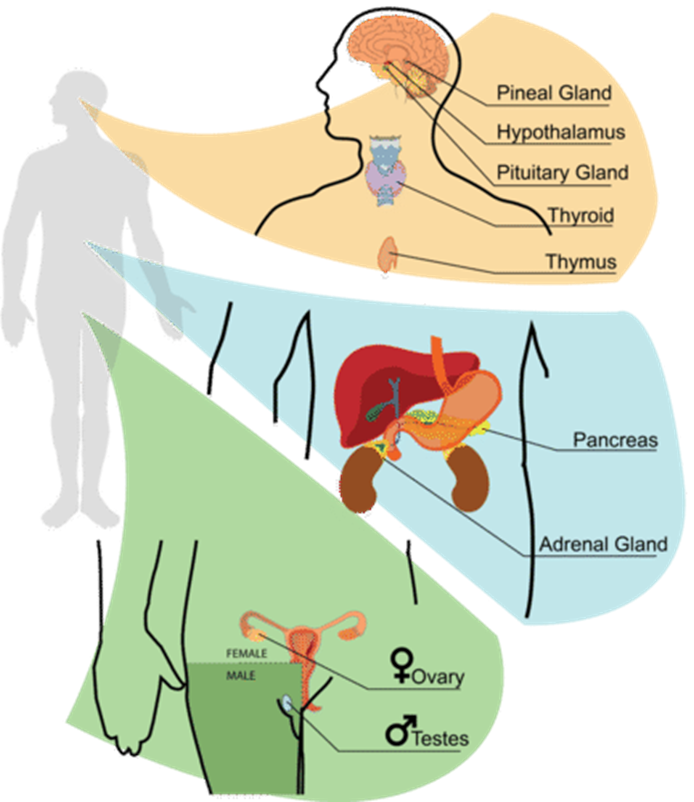 Shows glands (pituitary, adrenal, thyroid) and hormone pathways. (Image: Mariana Ruiz Villarreal (User:LadyofHats/Wikimedia Commons) , CC BY-SA 3.0, via Wikimedia Commons)
Worked Example: Stress at Work A bank employee under deadline pressure:
- Hypothalamus releases CRH → pituitary gland secretes ACTH → adrenal glands pump cortisol.
- Result: Increased focus but potential burnout if chronic.
5. Biological Psychology in Action: Real-World Applications
1. E-Sewa and Oxytocin
E-Sewa’s customer service relies on oxytocin to build trust. Agents use warm, empathetic language to reduce user anxiety during transactions.
2. Pathao Drivers and Adrenaline
Pathao drivers experience adrenaline spikes during peak hours (e.g., 6–9 PM), improving reaction times but risking fatigue.
3. Daraz and Dopamine
Daraz’s "limited-time discounts" trigger dopamine release, encouraging impulsive purchases (reinforcement learning).
4. NTC and the Sympathetic Nervous System
During power outages, NTC engineers activate their sympathetic NS to quickly diagnose issues under pressure.
5. Ncell and the Parasympathetic NS
Ncell’s "relaxation mode" ads (e.g., nature scenes) activate the parasympathetic NS, reducing customer stress.
6. Banks and Cortisol
Bank loan officers monitor cortisol levels in applicants—high stress may indicate financial mismanagement risk.
6. Disorders Linked to Biological Factors
| Disorder | Biological Cause | Example |
|---|---|---|
| Schizophrenia | Dopamine imbalance | Hallucinations, delusions. |
| Depression | Low serotonin/norepinephrine | Fatigue, hopelessness. |
| Parkinson’s | Dopamine neuron death | Tremors, stiffness. |
| Alzheimer’s | Hippocampus atrophy | Memory loss. |
| ADHD | Dopamine/norepinephrine dysfunction | Inattention, hyperactivity. |
Exam Tip
- Diagrams Are Key: Always draw and label the nervous system, neuron, or brain regions in exams. Use color to distinguish parts (e.g., red for sympathetic NS).
- Case Studies: Relate theories to real examples (e.g., Phineas Gage for frontal lobe, E-Sewa for oxytocin).
- Compare and Contrast:
- Sympathetic vs. Parasympathetic NS (fight/flight vs. rest/digest).
- Nature vs. Nurture (twin studies vs. adoption studies).
- Hormone Triggers: Memorize which hormone causes which behavior (e.g., cortisol = stress, oxytocin = bonding).
- Localization: Know the lobes and their functions—examiners love questions like "Which lobe is damaged if a person can’t recognize faces?" (Answer: Temporal lobe, fusiform gyrus).
Final Visual Summary
mindmap
  root((Biological Bases of Behaviour))
    Nervous System
      CNS["Brain & Spinal Cord"]
      PNS["Somatic & Autonomic"]
    Brain Regions
      Frontal["Decision-Making"]
      Temporal["Memory & Language"]
      Amygdala["Fear"]
    Neurons
      Dendrites["Receive Signals"]
      Axon["Transmit Signals"]
      Synapse["Neurotransmitters"]
    Hormones
      Adrenaline["Stress Response"]
      Oxytocin["Bonding"]
    Genetics
      Twin Studies["Nature vs. Nurture"]
      Epigenetics["Environmental Gene Changes"]
Based on the PU BBA (PU) syllabus for General Psychology, unit 2.
Discussion
Loading…