Principles of MarketingUnit 315 min read
Consumer Behaviour: Influences, Decision-Making & Applications
Unit 3 of Principles of Marketing explores how individuals and groups select, purchase, use, and dispose of products/services, covering psychological, social, cultural, and situational factors shaping consumer choices—essential for crafting effective marketing strategies.
Core Concepts of Consumer Behaviour
Consumer behaviour is the study of how individuals, groups, or organizations select, buy, use, and dispose of goods, services, ideas, or experiences to satisfy their needs and desires. It bridges the gap between a consumer’s needs and the marketer’s ability to convert those needs into demand for a product.
1. Factors Influencing Consumer Behaviour
Consumer decisions are shaped by a mix of internal (psychological) and external (social/cultural) factors. Below is a structured breakdown:
2. Psychological Factors
A. Motivation (Maslow’s Hierarchy of Needs)
Maslow’s pyramid explains why consumers act. Needs progress from basic to self-actualization:
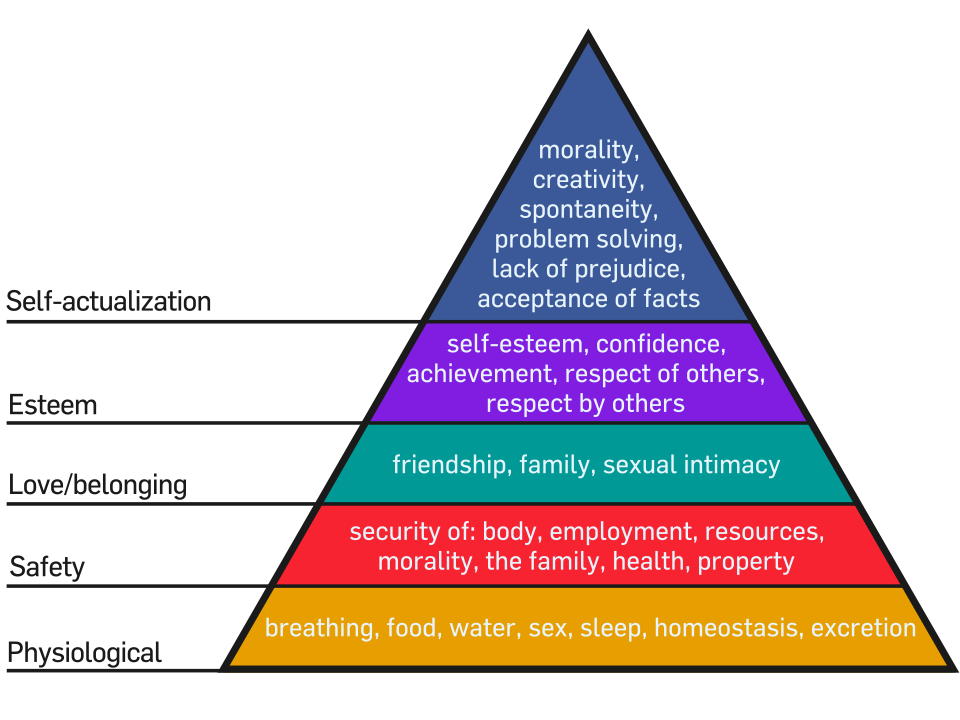
- Example: A Pathao rider prioritizes safety needs (helmet, bike insurance) before esteem needs (branding their bike). A Daraz customer may start with physiological needs (buying groceries) but upgrade to self-actualization (buying a premium laptop for remote work).
B. Perception
Consumers select, organize, and interpret information:
- Selective Exposure: Ignoring ads for products they dislike (e.g., a vegetarian avoiding meat ads).
- Selective Distortion: Twisting facts to fit preconceptions (e.g., believing "organic" = "always healthier").
- Selective Retention: Remembering ads that align with their beliefs (e.g., a Nepalese farmer recalling pesticide ads over organic ones).
Worked Example: A Khalti user sees 10 ads/day but only notices those for mobile recharge (selective exposure). If they distrust digital payments, they may distort Khalti’s security claims ("It’s not safe!"). Later, they retain only the recharge ad because it matches their habit.
C. Learning & Beliefs
- Classical Conditioning (Pavlov): Associating a brand with pleasure (e.g., Himalayan Java coffee paired with a relaxing morning routine).
- Operant Conditioning (Skinner): Rewarding desired behaviour (e.g., Daraz’s "Buy 3, Get 1 Free" for repeat purchases).
- Beliefs: Subjective opinions (e.g., "Nabil Bank is safer than Global IME").
- Attitudes: Evaluative responses (e.g., "I dislike NTC’s service").
Comparison Table:
| Factor | Definition | Marketing Application | Nepali Example |
|---|---|---|---|
| Motivation | Driving force behind actions | Target ads to unmet needs (e.g., safety ads for Pathao) | NTC promotes "reliable internet" for students. |
| Perception | How consumers interpret stimuli | Use familiar symbols (e.g., Khalti’s green tick for trust). | Daraz uses red sale banners for urgency. |
| Learning | Change in behaviour from experience | Loyalty programs (e.g., Nabil Bank’s cashback). | Himalayan Java trains baristas for consistency. |
3. Social Factors
A. Reference Groups
Groups that directly or indirectly influence consumer choices:
- Membership Groups: Families, clubs (e.g., a student buying Cambridge books to impress peers).
- Aspirational Groups: Celebrities, influencers (e.g., YouTubers promoting Fair & Lovely).
- Dissociative Groups: Groups consumers avoid (e.g., a vegetarian ignoring meat ads).
Real-World Example: eSewa’s success in Nepal relies on reference groups:
- Family: Parents teach kids to use eSewa for school fees.
- Friends: Peer pressure to pay bills via eSewa ("Everyone uses it!").
- Influencers: Comedians joke about eSewa’s convenience, normalizing its use.
B. Family Influence
Roles in purchase decisions:
- Initiator: Suggests the idea (e.g., a child asking for a Pokémon card).
- Influencer: Shapes the choice (e.g., a mother researching organic snacks).
- Decider: Makes the final call (e.g., a father approving a bike purchase).
- Purchaser: Buys the product (e.g., a teenager buying a phone with pocket money).
- User: Consumes the product (e.g., the child eating the snack).
Case Study: Nabil Bank’s Loan Decisions
flowchart TD
  A["Father (Decider)"] -->|"Needs car loan"| B["Mother (Influencer)"]
  B -->|"Researches interest rates"| C["Nabil Bank Website"]
  C -->|"Compares with Global IME"| D["Father (Purchaser)"]
  D -->|"Applies for loan"| E["Nabil Bank Officer"]
  E -->|"Approves loan"| F["Family (Users)"]
- Why Nabil? Lower interest rates (6.5% vs. Global IME’s 8%) and social proof ("Our relatives use Nabil").
C. Social Class
Divided by income, education, and occupation, affecting:
- Product Choice: A Chaudhary Group executive buys Rolex, while a rural farmer buys Timex.
- Brand Preference: Premium brands (e.g., Himalayan Java) target upper-class consumers.
- Retailer Choice: Hypermarkets (e.g., Big Mart) for middle-class; local kirana for lower-class.
4. Cultural Factors
A. Culture & Subculture
- Culture: Shared values (e.g., Nepali hospitality → Daraz’s "Free Delivery" as a gift).
- Subculture: Smaller groups with unique values (e.g., Newars prefer jhaneko over momos; Tharus buy rice beer for festivals).
Example: Nepal Telecom (NTC) markets 4G plans differently:
- Urban youth: "Stream HD videos without buffering."
- Rural elders: "Stay connected with family calls."
B. Socialization Process
How culture is learned:
- Family: Teaches values (e.g., saving money → preference for Nabil Bank over impulsive loans).
- Schools: Peer influence (e.g., branding like Levi’s jeans).
- Religion: Dietary restrictions (e.g., Hindus avoiding beef → vegetarian food brands).
- Media: Ads shaping trends (e.g., YouTube tutorials for DIY home decor).
5. Situational Factors
A. Purchase Task
- Gift vs. Personal Use: Consumers spend more on gifts (e.g., Chaudhary Group’s "Mother’s Day" sales).
- Emergency Purchases: Higher prices tolerated (e.g., medicine during lockdowns).
B. Social Surroundings
- Store Atmosphere: Big Mart’s bright lighting vs. local shops’ warm ambiance.
- Crowding: Daraz’s "Limited stock" urgency in busy times.
C. Temporal Effects
- Time of Day: Breakfast cereal ads peak at 7 AM.
- Seasonality: Diwali sales by Chaudhary Group vs. holiday discounts by Daraz.
D. Antecedent States
- Mood: Happy → impulse buys (e.g., ice cream after a movie).
- Cash Availability: Khalti’s "Pay in 3 installments" targets low-cash consumers.
6. Consumer Decision-Making Process
A 5-step model (adapted for Nepali context):
flowchart LR
  A["Need Recognition"] -->|"Problem: No phone"| B["Information Search"]
  B -->|"Asks friends, checks Daraz"| C["Evaluation of Alternatives"]
  C -->|"Compares Samsung vs. Xiaomi"| D["Purchase Decision"]
  D -->|"Buys Xiaomi (cheaper)"| E["Post-Purchase Behaviour"]
  E -->|"Satisfied? Leaves review"| F["Repeat Purchase"]
Worked Example: Buying a Bike in Kathmandu
- Need: "I need a bike for college."
- Search: Asks Pathao riders for recommendations; checks Daraz/Facebook Marketplace.
- Evaluation:
- Hero Honda (reliable but expensive).
- TVS (cheaper, but less brand trust).
- Decision: Buys TVS (affordable + Khalti EMI).
- Post-Purchase: Leaves a Daraz review ("Good bike, but delivery late!").
7. Types of Buying Decisions
| Decision Type | Complexity | Involvement | Nepali Example |
|---|---|---|---|
| Routine Response | Low | Low | Buying detergent (same brand every time). |
| Limited Decision | Medium | Medium | Choosing a new phone (researches specs). |
| Extensive Decision | High | High | Buying a house (consults realtors, banks). |
8. Post-Purchase Behaviour
- Customer Satisfaction: Depends on perceived performance vs. expectations.
- Cognitive Dissonance: Doubt after purchase (e.g., "Did I buy the right laptop?").
- Word-of-Mouth: Positive → repeat business; Negative → bad reviews (e.g., Daraz’s "sold out" scams).
Example: A Nepali student buys a second-hand laptop from Facebook Marketplace:
- Satisfied: Shares on WhatsApp groups.
- Dissatisfied: Posts on Reddit/Nepali forums ("Scammed!").
In the Real World
Khalti’s Psychological Triggers
- Uses selective perception (green tick = trust) and operant conditioning (rewards for referrals).
- Real Example: During Dashain, Khalti promotes "Pay for Prasad" to tap into cultural motivation (religious gifting).
Daraz’s Social Influence
- Leverages reference groups (celebrity endorsements) and social proof ("10,000+ sold!").
- Real Example: Daraz’s "Lightning Deals" create urgency (temporal effect), mimicking Black Friday hype.
Nabil Bank’s Cultural Targeting
- Offers low-interest loans for weddings (high cultural importance in Nepal).
- Real Example: "Nabil Wedding Loan" ads show joint family scenes, appealing to social class norms.
Exam Tip
Define Key Terms Precisely
- Consumer Behaviour: "The dynamic interaction of affect, cognition, behaviour, and environment by which human beings conduct the exchange aspects of their lives."
- Cognitive Dissonance: "The mental discomfort felt after a purchase that doesn’t match expectations."
Apply Theories to Nepali Cases
- Maslow’s Hierarchy: Link to NTC’s "Internet for Education" ads (self-actualization).
- Reference Groups: Explain Pathao’s rider culture (peer influence on bike choice).
Diagrams = Marks
- Draw Maslow’s Pyramid, Consumer Decision Process, or Family Influence Roles in exams.
- Label every part (e.g., in Maslow’s, mark "Physiological" at the base).
Compare & Contrast
- Routine vs. Extensive Decisions: Use toothpaste (routine) vs. car (extensive).
- Social Class Segmentation: Chaudhary Group (luxury) vs. local kirana (budget).
Real-World Applications
- Marketing Mix (4Ps): How Daraz uses Price (discounts), Promotion (influencers), and Place (hyperlocal delivery) to target consumer behaviour.
- Ethical Dilemma: "Is NTC’s 'unlimited data' ad misleading? Discuss perception and regulatory factors."
Case Study: Himalayan Java’s Consumer Behaviour Strategy
classDiagram
  class Consumer {
    +Needs: Quality, Convenience
    +Influences: Health trends, Social media
  }
  class HimalayanJava {
    +Product: Organic coffee
    +Promotion: "Farm-to-Cup" storytelling
    +Price: Premium (Rs. 500/bag)
    +Place: Hypermarkets, Online
  }
  Consumer "1" --> "0..*" HimalayanJava : "Buys due to"
  note for Consumer
    **Psychological**: Health-conscious (Maslow’s esteem)
    **Social**: Influenced by Instagram #SlowCoffee
    **Cultural**: Organic trend in Kathmandu
  end
Why It Works:
- Psychological: Targets self-actualization (healthy lifestyle).
- Social: Influencer collaborations (e.g., Nepali food bloggers).
- Cultural: Organic = prestige in urban Nepal.
- Situational: Weekend brunch marketing (temporal effect).
Common Mistakes to Avoid
Ignoring Cultural Nuances
- ❌ Saying "All Nepalis love spicy food" (ignores Newar vs. Magar preferences).
- ✅ Mention subcultural differences in marketing.
Overlooking Situational Factors
- ❌ Focusing only on psychological factors for Diwali sales.
- ✅ Include temporal effects (seasonality) and social surroundings (family gatherings).
Generic Examples
- ❌ "Coca-Cola targets youth."
- ✅ "Thums Up uses red cans to appeal to Nepali youth’s energy association (cultural + psychological).
Practice Questions for PU Exams
Short Answer (5 marks)
- "Explain the AIO model (Activities, Interests, Opinions) with a Nepali example."
Long Answer (10 marks)
- "How does Khalti apply psychological, social, and cultural factors in its digital payment strategy? Use three real examples."
Case Study (15 marks)
- "Nabil Bank wants to increase loan applications among young professionals. Analyze their consumer behaviour and suggest a marketing mix using Maslow’s Hierarchy and reference groups."
Final Summary
| Factor Type | Key Elements | Marketing Tool |
|---|---|---|
| Psychological | Motivation, Perception, Learning | Ads, Branding, Loyalty Programs |
| Social | Reference Groups, Family, Social Class | Influencers, Family Targeting, Class-Based Pricing |
| Cultural | Culture, Subculture, Socialization | Localized Ads, Religious Themes |
| Situational | Purchase Task, Surroundings, Time | Limited-Time Offers, Store Atmosphere |
Remember: Consumer behaviour is not static—it evolves with technology (e.g., Khalti), culture (e.g., Dashain trends), and economy (e.g., inflation affecting Daraz sales). Always link theories to real Nepali examples in exams!
Based on the PU BBA (PU) syllabus for Principles of Marketing, unit 3.
Discussion
Loading…