Organizational Behaviour and Human Resource ManagementTU Board 2081
OB is not an identical subject but it is constituted with the help of many other subjects. Discuss the statement.
15Answer
Organizational Behaviour (OB) is a dynamic and multifaceted field of study that examines how individuals, groups, and structures interact within organizations to influence behaviour and performance. The statement that "OB is not an identical subject but is constituted with the help of many other subjects" highlights its interdisciplinary nature. OB draws insights and methodologies from various academic disciplines to provide a comprehensive understanding of workplace dynamics. This essay explores the interdisciplinary foundations of OB by examining its key contributing subjects: Psychology, Sociology, Social Psychology, Anthropology, Political Science, and Economics.
1. Psychology: Understanding Individual Behaviour
Psychology is the cornerstone of OB, as it focuses on individual behaviour, cognition, and emotions within organizational settings. Key psychological concepts that shape OB include:
1.1 Individual Behaviour and Motivation
- Personality and Attitudes: OB borrows from personality psychology to understand how traits like extroversion, conscientiousness, and emotional stability influence job performance. For example, the Big Five Personality Traits (Openness, Conscientiousness, Extraversion, Agreeableness, Neuroticism) help explain why some employees thrive in leadership roles while others excel in technical positions.
- Motivation Theories: OB adopts Maslow’s Hierarchy of Needs, Herzberg’s Two-Factor Theory, and Expectancy Theory to explain what drives employees. For instance, Herzberg’s theory distinguishes between hygiene factors (salary, working conditions) and motivators (recognition, achievement), guiding managers in designing incentive systems.
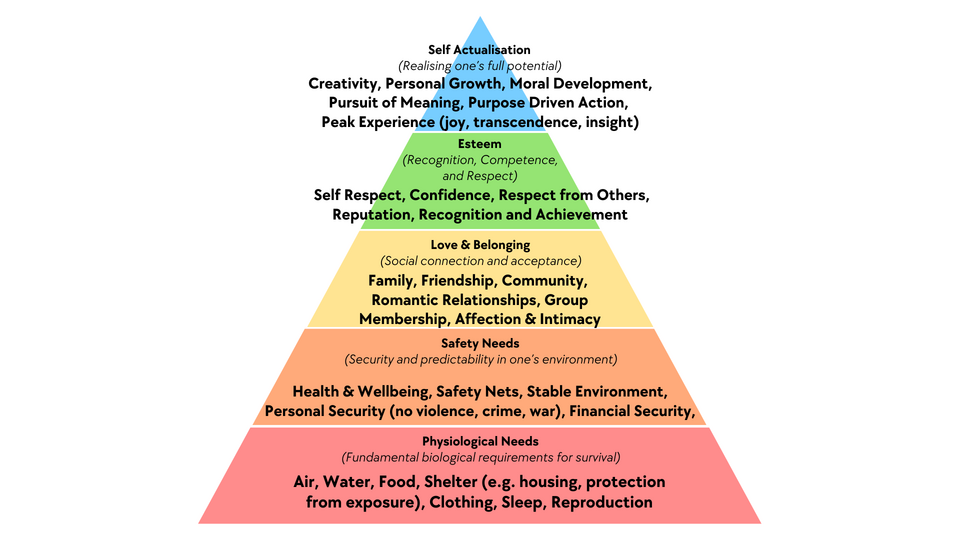 Maslow's five-level needs hierarchy (1943) (Image: Hamish.croker, CC BY-SA 4.0, via Wikimedia Commons)
1.2 Perception and Attribution
- Perceptual Processes: OB uses psychological theories of perception to explain how employees interpret workplace events. For example, the Selective Perception bias can lead managers to judge employees based on first impressions rather than objective performance.
- Attribution Theory: This helps explain why employees attribute success or failure to internal (effort, ability) or external (luck, task difficulty) factors, influencing their motivation and job satisfaction.
1.3 Learning and Decision-Making
- Behavioural Learning Theories: OB applies Skinner’s Operant Conditioning and Bandura’s Social Learning Theory to design training programs and performance management systems. For example, positive reinforcement (rewards) can encourage desired behaviours like punctuality.
- Cognitive Biases: OB incorporates insights from behavioural economics (e.g., anchoring bias, overconfidence effect) to improve decision-making processes in organizations.
2. Sociology: Analyzing Group and Organizational Dynamics
Sociology provides OB with frameworks to study group behaviour, organizational culture, and social structures within workplaces.
2.1 Group Dynamics and Teamwork
- Group Cohesion: Sociological theories explain how group norms, roles, and cohesion affect team performance. For example, Sherif’s Realistic Conflict Theory shows that competition between groups can reduce cooperation, while Tuckman’s Stages of Group Development (Forming, Storming, Norming, Performing) helps managers facilitate effective teamwork.
- Social Identity Theory: This theory helps understand how employees derive self-esteem from their group membership (e.g., departmental loyalty), which can impact collaboration and conflict.
2.2 Organizational Culture
- Schein’s Three Levels of Culture: OB uses Edgar Schein’s model to analyze organizational culture at three levels:
- Artifacts (visible elements like dress code, rituals).
- Espoused Values (stated mission, vision).
- Basic Assumptions (unconscious beliefs, e.g., "innovation is valued"). This framework helps managers align culture with organizational goals.
2.3 Power and Social Influence
- Weber’s Bureaucracy: OB borrows from Max Weber’s theories on bureaucracy to understand hierarchical structures, authority, and formal rules in organizations.
- Social Exchange Theory: This explains how employees form reciprocal relationships with their organizations (e.g., loyalty in exchange for job security), influencing retention and engagement.
3. Social Psychology: Leadership and Communication
Social psychology bridges individual and group behaviour, providing OB with insights into leadership, communication, and conflict.
3.1 Leadership Theories
- Trait vs. Behavioural Leadership: OB integrates Great Man Theory (leader traits like charisma) with contingency theories (e.g., Fiedler’s Model, Situational Leadership) to determine effective leadership styles.
- Transformational vs. Transactional Leadership: OB uses Burns’ Transformational Leadership to explain how leaders inspire followers through vision, while transactional leadership focuses on exchanges (rewards for performance).
3.2 Communication and Conflict
- Linguistic Relativity (Sapir-Whorf Hypothesis): OB applies this to understand how language shapes workplace communication, especially in multicultural teams.
- Conflict Resolution: Thomas-Kilmann Conflict Mode Instrument helps managers analyze conflict styles (e.g., competing, collaborating, avoiding) and resolve disputes effectively.
3.3 Conformity and Obedience
- Asch’s Conformity Experiments: OB uses these to explain why employees may conform to group pressure, even if it contradicts their personal beliefs (e.g., ethical dilemmas).
- Milgram’s Obedience Studies: Highlights how authority figures (e.g., managers) can influence unethical behaviour, guiding OB in designing ethical leadership training.
4. Anthropology: Workplace Diversity and Cross-Cultural Behaviour
Anthropology contributes to OB by examining cultural differences and their impact on workplace behaviour.
4.1 Hofstede’s Cultural Dimensions
OB uses Geert Hofstede’s framework to analyze cultural differences in:
- Power Distance (acceptance of hierarchy).
- Individualism vs. Collectivism (self-interest vs. group harmony).
- Uncertainty Avoidance (tolerance for ambiguity).
- Masculinity vs. Femininity (assertiveness vs. nurturing). For example, in high-power-distance cultures (e.g., Nepal), employees may expect clear hierarchical structures, while in low-power-distance cultures (e.g., Sweden), flat hierarchies are preferred.
4.2 Cross-Cultural Communication
- High-Context vs. Low-Context Cultures: OB applies Edward Hall’s theory to explain how communication styles vary. In high-context cultures (e.g., Japan), indirect communication is valued, while low-context cultures (e.g., Germany) prefer explicit instructions.
- Workplace Etiquette: Anthropological studies help OB design diversity training to avoid cultural misunderstandings (e.g., greeting styles, negotiation tactics).
5. Political Science: Power and Organizational Politics
Political science provides OB with tools to analyze power dynamics, decision-making, and organizational politics.
5.1 Power and Influence Tactics
- French and Raven’s Bases of Power: OB uses this model to identify six sources of power:
- Legitimate Power (positional authority).
- Reward Power (ability to give incentives).
- Coercive Power (ability to punish).
- Expert Power (knowledge/skills).
- Referent Power (charisma, likability).
- Informational Power (control over information). Managers can leverage these to influence employees ethically.
5.2 Decision-Making Models
- Simon’s Bounded Rationality: OB applies this to explain why managers make satisficing (good-enough) decisions due to limited information and cognitive constraints.
- Garbage Can Model: Helps understand chaotic decision-making in organizations where problems, solutions, and participants are loosely connected.
5.3 Organizational Politics
- Pfeffer’s Political Model: OB uses this to analyze how employees use networking, coalition-building, and resource control to achieve personal or departmental goals.
- Kipnis’ Influence Tactics: Identifies strategies like ingratiation (flattery), exchange (favours), and assertiveness (direct demands) used in workplace politics.
6. Economics: Human Capital and Organizational Efficiency
Economics contributes to OB by framing human resources as human capital and analyzing efficiency in organizations.
6.1 Human Capital Theory
- Becker’s Human Capital Model: OB uses this to explain how investments in education, training, and experience increase employee productivity.
- Signaling Theory: Helps understand why degrees and certifications (e.g., MBA) signal competence to employers.
6.2 Transaction Cost Economics
- Coase’s Theory: OB applies this to explain why firms integrate (hire employees) or outsource (hire contractors) based on transaction costs. For example, firms may outsource IT services if managing an in-house team is costly.
- Principal-Agent Theory: Addresses conflicts of interest between principals (owners) and agents (managers/employees), guiding OB in designing incentive contracts (e.g., bonuses tied to performance).
6.3 Organizational Efficiency
- Agency Theory: OB uses this to design performance appraisal systems that align employee interests with organizational goals.
- Efficiency Wage Theory: Explains why firms may pay above-market wages to reduce turnover, absenteeism, and shirking.
Synthesis: How OB Integrates These Disciplines
OB is not a standalone discipline but a synthesis of psychology, sociology, social psychology, anthropology, political science, and economics. For example:
- A manager designing a team-building workshop would use:
- Psychology (motivation theories).
- Sociology (group dynamics).
- Social Psychology (communication styles).
- Anthropology (cultural sensitivity).
- A performance management system would integrate:
- Psychology (goal-setting theory).
- Economics (incentive structures).
- Political Science (power dynamics in appraisals).
Practical Implications
The interdisciplinary nature of OB enables organizations to:
- Improve Employee Engagement: By applying psychological motivation theories and sociological group cohesion strategies.
- Enhance Leadership Development: Using social psychological leadership models and political science power tactics.
- Manage Diversity: Leveraging anthropological cultural frameworks and economic human capital theories.
- Optimize Decision-Making: Combining economic efficiency models with political science influence tactics.
In conclusion, OB’s strength lies in its ability to borrow, adapt, and integrate theories from multiple disciplines to address complex workplace challenges. This interdisciplinary approach ensures that OB remains a practical and evolving field, capable of addressing the dynamic needs of modern organizations.
Discussion
Loading…
More Organizational Behaviour and Human Resource Management questions
All Organizational Behaviour and Human Resource Management old questions