Front Office Operations IUnit 517 min read
Reservations: Systems, Types, and Front Office Workflow
Unit 5 of Front Office Operations I covers reservation systems, types of reservations, the role of the front office, and the step-by-step process from booking to confirmation, including cancellation policies, overbooking risks, and technology integration (PMS, GDS, and online platforms).
TAKEAWAYS:
- Reservations are the first guest interaction and directly impact revenue, occupancy, and guest satisfaction.
- Types of reservations (walk-ins, direct, group, online) require different handling procedures.
- The front office’s role includes confirming, modifying, and tracking reservations using Property Management Systems (PMS) and Global Distribution Systems (GDS).
- Overbooking is a revenue strategy but carries risks; hotels must balance it with cancellation policies.
- Technology (online booking engines, mobile apps, and third-party platforms) has transformed reservation management.
- Legal and ethical considerations (no-shows, cancellations, and guest rights) must be clearly communicated.
1. Definition and Importance of Reservations
Reservations are advance bookings made by guests for accommodation, dining, or other hotel services. They serve as a contractual agreement between the guest and the hotel, ensuring availability and revenue forecasting.
Why Reservations Matter
- Revenue Management: Hotels rely on reservations to predict occupancy and set room rates.
- Guest Satisfaction: Confirmed reservations reduce no-shows and last-minute disappointments.
- Operational Efficiency: Staff can prepare rooms, amenities, and services in advance.
- Competitive Edge: Hotels with seamless reservation systems attract more guests.
Real-World Example: Daraz and Online Hotel Bookings
Daraz (Nepal’s largest e-commerce platform) partners with hotels to offer instant booking through its travel section. When a guest books a room via Daraz:
- The reservation is automatically synced with the hotel’s PMS (e.g., Opera PMS or Cloudbeds).
- The hotel receives real-time updates on availability and guest details.
- Dynamic pricing is applied based on demand (e.g., higher rates during Dashain or peak seasons).
flowchart TD
    A["Guest Books via Daraz"] -->|"1"| B["Daraz Sends Request to Hotel PMS"]
    B -->|"2"| C["Hotel PMS Checks Availability"]
    C -->|"3"| D["If Available: Confirm & Send E-voucher"]
    D -->|"4"| E["Guest Receives Confirmation"]
    C -->|"5"| F["If Unavailable: Decline & Notify Guest"]
2. Types of Reservations
Reservations can be classified based on booking method, guest type, and confirmation status. Understanding these helps front office staff handle them efficiently.
Classification of Reservations
| Type | Description | Example |
|---|---|---|
| Walk-in Reservation | Guests arrive without a prior booking and request a room on the spot. | A tourist in Kathmandu who checks into a hotel without pre-booking. |
| Direct Reservation | Booked directly through the hotel’s website, call center, or front desk. | A guest calling +977-1-4223456 to book a room at the Himalaya Hotel. |
| Group Reservation | Booked by a travel agent, tour operator, or corporate client for multiple guests. | A group of 50 students from TU booking rooms via a travel agency for a trip. |
| Online Reservation | Made via third-party platforms (Booking.com, Agoda, OYO, or hotel websites). | A guest booking a room on OYO Rooms and receiving an e-voucher. |
| Corporate Reservation | Long-term bookings for business travelers under a corporate rate agreement. | A Marriott Bonvoy member booking a room for a month under a corporate plan. |
| Guaranteed Reservation | Requires a credit card pre-authorization to secure the room. | A guest using Khalti Pay to guarantee a room at the Dwarika’s Hotel. |
| Non-Guaranteed Reservation | No pre-payment; risk of no-shows. | A guest booking a room via WhatsApp without a deposit. |
IMAGE: Hotel Reservation Types Comparison Table
(No direct image, but visualize a table with the above columns and rows for clarity.)
3. The Reservation Process: Step-by-Step
The front office follows a structured workflow to handle reservations efficiently. Below is the standard reservation process:
Step 1: Receiving the Reservation
- Channel: Phone, email, walk-in, online (website/app), or third-party (Booking.com).
- Details Collected:
- Guest name, contact number, email.
- Arrival and departure dates.
- Room type (deluxe, suite, family room).
- Special requests (extra pillows, cribs, dietary restrictions).
- Payment method (credit card, cash, mobile banking like Khalti/E-sewa).
Step 2: Checking Availability
- The front desk agent checks the PMS (Property Management System) for:
- Room availability (occupied, out of order, under maintenance).
- Rate plan (rack rate, corporate rate, seasonal discounts).
- Guest history (repeat guests may get loyalty benefits).
Step 3: Confirming the Reservation
- If available, the hotel confirms the booking.
- Confirmation Methods:
- E-voucher (sent via email/SMS).
- Written confirmation (for walk-ins).
- Automated SMS/email (e.g., "Your room at Hotel X is confirmed!").
- Guaranteed vs. Non-Guaranteed:
- Guaranteed: Requires a credit card hold (e.g., ₹5,000 blocked for a ₹10,000 room).
- Non-Guaranteed: No hold; risk of no-show.
Step 4: Modifying or Canceling Reservations
- Modifications: Guests may change dates, room type, or add services.
- Cancellation Policy:
- Free cancellation (if booked via flexible plans).
- Penalty fees (e.g., 50% refund if canceled within 48 hours).
- No-show policy (charged for 1 night if guest fails to check-in).
Worked Example: Ncell’s Mobile Booking for Hotels
Ncell (Nepal’s largest telecom provider) has partnered with hotels to allow SMS-based bookings. Here’s how it works:
- A guest sends "BOOK ROOM 2024-10-15 1" to 1234 (hotel’s shortcode).
- Ncell’s system checks availability with the hotel’s PMS.
- If available, the guest receives:
- Confirmation SMS with room details.
- Payment link (via Khalti/E-sewa).
- The hotel updates its system, and the room is reserved for 24 hours before auto-canceling if unpaid.
sequenceDiagram
    Guest->>Ncell: SMS: "BOOK ROOM 2024-10-15 1"
    Ncell->>Hotel PMS: Check Availability
    Hotel PMS-->>Ncell: Available/Unavailable
    Ncell->>Guest: Confirmation SMS + Payment Link
    Guest->>Ncell: Pay via Khalti
    Ncell->>Hotel PMS: Update Reservation
4. Overbooking and Its Management
Overbooking is a revenue strategy where hotels sell more rooms than available to maximize occupancy. However, it carries risks.
Why Do Hotels Overbook?
- Anticipated cancellations/no-shows (historical data shows ~10-15% no-shows).
- Last-minute demand (e.g., a sudden spike in tourists during Dashain).
- Dynamic pricing (hotels adjust rates based on demand).
Risks of Overbooking
- Guest dissatisfaction if no alternative room is available.
- Legal issues if a guest is denied check-in without compensation.
- Reputation damage (negative reviews on TripAdvisor or Google).
How Hotels Manage Overbooking
| Strategy | Description | Example |
|---|---|---|
| Walk-in Policy | Prioritize walk-ins over pre-booked guests if overbooked. | A hotel may offer a walk-in guest a discount to avoid overbooking issues. |
| Upgrading Guests | Offer a better room (e.g., suite instead of deluxe) to free up the original room. | A guest booked in a deluxe room is upgraded to a suite to accommodate another guest. |
| Compensation | Provide vouchers, free meals, or discounts for inconvenience. | A guest denied check-in gets a ₹2,000 voucher for future stays. |
| Partnerships with Nearby Hotels | Arrange alternative accommodations if no room is available. | A guest at Hotel Everest is redirected to Hotel Annapurna (5 min away). |
IMAGE: Overbooking Risk Management Flowchart
(Visualize a flowchart showing: Overbooking → Check Walk-ins → Upgrade Guest → Compensate Guest → Redirect to Partner Hotel.)
5. Technology in Reservations
Modern hotels use automated systems to streamline reservations. Key technologies include:
A. Property Management System (PMS)
- Software that manages reservations, guest profiles, billing, and housekeeping.
- Examples:
- Opera PMS (used in luxury hotels like Dwarika’s).
- Cloudbeds (popular in mid-range hotels).
- HotelRunner (cloud-based PMS for small hotels).
B. Global Distribution Systems (GDS)
- Networks that connect hotels with travel agencies and online booking platforms.
- Major GDS Providers:
- Amadeus (used by large hotel chains).
- Sabre (common in international hotels).
- Travelport (for corporate bookings).
C. Online Booking Engines (OBE)
- Direct booking platforms on hotel websites.
- Features:
- Real-time availability.
- Secure payment gateways (Khalti, E-sewa, credit cards).
- Dynamic pricing (rates change based on demand).
D. Third-Party Booking Platforms
- OTAs (Online Travel Agencies) like:
- Booking.com
- Agoda
- OYO Rooms
- MakeMyTrip
- Commission Structure:
- Hotels pay 15-30% commission to OTAs.
- Example: A ₹10,000 room booked via Booking.com may cost the hotel ₹12,000 (including commission).
Real-World Example: E-Sewa and Hotel Reservations
E-sewa (Nepal’s leading online payment gateway) allows guests to pay for hotel reservations instantly via:
- QR Code Payment: Scan at the hotel front desk.
- Mobile App: Pay directly while booking.
- Bank Transfer: Link with Nabil Bank, Global IME, or Standard Chartered.
How it works:
- A guest books a room on HotelX.com and selects E-sewa as payment.
- They receive a payment link via SMS.
- After payment, the hotel’s PMS auto-confirms the reservation.
flowchart TD
    A["Guest Books Room on Hotel Website"] --> B["Selects E-sewa Payment"]
    B --> C["Receives Payment Link via SMS"]
    C --> D["Pays via E-sewa App"]
    D --> E["Hotel PMS Receives Payment"]
    E --> F["Reservation Confirmed Automatically"]
6. Legal and Ethical Considerations
Hotels must follow industry standards and laws regarding reservations:
A. Cancellation and No-Show Policies
- Cancellation Fees:
- Free cancellation (if booked via flexible plans).
- Partial refund (e.g., 50% if canceled within 24 hours).
- No refund (for non-refundable rates).
- No-Show Policy:
- Hotels may charge for 1 night if a guest fails to check-in without canceling.
- Example: A guest books a room but does not arrive; the hotel charges ₹3,000 (1 night rate).
B. Guest Rights
- Right to Accommodation: If a hotel overbooks, they must provide an alternative room or compensation.
- Refund Policy: Must be clearly stated at booking.
- Data Privacy: Guest details (name, contact, payment info) must be secured (GDPR compliance in some countries).
C. Ethical Practices
- Transparency: Hotels should not hide cancellation fees until checkout.
- Fair Treatment: Walk-in guests should not be discriminated against.
- Accessibility: Hotels must accommodate guests with disabilities (e.g., wheelchair-accessible rooms).
7. Challenges in Reservation Management
| Challenge | Cause | Solution |
|---|---|---|
| No-shows | Guests book but do not arrive. | Charge a credit card hold or implement a no-show fee. |
| Overbooking | Selling more rooms than available. | Use historical data to predict cancellations; offer compensation. |
| Last-minute Cancellations | Guests cancel close to arrival. | Charge higher fees for late cancellations. |
| Technical Glitches | PMS or online booking engine failures. | Have a backup system (manual logs) and 24/7 IT support. |
| Fraudulent Bookings | Fake bookings to block rooms. | Verify credit card details or require ID proof for high-value bookings. |
In the Real World
1. Pathao and Hotel Reservations
Pathao (Nepal’s ride-hailing app) has expanded into hotel bookings in partnership with local hotels. When a guest books a room via Pathao:
- The reservation is synced with the hotel’s PMS.
- Dynamic pricing is applied (e.g., ₹8,000 on weekdays, ₹12,000 on weekends).
- Instant confirmation via SMS/email.
- Payment via Pathao Pay (linked to Khalti/Nabil Pay).
Why it works:
- Convenience: Guests can book while traveling (e.g., after a Pathao ride).
- Trust: Pathao’s reputation ensures secure transactions.
- Data Integration: Hotels get real-time occupancy reports.
2. NTC and Hotel Reservation Systems
The Nepal Telecommunications Company (NTC) provides dedicated landlines and high-speed internet to hotels for:
- 24/7 reservation calls (e.g., +977-1-4223456).
- Secure online bookings (hotels need reliable internet for PMS updates).
- Emergency communication (e.g., last-minute cancellations).
Example:
- A guest calls Hotel Himalaya at 10 AM to book a room for Dashain.
- The front desk agent checks Opera PMS (connected via NTC’s fiber internet).
- If available, the agent confirms the booking and sends an SMS via Ncell.
3. NEPSE and Hotel Revenue Management
While NEPSE (Nepal Stock Exchange) deals with stock trading, the concept of revenue optimization applies to hotels:
- Yield Management: Hotels adjust prices based on demand forecasting (like stocks).
- Seasonal Pricing: Rates increase during peak seasons (e.g., Dashain, Tihar, summer).
- Last-minute Discounts: Hotels offer lower rates to fill unsold rooms (similar to stock liquidation).
Example:
- A hotel in Pokhara charges:
- ₹5,000/night in monsoon (low demand).
- ₹15,000/night during Loktantra Awardee Festival (high demand).
Exam Tip
How This Unit is Examined
Short Answer Questions (SAQ):
- Define reservation, overbooking, PMS, GDS.
- Explain 3 types of reservations (e.g., walk-in, group, online).
- List 2 advantages and 2 disadvantages of overbooking.
Long Answer Questions (LAQ):
- Describe the reservation process with a flowchart.
- Explain how technology (PMS, GDS, online booking) improves efficiency.
- Discuss overbooking management strategies with real-world examples (e.g., Daraz, Pathao).
Case Studies:
- Scenario: A guest books a room via Booking.com but cancels 2 hours before arrival. How should the front office handle it?
- Solution:
- Check cancellation policy (free or penalty).
- If non-refundable, inform the guest and offer alternative dates.
- If refundable, process the refund via Khalti/E-sewa.
Diagram-Based Questions:
- Draw a flowchart of the reservation process.
- Sketch a comparison table of reservation types.
Key Exam Strategies
✅ Memorize definitions (e.g., PMS, GDS, overbooking). ✅ Practice case studies (e.g., handling no-shows, cancellations). ✅ Draw diagrams (flowcharts, tables) for LAQs. ✅ Relate to real-world examples (Daraz, Pathao, Ncell bookings). ✅ Understand legal aspects (cancellation policies, guest rights).
Final Summary Table
| Topic | Key Points |
|---|---|
| Reservation Types | Walk-in, direct, group, online, corporate, guaranteed, non-guaranteed. |
| Reservation Process | Receive → Check availability → Confirm → Modify/Cancel. |
| Overbooking | Strategy to maximize revenue; risks include guest dissatisfaction. |
| Technology Used | PMS (Opera, Cloudbeds), GDS (Amadeus), OBEs (hotel websites), OTAs (Booking.com). |
| Legal Considerations | Cancellation policies, no-show fees, guest rights, data privacy. |
| Real-World Apps | Daraz, Pathao, Ncell SMS bookings, E-sewa payments. |
(Search: "hotel front office reservation process flowchart labelled diagram")
(Search: "Opera PMS dashboard labelled diagram")
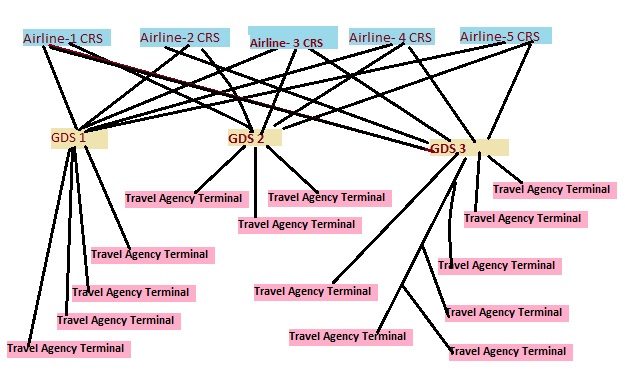 Global Distribution System (GDS) Network (Labelled Diagram) (Image: Sahirshah, CC BY-SA 3.0, via Wikimedia Commons)
(Search: "Amadeus GDS network labelled diagram")
Global Distribution System (GDS) Network (Labelled Diagram) (Image: Sahirshah, CC BY-SA 3.0, via Wikimedia Commons)
(Search: "Amadeus GDS network labelled diagram")
Based on the TU BHM syllabus for Front Office Operations I (BHM319), unit 5.
Discussion
Loading…