Food and Beverage Service Operation IIIUnit 48 min read
Cocktails: Types, Techniques, Pairing & Service
Unit 4 of Food and Beverage Service Operation III covers the art and science of cocktails—classifications, preparation techniques, glassware, garnishes, and pairing with food. Learn how to craft mixed drinks professionally, from classic cocktails to modern twists, with real-world applications in bars, hotels, and event
What is a Cocktail?
A cocktail is a mixed drink made by combining two or more ingredients, typically:
- A base spirit (e.g., vodka, gin, rum, whiskey)
- A mixer (e.g., soda, juice, tonic, or syrup)
- A modifier (e.g., bitters, liqueurs, or citrus)
- Garnish (e.g., lemon twist, mint sprig, or fruit skewer)
Cocktails differ from mixed drinks (which may include beer or wine) and highballs (long drinks with soda). They are served in specific glassware (e.g., martini, old-fashioned, margarita) and often follow standardized recipes (e.g., Mojito, Margarita, Manhattan).
Types of Cocktails
Cocktails are classified based on preparation methods, ingredients, and serving styles:
Key Differences:
| Type | Preparation | Glassware | Example |
|---|---|---|---|
| Stirred | Mixed with ice, then strained | Martini, Coupe | Martini, Manhattan |
| Built | Mixed directly in glass | Highball, Collins | Tom Collins |
| Shaken | Shaken with ice, then strained | Cocktail, Margarita | Mojito, Daiquiri |
| Layered | Dense liquids poured slowly | Rocks, Old Fashioned | Tequila Sunrise |
| Frozen | Blended with ice | Hurricane, Tiki | Piña Colada |
Bar Tools & Equipment for Cocktails
Proper tools ensure precision and efficiency. Key equipment includes:
Step-by-Step Cocktail Preparation
1. Stirred Cocktails (e.g., Martini, Manhattan)
Process:
- Measure ingredients (e.g., 2 oz gin, ½ oz dry vermouth).
- Add ice to a mixing glass.
- Stir gently for 20–30 seconds (no shaking).
- Strain into a chilled glass over a large ice cube.
- Garnish (e.g., olive, lemon twist).
Why Stir?
- Preserves clarity (no froth).
- Cools without dilution.
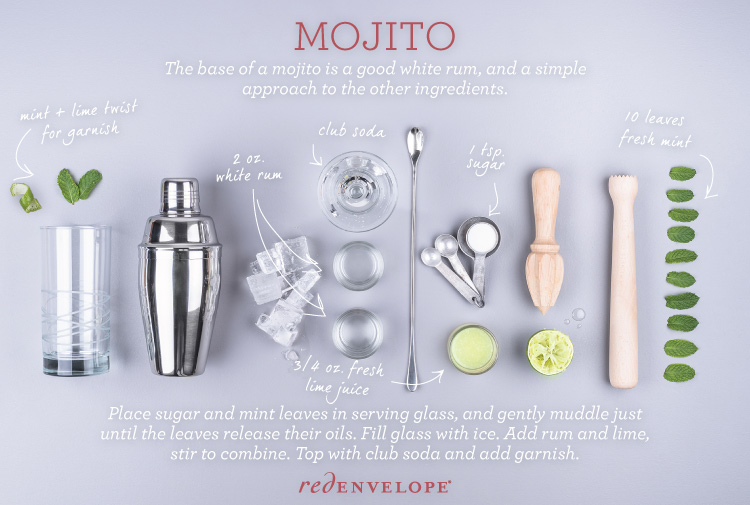
2. Shaken Cocktails (e.g., Mojito, Daiquiri)
Process:
- Muddle mint + sugar in a shaker.
- Add ice, then rum and lime juice.
- Shake hard for 10–15 seconds (chills and aerates).
- Strain into a glass with crushed ice.
- Top with soda and garnish.
Why Shake?
- Creates texture (e.g., froth in a Mojito).
- Chills faster than stirring.
 Shaken cocktail with fresh garnish (Image: Personal Creations, CC BY 2.0, via Wikimedia Commons)
3. Built Cocktails (e.g., Tom Collins, Gin Fizz)
Process:
- Fill glass with ice.
- Add spirits (e.g., gin, lemon juice).
- Top with soda and stir lightly.
- Garnish (e.g., lemon wheel).
Advantages:
- No shaking/straining needed.
- Quick for high-volume service.
Cocktail Pairing with Food
Pairing cocktails with food enhances flavor profiles. Key principles:
| Flavor Profile | Cocktail Pairing | Food Pairing |
|---|---|---|
| Sweet | Piña Colada, Margarita | Desserts, spicy dishes |
| Tart | Mojito, Aperol Spritz | Seafood, citrus-based salads |
| Herbal/Bitter | Martini, Negroni | Charcuterie, dark chocolate |
| Spicy | Paloma, Mezcal Margarita | Mexican cuisine, salsa |
Example:
- Smoky Mezcal Margarita pairs with grilled fish (smoke complements grilled flavors).
- Dry Martini pairs with steak (bold flavors cut through richness).
In the Real World
Khalti & eSewa (Nepal)
- How it uses this: Digital payment apps like Khalti and eSewa rely on quick, efficient service—similar to how a bartender must prepare cocktails swiftly during peak hours (e.g., New Year’s Eve). The layering technique (like in a Tequila Sunrise) mirrors how apps "stack" services (e.g., bill payment + top-up in one transaction).
Pathao (Food & Beverage Delivery)
- How it uses this: Pathao’s cocktail delivery service (e.g., Mojito, Aperol Spritz) requires precise measurements (like a jigger) and proper glassware to maintain quality. A shaken cocktail (e.g., Daiquiri) must be chilled quickly—just as Pathao’s cold chain ensures food arrives fresh.
Hotel Bars in Kathmandu (e.g., Yak & Yeti, Bhojan Griha)
- How it uses this: Upscale bars use gueridon service (flambé cocktails like B-52) for theatrical presentations, just as hotels pair wine with fine dining. A smoked Old Fashioned (using a cloche) creates a luxury experience, much like a multi-course meal service.
Worked Example: Crafting a Classic Mojito
Scenario: A guest orders a Mojito at a Pokhara hotel bar. Trace the steps:
- Muddle 6 mint leaves + 1 tsp sugar in a shaker.
- Add 2 oz white rum, ½ lime (juiced), and ice.
- Shake for 12–15 seconds until chilled.
- Strain into a highball glass with fresh ice.
- Top with 4 oz soda water.
- Garnish with mint sprig and lime wedge.
Why This Matters:
- Texture: Shaking aerates the drink, creating a refreshing fizz.
- Temperature: Ice ensures it’s served cold (4–6°C).
- Presentation: Garnish adds visual appeal (key for Instagram-worthy drinks).
Common Cocktail Mistakes & Fixes
| Mistake | Cause | Fix |
|---|---|---|
| Over-diluted drink | Too much ice or mixer | Use large ice cubes (melts slower). |
| Bitter taste | Over-shaken or wrong ratio | Stir instead for delicate cocktails. |
| Weak flavor | Old ingredients | Use fresh citrus/herbs. |
| Wrong glassware | Serving a Margarita in a rocks glass | Match glass to drink (e.g., Margarita = rimmed glass). |
Exam Tip
This unit is tested on:
- Definitions & Classifications (e.g., "Differentiate between stirred and shaken cocktails").
- Focus: Memorize glassware, tools, and preparation methods.
- Recipes & Pairing (e.g., "Pair a Negroni with food").
- Focus: Know 3–4 classic cocktails (Mojito, Martini, Margarita, Manhattan) and their flavor profiles.
- Service Techniques (e.g., "How would you serve a flambé cocktail?").
- Focus: Safety first (e.g., flambé requires proofing alcohol before lighting).
- Real-World Applications (e.g., "How does a hotel bar use gueridon service?").
- Focus: Link cocktail techniques to F&B service (e.g., speed, presentation, pairing).
High-Score Strategy:
- Draw glassware diagrams in exams (e.g., Martini vs. Old Fashioned).
- Use tables to compare cocktails (e.g., stirred vs. shaken).
- Describe a full preparation process (e.g., "How to make a perfect Margarita") with tools, steps, and garnish.
Quick Revision Checklist
✅ Can you name 4 types of cocktails and their preparation methods? ✅ Do you know the glassware for a Martini vs. a Mojito? ✅ Can you pair 2 cocktails with food and explain why? ✅ Are you familiar with bar tools (jigger, muddler, strainer)? ✅ Can you describe how to flambé a cocktail safely?
Based on the TU BHM syllabus for Food and Beverage Service Operation III (BHM313), unit 4.
Discussion
Loading…