Front Office Operations IIUnit 913 min read
Guest Services & Complaint Handling: Procedures, Security, Special Needs
Unit 9 of Front Office Operations II: explores guest services, complaint handling, security protocols, special requests, and safety measures in hotels, with real-world applications in Nepali hospitality like Daraz’s guest support and Pathao’s rider safety.
TAKEAWAYS:
- Guest services include check-in/out assistance, concierge services, and special requests (e.g., room upgrades, dietary needs) to enhance satisfaction.
- Complaint handling follows a structured process: listen, acknowledge, investigate, resolve, and follow-up to maintain trust.
- Security measures range from physical (CCTV, locks) to digital (PMS access controls) to protect guests, staff, and property.
- Special services like childcare, pet accommodations, and medical assistance cater to diverse guest needs.
- Safety protocols for vulnerable groups (e.g., female guests, elderly) include escort services, secure transportation, and emergency contacts.
- Complaint resolution is critical for reputation management and repeat business—studies show 95% of unhappy guests return if issues are resolved quickly.
1. Guest Services: Beyond the Basics
Guest services are the frontline interactions that shape a guest’s experience. Unlike transactional tasks (e.g., check-in), these services anticipate needs and create memorable stays.
Key Components of Guest Services
flowchart TD
    A["Guest Arrival"] --> B["Check-in Assistance"]
    B --> C["Concierge Services"]
    C --> D["Special Requests"]
    D --> E["Room Service & Amenities"]
    E --> F["Departure Coordination"]
F --> G["Feedback Collection"]- Check-in/out assistance: Greeting, luggage handling, and orientation.
- Concierge services: Booking tours, restaurants, or events (e.g., arranging a Kathmandu Valley tour for a guest).
- Special requests: Room upgrades, early check-ins, or dietary accommodations (e.g., vegan meals for guests).
- Room service & amenities: Ensuring supplies (e.g., toiletries, extra pillows) are available.
- Departure coordination: Transport arrangements, baggage assistance, and farewell gestures.
Worked Example: Daraz’s Guest Support Daraz (Nepal’s largest e-commerce platform) uses live chat and call centers to handle customer complaints about delayed orders or damaged items. Their structured complaint resolution (listen → escalate → compensate) mirrors hotel front desk protocols. For instance:
- A guest orders a laptop but receives it damaged.
- The Daraz support agent acknowledges the issue, investigates the shipping logs, arranges a replacement or refund, and follows up via email/SMS.
Concierge Services: Elevating the Stay
Concierge services are proactive hospitality—helping guests explore beyond the hotel. In Nepal, this includes:
- Tourist assistance: Booking treks (e.g., Everest Base Camp) or cultural tours (e.g., Kathmandu’s Durbar Square).
- Local recommendations: Restaurants (e.g., Bhojan Griha for Nepali cuisine), events (e.g., Dashain festivals), or hidden gems (e.g., hidden cafés in Thamel).
- Emergency contacts: Providing police, ambulance, or embassy numbers.
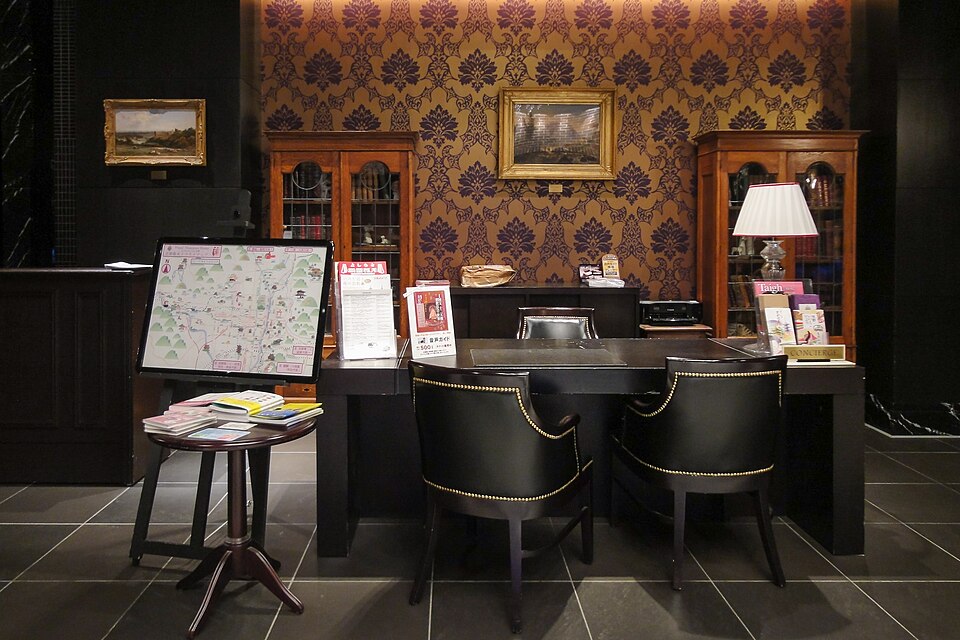 A well-organized concierge desk with maps, brochures, and a computer for bookings. (Image: J o, CC BY-SA 4.0, via Wikimedia Commons)
2. Complaint Handling: The Art of Recovery
Complaints are opportunities to turn dissatisfaction into loyalty. Hotels use a structured approach:
flowchart TD
    A["Guest Complaint"] --> B["Listen Actively"]
    B --> C["Acknowledge & Apologize"]
    C --> D["Investigate Root Cause"]
    D --> D1["Resolve Promptly"]
    D --> D2["Offer Compensation if Needed"]
    D2 --> E["Follow-Up"]
    E --> F["Feedback Collection"]
Steps in Complaint Handling
| Step | Action | Example |
|---|---|---|
| Listen | Let the guest vent without interruption. | "I understand this is frustrating—let me take notes." |
| Acknowledge | Validate the issue (even if it’s not your fault). | "I apologize for the inconvenience." |
| Investigate | Check facts (e.g., room condition, service delay). | Call housekeeping to verify a dirty room. |
| Resolve | Offer a solution (e.g., room change, discount). | "We’ll upgrade your room and waive tonight’s charges." |
| Follow-Up | Ensure the issue is resolved and check back later. | "Can I call you tomorrow to confirm everything is fixed?" |
| Feedback | Collect input for improvement. | "Would you like to share this on our review page?" |
Worked Example: Pathao’s Rider Complaint System Pathao (Nepal’s ride-hailing app) handles driver complaints (e.g., unfair ratings) via:
- Immediate response: The support team flags the complaint for review.
- Investigation: Checks ride logs, GPS data, and passenger feedback.
- Resolution: Adjusts ratings or compensates if justified.
- Follow-up: Sends a confirmation message to both parties.
Key Difference from Hotels:
- Pathao uses data-driven resolution (GPS, app logs).
- Hotels rely on human judgment (front desk staff observations).
3. Security Measures: Protecting Guests and Property
Hotels implement layered security to prevent theft, accidents, and emergencies.
Physical Security
flowchart TD
    A["Guest Arrival"] --> B["Key Card Access & Entry Logs"]
    B --> C["CCTV Monitoring: Lobby & High-Risk Areas"]
    C --> D["Fire Safety: Regular Drills & Equipment Checks"]
    D --> E["Emergency Exits: Clearly Marked & Accessible"]
    E --> F["Safe Storage: Locked Cabinets for Valuables"]
F --> G["Digital Security: Guest Wi-Fi with Password & Device Tracking"]- Key card access: Only authorized staff/guests enter rooms (e.g., electronic locks).
- CCTV: Monitors lobbies, hallways, and parking (e.g., NTC’s surveillance in airports).
- Fire safety: Smoke detectors, fire extinguishers, and evacuation plans.
- Safe storage: Locked safes for valuables (e.g., hotel safes in Kathmandu’s luxury hotels).
Digital Security
- PMS access controls: Only front desk staff can modify reservations.
- Guest data protection: GDPR-compliant storage of personal info (e.g., Nepal’s Data Protection Regulation).
- Fraud prevention: Verifying credit cards (e.g., AVS checks for eSewa/Khalti transactions).
Worked Example: Ncell’s Security Measures Ncell (Nepal’s telecom) uses:
- Biometric authentication (fingerprint for SIM activation).
- Fraud detection algorithms to block suspicious transactions.
- 24/7 customer support for lost/stolen SIMs.
4. Special Services: Catering to Diverse Needs
Hotels provide tailored services for guests with unique requirements.
| Service Type | Description | Example |
|---|---|---|
| Childcare | Baby-sitting, cribs, and children’s menus. | "We offer a play area and a babysitter for ₹1,000/night." |
| Pet accommodations | Pet-friendly rooms, walk services, and grooming. | "Our ‘Paws & Stay’ program includes a pet walker." |
| Medical assistance | First aid kits, doctor referrals, or emergency contacts. | "We have a 24/7 doctor on call for guests." |
| Accessibility | Wheelchair-accessible rooms, Braille signage. | "Our ‘Accessible Rooms’ have ramps and elevated toilet seats." |
| Wedding services | Venue bookings, catering, and decor assistance. | "We coordinate with local florists for your wedding." |
5. Safety Protocols for Vulnerable Guests
Hotels must prioritize safety for:
- Female guests (e.g., solo travelers).
- Elderly or disabled guests.
- Minors.
Measures for Female Guests
flowchart TD
    A["Female Guest Arrival"] --> B["Priority Check-in with Female Staff"]
    B --> C["Secure Transportation: Pre-booked Safe Vehicles"]
    C --> D["Escort Services: Staff-Accompanied Tours"]
    D --> E["Emergency Contacts: Direct Hotline & 24/7 Support"]
    E --> F["Safe Room Assignments: Ground Floor or High-Security"]
F --> G["Safety Briefing: Local Threats & Precautions"]- Escort services: Staff accompany guests to/from rooms or transport.
- Secure transportation: Partnering with female-only taxi services (e.g., Pathao’s women drivers).
- Female staff: Assigning a female receptionist or concierge.
- Emergency contacts: Pre-loaded police/ambulance numbers in the room.
Worked Example: Kathmandu’s Female Safety Initiatives
- Thamel Watch: A volunteer group patrolling tourist-heavy areas.
- Hotel partnerships: Luxury hotels provide 24/7 female security guards.
- Awareness programs: Training staff on gender-sensitive communication.
6. Handling Scanty Baggage
Scanty baggage (lost, damaged, or insufficient luggage) requires empathy and efficiency.
Procedure
- Assess the situation: Determine if the baggage is lost, damaged, or never arrived.
- Document evidence: Take photos, check receipts, or note flight details.
- Escalate: Contact airlines (e.g., Nepal Airlines) or shipping companies.
- Offer alternatives: Provide toiletries, clothes, or a loaner item.
- Follow up: Ensure resolution before departure.
Worked Example: A Guest’s Lost Luggage
- Scenario: A guest’s suitcase is misplaced by Nepal Airlines.
- Hotel’s role:
- Provides toiletries and a change of clothes.
- Tracks the luggage via airline’s portal.
- Offers a discount for the inconvenience.
- Escorts the guest to the airport for updates.
7. Guest Cycle: First and Third Stages
The Guest Cycle has five stages:
- Pre-arrival (reservation).
- Arrival (check-in).
- Stay (services, complaints).
- Departure (check-out, feedback).
- Post-stay (follow-up, loyalty programs).
First Stage (Pre-arrival):
- Reservation confirmation and pre-check-in services (e.g., sending room details).
Third Stage (Stay):
- Guest services, complaints, and special requests (this unit’s focus).
In the Real World
Daraz’s Complaint Resolution
- Idea used: Structured complaint handling (listen → investigate → resolve).
- How: Daraz’s customer support team uses ticketing systems (like Zendesk) to track complaints, similar to hotel PMS systems. For example, if a guest’s order is delayed, Daraz apologizes, offers a discount, and follows up—mirroring how hotels handle service failures.
Pathao’s Rider Safety
- Idea used: Security protocols for vulnerable groups (female riders).
- How: Pathao provides female-only ride options and 24/7 emergency contacts for riders. Hotels apply similar logic by offering female security escorts for solo female guests.
Ncell’s Fraud Prevention
- Idea used: Digital security measures (biometrics, fraud detection).
- How: Ncell uses AI to detect fraudulent transactions, just as hotels use PMS alerts for unauthorized room access.
Exam Tip
This unit is highly practical—exams test application, not memorization. Focus on:
- Processes: Describe step-by-step complaint handling or scanty baggage procedures (use bullet points).
- Real-world links: Connect ideas to Nepali hospitality (e.g., Daraz, Pathao) or global examples (Google’s customer support).
- Security measures: List physical and digital protections with one example each.
- Special services: Mention at least two (e.g., childcare, pet accommodations) and explain their importance.
- Guest cycle: Briefly define the first and third stages (pre-arrival and stay) with one action each.
Common Pitfalls:
- Ignoring follow-up: Complaint handling isn’t complete without checking back.
- Overlooking security: Always include both physical (CCTV) and digital (PMS access) measures.
- Vague examples: Use specific Nepali cases (e.g., Pathao, Daraz) to stand out.
Sample Answer Structure for 15 Marks:
- Define guest services (2 marks).
- Explain complaint handling steps with an example (5 marks).
- List 3 security measures (3 marks).
- Describe special services for female guests (3 marks).
- Relate to real-world Nepali examples (2 marks).
Final Tip: Practice role-playing a complaint scenario (e.g., a guest’s dirty room) to internalize the process. Use key phrases like "I understand your concern" and "How can we make this right?" to sound professional.
Based on the TU BHM syllabus for Front Office Operations II (BHM320), unit 9.
Discussion
Loading…