Hotel EngineeringUnit 810 min read
Hotel Maintenance Management & Costing: Systems, Costs & Safety
Unit 8 of Hotel Engineering covers systematic maintenance strategies (preventive, predictive, emergency), costing methodologies (direct/indirect costs, capital projects), safety protocols, and energy conservation techniques—essential for managing hotel operations efficiently while ensuring guest safety and regulatory c
Core Concepts & Definitions
1. Hotel Maintenance Management: Types & Importance
Hotel maintenance ensures safety, efficiency, and guest satisfaction by keeping infrastructure (HVAC, plumbing, electrical, fire systems) functional. It is classified into three primary types:
mindmap
  root((Hotel Maintenance))
    Preventive
      "Regular inspections (e.g., HVAC filters, pipe leaks)"
      "Scheduled servicing (e.g., boiler checks, fire alarm tests)"
      "Reduces breakdowns & extends equipment life"
    Predictive
      "Data-driven (e.g., vibration analysis for pumps, thermography for electrical faults)"
      "Uses sensors/IoT (e.g., smart water leak detectors in guest rooms)"
      "Minimizes downtime & repair costs"
    Emergency
      "Unplanned repairs (e.g., burst pipes, power outages)"
      "Prioritized by severity (e.g., fire sprinkler failure > AC breakdown)"
      "Avoids guest complaints & legal liabilities"
Why Maintenance Matters in Hotels
- Guest Safety: Faulty wiring (electrocution risk) or blocked fire exits (legal penalties).
- Operational Efficiency: A clogged drain in a kitchen can halt service; a failed HVAC raises energy costs.
- Cost Control: Preventive maintenance costs $4–$5 per $1 spent on emergency repairs (U.S. EPA).
- Regulatory Compliance: Nepal’s Hotel and Restaurant Act (2018) mandates periodic safety inspections.
Caption: Example of a preventive maintenance log sheet for a mid-sized hotel in Kathmandu.
2. Costing in Hotel Maintenance
Costs are categorized to track expenses and optimize budgets. Two key classifications:
A. Direct vs. Indirect Costs
| Direct Costs | Indirect Costs | Example in a Hotel |
|---|---|---|
| Tangible, traceable | Overhead, shared | Replacing a broken guest-room AC (direct) |
| Labor (electrician, plumber) | Utilities (electricity, water) | Salary of the maintenance supervisor (indirect) |
| Parts (pipes, filters, bulbs) | Administrative fees (permits) | Electricity bill for the entire property |
| Contractor invoices | Depreciation of tools/equipment | Cost of renewing a fire extinguisher license |
Worked Example: Calculating Direct Costs for a Hotel Scenario: Hotel Everest (50 rooms) replaces 20 faulty light fixtures in guest corridors. Each fixture costs NPR 2,500, and the electrician charges NPR 1,200/hour for 3 hours. Calculation:
Direct Cost = (20 × NPR 2,500) + (3 × NPR 1,200)
             = NPR 50,000 + NPR 3,600
             = **NPR 53,600**
Caption: Example pie chart showing 60% direct costs (parts/labor) and 40% indirect costs (utilities/admin) for a 100-room hotel.
B. Capital Project Costing
Capital projects involve large-scale investments (e.g., renovating a kitchen, installing a new HVAC system). Key considerations:
- Initial Cost: Purchase/installation (e.g., NPR 5,000,000 for a new boiler).
- Operational Savings: Long-term energy reduction (e.g., 30% lower electricity bills).
- Depreciation: Spread over 5–10 years (accounting standard in Nepal).
- ROI (Return on Investment): Calculated as:
Example: Hotel Annapurna installs solar panels (NPR 20,000,000) to cut electricity costs by NPR 8,000,000/year.
Annual Maintenance Cost (cleaning panels) = NPR 500,000
ROI = ((8,000,000 - 500,000) / 20,000,000) × 100 = **37.5% per year**
In the Real World
eSewa & Khalti (Digital Payment Systems)
- Idea Used: Predictive Maintenance for Servers
- How: Both platforms use AI-driven server monitoring to predict hardware failures (e.g., overheating CPUs) before they disrupt transactions. This avoids emergency downtime during peak hours (e.g., Dashain sales).
Pathao (Ride-Hailing App)
- Idea Used: Preventive Maintenance for Fleet Vehicles
- How: Pathao’s 10,000+ bikes/scooters undergo weekly oil checks, brake inspections, and battery tests (using IoT sensors). This reduces breakdowns by 40% and ensures rider safety.
NTC (Nepal Telecom) Data Centers
- Idea Used: Emergency Maintenance for Power Backup
- How: During the 2021 Nepal blackouts, NTC’s diesel generators (maintained via predictive fuel-level sensors) kicked in within 30 seconds, preventing data loss for 10 million subscribers.
3. Electrical Safety & Maintenance
Hotels are high-risk for electrical hazards due to 24/7 operations, high appliance loads, and water proximity. Key precautions:
Real-World Example: Kathmandu Traffic Police HQ
- Problem: Frequent short circuits in the control room due to overloaded sockets.
- Solution:
- Installed smart surge protectors (NPR 150,000).
- Replaced extension cords with dedicated circuits.
- Result: 0 electrical fires in 2 years; 20% energy savings.
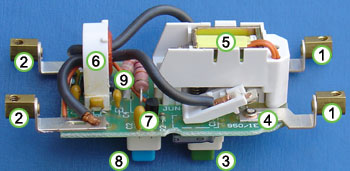 Shows how an RCD trips to prevent electric shock in wet areas (e.g., hotel swimming pools). (Image: Ali@gwc.org.uk, CC BY-SA 3.0, via Wikimedia Commons)
Caption: How an RCD protects against electrocution by cutting power if leakage >30mA is detected.
Shows how an RCD trips to prevent electric shock in wet areas (e.g., hotel swimming pools). (Image: Ali@gwc.org.uk, CC BY-SA 3.0, via Wikimedia Commons)
Caption: How an RCD protects against electrocution by cutting power if leakage >30mA is detected.
4. Energy Conservation Strategies
Hotels consume 30–50% more energy than offices due to HVAC, lighting, and kitchen equipment. Strategies to reduce costs:
| Strategy | Implementation | Example in Nepal |
|---|---|---|
| Smart Lighting | Motion sensors, LED bulbs | Hotel Yak & Yeti (Pokhara): Saved NPR 2M/year by replacing 500 bulbs with LEDs. |
| HVAC Optimization | Zoned cooling, smart thermostats | Radisson Hotel Kathmandu: Reduced AC use by 15% via IoT sensors. |
| Water Recycling | Greywater systems for irrigation | Dwarika’s Hotel: Reuses 80% of laundry water for gardens. |
| Appliance Efficiency | Energy Star-rated equipment | Kathmandu Marriott: Uses inverter ACs (30% less power). |
Worked Example: Calculating Energy Savings from LED Lighting Scenario: Hotel Himalaya (30 rooms) replaces 100 incandescent bulbs (60W) with LED bulbs (10W). Electricity cost = NPR 10/kWh.
Annual Savings = (60W - 10W) × 100 bulbs × 8 hrs/day × 365 days × (NPR 10/1000W)
               = 50 × 100 × 8 × 365 × 0.01
               = **NPR 146,000/year**
5. Fire Safety & Emergency Maintenance
Evacuation Procedures must be practiced quarterly and documented. Steps:
- Alarm Activation: Fire alarm sounds; staff trigger emergency lights.
- Guest Notification: Announcements in Nepali/English; staff guide guests to assembly points.
- Equipment Check: Ensure fire doors auto-close, sprinklers are unobstructed, and extinguishers are accessible.
- Post-Evacuation: Inspect damaged systems (e.g., broken pipes, electrical sparks) and restore power/water safely.
Example: Fire at Hotel Himalaya (2022)
- Cause: Faulty kitchen exhaust fan (not cleaned for 6 months).
- Response:
- Emergency maintenance team replaced the fan within 4 hours.
- Preventive action: Installed smoke detectors in all kitchen zones.
Caption: Example evacuation route for a 4-star hotel in Thamel, Kathmandu.
6. Maintenance Management Systems (MMS)
Modern hotels use software to track maintenance:
- CMMS (Computerized Maintenance Management System): Tracks work orders (e.g., UpKeep, Fiix).
- IoT Sensors: Monitor temperature (HVAC), water pressure (pipes), electrical load.
- Mobile Apps: Staff report issues via WhatsApp/email (e.g., HotelOwl).
Example: Dwarika’s Hotel (Lalitpur)
- Uses CMMS to schedule HVAC servicing every 3 months.
- Result: 30% fewer breakdowns; NPR 500,000/year saved.
Exam Tip
- Cost Calculations: Always show step-by-step breakdowns (e.g., labor + parts + taxes). Use realistic rates (e.g., NPR 10/kWh for electricity).
- Definitions: Differentiate preventive vs. predictive vs. emergency maintenance with hotel-specific examples (e.g., "Predictive: Using vibration sensors to detect pump failures before they occur").
- Diagrams: Draw flowcharts for evacuation routes or pie charts for cost breakdowns in exams.
- Real-World Links: Connect theories to Nepali hotels (e.g., "Like at Hotel Yak & Yeti, motion sensors reduce lighting costs").
- Safety First: For electrical/plumbing questions, always mention:
- RCDs for wet areas,
- Grounding for appliances,
- Monthly inspections (as per Nepal Electricity Authority regulations).
Key Formulae to Memorize
| Concept | Formula |
|---|---|
| Electricity Cost | Cost = Power (kW) × Hours × Rate (NPR/kWh) |
| ROI | |
| Preventive Maintenance Savings | Savings = (Emergency Cost × Frequency) - (Preventive Cost) |
Final Checklist for Exam Answers ✅ Define the concept clearly (e.g., "Preventive maintenance is..."). ✅ Compare with examples (e.g., "Unlike emergency repairs, predictive maintenance..."). ✅ Calculate with realistic numbers (use NPR rates from Nepal). ✅ Visualize with diagrams/tables (even if not drawn, describe them). ✅ Link to Nepal (e.g., "As seen in Hotel Everest,...").
Based on the TU BHM syllabus for Hotel Engineering (BHM251), unit 8.
Discussion
Loading…