Hotel EngineeringUnit 711 min read
Kitchen & Restaurant Safety Systems: Fire, Electrical & Equipment
Unit 7 of Hotel Engineering: Covers kitchen and restaurant safety systems, including fire safety, electrical safety, protective devices, evacuation procedures, and energy conservation strategies for hotels.
TAKEAWAYS:
- Learn how to classify kitchen fires and select the right extinguisher (Class A, B, C, or K).
- Understand electrical safety precautions for handling appliances and wiring in high-risk environments.
- Identify major protective devices (e.g., fire alarms, smoke detectors, GFCIs) and their roles in preventing accidents.
- Master evacuation procedures for fire emergencies, including escape routes and assembly points.
- Compare energy conservation strategies (e.g., LED lighting, efficient appliances) and their cost savings.
- Apply worked examples like calculating electricity costs for kitchen appliances or designing evacuation routes.
1. Introduction to Kitchen and Restaurant Safety Systems
Hotels and restaurants are high-risk environments due to open flames, electrical appliances, and high foot traffic. Safety systems are designed to prevent accidents, minimize damage, and ensure quick emergency response. These systems include:
- Fire safety systems (extinguishers, alarms, suppression systems)
- Electrical safety systems (GFCIs, circuit breakers, proper wiring)
- Protective devices (smoke detectors, fire curtains, emergency lighting)
- Evacuation procedures (escape routes, assembly points, drills)
Why is this critical? A single fire or electrical fault can lead to loss of life, property damage, and legal liabilities. Hotels must comply with Nepal’s Fire Safety Regulations (2075) and international standards like NFPA 96 (Commercial Cooking Equipment).
2. Types of Kitchen Fires and Extinguishing Agents
Kitchen fires are classified based on the fuel source. The wrong extinguisher can worsen the fire—e.g., using water on a grease fire causes explosions.
Classification of Fires
| Class | Fuel Type | Extinguisher Agent | Example in Hotel Kitchen |
|---|---|---|---|
| A | Ordinary combustibles | Water, Class A foam | Paper, wood, trash fires |
| B | Flammable liquids/gases | CO₂, Class B foam | Grease fires, oil spills |
| C | Electrical equipment | CO₂, dry powder | Faulty toasters, fryers |
| K | Cooking oils/fats | Wet chemical (Class K) | Deep fryers, stovetop grease fires |
How to Use a Fire Extinguisher (PASS Method)
flowchart TD
    P["Pull"] --> P1["Pull the pin to break the seal"]
    A["Aim"] --> A1["Aim at the base of the fire"]
    S["Squeeze"] --> S1["Squeeze the handle to discharge"]
    S --> S2["Sweep side to side"]
Worked Example: Grease Fire in a Hotel Kitchen
- Scenario: A deep fryer catches fire in a restaurant.
- Action:
- Do NOT use water (it spreads the fire).
- Use a Class K extinguisher (wet chemical).
- Cover the fryer with a metal lid to cut off oxygen.
- Evacuate staff and call emergency services.
3. Electrical Safety in Kitchens and Restaurants
Kitchens are high-risk zones for electrical fires due to:
- Overloaded circuits
- Faulty wiring
- Moisture exposure
- Poorly maintained appliances
Common Electrical Hazards
- Overloaded outlets (too many appliances plugged in)
- Damaged cords (cheap or worn-out wiring)
- Improper grounding (increases shock risk)
- Appliance misuse (e.g., running a fridge without a surge protector)
Electrical Safety Precautions
| Precaution | Implementation |
|---|---|
| Use GFCIs | Ground Fault Circuit Interrupters cut power if leakage is detected. |
| Regular inspections | Check wiring, outlets, and appliances monthly. |
| Surge protectors | Protect against power spikes (e.g., during storms). |
| Proper labeling | Mark high-voltage areas (e.g., deep fryers). |
| Training staff | Teach employees to unplug appliances when not in use. |
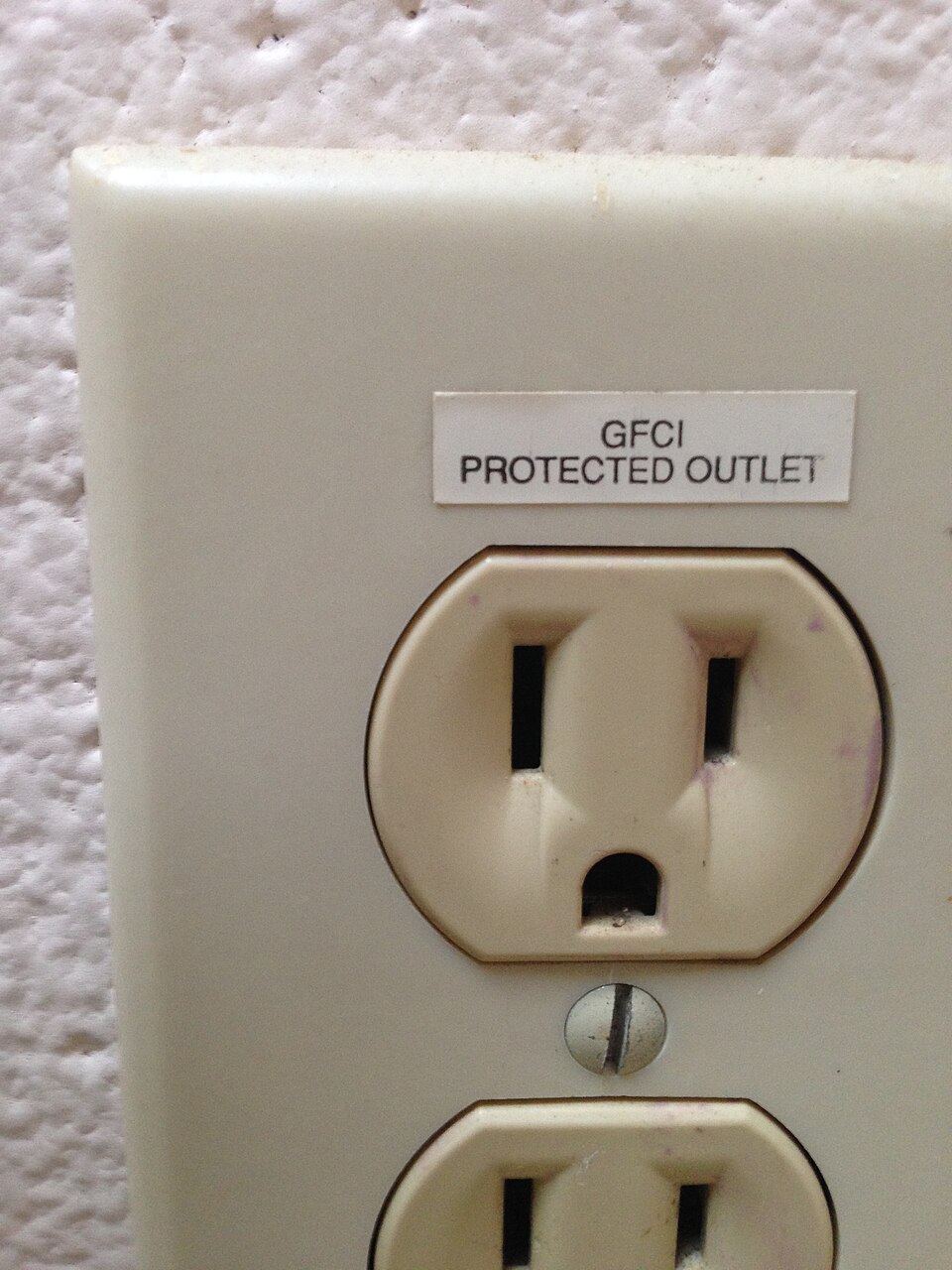 A ground fault circuit interrupter (GFCI) outlet, showing test and reset buttons. (Image: dankeck, CC0, via Wikimedia Commons)
Worked Example: Calculating Electricity Cost for Kitchen Appliances
Scenario: A hotel uses:
- 10 water pumps (2HP each), running 45 min/day.
- 25 water heaters (3.5 kW each), running 1 hr 15 min/day.
Step 1: Convert HP to kW
- 1 HP ≈ 0.746 kW
- 2HP pump = 2 × 0.746 = 1.492 kW
Step 2: Calculate daily energy consumption
- Pumps:
- Energy per pump/day = 1.492 kW × (45/60) hr = 1.074 kWh
- Total for 10 pumps = 10 × 1.074 = 10.74 kWh/day
- Water heaters:
- Energy per heater/day = 3.5 kW × 1.25 hr = 4.375 kWh
- Total for 25 heaters = 25 × 4.375 = 109.375 kWh/day
Step 3: Calculate monthly cost (assuming 30 days, ₹10/kWh)
- Total monthly energy = (10.74 + 109.375) × 30 = 3,699.45 kWh
- Monthly cost = 3,699.45 × ₹10 = ₹36,994.50
Exam Tip: Always convert units (HP → kW, hours → decimal hours) and multiply by 30 days for monthly costs.
4. Protective Devices in Kitchens and Restaurants
These devices detect hazards early and prevent accidents.
A. Fire Detection and Suppression Systems
| Device | Function | Example in Hotel |
|---|---|---|
| Smoke detectors | Detect smoke and trigger alarms. | Installed near fryers and ovens. |
| Heat detectors | Trigger alarms at high temperatures (e.g., in exhaust hoods). | Used in commercial kitchens. |
| Fire suppression | Automatically extinguishes fires (e.g., CO₂ or wet chemical systems). | Installed above deep fryers. |
| Fire curtains | Contain smoke/fire in one area. | Used in multi-level restaurants. |
B. Emergency Lighting and Exit Signs
- Emergency lights (battery-backed) illuminate escape routes during power outages.
- Exit signs (illuminated) must be visible from all areas.
- Evacuation routes should be unobstructed and marked with green signs.
Mermaid Diagram: Evacuation Route Design
flowchart TD
    A["Main Kitchen"] --> B["Exit Door 1"]
    A --> C["Exit Door 2"]
    B --> D["Assembly Point (Outdoor)"]
    C --> D
    D --> E["Emergency Contact (999)"]
5. Evacuation Procedures During Fire Emergencies
Hotels must have a clear evacuation plan to minimize panic and ensure safety.
Step-by-Step Evacuation Procedure
- Sound the alarm (fire bells, PA system).
- Staff activates fire suppression (if safe).
- Guests follow marked escape routes (no elevators—use stairs).
- Assembly point (designated outdoor area, away from fire risk).
- Headcount (staff checks if everyone is accounted for).
- Call emergency services (fire brigade, police).
Worked Example: Evacuating a 5-Star Hotel During a Fire
- Scenario: A fire breaks out in the basement kitchen of a 500-room hotel.
- Actions:
- Fire alarm triggers, staff don fire-resistant uniforms.
- Guests are directed to nearest exits (pre-marked on floors).
- Firefighters enter via stairwells (elevators are locked).
- Assembly point: A cleared area 100m away from the hotel.
- Hotel manager confirms all guests are evacuated before firefighters enter.
Mermaid Diagram: Fire Emergency Response Flow
sequenceDiagram
    participant Staff
    participant Guest
    participant FireBrigade
    Staff->>Guest: "Sound alarm & evacuate!"
    Guest->>Staff: Follow escape routes
    Staff->>FireBrigade: Call emergency services
    FireBrigade->>Staff: Confirm safe entry
6. Energy Conservation Strategies in Hotels
Hotels waste massive amounts of energy in kitchens and restaurants. Conservation reduces costs and carbon footprint.
Key Strategies
| Strategy | Implementation | Cost Savings |
|---|---|---|
| LED lighting | Replace incandescent bulbs with LEDs in kitchens and dining areas. | 60-70% energy savings per bulb. |
| Efficient appliances | Use Energy Star-rated refrigerators, ovens, and fryers. | 20-30% lower energy use. |
| Smart thermostats | Automate HVAC to reduce heating/cooling when not in use. | 10-15% energy reduction. |
| Waste heat recovery | Capture heat from exhaust fans to preheat water. | Reduces water heating costs by 30%. |
| Staff training | Teach employees to turn off equipment when not in use. | Immediate operational savings. |
Worked Example: Daraz’s Kitchen Energy Efficiency
- Scenario: Daraz’s logistics centers use automated sorting systems with LED lighting and motion sensors.
- Results:
- 40% reduction in electricity bills in warehouses.
- Lower carbon emissions (equivalent to planting 500 trees/year).
7. Real-World Applications
In the Real World
eSewa’s Payment Terminals (Electrical Safety)
- Idea: Uses GFCIs to prevent electrical shocks during transactions.
- Why? eSewa terminals are often placed in high-moisture areas (e.g., street vendors), making GFCIs essential.
Pathao’s Ride-Sharing App (Evacuation Planning)
- Idea: Uses real-time traffic data to optimize evacuation routes during emergencies.
- How? In case of a fire in a hotel, Pathao’s drivers can redirect traffic to avoid congestion near exits.
Nepal’s Fire Safety in NTC Offices (Protective Devices)
- Idea: Installs smoke detectors and fire curtains in server rooms and break rooms.
- Why? Paperwork and electrical equipment make offices high-risk zones.
Exam Tips for Unit 7
For calculations (electricity cost):
- Always convert HP to kW (1 HP = 0.746 kW).
- Convert minutes to hours (e.g., 45 min = 0.75 hr).
- Multiply by 30 days for monthly costs.
For fire extinguishers:
- Never use water on grease fires (Class K extinguisher only).
- CO₂ is for electrical fires (Class C).
For evacuation procedures:
- Escape routes must be unobstructed.
- Assembly points should be marked and accessible.
For protective devices:
- GFCIs prevent shocks, smoke detectors detect fires early.
- Fire curtains contain smoke in multi-level buildings.
For energy conservation:
- LED lighting and efficient appliances are low-hanging fruit for savings.
- Staff training is cheap but highly effective.
Final Note: This unit is highly practical. Expect calculations, diagrams, and scenario-based questions. Focus on:
- Fire classification and extinguishers.
- Electrical safety precautions.
- Evacuation procedures.
- Energy-saving strategies.
Good luck! 🚀
Based on the TU BHM syllabus for Hotel Engineering (BHM251), unit 7.
Discussion
Loading…