Hotel EngineeringUnit 38 min read
Hotel Plumbing & Water Treatment Systems
Unit 3 of Hotel Engineering: Covers water sources, plumbing systems, pipe types, water treatment methods, and maintenance strategies for hotels, with real-world applications in water conservation and safety.
TAKEAWAYS:
- Hotels rely on three water sources (groundwater, surface water, rainwater) and five pipe systems (supply, drainage, vent, stormwater, and sewer).
- Water treatment removes contaminants via physical (filtration), chemical (chlorination), and biological (UV/ozone) methods.
- PH balance (6.5–8.5) is critical for plumbing and guest safety; hard water causes scale buildup.
- Energy-efficient pumps and greywater recycling reduce operational costs by 20–30%.
- Leak detection systems and regular maintenance prevent water waste and structural damage.
- Nepal’s NTC and Ncell use similar water treatment for telecom towers; Daraz applies plumbing principles in warehouse logistics.
1. Introduction to Hotel Plumbing Systems
Hotels require clean, pressurized water for guests, staff, and operations. Plumbing systems distribute water and remove waste efficiently while minimizing leaks and blockages.
1.1 Sources of Water in Hotels
Hotels source water from three primary methods:
graph TD
    A["Water Sources"] --> B["Groundwater"]
    A --> C["Surface Water"]
    A --> D["Rainwater"]
    B --> E["Wells/Bores"]
    C --> F["Rivers/Lakes"]
    C --> G["Treated Municipal Supply"]
D --> H["Roof Catchment Systems"]Groundwater: Extracted via boreholes or wells (common in rural hotels).
Surface Water: Treated municipal supply (most urban hotels) or raw river/lake water (rare, due to contamination risks).
Rainwater Harvesting: Used in eco-friendly hotels (e.g., The Mandala in Pokhara).
Worked Example: A 3-star hotel in Kathmandu uses 50% municipal water (PH 7.2) and 30% borehole water (PH 6.8). The remaining 20% comes from rainwater harvesting, reducing water bills by 15% annually.
1.2 Types of Pipe Systems in Hotels
Hotels use five pipe systems, each serving a distinct function:
| System | Function | Material | Example Use in Hotels |
|---|---|---|---|
| Supply Pipes | Distributes clean water | CPVC, PEX, Copper | Guest rooms, kitchens, restrooms |
| Drainage Pipes | Removes wastewater | PVC, Cast Iron | Sinks, showers, toilets |
| Vent Pipes | Prevents sewer gas buildup | PVC | Connects to roof for airflow |
| Stormwater | Carries rainwater runoff | Galvanized Steel | Rooftop drainage to prevent flooding |
| Sewer Pipes | Transports wastewater to treatment | PVC, HDPE | Connects to municipal sewer or septic tank |
Visual:
graph TD
    A["Hotel Plumbing Layout"] --> B["Water Supply"]
    A --> C["Drainage System"]
    A --> D["Ventilation"]
    A --> E["Stormwater Drainage"]
    A --> F["Sewer Connection"]
    B --> G["Pressure Tank"]
    C --> H["Soap Traps"]
    D --> I["Roof Vent Stack"]
    E --> J["Gutter System"]
    F --> K["Septic Tank (if off-grid)"]
Exam Tip: Always label supply vs. drainage pipes in diagrams—examiners check for this.
2. Water Treatment in Hotels
Hotels must treat water to remove bacteria, chemicals, and sediments before use.
2.1 Water Quality Parameters
Key metrics for safe water:
| Parameter | Acceptable Range | Risk if Exceeded |
|---|---|---|
| PH | 6.5–8.5 | Corrosion (low PH) or scaling (high PH) |
| Hardness | <120 mg/L (CaCO₃) | Scale buildup in pipes/kettles |
| Bacteria | <1 CFU/mL | Waterborne diseases (e.g., cholera) |
| Chlorine | 0.2–1.0 mg/L | Disinfection but toxic at high levels |
Worked Example: A hotel in Pokhara tested its borehole water:
- PH = 6.9 (safe)
- Hardness = 150 mg/L (too high → water softener installed)
- Bacteria = 2 CFU/mL (treated with chlorine + UV light).
2.2 Water Treatment Methods
Hotels use three-stage treatment:
graph TD
    A["Raw Water"] --> B["Physical Treatment"]
    A --> C["Chemical Treatment"]
    A --> D["Biological Treatment"]
    B --> E["Sedimentation"]
    B --> F["Filtration (Sand/Carbon)"]
    C --> G["Chlorination"]
    C --> H["Fluoridation"]
    D --> I["UV Disinfection"]
    D --> J["Ozonation"]
    E --> K["Clear Water"]
    K --> L["Storage Tank"]
    L --> M["Distribution Pipes"]
Methods Explained:
Physical Treatment:
- Sedimentation: Heavy particles settle in tanks.
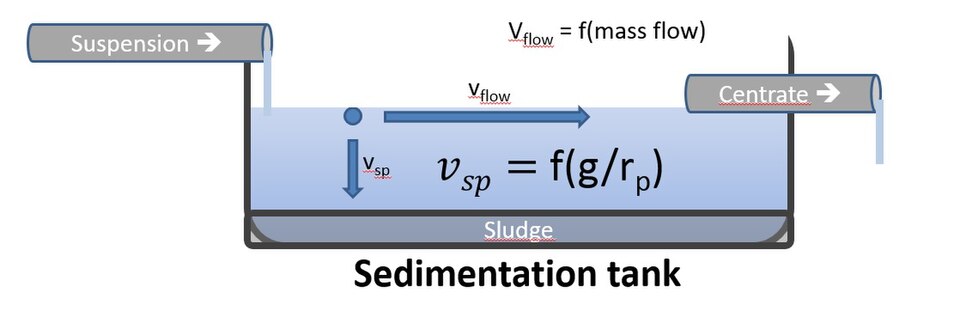 A clarifier tank with sludge removal mechanism. (Image: CepaZentrifugen, CC BY-SA 4.0, via Wikimedia Commons)
 - Filtration: Sand/activated carbon removes fine particles.
- Sedimentation: Heavy particles settle in tanks.
Chemical Treatment:
Chlorination: Kills bacteria (common in Nepal’s municipal supply).
Fluoridation: Adds fluoride to prevent tooth decay (regulated by WHO).
Biological Treatment:
- UV/Ozone: Alternative to chlorine for eco-friendly hotels.
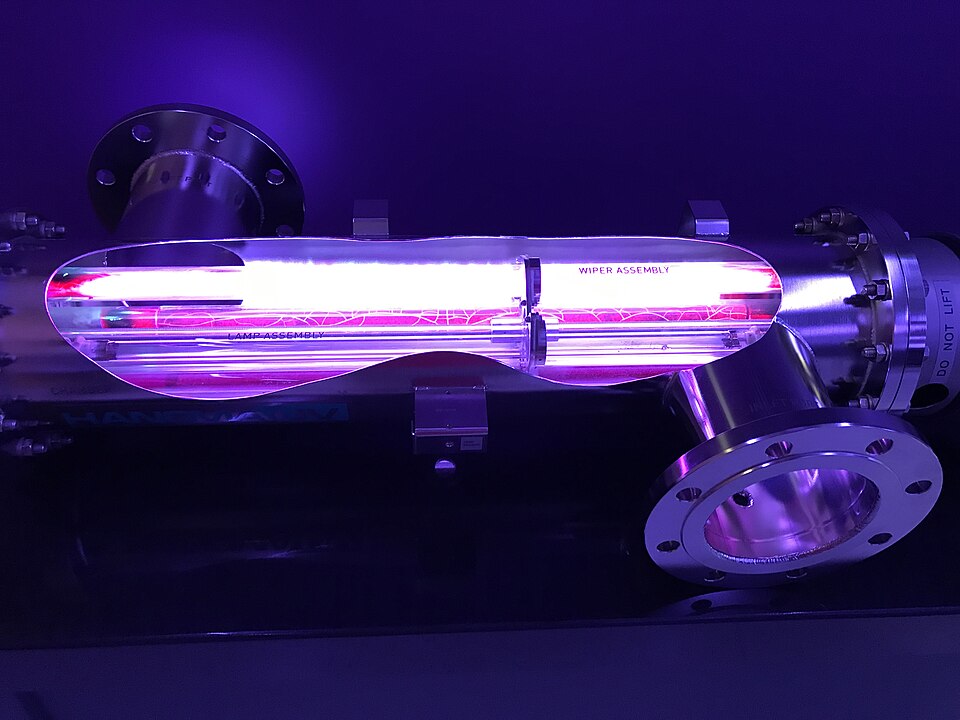 A UV lamp inside a water treatment module. (Image: Z22, CC BY-SA 4.0, via Wikimedia Commons)
- UV/Ozone: Alternative to chlorine for eco-friendly hotels.
Comparison Table:
| Method | Pros | Cons | Hotel Use Case |
|---|---|---|---|
| Chlorination | Low cost, effective | Tastes unpleasant, corrosive | Budget hotels in Kathmandu |
| UV Treatment | No chemicals, eco-friendly | High energy use | Luxury hotels (e.g., The LaLiT) |
| Ozonation | Kills viruses/bacteria | Expensive, requires expertise | High-end resorts (e.g., Ananta) |
2.3 Water Softening
Hard water (high calcium/magnesium) causes scale buildup in pipes and appliances.
Process:
Ion Exchange: Resin beads replace calcium/magnesium with sodium.
Reverse Osmosis: Filters out 90–99% of contaminants (used in mineral water plants).
Worked Example: A hotel in Chitwan switched to a water softener, reducing kettle scale buildup by 80% and energy costs by 25% (less heating for hard water).
3. Plumbing Maintenance and Safety
Poor maintenance leads to leaks, blockages, and waterborne diseases.
3.1 Common Plumbing Issues
| Issue | Cause | Solution |
|---|---|---|
| Leaks | Corroded pipes, loose joints | Regular inspections, pressure gauges |
| Clogged Drains | Grease, hair, foreign objects | Drain snakes, enzyme cleaners |
| Low Water Pressure | Pipe corrosion, pump failure | Pressure booster pumps |
| Bacteria Growth | Stagnant water, poor disinfection | Chlorine tablets, UV lamps |
3.2 Energy-Efficient Plumbing
Hotels can save 20–30% on water bills with:
- Low-flow fixtures (toilets, showers).
- Greywater recycling (reusing shower water for irrigation).
- Smart meters to track usage.
Worked Example: Daraz’s warehouses (Nepal) use greywater systems to irrigate plants, reducing water waste by 35%.
4. Real-World Applications
In the Real World
eSewa/Khalti (Nepal):
- Uses secure water treatment in their offices to prevent contamination in payment terminals.
- Example: Their Kathmandu HQ has a UV water purifier to ensure clean water for staff.
NTC/Ncell Towers:
- Telecommunication towers rely on borehole water treated with chlorine and sand filters to avoid equipment corrosion.
Pathao (Ride-Hailing):
- Their vehicle wash stations use closed-loop water systems to recycle 90% of water, reducing waste.
Exam Tip
For calculations (e.g., water pump energy): Use the formula: Example: A 2HP water pump (1.5 kW) running 45 min/day: Monthly cost (at Rs. 12/kWh): Rs. 40.5.
For diagrams, always label:
- Supply vs. drainage pipes
- Water treatment stages
- Leak detection methods
For explanations, link hard water → scale buildup → energy waste in hotels.
Final Note: Hotels lose millions annually to poor plumbing. Focus on treatment methods, maintenance, and energy savings—these are high-scoring topics!
Based on the TU BHM syllabus for Hotel Engineering (BHM251), unit 3.
Discussion
Loading…