Hospitality Marketing and SalesUnit 511 min read
Hospitality Products & Services: Types, Features & Management
Unit 5 of Hospitality Marketing and Sales explores the nature of hospitality products (tangible/intangible), service characteristics, product life cycles, and strategies for enhancing guest experiences—with real-world examples from Nepali hotels, airlines, and digital platforms.
TAKEAWAYS:
- Hospitality products are bundles of tangible (rooms, food) and intangible (service, ambiance) elements, requiring careful design to meet guest expectations.
- The 7Ps of service marketing (Product, Price, Place, Promotion, People, Process, Physical Evidence) extend beyond traditional 4Ps to highlight human interaction and experience.
- Perishability is a core challenge: unsold hotel rooms or restaurant seats cannot be stored, demanding dynamic pricing and yield management.
- Augmented products (core + facilitating + supporting services) create competitive advantage—e.g., a luxury hotel’s spa or a budget airline’s free Wi-Fi.
- Service recovery turns complaints into loyalty opportunities (e.g., Nabil Bank’s "Apology First" policy adapted by hotels like The Dwarika’s Heritage).
- Digital integration (e.g., eSewa’s instant booking for guest stays) blurs physical/digital boundaries, requiring hybrid marketing strategies.
1. Defining Hospitality Products and Services
Hospitality products are experiences delivered through a combination of:
- Core product: The basic offering (e.g., a hotel room, a meal).
- Facilitating services: Enablers like check-in, reservations, or room service.
- Supporting services: Enhancements like concierge, loyalty programs, or Wi-Fi.
mindmap
  root((Hospitality Product))
    Core Product
      Hotel Room
      Flight Seat
      Restaurant Meal
    Facilitating Services
      Reservation System
      Check-in/Check-out
      Payment Options
    Supporting Services
      Loyalty Programs
      Concierge Services
      Free Amenities (Wi-Fi, Breakfast)
    Augmented Product
      "Experience (e.g., The Dwarika’s Heritage Stay)"
      "Brand Story (e.g., Himalayan Java’s Ethical Sourcing)"
Why it matters: Unlike physical goods, hospitality products are co-produced by staff and guests. A poorly trained waiter or a slow check-in system can ruin an otherwise excellent product.
2. Unique Characteristics of Hospitality Products
Hospitality products differ from manufactured goods in 4 key ways:
| Characteristic | Explanation | Example (Nepali Context) |
|---|---|---|
| Intangibility | Cannot be seen/touched before purchase. | A guest books a room at Hotel Yak & Yeti without seeing it first. |
| Perishability | Unsold capacity (e.g., empty rooms) cannot be stored. | Nepal Airlines sells last-minute flight tickets at discounts to fill seats. |
| Inseparability | Production and consumption happen simultaneously. | A chef at Bhojan Griha cannot prepare a meal without the guest being present (or nearby). |
| Heterogeneity | Variability in quality due to human involvement. | Service at The Dwarika’s Heritage may vary by staff shift or season. |
| Ownership vs. Usage | Guests rent usage rights (e.g., a hotel room) rather than own the product. | Pathao’s ride-hailing lets users "rent" a driver’s time, not the vehicle. |
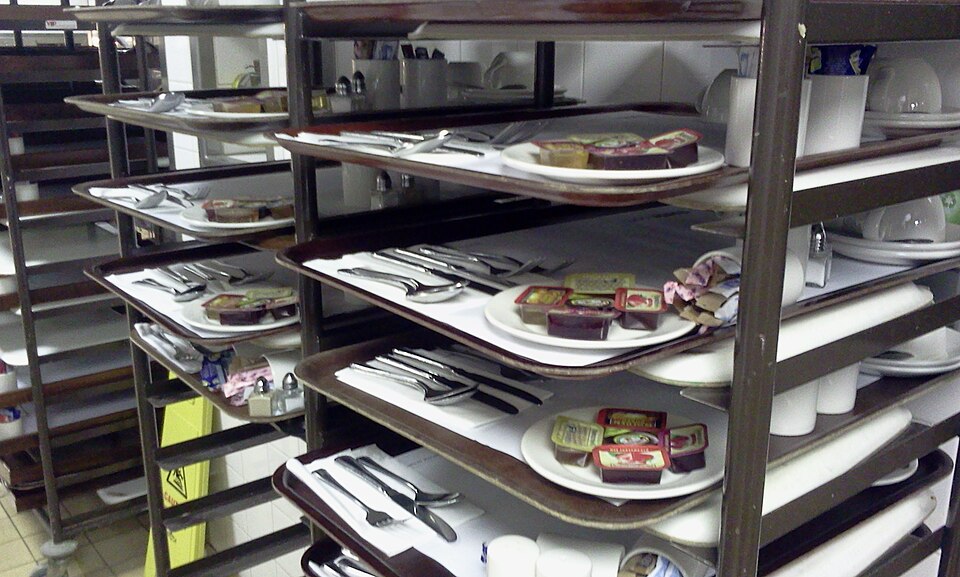 A tangible example of inseparability: the meal is prepared for the guest, not from a shelf. (Image: Simon Harriyott from Uckfield, England, CC BY 2.0, via Wikimedia Commons)
3. The Product Life Cycle in Hospitality
Unlike physical products, hospitality offerings follow a modified life cycle due to trends, seasonality, and innovation. Stages:
flowchart LR
  A["Introduction"] --> B["Growth"]
  B --> C["Maturity"]
  C --> D["Decline or Reinvention"]
  D -->|"Innovation"| B

  A -->|"Example: New Luxury Eco-Resort"| C["The Dwarika’s Heritage (2010s)"]
  C -->|"Example: Budget Airlines"| D["Nepal Airlines’ Low-Cost Spin-off"]
Key adaptations:
- Introduction: Limited capacity (e.g., Himalayan Java’s first café in Thamel).
- Growth: Expansion via franchising (e.g., Kathmandu Coffee House).
- Maturity: Differentiation (e.g., Hotel Yak & Yeti’s themed rooms).
- Decline/Reinvention: Pivot to new markets (e.g., Nepal Airlines adding cargo services).
Worked Example: Case Study: Chaudhary Group’s Hotel Expansion
- 2010: Launched Hotel Yak & Yeti (introduction phase) with limited rooms.
- 2015: Added Yeti Mountain Lodge in Pokhara (growth via location diversification).
- 2020: Introduced virtual tours and contactless check-in (reinvention during COVID-19).
4. Extending the 4Ps to 7Ps for Services
Hospitality marketing uses 7Ps to account for service-specific factors:
| Traditional 4Ps | Extended 3Ps | Application in Hospitality |
|---|---|---|
| Product | People | Staff training (e.g., The Dwarika’s heritage-trained staff). |
| Price | Process | Streamlined check-in (e.g., eSewa’s instant hotel bookings). |
| Place | Physical Evidence | Hotel décor, uniforms, and digital interfaces (e.g., Nabil Bank’s app design for guest use). |
| Promotion |
5. Managing Perishability: Yield Management
Perishability is the biggest challenge. Strategies:
- Dynamic pricing: Adjust prices based on demand (e.g., Daraz’s flash sales for hotel partners).
- Overbooking: Common in airlines/hotels (e.g., Nepal Airlines books 105% of seats).
- Bundling: Combine services to increase value (e.g., Hotel Yak & Yeti’s "Romantic Package" with dinner and spa).
Worked Example: NTC’s Train Booking System
- Peak season (Dashain): Trains sell out; NTC uses overbooking + waitlisting.
- Off-season: Discounts for youth/student fares to fill seats.
- Digital integration: eSewa payments reduce no-shows.
6. Augmented Products: Creating Competitive Advantage
Guests buy more than the core product—they buy the experience. Examples:
| Core Product | Facilitating Services | Supporting Services (Augmentation) | Example |
|---|---|---|---|
| Hotel Room | Check-in, Housekeeping | Concierge, 24/7 room service, free Wi-Fi | The Dwarika’s Heritage |
| Flight Ticket | Seat assignment, Boarding pass | In-flight entertainment, meal options, lounge access | Nepal Airlines’ Business Class |
| Restaurant Meal | Order taking, Delivery | Live cooking demos, chef’s tasting menu | Bhojan Griha’s "MasterChef Experience" |
7. Service Recovery: Turning Complaints into Loyalty
85% of dissatisfied customers leave without complaining—but 90% will return if their issue is resolved well (Harvard Business Review). Steps to service recovery:
- Listen actively: Let the guest vent (e.g., Nabil Bank’s "Apology First" policy).
- Apologize sincerely: Avoid excuses (e.g., "We’re sorry for the delay—here’s a complimentary drink").
- Resolve quickly: Compensate (e.g., Hotel Yak & Yeti’s free upgrade for a delayed check-in).
- Follow up: Call later to ensure satisfaction (e.g., Pathao’s post-ride feedback survey).
Case Study: Himalayan Java’s Coffee Spill Incident
- Problem: A guest spilled coffee on their laptop at Himalayan Java, Thamel.
- Recovery:
- Manager immediately offered a free coffee refill + laptop cleaning kit.
- Followed up with a discount voucher and a thank-you note.
- Outcome: Guest posted a positive review and became a repeat customer.
8. Digital Integration: The New Physical Evidence
Digital tools now define hospitality products:
- Virtual tours: Hotel Yak & Yeti’s 360° room previews.
- Mobile apps: eSewa’s hotel booking with QR-code check-in.
- AI chatbots: Nepal Airlines’ 24/7 customer service bot.
- User-generated content: TripAdvisor reviews as part of the product.
In the Real World
eSewa’s Hotel Partnerships
- Idea Used: Digital distribution channels + augmented products.
- How: eSewa lets users book Hotel Yak & Yeti rooms instantly, with dynamic pricing (cheaper last-minute deals). The app also offers exclusive perks (e.g., free breakfast for eSewa users), turning a transaction into an experience.
Nepal Airlines’ Cargo Reinvention
- Idea Used: Product life cycle adaptation.
- How: Facing declining passenger numbers post-COVID, Nepal Airlines expanded cargo services (e.g., transporting medical supplies to remote areas). This reinvented their core product from passenger flights to logistics, tapping into Nepal’s import-dependent economy.
The Dwarika’s Heritage Stay
- Idea Used: Augmented product + service recovery.
- How: The hotel’s "Heritage Experience" includes:
- Core: Traditional Newari-style rooms.
- Facilitating: Storytelling tours by heritage experts.
- Supporting: Complimentary Newari cuisine and cultural workshops.
- Recovery Example: A guest complained about a dusty room. The hotel immediately cleaned it, offered a free cultural show, and later sent a handwritten note with a discount for their next stay.
Exam Tip
How This Unit is Tested
Definitions & Concepts (20%)
- Expect questions on intangibility, perishability, and the 7Ps.
- Example Question:
"Differentiate between facilitating and supporting services in hospitality with examples from Nepali hotels."
Case Studies (30%)
- Short cases (e.g., Nepal Airlines’ yield management) or long cases (e.g., Chaudhary Group’s hotel expansion).
- Tip: Use SOAP structure (Situation, Obstacle, Action, Positive Outcome) for answers.
Diagrams & Flowcharts (20%)
- Draw product life cycles, 7Ps tables, or service recovery steps.
- Example: Sketch the augmented product layers for Hotel Yak & Yeti.
Application Questions (30%)
- "How would you apply yield management to a Pokhara-based guesthouse?"
- Tip: Link to real scenarios (e.g., Dashain season bookings).
Top 3 Exam Traps to Avoid
- Ignoring the 7Ps: Always explain People, Process, Physical Evidence when discussing service marketing.
- Overlooking perishability: Even if not asked directly, dynamic pricing or bundling are common fixes.
- Generic examples: Use Nepali brands (e.g., The Dwarika’s Heritage, Nepal Airlines)—examiners reward local context.
Quick Revision Checklist
- Can you list 3 augmented product examples from Nepali hospitality?
- Draw the 7Ps table with hospitality-specific applications.
- Explain yield management with a Nepal Airlines or hotel example.
- Describe service recovery steps using Himalayan Java’s coffee spill case.
- Sketch the product life cycle for a new eco-resort in Nepal.
Based on the TU BHM syllabus for Hospitality Marketing and Sales (BHM330), unit 5.
Discussion
Loading…